
How to Create a Minimalist Wardrobe for a Family Man
Most outfits tend to come from roughly 20% of a wardrobe. To learn how to create a minimalist wardrobe for a family man, start with a capsule: a considered collection of versatile pieces that work together, with 14 essential clothing pieces as a practical starting point, not counting socks and underwear.
Family life already brings its own rhythm of errands, workdays, and time with the people who matter. Getting dressed shouldn’t add unnecessary decisions. A smaller, carefully chosen wardrobe can simplify mornings while leaving room for comfort, personal style, and the moments that become part of family life.
This guide explains how to choose comfortable, hard-wearing clothes, build outfits around a restrained palette, and use accessories with intention. You’ll also learn how to assess what you own and shape a capsule wardrobe around your routine, so each piece earns its place and feels like yours.
Key Takeaways
- Build a capsule around clothes that suit your family routine, then choose tees, shirts, pants, and layers that work well together.
- Keep pieces that fit comfortably, hold up to regular wear, and can be combined in more than one way.
- Use a few thoughtful accessories and repeatable outfit combinations to add character without adding clutter.
- A smaller, intentional wardrobe can make everyday choices simpler while leaving space for the pieces that feel personal.
What is a capsule wardrobe?
A capsule wardrobe is a small collection of clothes chosen to work together. A starter capsule can include 14 essential clothing pieces, not counting socks and underwear. To understand how to create a minimalist wardrobe for a family man, begin with a coordinated set of versatile clothes suited to daily life.
-
Choose Versatile Clothing Pieces
Choose tees, shirts, pants, and outerwear that work for family time and more polished occasions. A starter capsule might include two jackets, one dressy and one casual, plus two pairs of pants, one casual and one dressier. Check that shirts fit comfortably at the shoulders and sleeves, and avoid pieces that work with only one outfit.
-
Coordinate a Neutral Color Palette
Start with neutral tees in white, black, navy, and gray, then add colors that already appear in your pants and jackets. A white tee, for example, can go under a navy shirt or gray sweater, while black and navy pair easily with jeans. Before adding another color, make sure it works with several pieces you own.
-
Select Adaptable Sweaters and Jeans
Choose a sweater that layers over a tee and under a jacket without feeling bulky. A plain crewneck works for relaxed days with jeans and looks more polished over a button-down shirt. Pick a pair of jeans in a clean, dark wash, avoiding heavy distressing or a fit so narrow or loose that it limits outfit combinations.
-
Choose Core Clothing Layers
Build outfits from three layers: a base layer, a mid-layer, and outerwear. A tee or button-down shirt works against the skin, a sweater adds warmth, and a jacket helps protect against changing conditions. For anyone learning how to create a minimalist wardrobe for a family man, choose simple, gender-neutral cuts in neutral shades. Each layer should fit over the one beneath it without restricting movement.
Evaluating clothes for sustainability, durability, versatility, and comfort
Review your clothes based on condition, comfort, and how often they suit your routine. The first step in how to create a minimalist wardrobe for a family man is deciding clearly what to keep.
-
Assess Clothing for Everyday Use
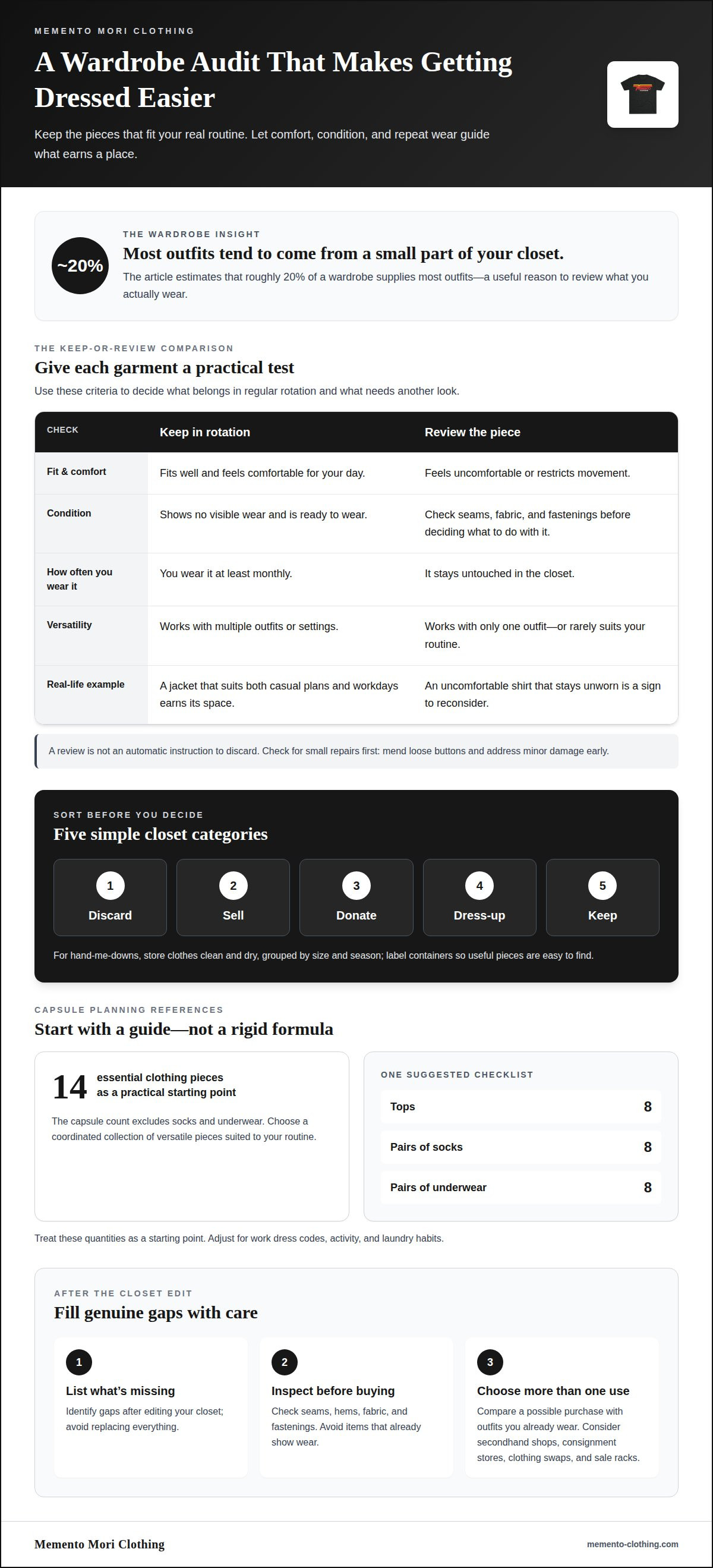
Sort your closet into five categories: discard, sell, donate, dress-up, and keep. Keep clothes that fit well, show no visible wear, and you wear at least monthly. A jacket that works for casual plans and workdays earns its space; an uncomfortable shirt that stays untouched does not.
A starter capsule contains 14 essential clothing pieces, excluding socks and underwear. One suggested checklist includes 8 tops, 8 pairs of socks, and 8 pairs of underwear. Treat these quantities as a starting point, then account for work dress codes, activity, and laundry habits. When deciding how to create a minimalist wardrobe for a family man, let actual use guide each keep-or-remove choice.
Before discarding or replacing a garment, check its seams, fabric, and fastenings. Follow the care label, mend loose buttons, and take care of small repairs early. Store hand-me-downs clean and dry, grouped by size and season. Label containers so useful clothes are easy to find.
-
Find Affordable, Durable Essentials
Look for essentials at secondhand shops, consignment stores, clothing swaps, and sale racks across the United States. Inspect seams, hems, fabric, and fastenings before buying; avoid pieces that already show wear. For chinos, sneakers, or a casual shirt, favor a timeless cut that works with clothes you own.
Before shopping, list the gaps left after editing your closet. Compare each possible purchase with outfits you already wear, and choose items that serve more than one purpose. This makes how to create a minimalist wardrobe for a family man a deliberate process, not a reason to replace everything. Follow care labels, mend minor damage, and store seasonal clothes clean and dry to help your smaller collection last.
Accessories and outfit combinations
Accessories add a personal finish to familiar outfits without filling your drawers with extras. Start with pieces that complement your clothes, suit your routine, and are easy to combine across seasons.
Choose Accessories That Reflect Personal Style
- Choose accessories that feel like you, then try them with clothes you wear often. A simple watch can add polish to a tee, button-down shirt, or sweater. A favorite hat brings character to casual outfits without changing the rest of your wardrobe. Keep details that feel personal rather than buying pieces just because they’re fashionable.
- Use color and material to connect an accessory with your existing clothes. A brown belt, for example, can echo brown footwear, while a black belt gives dark trousers a clean finish. Two belts, one black and one brown, cover common combinations. Let one detail stand out, since several competing accents can make an outfit feel cluttered.
Keep Accessories Minimal
- Build outfits from a small rotation of reliable pieces. Wear jeans, a tee, and sneakers for a relaxed day; switch the tee for a button-down when you want a sharper finish. A watch works with either outfit. Save a more expressive hat or accessory for days when it suits your plans and personal style.
- Keep accessories where your morning routine starts, and put each piece back after wearing it. Store your watch beside your everyday belt and seasonal hats separately from daily essentials. This simple habit makes accessories easier to choose when getting dressed and keeps forgotten items from piling up in drawers. A personal uniform can rotate among favorite styles rather than repeating one identical outfit.
Benefits of a minimalist wardrobe
In the United States, the total cost depends on what you already own, what needs replacing, and whether you buy new or secondhand. Set a spending limit after identifying genuine gaps, then add essentials gradually instead of rebuilding your wardrobe all at once.
- Use fewer pieces to make everyday choices clearer. Choose a repeatable outfit formula, such as a neutral shirt, dark jeans, and a sweater. For family errands, swap the shirt for a comfortable tee. Cutting down on morning decision fatigue also frees up energy for overall well-being, whether that means regular exercise or supporting recovery with home wellness tools from Pureffect. Ultimately, a small group of reliable combinations makes getting dressed feel like less of a task on a busy morning.
- Protect your budget by replacing garments only when they no longer serve their purpose. Before buying, consider whether an existing piece can be repaired, altered, or worn differently. Sew a loose button back on; a sweater with intact seams may still work as a layer. Reserve spending for genuine gaps, not passing trends.
- Choose versatile pieces that work hard in your wardrobe. A neutral jacket can finish casual jeans or dressier pants, while a simple shirt can suit work and family plans. Look for at least two uses in every addition. This creates more outfit combinations without crowding your closet.
- Make laundry and storage simpler by giving each garment a clear place. Fold sweaters to help them keep their shape, and hang jackets where they can air between wears. Group clothes by type, then notice which pieces repeatedly end up in the laundry. That pattern can show which garments earn regular space.
- Timeless choices can help you resist short-lived trends. Neutral colors, classic denim, and well-maintained leather accessories can stay useful across seasons. With a smaller wardrobe, signs of wear are easier to spot, so you can care for a favorite item before a minor issue becomes difficult to repair.
There is no fixed cost. It depends on the wardrobe gaps you need to fill and whether you choose new or secondhand pieces.
Memento Mori Clothing: Memento Mori Heavyweight Hoodie
Memento Mori Clothing offers the Memento Mori Heavyweight Hoodie as an everyday layer with a distinctive look. It can sit alongside quieter essentials without requiring a complete change of style. The Memento Mori Vintage Tee is another option for relaxed outfits, while Memento Crewnecks provide a familiar layer. Memento Hats add a simple finishing detail.
Choose one piece that fills a real gap in your rotation rather than adding several items at once. A hoodie can bring character to jeans and a plain tee; a vintage tee can give a neutral outfit a more personal touch. Let comfort, your existing clothes, and your everyday routine guide your choice.
Explore Memento Mori Clothing’s hoodies, vintage tees, crewnecks, and hats to find a piece that fits your wardrobe.
Make Room for What Matters
A wardrobe can be more than a way to get dressed. It can reflect the pace of family life, the places you return to, and the values you want to carry forward. As you decide how to create a minimalist wardrobe for a family man, let your choices express your own story, not someone else’s idea of style.
Start with one thoughtful edit. Notice which clothes are part of your daily life, then make space for pieces that feel personal. There’s no need to change everything at once. A considered choice, worn often and cared for, can become part of the memories attached to ordinary days.
If Memento Mori Clothing’s perspective on meaningful apparel resonates with you, explore the collection and choose what feels right for your next chapter.
Build slowly. Dress with intention. Let your wardrobe tell a story that is unmistakably yours.
Frequently Asked Questions
What is a minimalist wardrobe for a family man?
A minimalist wardrobe is a deliberately edited set of clothes for the roles your week asks you to fill. A parent moving between an office, school pickup, and weekend errands might choose pieces that suit all those settings. The goal isn’t to dress identically every day, but to make useful combinations easy to reach for.
How many clothes does a man need for a minimalist wardrobe?
A practical starter capsule includes 14 essential clothing pieces, excluding socks and underwear. Its suggested quantities assume laundry once week and allow for 8 days of clothing as a buffer. Treat those figures as a starting framework: the right count depends on work clothes, weather, activity, and how often laundry fits into your family’s routine.
What essential clothing basics should a family man own?
Build around basics for different settings: T-shirts, button-down shirts, jeans, dressier pants, a blazer, and a sweater. A starter list might include two black and two white T-shirts, two button-down shirts, one pair of jeans, one pair of nice pants, one navy blazer, and one sweater. Add or remove pieces to fit your actual week.
What clothing colors and fabrics are easiest to mix and match?
White, black, navy, and gray are easy to coordinate because they pair readily with one another. For fabric choices, consider organic cotton for everyday shirts, premium wool for sweaters, and genuine leather for accessories. Match fabric weight and care needs to how often you’ll wear each piece, and follow garment care labels to help maintain them.
How should a minimalist wardrobe adapt to seasons, work, and family activities?
Let the climate and calendar shape which pieces you rotate. For summer or hot climates, the starter recommendations include two pairs of dressy shorts; for wintry climates, men may add one or two sweaters. Keep work requirements in mind, and leave room for comfortable clothes suited to outdoor play, travel, or relaxed weekends.
How do you declutter a man's closet and decide what to keep?
Take each garment out and assess its fit, visible wear, and role in your routine. Sort clothing into five destinations: discard, sell, donate, dress-up, and keep. A shirt that fits and gets worn regularly has a clearer claim on closet space than an uncomfortable purchase saved for an imagined occasion. Store seasonal pieces separately to make rotation easier.