
How to Choose Comfortable Clothes for Intense Focus Sessions
Comfort is not a distraction from focused work; it helps create the conditions for attention to settle. Comfortable clothes for intense focus sessions start with breathable, nonrestrictive pieces and a light layer you can add or remove as a room warms up or cools down. When fabric pinches, itches, or traps heat, it gives your attention one more reason to wander.
You know the difference between a garment that fades into the day and one you keep adjusting. The right choice isn’t a uniform or a special “focus” outfit; it’s a balance of softness, freedom of movement, and enough structure to feel ready for the work ahead. Build that balance by choosing breathable fabrics and relaxed waistbands, layering for changing temperatures, and using a familiar outfit as a gentle cue to begin. The goal is simple: clothes that support the session without becoming its focus.
Key Takeaways
- Build an adjustable outfit with a removable outer layer so you can respond to a cool studio or a warmer room.
- Choose clothes that let you sit and move without pinching, itching, or pressing at the waist.
- Use breathable fabrics and a comfortable weight to help avoid temperature discomfort becoming a distraction.
- Choose an outfit that suits the task: a familiar, relaxed look for ease or a more structured layer when it helps you feel ready.
1. Layering for cool studios and temperature regulation
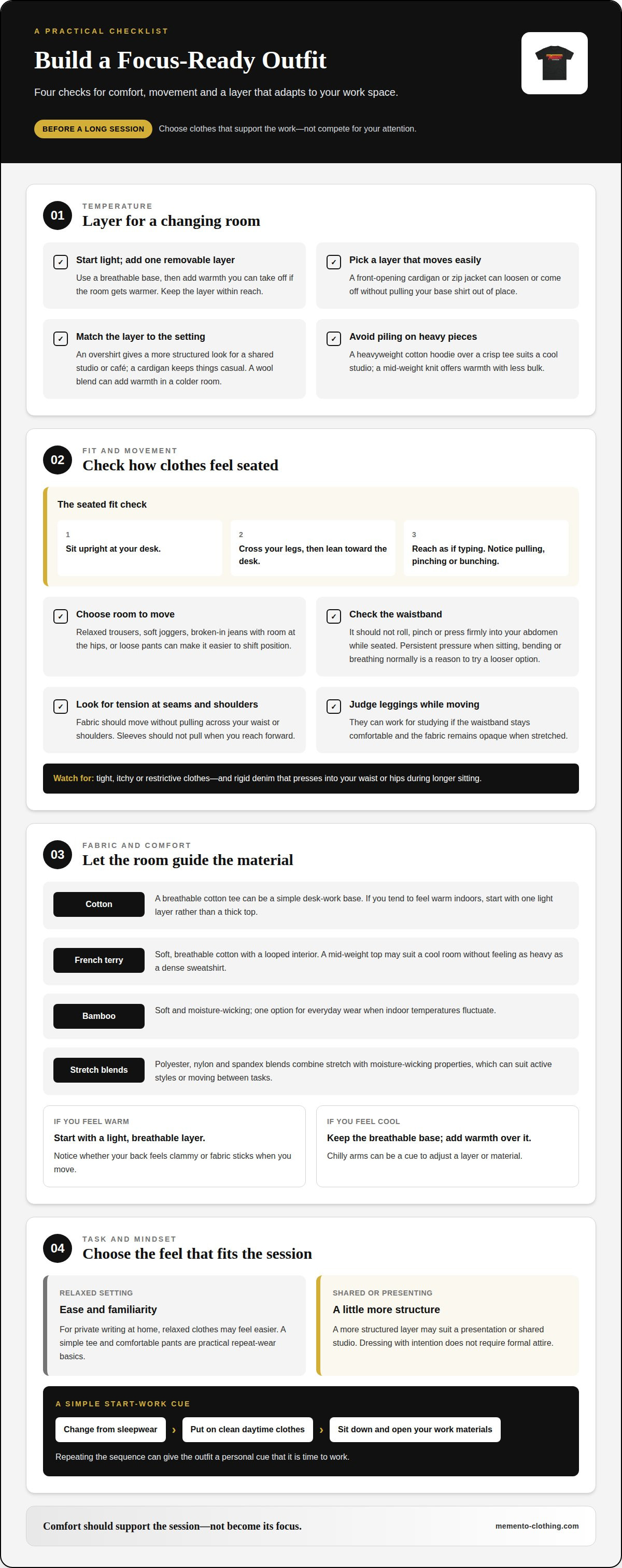
In a cool studio, start with a breathable base and add a layer you can remove. A crisp tee under a hoodie feels soft while keeping the base layer casual. If the room warms during a long session, take off the hoodie rather than sitting through rising discomfort. This simple approach keeps your outfit adaptable and can reduce interruptions to focused work.
Choose layers that are easy to open and move in. A front-opening cardigan or zip jacket can be loosened or removed without pulling your base shirt out of place. An overshirt offers a more structured look for a shared studio or café, while a cardigan keeps the outfit casual. In a colder room, a wool blend can add warmth over a lighter shirt.
Texture and weight matter as much as warmth. Pair a heavyweight cotton hoodie with a crisp tee when the studio feels cool, or choose a mid-weight knit for less bulk. The contrast gives an outfit a considered shape while keeping the inner layer soft against the skin. Avoid piling on heavy pieces: excess warmth can become a distraction, especially when you’re seated at a desk.
Before settling in, try a practical fit check: put on a light base, add one removable layer, then sit at your workstation and reach forward as if typing. Check that the sleeves don’t pull and the front doesn’t bunch. OSHA recommends arranging computer workstations to support comfortable, neutral positions, so your clothing should allow that posture without restricting your shoulders. Keep the cardigan or jacket within reach so you can adjust to changing room temperatures without changing your whole outfit.
2. Avoiding restrictive clothes to maintain focus
A pinching waistband can become an unwelcome distraction during a long study session. Tight, itchy, or restrictive clothes can pull attention away from reading, writing, or screen work. Judge an outfit by how it feels while seated, not only how it looks standing. Sit at a desk, lean forward, and reach for a keyboard; fabric should move without pulling across your waist or shoulders.
For affordable focus-session clothing in the US, prioritize repeat-wear basics over specialized fashion: a simple tee and relaxed pants can form a practical starting point. A Youth Graphic T-Shirt offers a casual top option when that fits your wardrobe. Pair it with bottoms that let you sit comfortably, rather than choosing a label as a shortcut for comfort.
Relaxed trousers, soft joggers, and broken-in jeans with room at the hips are all options for easy movement. For a seated workday, check that the waistband doesn’t roll, pinch, or press firmly into your abdomen. Leggings can also work for studying if the waistband stays comfortable and the fabric remains opaque when stretched. Loose pants offer more freedom to shift position or sit cross-legged during a reading break.
Compression pieces and tight waistbands may feel uncomfortable during prolonged sitting, especially if they press into your abdomen or restrict movement. A snug fit isn’t automatically a problem, but persistent pressure when you sit, bend, or breathe normally is a reason to choose a looser option.
Try a quick fit check before settling into a long task. Sit upright, cross your legs, then lean toward the desk; notice seams, waistbands, and fabric tension. Rigid denim may feel fine during a short café stop or a casual lunch run to Tacoverse, but press into your waist and hips when you sit for longer. Broken-in jeans or flexible pants may feel easier. Comfortable clothing gives your attention fewer adjustments to manage, while the meaning of your outfit remains personal.
3. Breathability and temperature regulation
Fabric that traps warmth can turn a quiet study session into a series of small distractions. Breathable cotton makes a cotton tee a useful base for desk work. If you tend to feel warm indoors, start with one light layer instead of a thick top. If the room feels cool, begin with a breathable base and add warmth over it.
French terry cotton is a soft, breathable option for focused work and casual wear. Its looped interior feels different from a smooth jersey tee, so consider what feels comfortable against your skin during a long session. A mid-weight French terry top may suit a cool room without feeling as heavy as a dense sweatshirt.
Other fabrics have different strengths. Bamboo is soft and moisture-wicking, which can suit everyday wear when indoor temperatures fluctuate. Polyester, nylon, and spandex blends combine stretch with moisture-wicking properties, making them practical for active styles. For seated writing, a breathable cotton shirt may feel simpler; for moving between tasks, a stretch blend may feel easier to wear.
Let the room and your own sense of temperature guide your choice, not the formality of the outfit. A formal-looking fabric that leaves you too warm or too cold can pull attention away from work. Notice whether your back feels clammy, your arms feel chilly, or fabric sticks when you move. These signs can help you decide whether to change the material or adjust a layer.
To test comfortable clothes for intense focus sessions, put on a garment, sit at your desk, and move your arms as if reaching for a book or keyboard. If the fabric clings or holds heat, switch to a lighter, breathable option. Choose comfortable clothes for intense focus sessions by considering the room and how your body feels in it. A cotton tee can serve as a base, with a warmer or moisture-wicking layer suited to the space.
4. Choosing clothes to support confidence or relaxation
Let the task shape your outfit. Writing privately at home may feel easier in relaxed clothes, while a presentation or shared studio session may call for a more structured look. Dressing with intention doesn’t mean wearing formal attire; it means choosing pieces that suit the setting and help you feel at ease.
A simple routine can make getting started feel different from lounging. Change from sleepwear into clean daytime clothes, then sit at your desk and open the document or materials for your session. Repeating this sequence gives the outfit a personal cue: it’s time to work. A familiar tee, comfortable pants, and a cardigan can mark the transition without suggesting that clothing guarantees better concentration.
For a task that involves speaking or sharing ideas, choose a shape that feels composed without restricting movement. A soft top under a jacket adds structure, while straight-leg pants stay comfortable when seated. For quiet reading, a loose tee and easy-fitting pants may feel more relaxed. Consider whether confidence or ease better supports the work in front of you.
Before you begin, try a quick outfit check: sit, reach for your notebook, and imagine staying in that position through the session. Notice whether you feel self-conscious, too casual for the setting, or distracted by a stiff collar. Adjust one piece rather than replacing everything. A familiar garment can also help distinguish study time from rest, especially when you work in the same room where you relax.
Clothing can serve as a personal signal, not a guaranteed route to focus. Keep the choice simple: match the level of structure to the task, preserve comfort while seated, and repeat combinations that feel right in that environment. To choose a familiar piece for a study-day outfit, explore a graphic tee as one possible starting point.
Memento Mori Clothing
Memento Mori Clothing offers apparel that can be part of a considered routine for focused work. For a familiar layer in a cool studio or a casual top for a writing session, consider the Memento Mori Heavyweight Hoodie, Memento Mori Vintage Tee, or Memento Crewnecks. Memento Hats are another everyday option.
The right fit depends on your environment and how you prefer to work. Choose pieces that suit your comfort and personal style, then pair them with layers that help you feel at ease throughout the session. Clothing can mark a moment without promising a particular result.
Explore Memento Mori Clothing’s apparel to find a comfortable layer or everyday top for your workday wardrobe.
Make Your Next Work Session Your Own
Choosing comfortable clothes for intense focus sessions is a small act of preparation that can shape how you approach the work ahead. Let your outfit reflect the attention you want to bring: quiet and unhurried, or composed and ready to share ideas. Keep the choice personal. A familiar piece can become part of the rhythm you return to, marking a moment between the day’s competing demands and the task you’ve chosen to make space for.
Memento Mori Clothing offers apparel to accompany that routine without defining it. Explore the Memento Mori Heavyweight Hoodie, Memento Mori Vintage Tee, and Memento Crewnecks as additions to your everyday rotation. Choose what feels at home in your workday and let the habit grow at its own pace.
Contact Memento Mori Clothing to continue the conversation. Begin with one thoughtful choice, then give your attention room to follow.
Frequently Asked Questions
Confidence in Comfort: Why Comfortable Clothing Boosts Productivity?
Comfortable clothing may support productivity by reducing small physical distractions, but it can’t guarantee concentration. A scratchy collar or shifting sleeve can repeatedly draw attention away from a task. Dressing in a way that feels right for your setting may also help you feel prepared. Treat clothing as one part of your work environment, alongside your desk and lighting.
How Should Your Clothes Feel While You Study?
Your clothes should feel unobtrusive as you read, type, and change position. Notice whether you’re tugging at a sleeve, adjusting a collar, or shifting because a seam bothers you. Try sitting through a short reading passage without adjusting your outfit. If your clothing keeps calling for attention, try a different cut or layer.
What Is the Most Reliable Study Outfit?
Which Bottoms Work Best for a Long Study Session?
For prolonged study, choose bottoms with a comfortable waist and enough room to change position. Sit in them at your usual desk, then reach for a notebook or turn toward a second screen. Soft joggers, flexible trousers, and familiar jeans can all work if they remain comfortable in those positions.
What fabrics are most comfortable and breathable for long focus sessions?
Breathable cotton and French terry are useful starting points, while bamboo and stretch blends suit different preferences and activities. Comfort also depends on construction: soft fabric may still irritate if seams rub or the garment clings. Check how it feels against your skin and as you move before wearing it for a full study day.
How should clothes fit for prolonged sitting and concentration?
Clothes should let you sit upright, lean forward, and move without firm pressure or constant readjustment. Check the waist while seated, since a fit that feels fine standing may press when you bend. Notice whether hems ride up or fabric gathers behind your knees. A brief seated fit check can reveal problems before studying begins.