
Everyday basics, from lasting white tees to warm layers
A white tee can look simple and still be difficult to choose well. For heirloom quality men's basics, start with a midweight white T-shirt around 170-240 gsm, then look beyond weight to the fabric, fit, and how a garment feels in regular rotation. The best choice is the one you’ll reach for often, not simply the thickest or most expensive.
It’s natural to want everyday clothes that hold their place through years of wear. But heirloom quality men's basics aren’t defined by a price tag alone: fabric, construction, comfort, and care all shape how useful a piece becomes. Pima and Supima cotton, for example, have longer fibers than standard commodity cotton.
This guide shows how to assess white tees, build a practical wardrobe of everyday essentials, and compare men’s tees, sweaters, and sweatshirts across budgets. Use these straightforward checks to weigh fabric and wear, so your choices feel considered and personal.
Key Takeaways
- Use fabric weight as a starting point for choosing a white tee, then weigh comfort, fit, and how the fabric holds up to regular wear.
- Test an everyday basic through a full month of regular rotation before deciding whether it deserves a lasting place in your wardrobe.
- Build warm layers around how you dress day to day, balancing tees, tops, sweaters, and sweatshirts for practical use.
- Judge a garment by its materials, construction, and expected use, not by price alone; the right choice depends on what you’ll reach for and keep wearing.
1. Long-lasting white T-shirts and fabric weight
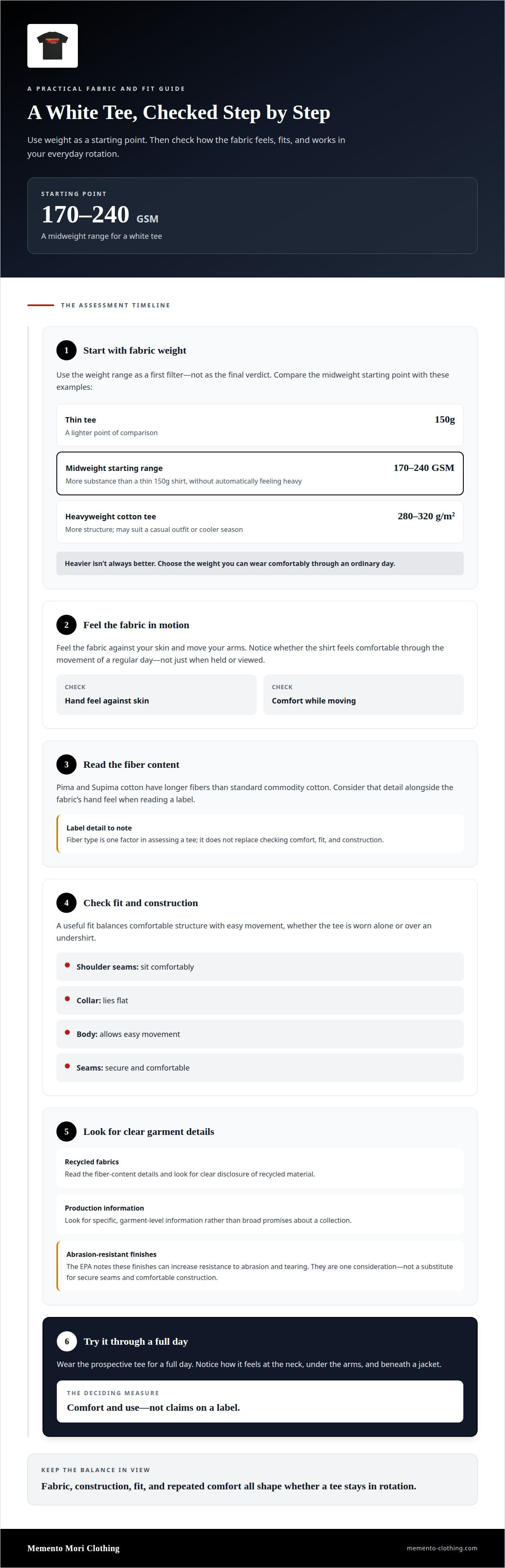
What makes men’s basics heirloom quality? A considered balance of fabric, construction, fit, and repeated comfort gives a garment a better chance of staying in rotation. For heirloom quality men’s basics, judge the shirt by how it feels and holds its shape, not weight alone. A useful starting point for a white tee is 170-240 gsm, a midweight range that offers more substance than a thin 150g shirt without automatically feeling heavy.
Heavier isn’t always better. A heavyweight cotton tee typically weighs around 280 to 320 grams per square meter, creating more structure for a casual outfit or cooler season. Compare that with a midweight shirt by feeling the fabric against your skin and moving your arms; the best weight is the one you can wear comfortably through an ordinary day. Supima and Pima cotton have longer fibers than standard commodity cotton, a difference to consider when reading fiber-content labels and assessing hand feel.
Fit matters as much as fiber. Check whether the shoulder seams sit comfortably, the collar lies flat, and the body allows easy movement, worn alone or over an undershirt. A soft natural fiber may suit warm days, while a denser knit can feel more substantial as a layer. The U.S. Environmental Protection Agency notes that abrasion-resistant finishes can increase a textile’s resistance to abrasion and tearing. That finish is one consideration, not a substitute for secure seams and comfortable construction.
For recycled fabrics, read the garment’s fiber-content details and look for clear disclosure of recycled material. For labor practices, look for specific, garment-level production information rather than broad promises about a collection. Then wear a prospective tee through a full day. Notice whether the fabric feels comfortable at the neck, under the arms, and beneath a jacket. A white shirt earns its place through use, not claims on a label.
2. Men’s everyday clothing essentials
For durable men’s basics made in the USA, choose pieces whose product descriptions and garment labels clearly identify U.S. manufacturing. Then assess the clothes themselves: inspect seams, hems, closures, and fabric rather than treating origin alone as proof of durability. A relaxed pair of chinos, for example, should allow comfortable movement and work with shirts and outerwear you already wear. Build an everyday wardrobe around useful essentials, not an arbitrary number of purchases.
Start with a rotation of T-shirts and undershirts. Wear each basic through a full month of regular rotation before buying more; this helps reveal whether its fit, fabric, and comfort suit your days. Notice whether an undershirt stays smooth beneath a button-down or feels comfortable on its own. After washing, check whether the neckline, seams, and overall shape still work for you. These observations help you keep the pieces that genuinely earn repeat wear.
Build outfits from combinations rather than isolated clothes. A white tee, an undershirt, chinos, and a versatile outerwear layer can suit different settings when their fabrics and silhouettes work together. Choose colors and shapes that are easy to pair across the season, then follow care instructions consistently to see how each piece responds over time. The point isn’t to own more. It’s to find the basics you’ll reach for, wear comfortably, and keep in rotation.
3. Men’s tees, tops, sweaters, and sweatshirts
Choose layers according to what each garment needs to do. A cotton tee works beneath a sweater, while a sweatshirt adds an easy layer over casual staples. Try each combination with trousers or a jacket you already wear. Check how the sleeve lengths work together, then raise your arms and sit down. A useful layer stays comfortable in motion and doesn’t bunch beneath another garment.
Knitwear adds texture and warmth without requiring a formal silhouette. Compare a crewneck sweater with a sweatshirt over the same shirt, and notice how each changes the outfit. For a classic, understated look, pair a plain knit with dark trousers. For relaxed days, a sweatshirt and simple tee may feel more natural. Let the season guide the thickness and layering instead of buying for one imagined occasion.
Cashmere sweaters and light jackets serve different roles. A cashmere sweater can sit close to the body or layer beneath outerwear; a light jacket provides an outer layer over a tee. Before choosing either, consider how often it fits your usual routine. Check the care label, then assess how the fabric feels against your skin. An affordable piece earns repeat wear when it works with clothes already in your wardrobe.
For sweatshirts, hoodies, and sweatpants, inspect the details you’ll handle often: cuffs, waistband, hood seams, and pocket openings. See whether cuffs stay comfortable when pushed up and whether a hood sits easily beneath a jacket. Knitwear calls for a different check: look for even stitching and a neckline that lies flat. These observations help you judge whether a garment suits regular wear, rather than relying on how it looks on a hanger.
Keep your collection deliberate. Choose a tee, a knit, and a casual layer that each pair with several pieces you already own. A youth graphic T-shirt can add visual character beneath an open jacket, while a plain top keeps the same outfit quieter. Wear each combination in ordinary settings before adding similar staples. A useful wardrobe makes room for warmth, ease, and personal expression without letting any one layer dominate.
4. Men's basics brands and price ranges
Compare brands by the details they provide about a garment, not by fashion language alone. Read the product information for fiber content, construction, fit, and production details. Then compare similar pieces, such as cotton tees with comparable silhouettes. A clear description helps you understand what you’re paying for; a polished photograph can’t show how a shirt feels or works in your wardrobe.
Price tiers can help narrow choices, but they don’t prove quality. Consider cost per wear by dividing the garment’s price by how many times you expect to wear it. A tee worn often may be more useful than a distinctive shirt that stays in the closet. For a button-front top, inspect button attachment and stitching, and see how the fabric sits when fastened. Apply the same practical fitting test at every price point.
What warranties or repair policies do men’s basics brands offer? Terms vary by brand and garment, so there isn’t one policy across the category. Read the written terms for coverage, exclusions, and whether repairs are offered before treating a warranty as part of a purchase.
Production details deserve equal attention. Look for specific statements about where a garment is made and what its materials contain. Check that the details apply to the particular item rather than assuming they describe everything a brand sells. A brand’s general sustainability language, for example, doesn’t tell you the fiber content of one sweatshirt. Specific garment information makes meaningful comparisons possible.
Finally, match the silhouette to your existing clothes. Compare a relaxed tee with your usual trousers and jacket, then consider whether it suits your everyday settings. Choose one piece that fills a real gap before expanding the wardrobe. If graphic shirts are part of your style, explore everyday apparel as you consider which pieces belong in your rotation.
Memento Mori Clothing
Memento Mori Clothing offers expressive everyday layers for readers choosing distinctive basics. Its Memento Mori Vintage Tee, Memento Mori Heavyweight Hoodie, Memento Crewnecks, and Memento Hats offer different ways to bring a considered point of view to casual dressing. Each serves a different role, from a simple tee to a warmer layer or finishing detail.
Turn to these pieces when you want everyday apparel shaped by the Memento Mori philosophy, rather than another passing fashion statement. Choose the kind of garment that fits your routine and personal style; the range includes tees, sweatshirts, and hats, without requiring a full wardrobe change. For questions about these offerings, contact Memento Mori Clothing.
Choose What You’ll Carry Forward
Clothing becomes personal through the days it accompanies: familiar mornings, long journeys, quiet milestones. Choosing heirloom quality men's basics is less about building a perfect wardrobe than deciding what deserves a place in your own story. Let comfort, character, and the way a piece fits your life guide that choice.
There’s no need to settle everything at once. Begin with what feels true to your everyday style, then let the rest take shape over time. Memento Mori Clothing offers apparel grounded in reflection and self-expression for those who want their clothing to hold meaning beyond the moment.
If you’d like to explore that perspective in wearable form, contact Memento Mori Clothing. Take the next step at your own pace, and choose pieces that feel like they belong to the life you’re living.
Frequently Asked Questions
Which brands make durable heirloom-quality men's basics?
No brand name alone proves that a garment will last. Memento Mori Clothing offers graphic tees and casual layers, but assess each piece on its own materials, construction, fit, and care details. Across brands, look for clear product-specific information and choose garments that suit your regular routine. A thoughtful purchase depends on the individual piece, not a broad promise attached to a label.
What fabrics and construction make men's basics last longer?
Start with fiber content suited to the garment’s use, then examine how the fabric is assembled. A consistent knit, secure seam stitching, and stable edges can help a shirt withstand regular handling. For a henley, check the placket and buttons; for a tee, inspect the shoulder and neckline, which move with repeated dressing. Follow the care label to help preserve the fabric and shape.
How much do heirloom-quality men's basics cost?
Men’s T-shirts on the market typically range from $26 to $49 USD. That range describes the market, not any single brand or garment. Price can reflect differences in fabric, construction, and design, but it doesn’t establish how long a tee will last. Compare the specific garment’s details and how often you expect to wear it before deciding what fits your budget.
How do premium men's basics compare with budget basics for durability and value?
Premium basics may offer more considered materials or construction, but a higher price doesn’t guarantee longer wear. Budget pieces can be worthwhile if they fit comfortably and hold up in your routine. Compare value by considering how often you’ll wear a garment, whether it remains comfortable after washing, and whether its construction suits regular use. Choose the piece that earns repeat wear, not simply the higher price tag.
How should you wash and care for men's basics to extend their lifespan?
Follow each garment’s care instructions and wash it consistently. Over time, check how its neckline, seams, and shape respond.