
Casual Style That Doesn’t Look Sloppy: A Practical Guide
What if the difference between looking relaxed and looking unkempt has less to do with what you wear than how you wear it? Casual style that doesn't look sloppy begins with a few quiet decisions: clothes that fit well, pieces in good condition, and proportions that feel balanced. Comfort can stay at the center. It simply needs a little intention.
It’s easy to know what feels good and still feel that an outfit doesn’t quite come together. A stretched collar, extra fabric pooling at the ankle, or layers competing for attention can shift the whole impression. The answer isn’t to dress formally or chase every new trend. It’s to notice the small details that let your personal style come through.
This guide will help you build everyday outfits that feel comfortable, considered, and true to you. We’ll look at fit and condition, explore ways to balance relaxed silhouettes and layers, and consider how color, texture, and finishing touches can bring an outfit into focus. The aim isn’t perfection. It’s a wardrobe that feels like yours, with enough care to make each choice count.
Key Takeaways
- Casual style that doesn't look sloppy comes from dressing comfortably with intention, not from making every outfit formal or trend-led.
- Use the relationship between your top, bottoms, and layers to create a balanced silhouette that feels easy to move in.
- Start with one anchor piece, then use supporting basics and a restrained palette to bring the outfit together.
- A quick check for cleanliness, damage, fit, and the day’s demands can help catch small distractions before you leave.
- Build a few repeatable outfit choices around what feels comfortable and personal, rather than relying on a formula that feels like a uniform.
Casual Style That Doesn’t Look Sloppy Starts with One Distinction
Casual describes a level of formality, not a lack of care. A soft T-shirt, relaxed jeans, or roomy sweatshirt can feel easy and still look considered. The difference isn’t a dress code. It’s whether the clothes fit comfortably, appear cared for, and work together in a way that suits the person wearing them.
Casual clothing has shifted across eras and settings; the history and definition of casual wear offer useful context for that evolution. But no historical account can prescribe one right outfit for everyone. For a practical wardrobe, use a simpler lens: fit, garment condition, and intention. These aren’t rules for looking expensive or following trends. They help explain why some comfortable outfits feel coherent and others feel unfinished.
What makes an outfit look relaxed rather than neglected?
Ease is a choice; neglect is often a distracting detail. A loose tee can look relaxed when its shoulders sit comfortably and its hem falls as intended. A similar tee may feel neglected if the neckline has stretched or the fabric is visibly stained. Jeans can be roomy without dragging underfoot, and a sweatshirt can be soft without appearing misshapen.
Fit and condition shape the impression before anyone notices labels or styling. Choose clothing that lets you sit, reach, and walk without persistent pulling or fabric slipping out of place. Then check whether wear, wrinkles, lint, or damage draws attention away from the outfit. These observations aren’t judgments about body type, taste, or budget. Personal style takes many forms, and care isn’t measured by how much someone spends.
Why casual style still benefits from intention
Before getting dressed, consider the purpose of the outfit: a day of errands, a casual lunch, or time spent relaxing at home. The setting helps narrow your choices without demanding a formal look. A favorite sweatshirt and comfortable trousers may suit one day; a clean tee, jeans, and a light layer may feel better for another.
Intention is the quiet agreement between comfort, context, and personal preference. It might mean choosing a familiar color, wearing a layer you can remove, or reaching for clothes that let you move freely. You don’t need to rebuild your wardrobe or follow each passing trend. A little forethought can make casual style that doesn't look sloppy feel natural rather than overworked.
Polished casual style is comfort shaped by care, with no single uniform required. Keep that definition in mind as you assess an outfit. The goal isn’t to look dressed up; it’s to feel at ease while making choices that belong together. Next, look at fit and proportion, where small adjustments can change the whole silhouette.
Use Fit and Proportion to Make Casual Clothes Look Considered
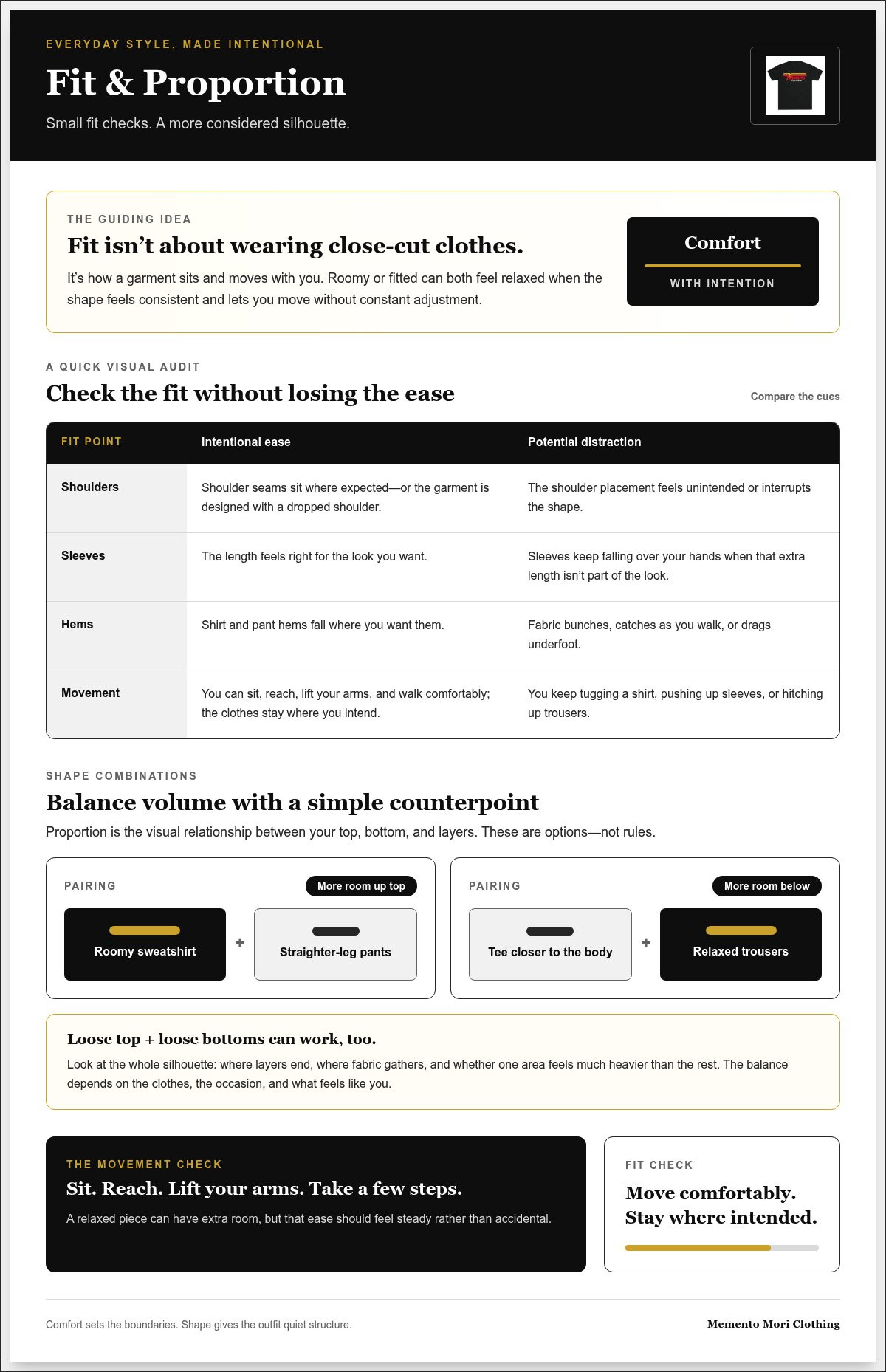
Fit isn’t the same as wearing close-cut clothes. It’s the way a garment sits and moves with you. A roomy sweatshirt can feel deliberate; a fitted tee can feel just as relaxed. What matters is whether the shape looks consistent and lets you move without constant tugging, pulling, or readjusting.
How should casual clothes fit?
Start with the points that tend to draw the eye: shoulders, sleeves, and hems. Shoulder seams usually look intentional when they sit where you expect, unless the garment is designed with a dropped shoulder. Sleeves shouldn’t keep falling over your hands unless that extra length is part of the look. Check that pants and shirt hems fall where you want them, rather than bunching or catching as you walk.
Then test the fit in motion. Sit, reach forward, lift your arms, and take a few steps. A relaxed piece can have extra room, but that ease should feel steady rather than accidental. If you’re repeatedly pulling down a shirt, pushing up sleeves, or hitching up trousers, the garment may be interrupting your day as well as the line of the outfit.
Fit check: If you can move comfortably and the clothes stay where you intend, the fit is working.
How can you balance proportions without following trends?
Proportion is the visual relationship between your top, bottom, and any layers. One easy experiment is to let one piece have more volume while keeping another simpler in shape. Try a roomy sweatshirt with straighter-leg pants, or relaxed trousers with a tee that sits closer to the body. These are options, not rules. A loose top and loose bottoms can also work if the shapes feel purposeful to you.
Look at the whole silhouette, not just each item on its own. In a full-length mirror, notice where layers end, where fabric gathers, and whether one area feels much heavier than the rest. A shorter jacket over longer layers creates a different visual rhythm than a long overshirt over a simple base. Neither is inherently better. The right balance depends on the clothes, the occasion, and what feels like you.
For casual style that doesn't look sloppy, treat proportion as a way to make choices, not a formula for correcting your body. Your height, shape, and preferred ease don’t need to match a trend image. Instead, notice what you like seeing in the mirror. You might prefer clean lines, generous layers, or a clear break between top and bottom. A small adjustment, such as changing where a shirt hem falls or opening a layer, can bring the outfit into focus.
Let comfort set the boundaries, then use shape to give the outfit its own quiet structure. For everyday inspiration, explore Memento Mori apparel and consider which styles feel natural to you.
Build a Casual Outfit Around a Clear Color and Layering Plan
A simple outfit can feel complete without being complicated. Begin with one anchor piece, the item that sets the direction: perhaps a graphic tee, relaxed trousers, or a quality piece from Martindale. Add supporting basics that let it stand out, then consider an extra layer only if the weather or setting calls for one. Giving each piece a role helps prevent the feeling that several unrelated choices landed together by chance.
Color can connect those pieces. Choose a shade you enjoy, then build around it with neutrals or quieter tones. A deep green top might sit naturally with denim and a cream layer; a burgundy accent can echo a detail elsewhere in the outfit. The shades don’t need to match exactly. A little repetition creates a visual thread, while contrast can keep the look from feeling too uniform.
How do you coordinate colors without overthinking?
Start with one preferred color, then add one or two supporting shades. For example, pair a muted blue shirt with neutral pants and a darker jacket. Repeating blue in a small detail can tie the pieces together, but it’s not essential. Treat color ideas as invitations, not rules. What matters is whether the combination feels comfortable and coherent to you.
A useful formula is anchor piece + supporting basics + optional layer. If the anchor has a bold print, keep the supporting pieces quieter. If it’s a plain tee, color or texture elsewhere can add interest. The point isn’t to make every item identical. Decide what should lead, then let the other pieces support it.
When does layering make an outfit look more deliberate?
A layer earns its place when it suits the temperature or setting and adds something useful, such as warmth or a clearer outline. Try a base layer, a main piece, and an optional outer layer. If the layers bunch, restrict movement, or compete for attention, remove one. The outfit should feel easy, not assembled for its own sake.
Before adding a layer, consider its length, weight, and color beside what you’re already wearing. A simple jacket over a tee can add structure; a light overshirt may offer a relaxed alternative. You don’t need several visible layers to create depth. One added piece is often enough, especially if the base outfit already has texture or a strong focal point.
| Coordinated choice | Potential distraction |
|---|---|
| One standout piece with quieter basics | Several competing prints or focal points |
| A repeated shade or related neutral | Colors added without considering the whole outfit |
| A layer suited to the weather and setting | Extra bulk that bunches or limits movement |
Use the comparison as a quick guide, not a strict standard. A mix of colors or patterns can feel personal and lively when you give it room to breathe. The aim is casual style that doesn't look sloppy: pieces with distinct character, connected by a choice or two that feels like yours.
For more everyday outfit inspiration, explore Memento Mori apparel and consider which colors and graphic pieces you would enjoy wearing.
Check Garment Condition and Finishing Details Before You Go
A thoughtful outfit can lose its balance when a small distraction goes unnoticed. A visible stain, lint on a dark shirt, or a loose button may draw the eye away from the whole. The answer isn’t a new wardrobe or a flawless appearance. It’s a brief check that helps you notice what needs attention and decide whether each finishing detail belongs.
What clothing details can make an outfit feel unfinished?
Look over the pieces you’re wearing in good light. Check for stains, wrinkles, lint, stretched areas, loose threads, and buttons or zippers that aren’t sitting as they should. These signs don’t mean a garment is no longer worth wearing. Some wear is part of a well-used favorite; the question is whether the item still looks cared for and feels right for the day.
Follow the garment’s care instructions when washing, steaming, or removing lint. Simple upkeep can help clothes remain presentable without treating every crease or sign of age as a flaw.
- Clean: Notice stains, visible lint, and odors before heading out.
- Intact: Check seams, hems, closures, and details for damage or anything that needs repair.
- Fitted: Make sure the outfit sits as intended and doesn’t require repeated adjusting.
- Suited to the day: Consider the setting, weather, and what you’ll be doing.
This check is practical, not punitive. A favorite tee can have a softened texture and still look cared for. A small wrinkle may not matter for a relaxed day, while a noticeable stain could become the detail you keep thinking about. Decide based on the whole outfit and the occasion, not an impossible standard of newness.
Which finishing touches help without making the outfit fussy?
Consider whether your shoes and accessories feel in step with the rest of the outfit. Casual sneakers may suit a relaxed combination; a more polished shoe can shift its tone. Neither is automatically right. Choose what feels appropriate for the setting and comfortable for your plans. A bag, hat, or piece of jewelry can add character when it has a reason to be there.
Before adding anything at the last minute, ask whether it contributes comfort, usefulness, or personal meaning. If an accessory competes with the outfit’s main feature, removing it may bring the look back into focus. Grooming is personal, too. A quick mirror check can help you notice what you want to adjust, without suggesting there’s one correct way to look.
A quick outfit check: clean, intact, comfortable, and right for the day. It’s a small habit that can make casual style that doesn't look sloppy feel easier and more assured. For everyday outfit inspiration, explore Memento Mori apparel.
Make Casual Style Feel Like Your Own, Not a Uniform
A dependable everyday style isn’t a strict set of rules. It’s a pattern you recognize: the pieces you reach for because they feel comfortable, the colors you enjoy seeing together, and the details that make an outfit feel like yours. Repeating a combination isn’t a failure of imagination. It can save time and help you feel at ease in what you wear.
How can you create a repeatable everyday style?
Notice what you already choose on days when getting dressed feels easy. Which clothes stay in rotation? What do you avoid adjusting? Are there colors, shapes, or layers that reliably feel right? These answers can reveal more about your personal style than a list of trends ever could.
Use those observations to build a small roster of combinations from clothes you own. You might keep a few reliable outfits in mind for work, errands, or time with friends, then change a single piece when the mood or day calls for it. There’s no need to create a capsule wardrobe or wear the same formula every day. Keep what works and leave room for change.
If you’re unsure whether a combination feels like you, take a quick mirror photo and revisit it later. A small collection of outfit notes can help you recognize what you genuinely enjoy wearing, rather than what you think you’re supposed to like. Over time, those choices become a personal reference point, not a uniform.
How does personal meaning shape what you wear?
Clothing can carry more than color and shape. A favorite tee might recall a particular season of life; a familiar hat may feel like part of your daily rhythm. These associations don’t need to be visible to anyone else. Their value is in how they help an outfit feel connected to your own experience.
Memento Mori Clothing’s ethos, “live fearless, remember humbly,” offers a values-led way to think about that connection. It pairs a willingness to express yourself with an awareness that moments pass and personal choices leave their own small mark. The tagline “New Season. New Perspective.” can serve as a reminder that style may evolve with you. You can return to familiar pieces and still see them differently.
That is the heart of casual style that doesn't look sloppy: not a prescribed look, but a way of dressing that reflects your comfort, context, and point of view. Let your everyday choices be repeatable without becoming fixed. Keep what feels honest, release what no longer fits your life, and allow your style to change at its own pace.
For a closer look at the values behind this approach to personal style, Explore Memento Mori.
Let Your Everyday Style Evolve With You
Your wardrobe doesn’t need a final form. It can shift with your routines, your tastes, and the person you’re becoming. Let casual style that doesn't look sloppy be a practice of paying attention, not a standard you must meet: keep the pieces that feel like you, and stay open to seeing them in a new way.
Memento Mori Clothing’s phrase “New Season. New Perspective.” speaks to that possibility of change. Its ethos, “live fearless, remember humbly,” offers another reminder: personal style can express conviction while staying grounded in what matters to you. Neither asks you to dress for approval. They invite you to make choices with a little more awareness.
If that perspective resonates, explore Memento Mori and discover a point of view shaped by intention and self-expression. Take what inspires you, leave what doesn’t, and keep building a way of dressing that feels comfortable, considered, and entirely your own.
Frequently Asked Questions
How can I look casual but still put together?
Choose clothes that feel comfortable, then check how they work as a complete outfit. Sit, reach, and walk in your clothes, look for visible marks or damage, and consider whether the pieces suit your plans. For example, a clean tee, comfortable jeans, and a familiar jacket can feel relaxed but considered. Casual style that doesn't look sloppy doesn’t require formal clothes or purchases dictated by trends.
What makes an outfit look sloppy instead of casual?
An outfit can read as unfinished when several distracting details appear together: a shirt that keeps slipping out of place, visible stains, damaged closures, or pieces that seem disconnected. A relaxed silhouette alone isn’t sloppy; roomy clothes can be intentional and comfortable. Before leaving, view the whole outfit and ask: does anything look damaged, feel distracting, or seem out of place for today?
Can oversized clothes look polished?
Yes. Oversized clothing can look intentional when the garment is in good condition and its shape feels considered beside the rest of the outfit. Try a roomy sweatshirt with simple pants, or an oversized shirt over a less voluminous base layer. Check whether the fabric hangs as you want when you move. Balancing a generous piece with a simpler one is an option, not a rule for every body or personal style.
How do I make simple clothes look more stylish?
Give simple pieces a clear direction rather than adding more by default. Start with basics that feel comfortable and sit the way you like, then choose a color to repeat, such as a shade in your shirt echoed by a small detail. A light layer can add depth, while a meaningful accessory can make the look personal. You don’t need new or expensive clothes; a thoughtful combination can make familiar pieces feel renewed.
Do casual outfits need to match?
No. Pieces don’t need identical colors, patterns, or styles to belong together. Look for one connecting element, such as a color that appears twice, a similar level of formality, or shapes that feel balanced as a whole. For instance, a patterned top can sit comfortably beside plain pants and casual shoes. Step back and assess the full outfit rather than judging each item alone. If it feels coherent to you, it doesn’t need perfect matching.
How can I make a hoodie look less sloppy?
Start with the hoodie itself: check that it sits comfortably, isn’t visibly stained, and doesn’t have damage that distracts from the outfit. Pair it with clean, simple basics, such as pants that suit its relaxed feel, and avoid piling on layers that bunch or compete. Memento Mori Clothing’s Memento Side-Zipped Hoodies are crafted from soft cotton and feature unique side zippers and a buttoned hood printed with “Believe in Yourself.” The hoodies are currently sold out and unavailable for purchase. For any hoodie, the surrounding choices can help it look purposeful rather than thrown on without thought.
What should I check before leaving home in a casual outfit?
Pause for a brief head-to-toe check. Notice whether anything pulls or slips as you move, scan for stains or visible damage, and consider whether your clothes suit the weather and plans. Then look at the outfit as a whole. If an extra accessory distracts rather than adds meaning, take it off instead of searching for another finishing touch. Keep the check simple; it’s a useful habit, not a test you have to pass.