
Build a Men's Travel Capsule Wardrobe Around Your Trip
A useful travel capsule is built around repeatable combinations, not a different outfit for every day. To learn how to build a man's travel capsule wardrobe, begin with a 10-11-piece core of versatile clothes, then shape it around your destination and trip length. Pack six pairs of underwear and six pairs of socks as a practical starting point, with the rest guided by the weather and your plans.
Underwear and socks deserve a place in the plan, not whatever space remains at the end. They’re quiet essentials that help a small wardrobe work. Choose them thoughtfully and you can pack lightly while staying prepared for a long walk, a cool evening, or a change of pace.
This guide explains how to choose coordinating clothes, underwear, socks, lightweight outerwear, and sun protection for your trip. Use these steps to balance comfort, practicality, and personal style, so each item earns its place and your bag has room for the memories you’ll bring home.
Key Takeaways
- Plan outfits around the destination’s climate, trip length, and activities; choose pieces that work together and can be worn in more than one setting.
- Give underwear and socks a deliberate place on your packing list, adjusting quantities to your laundry plans and the demands of the trip.
- Choose lightweight outerwear and a hat to prepare for changing weather and sun exposure without overloading your bag.
- Build the capsule from versatile tops, bottoms, and shoes, then add only the layers and extras your itinerary calls for.
1. Planning clothes around destination climate and trip length
Start with the forecast, then match clothing to each day’s activities. A coastal weekend calls for breathable tops and an evening layer; a cold city itinerary needs warmer pieces for long walks. For a one-week trip, plan outfits that work in different combinations instead of packing a separate look for every occasion. This keeps your bag focused without making each day feel the same.
Choose a restrained palette before selecting individual garments. Navy, charcoal, and cream, for example, can let one pair of trousers work with several tops. Prioritize comfort, lightweight construction, easy-care fabrics, and pieces that resist wrinkles. A shirt that works for a museum visit and dinner earns its space more readily than a single-use outfit. Check the care label, seams, and fabric feel before relying on a garment for repeated wear.
Match fabric to the climate and your pace. Merino wool can help repel odors and regulate temperature, while synthetic performance fabrics can wick sweat during active days. In summer, pack 2-3 casual, comfortable T-shirts or tank tops in breathable fabrics. Choose fabrics that dry readily after washing when you expect to refresh clothes on the road.
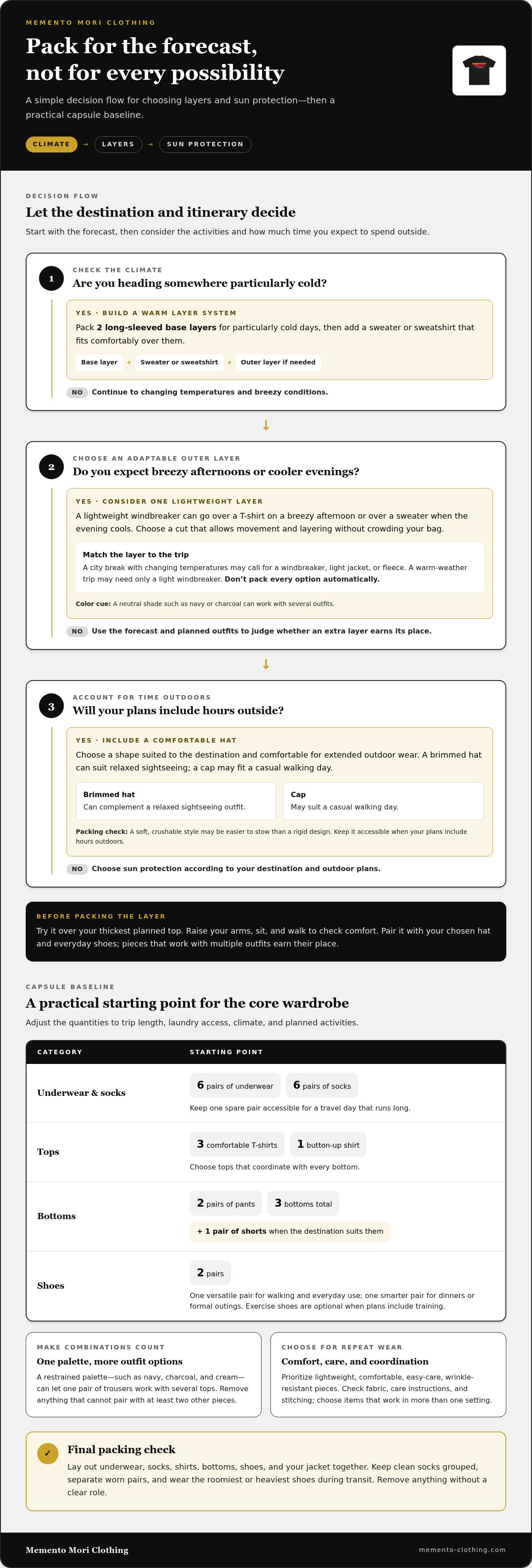
Cold destinations call for deliberate layers, not simply heavier clothing. Pack 2 long-sleeved base layers for particularly cold days, then add a sweater or sweatshirt that fits comfortably over them. A premium cold-weather capsule depends on useful layering, good construction, and pieces that remain comfortable through repeated wear. Consider how a base layer, mid-layer, and outer layer work together before choosing each garment.
Judge travel clothing by the garment, not the label alone. Compare fabric composition, care instructions, stitching, and how well each piece coordinates with clothes you already own. A lightweight, wrinkle-resistant shirt may earn more wears than a specialized travel item. Before packing, lay out each outfit and remove anything that cannot pair with at least two other pieces.
2. But what about underwear and socks you say?
Underwear and socks are the quiet foundation of a travel wardrobe. A useful starting point is 6 pairs of underwear and 6 pairs of socks, with the final count shaped by trip length and laundry access. For a shorter journey, pack what you’ll wear between washes; for a week away, six of each gives you a clear baseline. Keep one spare pair accessible for a travel day that runs long.
Choose socks for your activities, not just their color. Walking socks should feel comfortable inside your everyday shoes, while lighter pairs suit warm-weather outings. If your itinerary includes exercise, set aside a pair for that purpose. Store clean pairs together in a small packing cube and keep worn socks separate. This makes it easier to find what you need without disturbing folded clothes.
For the main wardrobe, build around 2 pairs of pants and 3 bottoms in total, including at least one pair that can shift from daytime exploring to dinner. Add 1 pair of shorts when the destination suits them. Three comfortable T-shirts and 1 button-up shirt can cover casual days and a more polished evening. Choose tops that coordinate with every bottom, so a change of setting doesn’t demand a completely new outfit.
Shoes need the same discipline. Pack 2 pairs: one versatile pair for walking and everyday use, plus a smarter pair, such as loafers, for dinners or formal outings. Exercise shoes are optional when your plans include training. Wear the roomiest or heaviest pair during transit, and pack the other neatly to protect clothing. A single multi-use pair is a practical choice when luggage space matters most.
For changeable weather, a lightweight windbreaker can be a useful outer layer. It should fit over your usual travel clothes without restricting movement. Before packing, lay out underwear, socks, shirts, bottoms, shoes, and your jacket together. Remove anything without a clear role, then check that the combinations suit your destination and planned activities.
3. Choosing lightweight outerwear and sun protection
Pack one lightweight windbreaker as an adaptable outer layer. Wear it over a T-shirt on a breezy afternoon or over a sweater when the evening cools. Choose a cut that allows comfortable movement and layering, rather than a bulky shape that crowds your bag. A neutral color, such as navy or charcoal, can work with several outfits. Check that the jacket pairs with the tops and bottoms you’ve selected.
A hat adds practical sun protection without taking up the space of another outfit. Choose a shape that suits your destination and feels comfortable for extended outdoor wear. A brimmed hat, for example, can complement a relaxed sightseeing outfit, while a cap may suit a casual walking day. Consider how it packs: a soft, crushable style may be easier to stow than a rigid design. Keep it accessible if your plans include hours outdoors—and for travelers taking a comprehensive approach to skin wellness, aesthetic clinics like The Glow Up Society offer professional treatments to address sun exposure and keep skin refreshed.
Use your itinerary to decide whether to pack a windbreaker, light jacket, or fleece. A city break with changing temperatures may call for a layer over a shirt; a warm-weather trip may need only a light windbreaker. Don’t pack both automatically. Compare each option with your planned outfits, the destination’s climate, and how much time you expect to spend outside.
Before packing, try your outer layer over the thickest top you plan to bring. Raise your arms, sit, and walk to make sure the combination stays comfortable. Then pair the jacket with your chosen hat and everyday shoes, as you would for a long sightseeing day. If those pieces work with multiple outfits, they earn their place. Store the hat where it won’t be crushed, and wear the jacket during travel if the forecast suits it. A thoughtful layer adds flexibility without turning your bag into a wardrobe.
4. How to build a men's travel capsule wardrobe
Begin with the itinerary, then choose clothes that cover its real demands. For a one-week trip, a suggested core wardrobe contains 10-11 pieces; a stricter approach limits the full selection, including shoes, to 10 items or fewer. Treat either figure as a framework, not a reason to pack clothes you won’t wear. Count each garment consistently, including outerwear and footwear.
Airlines set their own carry-on size and weight limits. Choose a bag that fits the allowance for your ticket, then pack within its dimensions. Fold structured shirts neatly, roll softer clothes, and place heavier items near the suitcase wheels. Keep a lightweight jacket accessible for the journey rather than burying it under packed clothing.
Build a palette from two neutral colors and one accent. Navy trousers, gray tops, and a muted green shirt, for example, create combinations without making every outfit look identical. Choose pieces that coordinate across the palette, then test each top with each bottom. If a garment works with only one other item, consider leaving it behind.
Plan outfits against your calendar before packing. Two pairs of pants, one optional pair of shorts, three casual T-shirts, and one button-up shirt can make a useful starting point. Add one or two sweaters or sweatshirts for layering, adjusting for the climate and your activities. A swimsuit can double as workout shorts if its cut and fabric suit both uses, and for travelers planning a round on the course, packing a versatile polo transitions easily from the green to dinner while Golf Ball Monkey can provide the golf balls and accessories for your trip.
Finish by assembling complete outfits for travel, daytime activities, and dinner. A button-up can dress up the same trousers you wear with a T-shirt; a sweater adds warmth without requiring another outfit. Try every combination, then remove pieces that serve the same role. Keep the final selection cohesive, comfortable, and easy to rearrange as plans change.
Memento Mori Clothing: Memento Mori Heavyweight Hoodie
Memento Mori Clothing offers the Memento Mori Heavyweight Hoodie as a layer for cold-weather travel. Whether it belongs in your capsule depends on your destination, itinerary, and bag space. Wear it in transit or choose it when warmth matters more than packing light. For milder days, the Memento Mori Vintage Tee offers a simpler foundation, while Memento Crewnecks provide another layering option. Memento Hats can complete a casual travel outfit.
Choose pieces that support the journey you’re actually taking, rather than adding clothing without a clear role. A meaningful garment can be practical and personal, accompanying you through places that become part of your story.
Visit Memento Mori Clothing to explore the apparel.
Let your next journey shape what you pack
A travel wardrobe is more than a set of clothes. It’s a small, considered expression of how you want to move through unfamiliar places. As you learn how to build a man's travel capsule wardrobe, leave room for the unexpected: a quiet morning, a long walk, or an evening that calls for a different look. The best choices support your plans without defining them.
Before your next trip, give each piece a purpose and let the rest stay home. Choose garments that feel like you, not simply items that fill space. Memento Mori Clothing offers apparel for people drawn to thoughtful design and lasting meaning. If you’d like to explore its pieces, contact Memento Mori Clothing.
Pack with intention, then set off with a little more room for what you’ll remember.
Frequently Asked Questions
But what about underwear and socks you say?
Treat underwear and socks as planned essentials, not leftovers. Set aside enough clean pairs for the days between laundry, plus a spare for an unexpectedly long travel day. If you can wash clothes mid-trip, pack according to your laundry schedule and allow time for items to dry. A separate pouch for worn pairs keeps clean items easy to find.
What versatile clothing essentials should men pack for travel?
Choose garments that move between settings without requiring a full outfit change. A neutral overshirt, for example, can add structure over a casual top or work as a light indoor layer. A simple belt and subdued colors help bring different combinations together. Prioritize pieces that feel comfortable in transit as well as during a day of exploring.
How to build a men's travel capsule wardrobe for a 7-day trip?
For a 7-day trip, sketch a simple outfit plan before packing. Match each day’s main activity with a base outfit, then identify which pieces can repeat comfortably. If laundry is part of the trip, plan around when you can wash and dry clothes. Keep one outfit flexible for a change in plans, rather than packing a separate look for every possibility.
How to adapt a men's travel capsule wardrobe for warm, cold, or rainy weather?
For warm weather, favor breathable pieces and leave room for a hat. In cold conditions, layer garments so you can adjust between indoors and outside. For rain, choose clothes that dry readily and keep a spare top protected inside your bag. A windbreaker can add a useful layer, but don’t assume it’s designed for sustained rain. Let the destination and daily activities guide your choices.
What fabrics are best for men's travel clothing: merino wool, synthetics, or cotton?
Choose fabric according to the garment’s role. Merino wool can help with odor resistance and temperature regulation, while synthetic performance fabrics can wick sweat during active days. Cotton can suit relaxed wear when softness and familiarity matter. Check the care label before packing: the right choice depends on how a garment feels and how you’ll wash and dry it during the trip.
What are affordable men's travel capsule wardrobe brands and price ranges?
There’s no single price range for every travel wardrobe. Costs vary by garment type, fabric, construction, and retailer. To focus your spending, compare pieces by how often you’ll wear them, whether they work with your existing clothes, and how they need to be cared for. A dependable basic that suits several outfits may offer more practical value than a specialized item you wear once.