
What to Wear to a Philosophy Conference: Shoes and Style
For what to wear to a philosophy conference, choose polished, comfortable clothes that look professional without requiring a full suit. A blazer, button-down shirt or blouse, tailored trousers, and comfortable shoes are a reliable starting point. Follow the event’s stated dress code when there is one.
The goal is to feel comfortable listening, presenting, and moving between sessions while looking composed in conversations and photos. Academic conferences can mix formal sessions with relaxed social events, so choose pieces that work across settings. If the dress code is unclear, look at photos from previous events or ask fellow attendees what they plan to wear.
Choose an outfit that works for your role, the schedule, and the venue. Prioritize shoes you can wear through a full day, then use a jacket or other layer to adjust your look. For casual activities after sessions, aim for comfort with enough polish for the occasion. Considered simplicity keeps your clothes supportive rather than distracting.
Key Takeaways
- Build a polished outfit around the event’s dress code, then adjust the formality to suit your role and the setting.
- Choose comfortable shoes for walking and standing, and wear new pairs in before the conference.
- Keep personal style through thoughtful details while choosing clothing that feels professional and lets you present with ease.
- For informal gatherings, favor relaxed pieces that still feel considered, especially when the event includes standing and conversation.
1. What should you Wear to a Conference?
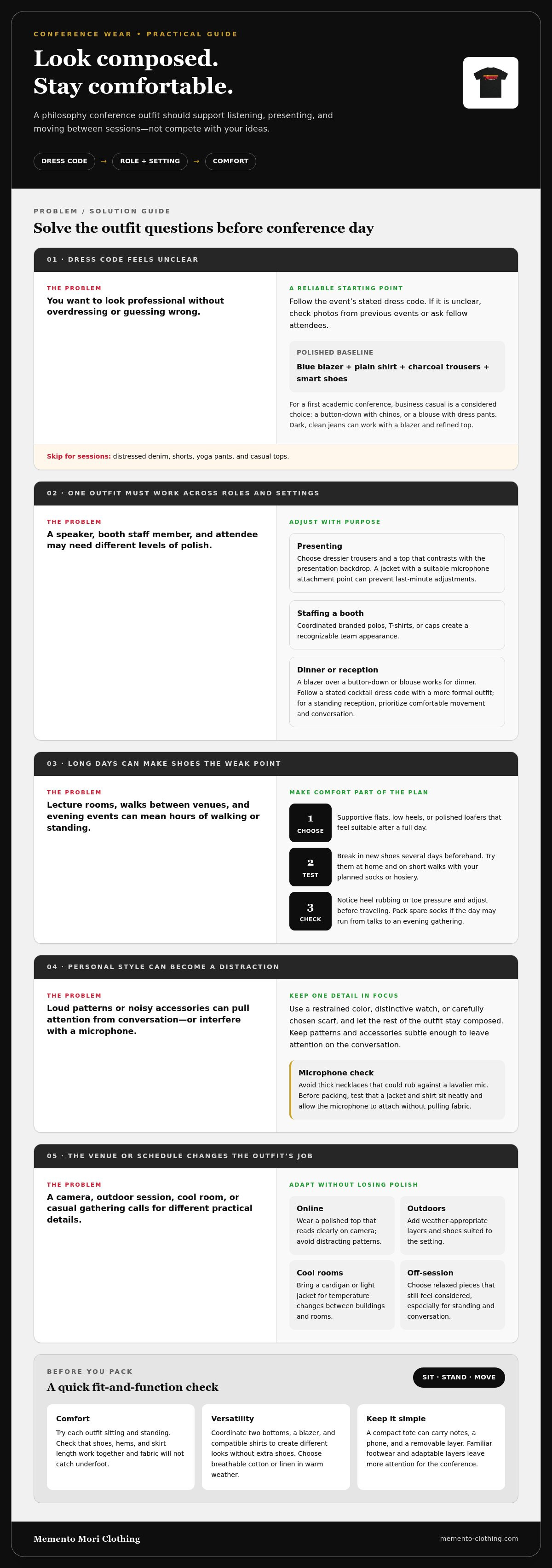
Choosing what to wear to a philosophy conference starts with the event’s dress code. A blue blazer, plain shirt, charcoal trousers, and smart shoes form a polished baseline. For a first academic conference, business casual is a considered choice: try a button-down shirt with chinos, or a blouse with dress pants. Dark, clean jeans can work with a blazer and refined top. Skip distressed denim, shorts, yoga pants, and casual tops for sessions.
Dress for your role, too. Speakers can choose their dressiest trousers without wearing a full suit, then select a top that contrasts with the presentation backdrop. A jacket with a suitable microphone attachment point can help avoid last-minute adjustments. Booth staff can wear coordinated branded polos, T-shirts, or caps for a recognizable team appearance. In either role, keep patterns and accessories subtle enough to leave attention on the conversation.
To introduce yourself, prepare a brief opening that connects your name to your research or interests. Mention your paper’s central question, for example, then ask what someone else is working on. A visible name badge, an uncluttered outfit, and an attentive greeting can make that first exchange easier. Your clothes should support participation, not become a second presentation.
Non-members can attend when an event offers non-member registration; membership and registration rules vary by conference. Read the event’s registration details before making plans, since access depends on its stated participation options.
For online sessions, wear a polished top that reads clearly on camera and avoids distracting patterns. At hybrid events, maintain the same professional standard. For outdoor sessions, add weather-appropriate layers and shoes suited to the setting.
For a conference dinner or networking event, stay professional rather than dressing for a club. A blazer over a button-down shirt or blouse works for dinner, while a stated cocktail dress code calls for a more formal outfit. At a standing reception, choose clothes that let you move and greet people comfortably.
2. Comfortable shoes for conference venues
A conference day may include lecture rooms, walks between venues, and evening events. Choose shoes that feel comfortable while walking and standing, such as supportive flats, low heels, or polished loafers. To judge what to wear to a philosophy conference, consider whether your shoes will still feel suitable after a full day, not just during a quick outfit check. If you’re traveling for two days, pack a comfortable pair of closed-toe flats for walking.
Break in new shoes several days before the event. Wear them at home and on short walks with the socks or hosiery you plan to bring. Notice any rubbing at the heel or pressure across the toes, and adjust before traveling. A spare pair of socks can also help if your day stretches from morning talks to an evening gathering.
Build versatile outfits around your footwear. Two coordinating bottoms, a blazer, and shirts in compatible colors can create different looks without extra shoes. Add a cardigan or light jacket for rooms that feel cooler than the walk between buildings. In warm weather, breathable cotton or linen can make a layered outfit more comfortable.
Accessories should make the day simpler. A compact tote can carry notes, a phone, and a removable layer; simple jewelry avoids unnecessary distraction. Check trouser hems or skirt length with your chosen shoes so fabric won’t catch underfoot. For downtime, a graphic tee can pair with clean jeans and comfortable shoes. If that suits your off-session plans, explore Youth Graphic T-Shirts.
Ultimately, what to wear to a philosophy conference depends on more than the room itself. Consider the distance between venues, how long you’ll be standing, and whether one pair of shoes works with your planned outfits. Familiar footwear and a few adaptable layers leave more attention for the ideas and people that brought you there.
3. Balancing personal style with professional expectations
Show personal style through a restrained color, a distinctive watch, or a carefully chosen scarf. Keep one detail in focus and let the rest of the outfit remain composed. A muted suit with a patterned pocket square, for example, feels individual without competing with your ideas. The aim is to feel like yourself while making room for conversation.
Use the conference setting as your guide. A paper presentation may call for dressier trousers and a jacket, while a seminar with small-group discussion may feel more relaxed. Bring a jacket as a flexible layer in case the room feels more formal than expected. Whatever your style, choose pieces that let you sit, speak, and move comfortably.
How formal are philosophy conferences compared with academic job interviews? A conference calls for professional attire, but doesn’t automatically require the formality of an academic job interview. If you’re presenting or meeting senior scholars, a jacket and polished shoes create a more deliberate impression.
Avoid clothing that draws attention away from your contribution. Loud patterns can distract on stage or on camera, while noisy jewelry may interfere with a microphone. Skip thick necklaces if they could rub against a lavalier mic. For a business-casual look, save hoodies, camisole-style tops, and visibly distressed jeans for another setting.
Before packing, try each outfit while sitting and standing, then check the fit under indoor lighting. If you’re presenting, test whether your shirt stays neat beneath a jacket and whether a microphone can attach without pulling the fabric. Comfortable clothes make it easier to gesture and maintain natural eye contact. That quiet confidence matters more than a striking label or trend.
4. Casual wear for conference activities
Casual activities are still part of the conference, but their setting changes what your outfit needs to do. Gatherings may take place in university cafeterias with standing buffets. Choose clothes that let you move through a line, hold a plate, and talk comfortably. A soft collared shirt with neat trousers works well; a light jacket adds polish without feeling formal.
For an after-hours reception, keep your outfit professional rather than club-ready. Dark jeans with a tidy knit top can suit an informal gathering, while a simple dress or clean trousers work for dinner. Save distressed denim, shorts, and distracting accessories for another occasion. Aim for ease, with enough care to show respect for fellow attendees.
Plan for the activity, not just the room. At a standing reception, avoid restrictive waistbands and sleeves that slip while you eat. For a restaurant dinner, choose a layer you can remove and carry easily. A jacket over a plain shirt or blouse can take you from a campus talk to a nearby meal.
Plan social events as carefully as sessions. Many conference gatherings require advance registration, while some allow registration on the day. Read the event schedule and choose an outfit for the actual setting: a cafeteria reception calls for easy movement, while a dinner with a stated dress code calls for a more formal look.
For a multi-day event, repeat one versatile piece and change the rest. A neutral jacket can work with a patterned shirt one evening and a plain top the next. Keep a casual change ready for time between sessions, such as clean jeans and a comfortable top. To bring a relaxed graphic tee into your off-session wardrobe, browse casual graphic T-shirts.
Memento Mori Clothing: Memento Mori Heavyweight Hoodie
Memento Mori Clothing’s Memento Mori Heavyweight Hoodie is a relaxed layer for travel, quiet moments between sessions, and casual time after the conference. It isn’t a substitute for business-casual attire during formal talks, but it can bring a personal touch to off-session dressing. The Memento Mori Vintage Tee and Memento Crewnecks offer other ways to wear the philosophy in everyday settings, while Memento Hats add a simple finishing touch.
Choose these pieces when you want a relaxed, reflective element in your wardrobe beyond the lecture hall. Each offers a way to express personal style without dominating the room. Explore Memento Mori Clothing’s apparel at memento-clothing.com.
Carry Your Perspective Beyond the Conference
Choosing what to wear to a philosophy conference is also a choice about how you want to enter the room: with quiet assurance, a trace of individuality, or simplicity that leaves space for your ideas. Let your clothes serve that intention. Personal style doesn’t need to announce itself; it can become part of how you remember the conversations and questions that stay with you.
After the final session, let everyday clothes carry a little of that reflection. Memento Mori Clothing’s apparel draws on the practice of remembering what matters, bringing a thoughtful presence to casual wear beyond conference hours. These pieces can serve as reminders of the ideas you carry forward long after the event ends.
Explore Memento Mori Clothing and find a piece that feels true to your perspective. Then take that thoughtful presence into the next conversation, wherever it begins.
Frequently Asked Questions
What should you Wear to a Conference?
Choose neat clothing that suits the event and your role. For a standard day, try tailored trousers with a fine-knit top, or a simple dress with a structured layer. Check that pockets, hems, and sleeves won’t get in the way when carrying notes or using a laptop. A restrained outfit keeps attention on your questions, discussion, and exchange of ideas.
What is the typical dress code for a philosophy conference?
Philosophy conferences generally call for polished academic attire, though the atmosphere varies by event. Smart casual is a useful starting point when there’s no stated dress code. Consider the schedule: a day of talks may feel different from a formal reception or public lecture. Aim for clothes that look intentional without feeling ceremonial.
What should men wear to a philosophy conference?
Men can wear a button-down shirt with tailored trousers, a knit polo, or a fine-gauge sweater over a collared shirt. A simple belt and clean leather shoes finish the look. For a presentation, choose trousers that stay neat while sitting and standing. Add a jacket for a more formal impression, or remove it during informal discussion.
What should women wear to a philosophy conference?
Women can choose tailored trousers with a blouse, a simple dress with a cardigan, or a skirt paired with a refined top. Look for fabrics that stay comfortable through long sessions and don’t need frequent adjustment. A modest necklace, scarf, or structured bag can add personal character. Keep accessories subtle enough that they won’t catch on a microphone or desk.
What should graduate students and first-time attendees wear to a philosophy conference?
Graduate students and first-time attendees can wear familiar pieces that feel appropriate in an academic setting. For example, pair a well-fitting sweater with pressed trousers and shoes you already know are comfortable. Prepare a brief introduction, too: your name, institution, and research interest give others an easy way to start a conversation.
What should keynote speakers and panel presenters wear?
Keynote speakers and panel presenters should choose clothes that look composed under stage lighting and on camera. A solid or subtly textured top can stand out against a plain backdrop without competing with slides. Check that the neckline accommodates a microphone, and test the outfit while seated at a table. Wrinkle-resistant fabric helps maintain a neat appearance through travel and presentations.