
What Makes a Quality Heavyweight Hoodie? A Guide to Intentional Craftsmanship
Most garments are designed to be forgotten. They are fleeting echoes of a season, destined to lose their soul before the first frost settles. You've likely felt the frustration of thin fabrics that pill or a hood that collapses into a lifeless shape after a single laundry cycle. It's a symptom of a world that prioritizes the temporary over the timeless. Understanding what makes a quality heavyweight hoodie is the first step in reclaiming your wardrobe from the cycle of disposable fashion.
A true masterpiece isn't born from chance. It's built through technical rigor and a deep respect for permanence. In this guide, you'll discover the specific markers of excellence, from the necessity of 400+ GSM fabric density to the structural integrity of double-lined hoods. We will explore how intentional design and reinforced construction justify the investment in premium apparel. You'll learn to identify the technical standards that separate a true heavyweight staple from a fragile imitation. It's time to find a piece that doesn't just sit in your closet, but serves as a durable anchor for your personal history.
Key Takeaways
- Technical excellence begins at 400+ GSM, providing the structural weight necessary to resist the pull of time.
- Discover what makes a quality heavyweight hoodie by examining raw fiber content and the density of the primary weave.
- Identify the architectural details of permanence, focusing on double-needle stitching and reinforced seams that survive repeated laundering.
- Learn tactile verification methods like the Light Test to ensure your investment possesses true fabric consistency.
- Connect your wardrobe choices to a deeper philosophy of intentionality, where every garment serves as a lasting memento of the present.
Defining the Heavyweight Standard: More Than Just Grams
Weight is a silent language. It speaks of presence. In an era of disposable threads, choosing a substantial garment is a quiet rebellion. Most people understand thickness as warmth. But true quality is measured in density. To understand what makes a quality heavyweight hoodie, one must look past the surface fluff. It is a technical standard born from a desire for things that last, a philosophy also found in the specialized outdoor and hunting gear at Eräkolmio. It is the rejection of the ephemeral in favor of the enduring.
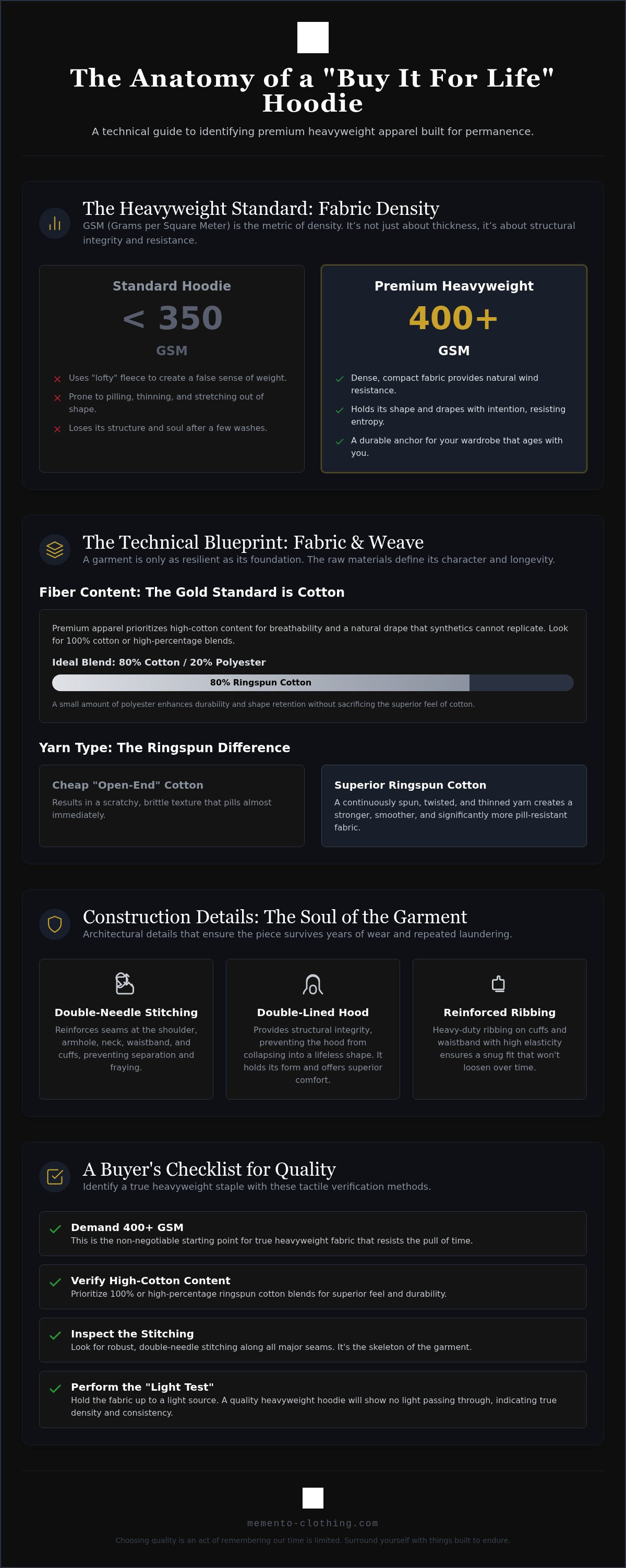
The industry often labels anything above 350 GSM as heavy. This is a baseline, not a peak. True premium craftsmanship begins at 400 GSM and often climbs higher. At this level, the fabric stops being a mere covering. It becomes a structure. It drapes with intention. It resists the wind. It holds its shape against the entropy of daily life. There is a specific gravity to these pieces. They don't flutter. They settle. This weight offers a unique psychological comfort. It is a tactile reminder of one's own physical presence in a world that often feels increasingly intangible.
What is GSM and Why Does It Matter?
GSM, or grams per square meter, is the metric of density. It isn't just about warmth; it's about resistance. A high GSM fabric doesn't just feel thick. It feels solid. Many fast-fashion brands use "lofty" fleece. This creates a false sense of weight through trapped air and synthetic fuzz. Real heavyweight fabric is compact. This density provides natural wind resistance and prevents the garment from stretching into a distorted ghost of its former self. When you choose a hoodie with a high GSM, you're choosing a fabric that won't pill or thin after a few encounters with the laundry. It is a promise of longevity.
The Shift Toward Intentional Permanence
We are witnessing a return to the foundational. The hoodie originated in the 1930s for workers who needed a shield against the elements. Today, that shield is psychological as well as physical. A heavyweight hoodie acts as a wardrobe anchor. It provides a sense of security. It is a piece that ages with you, gaining character rather than losing its soul. This shift toward durability is at the heart of the Memento Mori story. We recognize that life is fleeting. Therefore, the objects we choose to keep should be built to endure. Choosing quality is an act of remembering that our time is limited. We shouldn't waste it on the temporary. We should surround ourselves with things that reflect our own desire for a lasting legacy.
The Technical Blueprint: Fabric, Weave, and Content
A garment is only as resilient as its foundation. While weight provides the initial impression, the true character of a piece is hidden within the weave and the fiber. Understanding what makes a quality heavyweight hoodie requires an intimate look at the raw materials. Most mass-produced options rely on synthetic-heavy blends that feel artificial and age poorly. In contrast, premium apparel prioritizes high-cotton content. Cotton offers breathability and a natural drape that synthetics simply cannot replicate. It is the difference between a garment that merely exists and one that lives with you.
The selection of the fiber determines how the fabric will behave after ten, fifty, or a hundred washes. High-quality heavyweight hoodies typically utilize 100% cotton or high-percentage cotton blends, such as an 80/20 or 70/30 split. These blends often incorporate a small amount of polyester to enhance durability and shape retention without sacrificing the tactile soul of the cotton. This balance ensures the hoodie remains a steadfast companion through the years, resisting the sagging and thinning that plague lesser fabrics.
Ringspun Cotton: The Gold Standard
The process matters. Cheap cotton is often "open-end," resulting in a scratchy, brittle texture that pills almost immediately. Ringspun cotton is different. It is created by continuously spinning, twisting, and thinning the cotton strands. This process produces a much stronger, smoother yarn. The result is a fabric with a superior hand-feel and a quiet, matte elegance. Because the fibers are more tightly bound, ringspun cotton is significantly more resistant to pilling. It feels substantial yet soft against the skin. It is a material built for permanence. Those seeking this level of material integrity often find it in the Memento Mori Heavyweight Hoodie, where the blueprint is executed without compromise.
The Interior: Brushed Fleece vs. French Terry
The soul of a hoodie is often found on the inside. The choice between brushed fleece and French Terry defines the garment's utility and silhouette. Brushed fleece is created by mechanically brushing the interior loops of the fabric to create a soft, fuzzy nap. This provides maximum warmth and a cozy, "lived-in" comfort. It is the classic choice for those seeking a shield against the cold.
French Terry remains unbrushed, leaving the knit loops intact. This results in a thinner, flatter interior that offers exceptional breathability and a cleaner, more structured drape. It is less about insulation and more about a refined, architectural silhouette. Both have their place in a curated wardrobe. The choice depends on whether you seek the warm embrace of fleece or the crisp, rhythmic structure of Terry loops. Each represents a different facet of intentional craftsmanship.
Construction Details: The Soul of the Garment
Quality is often invisible until it fails. While fabric density provides the initial weight, the construction determines whether a garment will endure as a legacy or dissolve into a memory. When considering what makes a quality heavyweight hoodie, the eye must travel to the edges. It must find the points of tension. A hoodie is a complex architecture of seams, ribbing, and hardware. If these elements are neglected, even the heaviest cotton will eventually surrender to the pull of time. True craftsmanship is found in the refusal to compromise on the hidden details.
Construction is the silent architect of longevity. It is the difference between a silhouette that remains sharp and one that collapses after three launderings. To invest in a premium garment is to invest in the technical rigors that prevent sagging, stretching, and fraying. These details are the physical manifestation of intentionality. They transform a simple piece of clothing into a memento of enduring value.
Stitching and Seam Integrity
The seams are the skeleton of the garment. In premium heavyweight apparel, double-needle coverstitching is the definitive hallmark of excellence. This technique involves two rows of stitching that lock the fabric together, providing a level of security that single-needle alternatives cannot match. It ensures that the seams remain flat and resilient, even under the stress of daily movement. Thread tension is equally vital. If the tension is too loose, the seam will gap. If it's too tight, the fabric will pucker.
Reinforcement at the neck is another critical marker of a garment built to last. A high-quality hoodie features a reinforced neck seam, often covered with a soft twill tape. This prevents the dreaded "bacon neck" effect, where the collar loses its elasticity and begins to ripple. By securing these high-stress areas, the garment maintains its structural grace for years rather than months.
The Architecture of the Hood and Cuffs
A hood should never feel like an afterthought. In the world of fast fashion, hoods are often thin and limp, collapsing against the shoulders without form. A quality heavyweight hoodie utilizes a double-layered construction. This provides the "standing" hood effect, where the hood maintains a structured, purposeful silhouette even when not in use. It adds a necessary weight that balances the overall drape of the garment.
The cuffs and hem act as the anchors of the piece. High-density ribbing is essential here. Cheap ribbing quickly loses its memory, leading to sagging cuffs that no longer stay at the wrist. Premium ribbing, often enriched with a small percentage of elastane, retains its snap. Finally, the hardware should reflect the same commitment to permanence. Silver or brass aglets on the drawstrings provide a tactile finish and prevent fraying. These small, heavy details are the final signatures of a piece designed for a lifetime of wear.
How to Spot a 'Buy It For Life' Hoodie: A Buyer’s Checklist
Discerning quality is a ritual. It requires a patient eye and a willingness to touch. In a marketplace flooded with high-volume, low-intent garments, you must know how to identify the markers of permanence. Understanding what makes a quality heavyweight hoodie isn't just about reading a label. It's about testing the architecture of the piece. True craftsmanship leaves a trail of evidence. You only need to know where to look.
Begin with the Light Test. Hold the fabric up to a direct light source. If the glow passes through the fibers with ease, the weave is loose and fragile. A premium heavyweight garment is nearly opaque. It is a solid wall of cotton designed to shield you. Next, examine the side-seams. Many mass-produced hoodies use a tubular build to save on manufacturing costs. This results in a boxy, shapeless fit that twists after washing. Side-seam construction allows for a tailored silhouette. It ensures the garment follows the lines of the body, maintaining its grace through years of use.
The 5-Point Quality Inspection
A garment's soul is revealed in its details. Follow these steps to verify the integrity of any potential investment:
- Verify the Density: The weight should be palpable. High-quality pieces feel substantial in the hand, signaling a GSM of 400 or higher.
- Inspect the Hood: A single-layered hood is a sign of compromise. Seek a double-layered construction that stands with purpose.
- Test the Recovery: Stretch the cuffs and the hem. They should snap back to their original form instantly. If they stay distended, the ribbing lacks the necessary density.
- Feel the Hardware: Zippers and eyelets should be heavy. Cold metal is a hallmark of quality; thin plastic is a herald of failure.
- Search for Cleanliness: Turn the garment inside out. The seams should be finished with precision. Loose threads and raw edges are the fingerprints of haste.
Understanding the Price-to-Value Ratio
Price is a temporary sting; quality is a lasting comfort. When you invest in a Memento Mori Heavyweight Hoodie, you are calculating a cost per wear that spans years, not months. A disposable alternative may seem affordable, but its lifespan is a fraction of a true staple. Over time, you'll spend more replacing five thin hoodies than you would on a single masterpiece.
There is also an ethical dimension to this choice. Choosing the enduring over the ephemeral reduces the burden on our world. It is a commitment to keeping fewer, better things. This philosophy transforms a simple purchase into a worldview. It is an act of remembering that what we keep should be worthy of our time. If you are ready to choose permanence, explore our collection of intentionally crafted staples.
The Memento Mori Philosophy: Heavyweight Quality as a Life Choice
Our garments are designed to be mementos. They are physical reminders of the present. The ancient concept of Memento Mori—remembering mortality—is not a fixation on the end. It is a celebration of the now. When we value the things we keep, we reflect a respect for our own history. A hoodie shouldn't be a temporary covering. It should be a witness to your life. Intentional design is, at its core, a form of respect for the wearer's time. We don't want you to spend your days replacing what has failed. We want you to live in what endures.
Intentional Style in an Era of Fast Fashion
Fast fashion thrives on the churn of the ephemeral. It relies on the quick thrill of the new and the inevitable decay of the cheap. Rejecting this cycle requires a shift toward an aesthetic of silence. A timeless, heavyweight silhouette doesn't scream for attention; it commands it through presence. Whether you choose the hooded masterpiece or the structured lines of Memento Crewnecks, you are simplifying your daily existence. A foundational wardrobe anchor removes the noise of trend-chasing. It creates a space where style is a constant, not a variable. This is the essence of intentional style. It is the quiet confidence of knowing your choices are built to last.
Your Legacy in Fabric
A quality hoodie shouldn't just survive. It should age with a specific, melancholic character. There is a rare beauty in high-GSM cotton as it evolves over decades. It fades in the areas where you move. It softens in the places where you seek comfort. It becomes a canvas for your personal history. Each wash and each wear adds a layer of depth that synthetic blends can never achieve.
When you understand what makes a quality heavyweight hoodie, you stop seeing apparel as a commodity. You see it as a legacy. The weight of the fabric is a reminder of the weight of your intentions. As the years pass, the garment becomes more than the sum of its threads. It becomes a part of your story. Choose clothing that is as enduring as your intentions. Surround yourself with the permanent. Remember that while life is fleeting, the marks we leave—and the things we hold dear—can remain.
Choosing a Legacy of Fabric
True quality is a rejection of the fleeting. We have defined the technical markers of excellence, from the necessity of 400+ GSM density to the structural integrity of double-needle stitching. These are not merely specifications. They are the physical evidence of a garment designed to survive the seasons. Understanding what makes a quality heavyweight hoodie is the first step toward a more intentional wardrobe. It is a choice to value the enduring over the disposable.
A hoodie shouldn't be a temporary layer. It should be a constant. Our collection is built on this foundation of permanence. Each piece features a double-layered hood for a sharp silhouette and is crafted from heavy, premium cotton that ages with character. This is the intersection of technical rigor and the Memento Mori philosophy. You are choosing a piece that respects your time and honors your story. It is a commitment to the things that remain.
It is time to invest in things that last. We invite you to Shop the Memento Mori Heavyweight Hoodie Collection and discover the difference of intentional craftsmanship. Surround yourself with the permanent. Let your clothing be as resilient as your intentions.
Frequently Asked Questions
What is considered a heavyweight hoodie in terms of GSM?
A garment enters the heavyweight category once it surpasses the 350 GSM threshold. True excellence is usually found in the 400 to 480 GSM range, where the fabric gains a distinct architectural presence. Ultra-heavy variations may reach 500 GSM or more. This metric defines the density of the weave. It ensures the piece settles with a quiet authority on the shoulders.
Are heavyweight hoodies warmer than regular ones?
Yes, the increased density and weight naturally provide superior insulation and wind resistance. Because the fibers are more tightly packed, they trap heat more effectively while shielding the body from external cold. This thermal efficiency is a byproduct of the compact structure of the fabric. It offers a protective embrace against the elements that thinner alternatives cannot replicate.
Does a higher GSM mean the hoodie will shrink more?
Fabric weight does not dictate shrinkage; the fiber treatment and washing process do. Many premium heavyweight pieces are pre-shrunk or laundered during production to ensure the fit remains constant. High-density cotton actually holds its shape better than thinner fabrics. It resists the distortion that often follows the first encounter with water, preserving the original silhouette.
Is 100% cotton better than a cotton-poly blend for heavyweight hoodies?
100% cotton is prized for its breathability and natural aging, though high-quality blends offer unique benefits. A 70/30 or 80/20 cotton-polyester split often enhances durability and shape retention. These blends prevent the sagging that can occur with pure fibers over time. Understanding what makes a quality heavyweight hoodie involves choosing the material that aligns with your desire for longevity.
How should I wash a heavyweight hoodie to maintain its quality?
Wash your garment in cold water on a gentle cycle and always air dry. Heat is the enemy of permanence. High temperatures can damage the fibers and compromise the structural integrity of the ribbing. By avoiding the dryer, you preserve the hand-feel and the precise fit of the piece. Treat the laundering as a slow ritual of preservation for your mementos.
Can a heavyweight hoodie be worn in the summer?
Heavyweight hoodies are best suited for cooler climates or transitional evenings. While high-cotton content offers natural breathability, the density of a 400+ GSM fabric is designed for protection rather than heat dissipation. It is a garment for the stillness of autumn or the biting air of a coastal morning. It serves those who value substance over seasonal trends.
What is the difference between a cheap heavy hoodie and a premium one?
Premium hoodies are defined by ringspun cotton, side-seam construction, and double-layered hoods. Cheap alternatives often use lofty fleece to fake thickness and tubular builds that twist over time. A premium piece is an intentional architectural achievement. It maintains its grace and silhouette long after the mass-produced version has faded into a shapeless memory.
Why is double-needle stitching important for hoodies?
Double-needle stitching provides the skeletal strength required for a lifetime of wear. It creates a reinforced seam that resists the stress of movement and repeated laundering. This technique is a hallmark of what makes a quality heavyweight hoodie. It ensures that the points of tension remain secure. It is the silent guardian of the garment's longevity and structural soul.