
What Makes a Hoodie High Quality? The 2026 Guide to Intentional Craftsmanship
Most garments are designed to disappear. They arrive vibrant and leave as waste within a single season, victims of thin fabrics and hollow construction. You've likely felt the quiet frustration of a favorite layer pilling before the first frost or a silhouette that sags after one wash. It's a common betrayal in a world of fast fashion. Understanding what makes a hoodie high quality is the first step toward intentional resistance against the ephemeral.
This guide reveals the technical markers of premium apparel, from the structural weight of the weave to the silent strength of reinforced seams. You'll gain the expert knowledge needed to identify a piece built to endure a lifetime. We'll explore the tactile superiority of 450 GSM fabrics, the necessity of double-layered hoods, and why 2x2 ribbing is a hallmark of a piece like the Memento Mori Heavyweight Hoodie. By the end, you'll have the confidence to choose basics that serve as emotional anchors, ensuring your wardrobe remains a collection of lasting value rather than temporary trends.
Key Takeaways
- Identify density through weight. A standard of 400 GSM or higher provides the structural integrity and warmth necessary for a premium, lasting silhouette.
- Prioritize fiber over finish. Choosing 100% ring-spun cotton prevents the premature pilling and textural degradation found in cheaper, carded cotton alternatives.
- Analyze the architecture. Double-needle coverstitching and twill-taped neck seams are the essential technical markers of what makes a hoodie high quality and resilient.
- Evaluate the finish for longevity. Look for garment-dyed and pre-shrunk fabrics to ensure the piece maintains its original fit and color depth through years of use.
- Adopt a slow fashion mindset. Investing in heavyweight basics like the Memento Mori collection transforms a simple garment into a durable anchor for your personal history.
The Foundation of Quality: Fabric Weight and the Heavyweight Standard
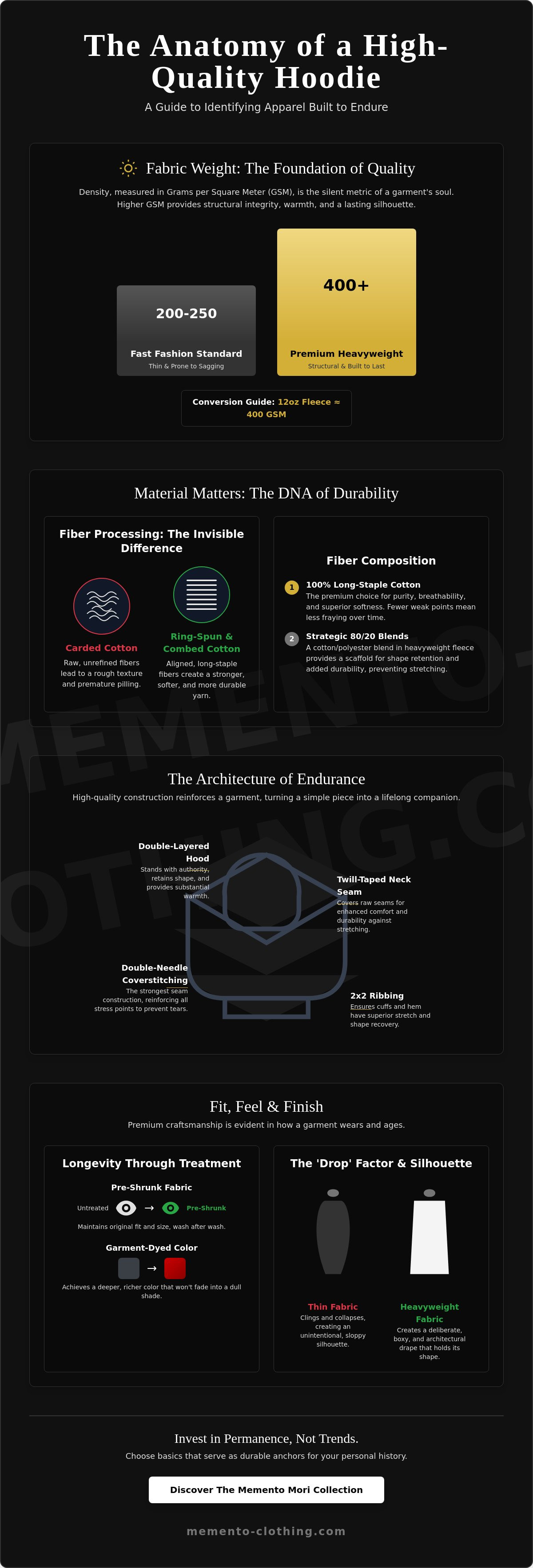
True luxury is felt in the gravity of the cloth. When questioning what makes a hoodie high quality, the conversation begins with density. We measure this through GSM, or Grams per Square Meter. It's the silent metric of a garment's soul. While fast fashion pieces often hover around 200 to 250 GSM, a truly premium piece demands more. A 400 GSM standard is the threshold where a basic becomes a monument. It's the weight of a piece that refuses to surrender to the wind or the wash. This density ensures the fabric remains opaque and resilient through years of wear.
GSM vs. Ounces: Navigating Textile Measurements
GSM represents the weight of exactly one square meter of fabric. In some regions, you'll see ounces per yard instead. Converting these is vital for global quality comparisons; a 12oz fleece roughly equates to 400 GSM. It's a common misconception that "heavy" always means "hot." High-quality heavyweight cotton is surprisingly breathable because it relies on the density of the yarn rather than synthetic insulation. It's a shield that protects without stifling the wearer.
The 'Drop' Factor: How Weight Influences Aesthetic
Architecture matters in apparel. Thin fabrics fail because they lack the internal tension to hold a shape. They cling to the body, highlighting every movement in a way that feels unintentional and sloppy. A heavyweight 14oz fleece, like that found in the Memento Mori Heavyweight Hoodie, creates a deliberate drape. It masks body imperfections and maintains a boxy, architectural silhouette that feels grounded. The weight ensures the garment moves with you rather than collapsing against you.
This structural integrity is most visible in the hood itself. Throughout the history and design of the hoodie, the hood has served as both a functional shelter and a stylistic signature. On a low-quality garment, the hood is thin and flat. It rests limply against the back. On a premium piece, the double-layered, heavyweight fabric allows the hood to stand with authority. It retains its shape even when down, framing the shoulders and face with a sense of permanence. This is what makes a hoodie high quality; it's the refusal to let the garment fade into the background of a wardrobe.
Material Composition: Why 100% Cotton and High-Grade Blends Matter
Texture is a language. Before you even examine the seams, the fabric speaks of its origin and its eventual fate. When deciphering what makes a hoodie high quality, the fiber composition acts as the garment's DNA. While mass-produced items rely on cheap, short-staple fibers, premium apparel utilizes 100% ring-spun cotton. This process tightly twists the cotton strands together, resulting in a yarn that is significantly stronger and softer to the touch. It represents a commitment to permanence over the ephemeral nature of fast fashion.
Long-staple cotton is the true marker of high-end manufacturing. These longer fibers require fewer joins when spun into yarn; fewer joins mean fewer weak points. This structural integrity prevents the garment from fraying or losing its luster after a few months of life. While 100% cotton is often prized for its purity, a strategic 80/20 cotton-polyester blend serves a specific purpose in heavyweight fleece. The polyester acts as a scaffold. It provides the shape retention and durability needed to ensure your hoodie doesn't become a shapeless relic after its first encounter with a washing machine.
Combed vs. Carded Cotton: The Invisible Difference
The difference between a scratchy surface and a silken one lies in the combing. Carded cotton is essentially raw and unrefined. It contains short, prickly fibers and impurities that lead to premature pilling. Combing is a deliberate mechanical process that removes these inconsistencies. This results in a smoother finish that accepts dye with greater depth. It's why the rich, dark tones of the Memento Mori collection remain vibrant while lesser fabrics fade into a dull gray.
Fleece Types: French Terry vs. Brushed Back
The interior finish determines how the garment interacts with your skin. French Terry is defined by its loops-and-piles construction. It offers a structured feel and excellent breathability, making it ideal for year-round wear. Conversely, brushed fleece undergoes a mechanical abrasion process to create a soft, plush texture. High-quality brands achieve this softness through craftsmanship rather than temporary chemical softeners. This mechanical brushing ensures the swaddly feel survives the laundry cycle, maintaining the what makes a hoodie high quality standard for years. French Terry generally holds its architectural shape better over time, while brushed fleece offers immediate, intimate comfort.
The Architecture of a Hoodie: Construction Details That Defy Time
Form follows function, but in the realm of intentional craftsmanship, form also preserves history. Beyond the weight of the fabric lies the invisible skeleton of the garment. The way a piece is assembled determines whether it will become a cherished heirloom or a forgotten fragment. When analyzing what makes a hoodie high quality, one must look at the seams. They are the silent promises a brand makes to the wearer. A garment is only as strong as its weakest point of connection.
The structural integrity of a premium hoodie relies on sophisticated knitting and assembly techniques. While mass-market brands favor tubular knits to save on production costs, high-end basics utilize side-seam construction. This method allows for an anatomical fit that respects the human form. It prevents the garment from twisting or losing its alignment after a few cycles in the laundry. This commitment to structure ensures that the silhouette you buy today remains the silhouette you wear years from now.
Stitching and Seam Integrity
Double-needle stitching uses two needles to create parallel rows of reinforcement. This technique is the hallmark of a garment that won't unravel under the pressure of daily movement. For the highest level of comfort and strength, flatlock seams are the gold standard. They eliminate the bulky interior ridges found in cheaper apparel, creating a smooth interface against the skin. Quality is also found in the reinforcement of stress points. Premium manufacturers apply extra passes of thread at the armpits and pocket corners. These are the areas where lesser hoodies fail, surrendering to the tension of life.
Structural Stability: Twill Tape and Ribbing
Stability is a quiet virtue. A reinforced neck seam, finished with twill tape, ensures the collar retains its shape and doesn't stretch into an unsightly scoop. This small detail provides a barrier against the friction of wear. Equally vital is the ribbing at the cuffs and hem. High-quality pieces use 2x2 spandex-infused ribbing. This specific weave provides a firm grip that snaps back into place, preventing the "blown-out" look common in fast fashion. It's a technical necessity for maintaining the architectural "drop" of a heavyweight piece.
Hood and Hardware Quality
The hood is the crown of the garment. A single layer of fabric is a cost-cutting red flag; it lacks the weight to sit properly on the shoulders. A double-lined hood provides the necessary density to stand with authority. You can identify a Memento Mori Heavyweight Hoodie by this specific structural design, where the hood acts as a deliberate frame for the face. Finally, examine the hardware. Plastic tips are temporary. High-grade aglets made of brass or nickel signify a piece built for the long haul. This attention to detail is what makes a hoodie high quality; it's the refusal to compromise on the smallest components of the whole.
Fit, Feel, and Finish: Identifying Premium Craftsmanship in 2026
Touch reveals what the eye might miss. A garment's initial softness often masks a deceptive reality. Many mass-market brands apply chemical silicone softeners to mimic the feel of luxury. These coatings vanish after a single wash; they leave behind a coarse, skeletal fabric that lacks soul. True quality is found in the fiber itself, not a temporary chemical treatment. When considering what makes a hoodie high quality, the hand-feel must be honest. It should feel substantial and dense, a tactile reflection of the long-staple cotton and intentional weight. It's a weight that promises to stay.
Durability is an ethical choice. A piece that shrinks two sizes in the dryer is a piece destined for a landfill. Premium craftsmanship involves pre-shrinking the fabric before it ever reaches the sewing table. This stability suggests a slower, more intentional production line. Skilled artisans who understand these nuances are rarely found in high-speed, exploitative environments. High-quality construction usually implies a respect for the hands that made it. By choosing garments that endure, you reject the cycle of disposability. It's a small, personal rebellion against the fleeting nature of modern consumption.
The Reality of Pre-Shrunk Fabrics
Mass-market garments often skip the washing stage to save time. They rely on heat-setting, which only temporarily stabilizes the fibers. Garment-washed pieces are laundered after assembly, removing the stress from the seams and ensuring a "laundry-ready" experience. This is why a Memento Mori Vintage Tee maintains its fit through the years. It has already faced the water. You don't have to fear the first wash because the garment has already found its permanent shape.
Dyeing Processes and Longevity
Color should be an anchor, not a fading memory. Reactive dyeing bonds the pigment to the fiber at a molecular level. It's the standard for deep blacks and vibrant tones that endure over 50 washes without losing their intensity. Pigment dyeing, conversely, coats the surface for a weathered, vintage look. Both have their place, but uneven patches or "streaking" on a new garment are clear signs of rushed, low-quality processes. Long-lasting dyes reduce the need for replacement, honoring the desire for things that stay. When you understand what makes a hoodie high quality, you look for color that matures rather than disappears.
The finish of a garment is the final word in its story. Explore the depth of our intentional apparel collection and feel the difference of true craftsmanship for yourself.
The Memento Mori Philosophy: Choosing Apparel Designed for Longevity
Time is a thief. Most objects we surround ourselves with are designed to surrender to it. They fade, fray, and eventually vanish into the landfill of history. But true craftsmanship is an act of resistance. It's a quiet declaration that some things are worth keeping. When we examine what makes a hoodie high quality, we aren't just looking at textile specs. We're looking for an anchor. Quality is a reflection of the Memento Mori mindset. It's the realization that because our time is limited, our choices must be intentional. Every garment should be a monument to that belief.
A wardrobe built on trends is a wardrobe built on sand. It shifts with the wind and leaves you with nothing of substance. Moving toward a timeless, intentional collection requires a shift in perspective. You stop buying for the moment. You start buying for the decade. This is what makes a hoodie high quality in the modern era; it's the ability to transcend the cycle of the ephemeral. It's the weight of the fabric and the strength of the stitch working together to defy the passage of time.
Clothing as a Narrative
Objects are emotional anchors. They hold the weight of our memories. The Memento Mori story informs every thread we weave. We don't build garments to be pristine forever. We build them to age with grace. A high-quality hoodie collects a patina of life. It remembers the cold mornings and the quiet evenings. Intentionality in design leads to a more meaningful lifestyle. When your clothing doesn't need constant replacement, you find space for the things that truly matter. You aren't just wearing a brand. You're wearing a piece of your own history.
The True Cost of Fast Fashion
Cheap clothing is an expensive habit. A budget hoodie might seem like a bargain, but its life is measured in months. The seams fail. The fabric pills. You buy it again. When you calculate the cost per wear, the premium option is the only logical choice. Choosing a Memento Crewneck is a commitment to durability. It's a rejection of the hidden toll that disposable fashion takes on our planet. We don't ship internationally because we believe in a smaller, more focused footprint. Quality is an environmental imperative. It's better to own one thing that lasts than ten things that disappear. Build a wardrobe that stays. Leave a footprint that matters.
Embrace the Weight of Intentional Style
True value isn't found in a logo. It's found in the density of custom-developed 400+ GSM fleece and the resilience of double-needle reinforced construction. These technical details ensure a garment doesn't just exist; it endures. Understanding what makes a hoodie high quality allows you to curate a wardrobe that serves as a collection of lasting memories. It's a choice to prioritize substance over the fleeting trends of a season. By focusing on structural integrity and premium fibers, you invest in a silhouette that maintains its authority year after year.
Every piece we create is an invitation to live more intentionally. Our garments are rooted in the Memento Mori philosophy, reminding us that while time is limited, our choices can be timeless. We invite you to Shop the Memento Mori Heavyweight Collection and discover basics built for a lifetime. Don't settle for the ephemeral. Invest in pieces that stay and let your clothing tell a story of permanence and purpose.
Frequently Asked Questions
What is the best GSM for a high-quality hoodie?
The gold standard for premium streetwear is 400 GSM or higher. This weight provides the structural integrity needed to maintain a boxy, intentional silhouette. While lighter fabrics around 250 GSM are common in mass-market production, they lack the density required for a lifetime garment. A custom-developed 450 GSM fleece ensures the piece remains a permanent anchor in your wardrobe rather than a fleeting trend.
Is 100% cotton better than a cotton-polyester blend?
Pure 100% ring-spun cotton offers an unparalleled tactile experience and superior breathability. However, an 80/20 cotton-polyester blend is often a deliberate choice for heavyweight fleece. The polyester acts as a structural scaffold, preventing shrinkage and helping the garment retain its shape. The choice depends on whether you prioritize the purity of the fiber or the long-term architectural stability of the piece.
How can I tell if a hoodie will pill before I buy it?
Examine the fabric for a smooth, consistent finish. Pilling is caused by short, stray fibers that tangle together over time. If a garment feels "fuzzy" or uneven to the touch while still on the shelf, it's likely made from low-grade carded cotton. High-quality pieces use combed cotton, a process that removes these short fibers to ensure the surface remains pristine through years of wear.
What does 'ring-spun cotton' actually mean for quality?
Ring-spun cotton is created by continuously twisting and thinning the cotton strands to create a fine, strong rope of fiber. This process results in a yarn that is significantly softer and more durable than regular "open-end" cotton. It's a foundational element of what makes a hoodie high quality. This refined yarn creates a tighter knit that resists fraying and feels luxurious against the skin.
Why are some hoodies so much heavier than others?
Weight is a direct reflection of the amount of physical material used in the weave. Heavyweight hoodies utilize dense yarns and double-layered construction, often reaching 12oz or 14oz in weight. This extra mass isn't just for warmth; it provides the architectural "drop" that defines a premium silhouette. It's a tangible marker of intentional craftsmanship that ensures the garment moves with purpose and weight.
How should I wash a high-quality hoodie to make it last?
Wash your garments in cold water and always turn them inside out to protect the surface fibers. Avoid the dryer. High heat is the enemy of natural fibers and structural integrity. Air drying preserves the original fit and color depth of the piece. This ritual of care ensures your hoodie remains a lasting vessel for your personal history rather than a victim of laundry cycles.
Are expensive hoodies always higher quality than budget ones?
Price is not always a guarantee of excellence. However, what makes a hoodie high quality involves expensive, slow processes like combing, garment-dyeing, and high GSM knitting. A budget hoodie often cuts these technical corners to lower costs. You should examine the technical specifications, such as seam reinforcement and fiber type, to ensure you're investing in true craftsmanship rather than just a brand name.
What is the difference between French Terry and Fleece?
French Terry features a series of loops on the interior, offering a structured feel and excellent breathability for year-round wear. Fleece is created by mechanically brushing those loops into a soft, plush nap. While French Terry is often preferred for its architectural shape, brushed fleece provides the intimate, swaddly comfort needed for colder seasons. Both require high-quality fibers to maintain their texture after repeated washing.