
Washing Instructions for Graphic Prints: Preserving the Narrative of Your Garment
A garment is not a static object but a living narrative, yet most treat laundry as a chore rather than a ritual of preservation. Every time you ignore the specific washing instructions for graphic prints, you risk a slow erasure of the stories your clothes were meant to tell. You have likely watched a cherished Memento Mori Hoodie lose its depth to cracking or seen a vibrant vintage tee fade into a ghost of its former self after just a few cycles. It's a quiet grief to see a piece of self-expression deteriorate under the harsh friction of a careless wash.
We understand that you seek more than just cleanliness; you want to honor the craftsmanship of your heavyweight garments. This guide will teach you to master the intentional art of care, ensuring your prints remain as vivid and meaningful as the day they were first worn. We will examine the technical necessity of cold water, the impact of modern concentrated detergents, and the simple, meditative steps that extend the lifespan of your most valued pieces. By respecting the technical needs of a print, we honor the story the garment tells.
Key Takeaways
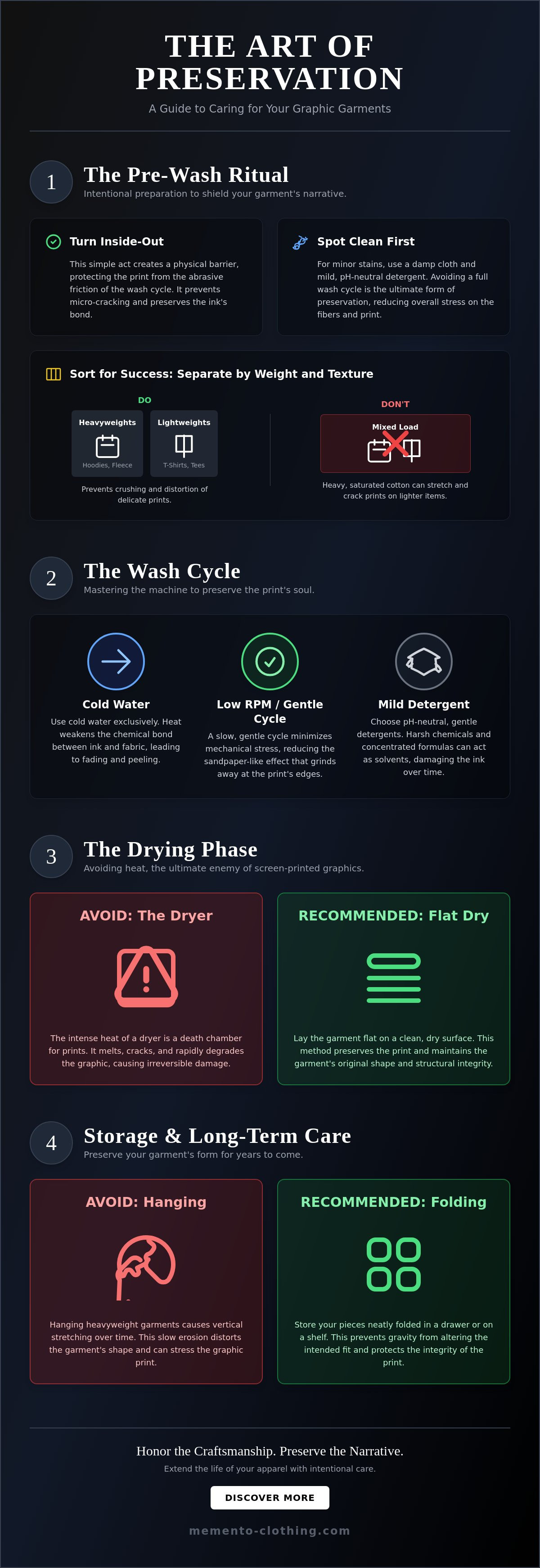
- Protect the narrative of your artwork by turning garments inside out to shield them from the silent violence of mechanical abrasion.
- Master the precise washing instructions for graphic prints by prioritizing cold water and low-RPM cycles to preserve the ink's bond with the fabric.
- Avoid the dryer's intense heat, which serves as a death chamber for screen-printed graphics, and choose flat drying to maintain structural integrity.
- Separate your heavyweight hoodies from lighter tees to prevent the weight of saturated cotton from crushing or distorting delicate prints.
- Store your garments with intention, opting for folding over hanging to prevent vertical stretching and the slow erosion of the garment's original form.
The Philosophy of Preservation: Why Graphic Print Care Matters
To wear a garment is to carry a memory. It's a quiet dialogue between the fabric and the skin. At Memento, we view every piece as a vessel for personal history. The Memento Mori philosophy reminds us that while all things are ephemeral, we have the power to honor the present through intentionality. A hoodie or a tee is more than a commodity. It's a fragment of an individual story. When we neglect care, we're not just washing a shirt; we're accelerating the erasure of that story.
Heavyweight cotton is built for endurance. It's a rugged, tactile foundation designed to survive the years. However, the graphics we place upon it are more vulnerable. They are the voice of the garment. Like any voice, they can be silenced by neglect. Proper washing instructions for graphic prints aren't just technical data. They're a defense against the disposable nature of modern fashion. We reject the culture of the temporary. Preservation is a ritual, a slow and conscious choice to keep the meaningful alive. The longevity of a design often begins with technical precision, and RAW Merch highlights how starting with properly vectorized artwork is essential for achieving a flawless, durable finish.
Understanding the Life Cycle of a Print
The art of Screen printing creates a physical bond. It's a marriage between ink and fiber. This bond is resilient yet sensitive to the violent environment of a standard cycle. Friction acts as a slow sandpaper, grinding away the edges of the narrative. Heat acts as a solvent, weakening the chemical grip of the ink. There's a profound difference between a garment that's simply clean and one that's preserved. Cleanliness removes the debris of the day. Preservation protects the soul of the design for the years to come.
Investing in Longevity
When you choose a Memento Mori Vintage Tee, you're investing in an object designed to age with grace. This endurance requires a standard of care that transcends the ordinary. By extending the life of your apparel, you're making a silent protest against the environmental cost of waste. It's a commitment to quality over quantity. Following specific washing instructions for graphic prints ensures that your choice remains a permanent part of your wardrobe. It's about maintaining the 'like-new' depth while allowing the fabric to develop its own character. We don't just sell clothing. We offer anchors for your personal history.
Preparing the Garment: The Ritual of Pre-Wash Care
Before water ever touches the fabric, the preservation of your garment begins. It is a quiet, meditative moment of inspection. This pre-wash ritual is where you decide whether the story of your piece continues in its full vibrance or begins a slow, mechanical erasure. Many treat laundry as a thoughtless task. We invite you to view it as an act of intentionality. Proper washing instructions for graphic prints start with the physical state of the garment itself, long before the machine is engaged.
The first rule is the most vital: the inside-out mandate. This simple inversion creates a physical barrier between the artwork and the chaotic environment of the wash cycle. It protects the ink from the constant friction that leads to micro-cracking. Beyond the print, check for localized stains. If a mark is small, consider spot cleaning with a damp cloth and a drop of pH-neutral detergent. Avoiding a full wash cycle whenever possible is the ultimate form of preservation. It reduces the total stress on the cotton fibers and the graphic bond.
The Inside-Out Defense
The interior drum of a washing machine acts as a high-speed abrasive. It is essentially sandpaper for your clothing. By turning your piece inside out, you ensure that the mechanical abrasion strikes the unprinted interior rather than the delicate graphic. This is particularly crucial for smaller, more sensitive items like Youth Graphic T-Shirts, where the ratio of ink to fabric surface area is often higher. This defense also prevents fiber transfer, ensuring that dark lint from other garments doesn't embed itself into the lighter hues of your print.
Sorting for Success
Weight is a silent aggressor in the laundry cycle. When a Memento Mori Heavyweight Hoodie becomes saturated with water, its mass increases significantly. If washed with lighter tees, this heavy fabric acts as a crushing force, pulling and stretching the lighter garments. This tension is what causes the ink on thinner shirts to crack prematurely. Always sort by weight and texture. Keep your heavy fleece separate from your fine-gauge cotton.
Be wary of "hardware" garments. Zippers, buttons, and velcro are the natural enemies of screen-printed ink. A single metal zipper can gouge a graphic in seconds. Ensure all zippers are closed and, ideally, washed in a separate load from your most cherished pieces. To better understand the technical requirements of your apparel, you can study the universal Clothing Care Symbols which provide a standardized language for garment endurance. By following these washing instructions for graphic prints, you respect the craft. If you are seeking a new vessel for your personal history, explore our collection of heavyweight essentials.
Choosing Your Method: Machine Wash vs. Hand Wash
The machine is an efficient tool, yet it lacks discernment. It treats a cherished graphic with the same mechanical indifference as a kitchen towel. When you consider washing instructions for graphic prints, the choice of method is a choice of longevity. Machine washing is a compromise of convenience. Hand washing is a declaration of value. Both require a specific set of boundaries to ensure the artwork survives the cleaning process.
Chemicals are the silent erasers of art. Avoid detergents with harsh enzymes, bleaches, or optical brighteners. These agents are designed to attack organic matter, but they don't distinguish between a stain and the delicate ink of your print. Choose mild, liquid formulas instead. They dissolve effortlessly in cold water and leave no abrasive residue to stiffen the cotton fibers. If you must use a machine, the "Gentle" or "Delicate" setting is a technical necessity. High-speed spin cycles generate centrifugal force that can stretch the fabric beyond its elastic limit, causing the graphic to pull apart. Lowering the RPMs reduces this tension and keeps the narrative intact.
The Cold Water Protocol
Heat is a catalyst for decay. It causes the ink to expand at a different rate than the cotton fibers, leading to the microscopic fractures we recognize as cracking. Thermal shock can also cause 100% cotton to contract violently, warping the canvas beneath the graphic and distorting the image forever. To maintain the integrity of the chemical bond between ink and fiber, 30°C (86°F) is the maximum safe temperature for any wash cycle. Cold water preserves the saturation of the hues and the stability of the garment's form.
The Hand Wash Ritual
For your most prized pieces, the sink becomes a sanctuary of preservation. Fill it with cool water and add a minimal amount of gentle detergent. Submerge the garment completely. Instead of aggressive scrubbing, use a soft kneading motion to move the water through the fibers. This manual agitation cleans without the high-RPM stress of a mechanical spin. This approach is particularly effective for maintaining the dense structure of Memento Crewnecks, where the heavy ribbing and cuffs require a delicate touch to avoid stretching.
The final stage of the ritual is the most critical: the no-wring rule. Never twist the fabric to remove excess moisture. Twisting snaps the fibers and shatters the ink's surface. Instead, lay the garment on a clean towel and roll it up, pressing gently to absorb the water. It's a slower process that honors the craft. Following these washing instructions for graphic prints ensures that your garment remains a faithful witness to your personal history.
The Drying Phase: Why Heat is the Ultimate Enemy
If the wash is a ritual, the drying phase is a vigil. It is the final trial where many narratives are lost to impatience. The tumble dryer is a death chamber for screen-printed graphics. High heat liquefies the bond between ink and fiber. It causes the graphic to peel, crack, and eventually vanish. True preservation requires a return to the slow, atmospheric process of air drying. This is a non-negotiable part of the washing instructions for graphic prints if you intend for them to survive the decade.
Sunlight is another silent agent of erasure. Direct UV exposure bleaches pigments and weakens the structural integrity of heavyweight cotton. Always dry your pieces in a shaded, well-ventilated space. While air drying can sometimes leave heavyweight cotton feeling stiff, this is merely a temporary state of the fibers. You don't need heat to restore softness; you only need movement.
Air Drying for Longevity
Evaporation is a gentle transition. Tumble drying is a violent collision. To maintain the silhouette of a Memento Mori Heavyweight Hoodie, avoid hanging it while wet. The weight of saturated cotton will pull the shoulders into permanent distortion, creating unsightly "shoulder nipples." Instead, use a flat drying rack. This preserves the original drape and keeps the graphic surface tension-free.
- Give the garment a vigorous 'shake out' while damp to relax the fibers and prevent the "crunchy" air-dry feel.
- Lay it flat on a rack, ensuring the graphic is not folded or creased against itself.
- Flip the garment halfway through the process to ensure even airflow to both sides of the heavy fabric.
Removing Wrinkles Safely
Wrinkles are a natural mark of wear. They don't require the harsh intervention of a hot iron. Never touch an iron directly to a graphic print. The heat will melt the ink into a shapeless smear, destroying the artwork instantly. A handheld steamer is the preferred alternative. It uses moisture to relax the cotton without direct thermal contact. If a steamer isn't available, use the 'shower steam' trick. Hang your piece in the bathroom while you take a hot shower. The ambient humidity will naturally release the tension in the fibers without risking the print. These washing instructions for graphic prints ensure your garment ages with dignity.
Respect the life cycle of your apparel. Discover our enduring heavyweight collection and find your next anchor for personal history.
The Memento Mori Standard: Long-Term Storage and Care
Storage is the silent phase of stewardship. While the wash cycle is a moment of active intervention, the closet is where a garment spends the majority of its existence. Without intention, this space becomes a site of slow degradation. The weight of your apparel, the humidity of the air, and the proximity of other fabrics all dictate the longevity of the narrative you carry. True washing instructions for graphic prints must extend beyond the machine and into the sanctuary of your wardrobe.
Gravity is a slow sculptor. For heavyweight items, it is often an adversary. A saturated Memento Mori Heavyweight Hoodie or a dense crewneck should never be left on a hanger for extended periods. The sheer mass of the high-ounce cotton pulls at the seams, distorting the neckline and shoulders. This vertical stretching doesn't just ruin the silhouette; it creates micro-tension across the graphic print, leading to premature cracking even without the stress of a wash. Folding is the only way to honor the structural integrity of these pieces.
Climate is the final variable. Heavy fabrics are porous and retain moisture with ease. In humid environments, this leads to the quiet growth of mold or a musty scent that requires unnecessary washing to remove. Beyond moisture, beware of the "Print-to-Print" danger. In warm or poorly ventilated closets, the ink on your graphics can become slightly tacky. If two prints are pressed together for months, they may fuse. When pulled apart, the artwork is torn. Always fold your garments so that the graphics face outward or are shielded by a layer of unprinted cotton.
Optimal Storage Rituals
Archival preservation requires a commitment to the "cool, dry, dark" rule. Light is a bleaching agent. Heat is a catalyst for ink decay. By keeping your collection in a dark, climate-controlled space, you prevent the slow erosion of pigment. For your most cherished pieces, consider placing a sheet of acid-free tissue paper over the graphic before folding. This creates a neutral barrier that prevents ink migration and ensures the print remains as crisp as the day it was cured.
A Commitment to Quality
Maintaining your wardrobe is an act of resistance against the ephemeral. By following these washing instructions for graphic prints, you are not just cleaning a shirt. You are preserving a fragment of your own history. Every choice, from the cold water rinse to the careful fold, ensures that the Memento Mori story continues to resonate through your style. Embrace the natural patina that comes with time. A well-cared-for print ages with a dignity that fast fashion can never replicate. It becomes a testament to your endurance. At Memento Mori Clothing, we invite you to explore our collection of enduring heavyweight essentials and begin your own ritual of preservation.
The Endurance of Your Personal Narrative
A garment is a physical archive. It's a witness to your history. By mastering these washing instructions for graphic prints, you ensure that the witness remains eloquent. You now understand the necessity of the cold water sanctuary. You recognize the quiet power of the inside-out ritual. These intentional choices protect the bond between ink and fiber. They allow your story to resist the slow erosion of time. Care is not a burden; it's a tribute to the objects that define our presence.
Our pieces are founded on heavyweight 100% cotton construction. Each design is a philosophical anchor. They are built for longevity and profound narrative depth. When you care for your apparel, you honor the craft behind it. We invite you to explore our collection of intentionally crafted Memento Mori apparel. Invest in objects that are designed to last. Wear them as a declaration of your values. Your journey is unique. Let your clothing be a permanent reflection of that path. Wear your story with conviction.
Frequently Asked Questions
Can I ever put my graphic tees in the dryer on a low setting?
No, you should avoid the dryer entirely, even on low heat settings. The mechanical tumbling and residual heat are the primary causes of micro-fractures in screen-printed ink. While a low setting is less aggressive, it still accelerates the aging of the chemical bond between the print and the cotton. Patience is the price of preservation.
What should I do if my graphic print has already started to crack?
Cracking is a permanent physical change that cannot be fully reversed, but you can prevent further deterioration. Once the ink has split, it signifies that the fibers have been stretched or heated beyond their limit. From this point on, strictly follow washing instructions for graphic prints to ensure the remaining narrative doesn't flake away. Treat the piece with increased reverence.
Is it safe to use fabric softener on screen-printed clothing?
Fabric softeners are not recommended for screen-printed garments. These products work by coating fibers in a thin layer of chemicals that can weaken the adhesion of the ink over time. This coating can also trap dirt and oils, leading to a dulling of the print's original vibrance. Stick to mild, pH-neutral liquid detergents to maintain the integrity of the design.
How do I remove a stain from a white graphic tee without using bleach?
Use a localized spot treatment with a mixture of baking soda and water or a gentle dish soap instead of bleach. Bleach is a corrosive agent that will yellow the cotton and dissolve the edges of your graphic. Apply the paste only to the stain, let it sit for 15 minutes, and rinse with cold water. It's a precise method that respects the surrounding artwork.
Why does my graphic tee feel stiff after air drying, and how can I fix it?
Stiffness occurs because air drying allows cotton fibers to settle into a rigid state without the artificial softening of a tumble cycle. This is a sign of fabric integrity, not a defect. To fix this, give the garment a vigorous shake once it is dry, or simply wear it for ten minutes. Your natural body heat and movement will quickly relax the fibers.
Does the weight of the cotton affect how the print should be washed?
Yes, the mass of heavyweight cotton requires more intentional care during the wash. Heavy garments like the Memento Mori Heavyweight Hoodie absorb significant amounts of water, increasing their weight and the resulting friction during the cycle. This added mass can crush lighter items and put more strain on the print's surface. Always wash heavyweight pieces separately or in small, balanced loads.
How often should I actually wash my heavyweight hoodies and tees?
You should wash your heavyweight tees and hoodies as infrequently as possible. Over-washing is the most common cause of garment death. Unless the piece is visibly soiled or holds an odor, a simple airing out is often enough to refresh it. Reducing the number of wash cycles is the most effective way to follow washing instructions for graphic prints and extend the life of your wardrobe.
Can I use a steamer on a graphic print?
Yes, a steamer is the safest way to remove wrinkles from a graphic print. Unlike an iron, a steamer doesn't require direct physical contact with the ink. The moist heat relaxes the cotton fibers without melting or distorting the screen-printed surface. It's a gentle, modern alternative that aligns with the philosophy of long-term preservation.