
Vintage Wash vs Pigment Dye: Which Shirt Lasts Longer
The shirt with the longer-lasting color isn’t always the one with the more convincing vintage look. Vintage wash describes an appearance, not a specific dye chemistry, while pigment dye sits closer to the fabric’s surface and tends to fade with wear. A deeply dyed shirt generally keeps a more even color. Those are the key vintage wash versus pigment dye characteristics to understand before choosing.
A worn-in finish has its own appeal: softness, subtle variation, and the sense that a garment already carries a little history. But appearance and longevity aren’t the same. Fabric, construction, dye method, and care all affect how a shirt changes over time.
This guide compares color, fading, softness, and drape, then explains what each finish means for lasting wear. You’ll get a clearer sense of which look suits your taste and what to expect as the fabric gathers the marks of everyday life.
Key Takeaways
- “Vintage wash” describes a finished look, not one dye method, so learn what process may be behind the effect.
- Choose pigment dye for surface variation and a lived-in look; expect its color to evolve with wear and washing.
- Look beyond the finish when comparing softness and drape, since the fabric and treatment both shape how a shirt feels.
- For a more even color that changes less quickly, consider how garment dyeing colors the finished shirt.
- Protect a pigment-dyed shirt’s surface color by washing it inside out in cold water with like colors and avoiding harsh detergents.
Dye penetration and surface coloration
The key difference is where the color sits: within the fibers or on the fabric surface. That distinction affects saturation, variation, and how a shirt’s color changes with wear.
Dye Penetration
Garment dyeing colors a completed shirt by immersing it in dye, allowing the color to penetrate the fabric fibers. Reactive dyes form a chemical bond with compatible cellulose fibers, unlike pigment that rests on the surface. The difference can show at seams: dye may miss areas beneath topstitching, so later alterations can expose lighter fabric.
Pigment Surface Color and Wear
Pigment dyeing applies insoluble pigments to a finished garment with a binder resin. The color stays on the fiber surface rather than bonding chemically with the fibers. As a shirt is worn, friction gradually changes that surface color, creating gentle fading and a lived-in appearance. Seams and edges, for example, may show more variation than broad panels.
Color Saturation and Tonal Variation
Garment dyeing tends to create deep, even, saturated color across a finished shirt. Pigment dyeing lends itself to tonal variation, subtle highlights, and a deliberately worn appearance. Pigment-dyeing fabric before cutting can also create shading differences across a fabric roll. When panels are cut from that roll, their colors may not match perfectly.
That variation can be part of the design, not a flaw. Pigment-dyed T-shirts may show differences around seams and edges, while cutting from unevenly shaded fabric can result in mismatched panels. A vintage wash is an aesthetic category, not a specific dye chemistry. Enzyme, pigment, mechanical, and fading processes can all contribute to the look.
| Option | Color placement | Typical appearance | Variation to expect |
|---|---|---|---|
| Garment dye | Color permeates the constructed garment | Deep and even | Seams may differ beneath stitching |
| Pigment dye | Pigment rests on the surface | Worn-in, tonal | Shading can vary across panels |
For apparel production, compare a physical sample with the intended color before approving a run. Pigment and specialty-wash effects are intentionally varied, so production should follow an approved physical standard and agreed tolerance. A lab dip can help assess a proposed color, while a finished sample shows how seams, edges, and panels look together.
Choose garment dye for more uniform, saturated color. Choose pigment dye when surface variation and gradual fading are part of the desired character.
Garment Dyed VS Pigment Dyed: Which One Will Last Longer?
Color longevity depends on the dye process: pigment color can fade from the surface, while vintage wash describes an appearance created through several methods. Reactive dyes suit compatible cellulose fibers; polyester generally requires disperse dye chemistry, and care affects how both finishes age. For pigment-dyed garments, wash inside out in cold water with like colors, and avoid harsh detergents. The U.S. Environmental Protection Agency reports that sampled ink plants released pigments containing barium, chromium, lead, and zinc into waste and washing water.
Pigment-Dyed Fading and Unevenness
Pigment-dyed shirts can develop a softer, faded appearance because the color sits on the fabric surface. Repeated washing and prolonged sunlight can make this change more noticeable. Unevenness may appear around seams and edges, creating a worn-in look rather than the more uniform appearance associated with garment dyeing. Color rubbing onto lighter materials, known as crocking, is another possible effect of pigment-colored fabric.
A fade-out wash creates a different kind of wear: some color is washed away after dyeing, especially along seams and edges. This controlled contrast gives a finished shirt a pre-worn appearance. A vintage wash isn’t one specific chemistry, either. Enzyme, pigment, mechanical, and fading processes can all contribute to the look, so two shirts with a similar aesthetic may age differently.
Mineral-wash and acid-look processes add irregular highlights and contrast for a distressed appearance. Sun-faded finishes use controlled bleaching agents applied selectively to parts of a garment. These methods create distinct patterns, unlike the gradual surface fading associated with pigment dye. The final texture and appearance depend on the treatment and garment construction.
Fabric Suitability and Garment Care
For cellulose fabrics, reactive dyes form a chemical bond with compatible fibers; polyester generally uses disperse dye chemistry. Vintage wash is a visual category, so fabric suitability depends on the specific process used to create the finish. Pigment dye colors a garment’s surface, producing a different texture and fading pattern from a treatment that changes the fabric itself.
To care for pigment-dyed apparel, turn the garment inside out, use cold water, wash it with like colors, and avoid harsh detergents. These steps reduce friction against surface pigments and help preserve the binder and softness. Gentle care also helps limit premature fiber breakdown. Sun exposure can contribute to fading, so storing the garment away from direct sunlight helps maintain steadier color.
The environmental footprint also depends on the process: washing and bleaching treatments use water, while pigment production and application involve colorants and binders. The U.S. Environmental Protection Agency found certain pigments in waste and washing water at sampled ink plants. That finding concerns those sampled plants, not every vintage-wash or pigment-dye operation.
Dye-related softness and drape
A shirt’s feel comes from its fabric and finish, not its color alone. Pigment dye can feel firmer at first, while garment-dyed fabric is described as soft with a smooth finish. Vintage wash is an aesthetic category, so softness depends on the process behind the appearance. Comparing the actual fabric hand helps distinguish these qualities.
How Each Finish Feels
Pigment-dyed fabric may feel rawer and firmer than fabric finished with reactive dye, fade-out wash, or enzymatic wash. Wear and washing can soften it over time. The change is gradual: a new pigment-dyed shirt may feel more structured than the same shirt after repeated use.
Garment dyeing can leave fabric with a soft, smooth finish. Enzymatic washing works differently: natural enzymes gently break down surface fibers. This treatment can contribute to a softer feel without relying on pigment’s surface coloration. A vintage-looking shirt made with an enzyme process may therefore feel different from one whose appearance comes from pigment.
Softness, Comfort, and Drape
Softness describes how fabric feels against the skin; drape describes how it falls over the body. They’re related, but one doesn’t guarantee the other. A soft, lightweight cotton shirt may fall differently from a heavier cotton shirt, even when both have similar finishes. Fabric weight, knit, and garment construction all shape the result.
Pigment dye’s initial firmness can give a shirt a more substantial feel. As the fabric softens through wear and washing, it may move less rigidly. That doesn’t mean pigment dye alone determines drape. The cut and fabric matter, too: a loose-fitting shirt can hang differently from a close-fitting one made with the same material and dye process.
| Finish or process | Starting feel | Change with wear | What shapes drape |
|---|---|---|---|
| Pigment dye | May feel firmer and rawer | Can soften through wear and washing | Fabric, knit, and construction |
| Garment dye | Soft, smooth finish | May fade slightly after repeated washing | Fabric weight and garment cut |
| Enzymatic wash | Surface fibers are gently broken down | Finish contributes to a softer hand | Fabric and construction |
To compare shirts, feel the fabric at the body and seams, then let each garment hang naturally. Notice whether the material folds easily or holds its shape. Comparing a new pigment-dyed shirt with an enzyme-washed cotton shirt can reveal differences in firmness and softness without confusing finish with fabric weight.
For everyday comfort, consider the fabric feel you prefer now and how it may soften with use. For a more fluid drape, assess the shirt’s weight and cut alongside its dye treatment. Those details, rather than the vintage appearance alone, shape how the garment feels in motion.
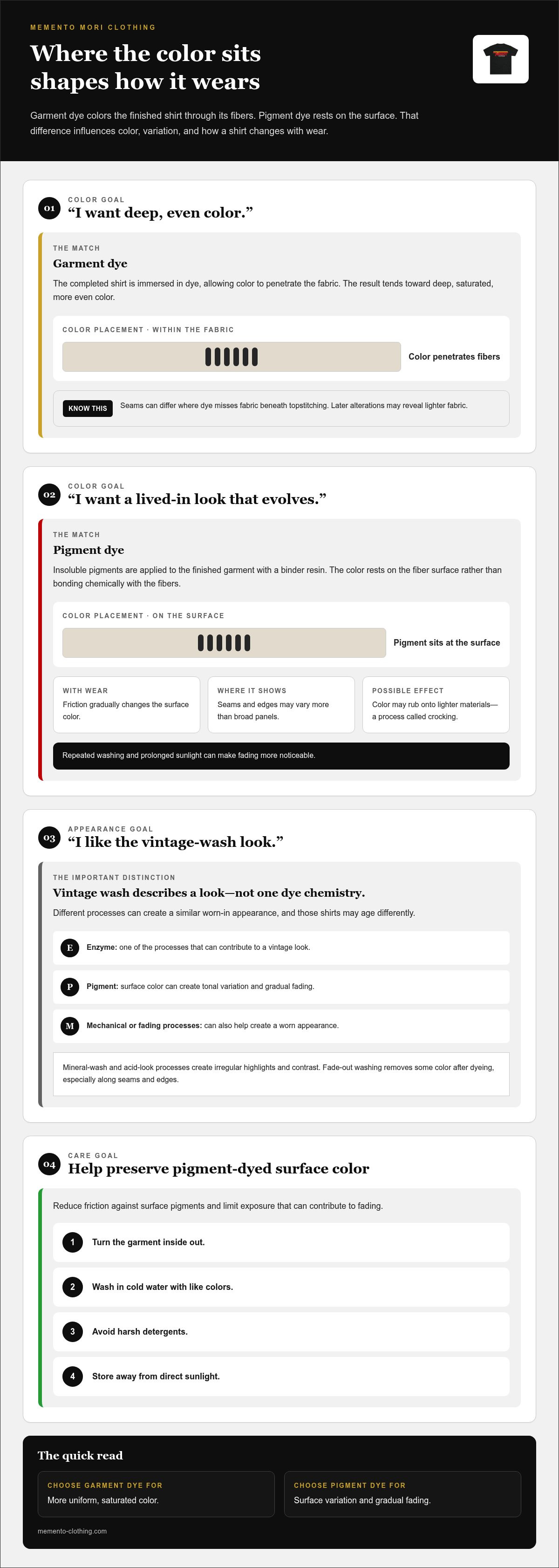
Garment-dyed versus pigment-dyed shirts
A garment-dyed shirt is colored after construction; pigment dye places color on the fabric surface. That difference affects how a tee feels, how printed artwork appears, and how its colors change with wear. “Vintage wash” describes an aesthetic, not a specific process, so the label alone doesn’t reveal how a shirt will age.
Garment dyeing immerses the finished garment in dye, coloring its fabric and seams together. The result is typically more consistent across the shirt than pigment dye. Heat and moisture during the process can cause slight shrinkage, and garment-dyed clothing can release more color into wash water. The seams and panels are part of the finished garment’s overall color story, rather than separately dyed pieces of fabric.
Pigment dyeing colors the surface, creating a different relationship between cloth and shade. Its tonal variations can give a tee a casual, lived-in character from the start. With repeated washing and prolonged sunlight, pigment-dyed shirts may fade more rapidly. That change can suit a worn-in style, but it’s less suited to someone who wants the original shade to remain visually steady.
Feel differs, too. Garment-dyed fabric is described as soft, with a smooth finish. Pigment-dyed fabric may feel firmer at first, then soften with wear and washing. Compare two tees by handling the body and seams, rather than judging softness by color alone. Fabric weight and construction also affect how each garment falls and moves.
Printed artwork introduces another consideration. A faded or dark blank can reduce the contrast of full-color artwork. Direct-to-film transfers use a white ink underbase to keep full-color designs visible on dark or faded blanks. For example, a bright graphic can stand out more clearly against a washed background when that underbase is used. The blank’s finish and the printing method together shape the final contrast.
Over time, garment-dyed shirts may fade slightly after repeated washing or sun exposure, sometimes deepening their vintage appearance. Garment-dyed shirts may fade over time, while pigment-dyed tees can develop a more visibly worn-in look. Pigment color can develop gentle, uneven fading, especially in areas exposed to friction. The difference is not simply “lasting” versus “wearing out”; it’s whether you prefer a steadier shade or a surface color that evolves.
| Shirt finish | Feel | Color over time | Artwork consideration |
|---|---|---|---|
| Garment dyed | Soft, smooth finish | Typically more even; may fade slightly | Assess print contrast against the chosen shade |
| Pigment dyed | May begin firmer, then soften | Can fade with wear and washing | White underbase can support full-color visibility |
Choose garment dye for more uniform color and a softer initial feel. Choose pigment dye if you welcome tonal variation and a tee whose surface gradually records wear.
Advantages and disadvantages of each method
Each dyeing method creates a different effect for the eye and the garment. Garment dye favors more uniform color, while pigment dye offers surface variation and a worn-in character. Neither method defines clothing quality on its own. The useful comparison is how each finish meets your priorities for color, feel, and how a shirt changes with wear.
Garment dye’s main advantage is an even, saturated result across the completed shirt. Reactive dye forms a chemical bond with compatible cellulose fibers, supporting long-lasting color through repeated washing. This method also gives fabric a smooth finish. Trade-offs include possible slight shrinkage from heat and moisture during garment dyeing, and more color bleeding into wash water than with pigment-dyed clothing.
Pigment dye brings tonal variation and a naturally aged appearance to apparel. It can retain color vibrancy through repeated washes, yet its surface color may fade with repeated laundering and prolonged sunlight. That contrast is central to the choice: a pigment-dyed shirt can develop gentle, uneven fading, while a garment-dyed shirt is generally less prone to fading quickly. Pigment color may also rub onto lighter materials, a process called crocking.
- Choose garment dye for a more consistent shade, a smooth hand, and color that tends to last through repeated washing.
- Choose pigment dye for visible tonal shifts, a rawer initial feel, and a surface that can evolve with wear.
There are practical trade-offs beyond appearance. Garment-dyed shirts may bleed more color into wash water, so washing them with like colors helps protect other clothing. Pigment-dyed fabric can show uneven color around seams and edges, and rubbing against pale materials may transfer color. Turning pigment-dyed garments inside out, washing in cold water, and avoiding harsh detergents helps protect the surface and binder.
Use the shirt’s intended life to guide your choice. For a graphic tee expected to keep a clean, consistent color, garment dye may be the better fit. For a casual shirt whose fading is part of its character, pigment dye can make wear feel like part of the design. Either way, fabric construction and care influence how the fibers and finish age together.
Before choosing, compare the shade, seams, and printed design under ordinary light. A physical sample can show whether the color variation feels intentional and whether artwork remains legible against the finished fabric. Brands producing pigment or specialty-wash apparel should approve a physical standard with an agreed tolerance, since planned variation still needs a clear reference.
If a graphic tee is the right everyday piece, explore Youth Graphic T-Shirts and choose a design that fits your style.
Memento Mori Clothing: Memento Mori Heavyweight Hoodie
Memento Mori Clothing offers apparel including Memento Mori Heavyweight Hoodies, vintage tees, and crewnecks for those drawn to a considered wardrobe. The Memento Mori Vintage Tee offers a lighter option, while Memento Crewnecks and Memento Hats extend the choice beyond shirts. Choose a piece that reflects your style and the moments you want to remember.
Dye method is only one part of a garment’s life. Fabric, construction, and care also influence how its color and feel change over time. Choose the piece that best suits how you want to wear and remember it.
Explore the Memento Mori Clothing collection at memento-clothing.com.
Choose the Garment That Will Gather Your Story
The right shirt is more than a choice of finish. It’s a piece you’ll reach for, live in, and let become part of your own history. Understanding vintage-wash versus pigment-dye characteristics can help you choose a look that feels true to you, but personal meaning often begins after the decision: in the everyday moments and memories attached to what you wear.
Memento Mori Clothing brings that philosophy into apparel with the Memento Mori Heavyweight Hoodie, Memento Mori Vintage Tee, and Memento Crewnecks. Choose the piece that fits your everyday rhythm, whether you’re drawn to a tee’s familiar ease or the quiet presence of a heavier layer. Let your next garment reflect not only how you want it to look, but what you want to carry forward.
Contact Memento Mori Clothing to discuss your needs, and take the next step toward a garment that feels like your own.
Frequently Asked Questions
WHAT IS THE DIFFERENCE BETWEEN GARMENT AND PIGMENT DYE?
Garment dye colors a completed piece of clothing by immersing it in dye, while pigment dye applies insoluble colorants to the fabric surface with a binder. That difference matters when inspecting a finished shirt: garment dye usually gives a more even overall shade, while pigment dye can produce tonal shifts. A useful clue is the seam area, where surface color and fabric construction can make variation more visible.
What Are the Key Differences?
The main differences are color placement, visual consistency, feel, and how each shirt changes with wear. Garment dye tends toward a more uniform shade and a soft finish. Pigment dye can begin firmer and show surface variation. If choosing between two shirts in person, compare their seams, panels, and fabric feel under the same light. Those details reveal more than the finish name alone.
What Is a Vintage Wash T-Shirt?
A vintage-wash T-shirt is finished to look and feel worn-in, rather than made using one specific dye chemistry. Its appearance may come from enzyme treatment, pigment, mechanical action, or controlled fading. For example, a tee with softened color at the seams may use a fade-out process, while irregular highlights can come from a mineral-wash or acid-look treatment.
What is a vintage wash on clothing?
A vintage wash is a finishing effect that gives clothing a pre-worn appearance, often through faded color, softened texture, or irregular highlights. The term describes the aesthetic, not a single production method. A shirt can achieve that look through enzyme washing, pigment treatments, mechanical processes, or selective fading. To understand a garment’s likely feel and how it may age, consider the finish and fabric together.
What is pigment dyeing and how does it work?
Pigment dyeing colors the fabric surface using insoluble pigments held by a binder resin. Unlike reactive dyes, which bond chemically with compatible cellulose fibers, pigments sit on the surface. This helps create tonal variation and a naturally aged look. For example, friction at a shirt’s seams can gradually change the surface color, while rubbing against pale fabric may transfer pigment.
How do vintage wash and pigment dye differ in appearance and texture?
Vintage wash versus pigment dye characteristics depend on the specific finish: vintage wash names a look, while pigment dye names a coloring method. A vintage-wash shirt may have a softened, faded appearance created by several processes. Pigment dye often creates surface color variation and can feel firmer at first. Compare the garment’s highlights, seams, and feel to understand the particular result.
How does each finish fade and age with washing and wear?
Each finish can change differently as washing, friction, and sunlight affect its color and fibers. Pigment-dyed garments may develop gentle fading, especially where the surface experiences repeated friction. A vintage-wash shirt’s aging depends on how its finish was produced. To preserve color, wash specially dyed garments inside out in cold water with like colors, and avoid harsh detergents that can affect the binder and softness.
How durable are vintage-washed and pigment-dyed garments?
Durability depends on more than the finish: fabric quality, garment construction, and care all matter. Garment-dyed shirts are generally less prone to fading quickly than pigment-dyed shirts, while pigment color can change more noticeably with washing and prolonged sunlight. That color change doesn’t necessarily mean the garment has failed. Inspect stitching and fabric condition separately from shade, since fading and structural wear are different signs.