
Vintage T-Shirt Care: A Guide to Preserving Your Personal History
A t-shirt isn't just fabric; it's a 240 GSM archive of a summer night or a concert that changed everything. You've likely felt the quiet frustration of watching a deep black fade into a dull grey or seeing a "bacon neck" ruin the silhouette of a piece you've owned since 2014. It's painful to see a rare screen print crack after a single careless cycle in a high-heat dryer. Proper vintage t-shirt care ensures these items remain emotional anchors rather than becoming disposable waste.
We believe your wardrobe is a museum of your life. Mastering these protocols transforms your favorite garments into permanent anchors of your personal history. By adopting a more meditative approach to maintenance, you'll preserve the structural integrity and memento value of your collection for the next decade. This guide outlines the definitive rituals for cleaning, drying, and storing your tees. We'll explore a simple, repeatable system that protects your investment and honors the memories woven into every fiber.
Key Takeaways
- Understand why preserving your garments is an act of honoring your personal history and resisting the cycle of disposable fashion.
- Master the essential protocols of vintage t-shirt care, starting with the non-negotiable rule of washing inside out to protect fragile graphics.
- Learn why heat is the ultimate enemy of cotton fibers and how to prevent your screen prints from premature cracking and peeling.
- Discover the "Archive Method" for storing heavyweight cotton, ensuring your tees remain free from permanent creases and environmental decay.
- Explore gentle restoration techniques to brighten whites and address stubborn stains without compromising the integrity of the fabric.
The Philosophy of Preservation: Why Your Vintage Tee Deserves Respect
A t-shirt isn't just a layer of fabric. It's a timestamp. It captures the essence of a specific era, holding the ghost of a concert, a summer, or a quiet moment of personal transition. When we discuss vintage t-shirt care, we're really discussing the protection of a personal archive. Modern fast fashion is built on a cycle of disposal, contributing to the 92 million tons of textile waste produced globally each year. In contrast, a vintage or vintage-inspired garment is an anchor. It represents a commitment to longevity. It's a rejection of the temporary.
Viewing the wash cycle as a maintenance ritual changes your relationship with your wardrobe. It's no longer a chore. It's a deliberate act of stewardship. By applying fundamental textile conservation principles to your daily routine, you extend the life of the fibers. You preserve the narrative woven into the threads. Heavyweight cotton requires this level of respect. It isn't a standard, flimsy tee that loses its shape after three cycles. It's a structural piece of art that demands a different set of rules to survive the passage of time.
Understanding the Memento Mori Aesthetic
There's a profound beauty in a garment that ages with dignity. Intentional aging differs from accidental damage; it's the difference between a refined patina and a ruined collar. The Memento Mori Vintage Tee is engineered to embrace this evolution. Its heavyweight fabric doesn't just wear out. It softens and adapts to your frame. It reminds us that while everything is fleeting, quality allows us to linger in the beauty of the present. A well-cared-for shirt becomes a testament to your journey.
Textile Integrity and the "Memento" Value
High-GSM fabrics, specifically those exceeding 240 grams per square meter, react uniquely to water and heat. These dense weaves absorb significant moisture, which increases the weight of the garment during the cleaning process. This weight can lead to structural collapse if the shirt is handled roughly. Fiber fatigue is a real chemical process where heat and friction break down the natural cellulose bonds of the cotton. Effective vintage t-shirt care focuses on maintaining a soft hand-feel without sacrificing the shirt's silhouette. The goal is a garment that feels like a memory but stands like a monument.
The Essential Vintage T-Shirt Care Checklist: A Master Protocol
Preservation is a silent dialogue with the past. To own a vintage piece is to hold a fragment of a specific era, a 1994 concert or a 1982 local track meet. This history is fragile. The fibers have weathered decades of light and movement; they require a disciplined approach. Effective vintage t-shirt care begins with a meticulous "pre-flight" inspection. Examine the garment under a 100-watt light source. Look for 2mm pinholes or loose threads on 1990s single-stitch hems. Addressing a weakened seam before it hits the water prevents a minor flaw from becoming a structural failure.
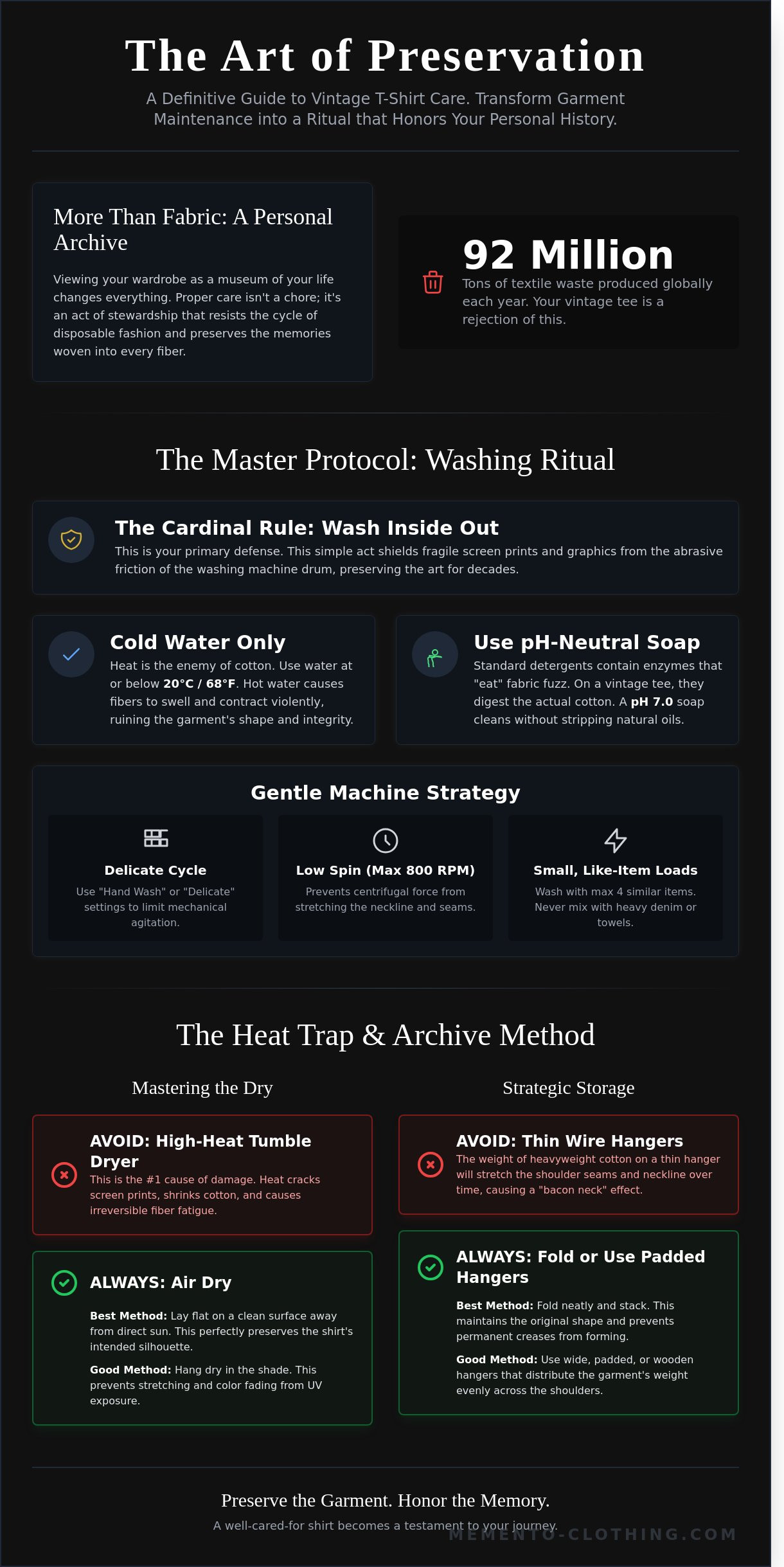
The ritual of inversion is your primary defense. Always wash the shirt inside out. This simple act shields the graphic, whether it's a cracked plastisol print or a faded water-based ink, from the abrasive friction of the drum. Even in 2026, with advanced ultrasonic cleaning options available, professional archivists still rely on temperature control. Heat is the enemy of old cotton. Water exceeding 20 degrees Celsius causes fibers to swell and contract violently, leading to "ghosting" or loss of shape. Stick to cold cycles to keep the silhouette intentional.
Your choice of chemistry matters more than the machine. Standard supermarket detergents often contain cellulase enzymes designed to eat away "fuzz," but on a thirty year old tee, these enzymes digest the actual fabric. Use a pH-neutral soap with a value of 7.0. This maintains the integrity of the heavyweight cotton without stripping the natural oils that keep the material soft. If you value the longevity of your collection, you might consider how a curated wardrobe deserves this level of archival respect.
The Washing Machine Strategy
Modern machines offer "Hand Wash" or "Delicate" settings that limit mechanical agitation. Set the spin speed to a maximum of 800 RPM to prevent the centrifugal force from stretching the neckline. Never introduce heavy 14oz denim or rough towels into the same load. These items act like sandpaper against aged jersey. Limit your load to four items. This reduces friction and prevents the pilling that destroys the clean aesthetic of a premium vintage find.
The Hand-Wash Ritual
For the rarest pieces, the basin is the only sanctuary. Fill a clean sink with 20-degree water and a teaspoon of pH-neutral detergent. Submerge the garment and let it soak for exactly 15 minutes. Avoid the urge to scrub. Instead, use a gentle "pressing" motion to move water through the fibers. When rinsing, ensure the water runs clear; soap residue trapped in 200 GSM cotton can cause the fabric to become brittle over time. Never wring the shirt. Press it between two white towels to extract moisture, honoring the garment's shape and its story.
Mastering the Dry: Avoiding the Heat Trap
The dryer is a machine of erasure. While convenient, it's the primary enemy of vintage t-shirt care. Every tumble cycle strips away microscopic layers of cotton fibers; it turns your favorite graphic into a ghost of its former self. High heat is particularly violent toward plastisol ink. This heavy, plastic-based ink was the standard for most 1980s and 90s streetwear. When exposed to temperatures exceeding 140°F, this ink becomes brittle. It loses its flexibility, leading to the irreversible cracking and peeling that marks the end of a garment's life.
Air drying is the only path to longevity. However, it requires patience and a specific technique. Instead of letting a soaked shirt drip, use the towel-roll method. Lay your damp tee flat on a clean, white cotton towel. Roll it up tightly like a sleeping bag. Apply firm pressure for 30 seconds. This simple ritual extracts approximately 35% more moisture than simple hanging. It significantly reduces the time your garment spends in a vulnerable, wet state.
- Heat: Causes fiber shrinkage and ink degradation.
- Agitation: Accelerates the fraying of vintage seams.
- Patience: The essential ingredient in preserving personal history.
The Dangers of Vertical Drying
Gravity is a relentless force on wet fabric. For heavyweight garments like Memento Crewnecks, which often exceed 300 GSM, vertical drying is a risk. The weight of the water pulls the cotton downward. This creates "shoulder nipples" where the hanger ends poke through the fabric. It permanently distorts the silhouette. Always dry your heavyweight pieces flat on a mesh rack. While the garment is damp, gently reshape the hem and collar. This ensures the piece retains its intended structure once dry.
De-Wrinkling Without Damage
A steamer is a vital tool for any collector. It uses moist heat to relax fibers without the crushing pressure of a metal plate. If you must use an iron, never let it touch the graphic directly. Set the temperature to a low cotton setting, below 150°C, and always use a press cloth. Dark cotton is susceptible to a "shine" effect. This happens when high heat flattens the natural texture of the fibers. A protective layer prevents this aesthetic ruin. It keeps the fabric matte and deep, preserving the quiet elegance of the original piece.
The Archive Method: Strategic Storage for Heavyweight Cotton
Preservation is a silent dialogue between the owner and the object. While washing dictates the cleanliness of a garment, mastering vintage t-shirt care means understanding the architecture of the garment during its hours of rest. Storage isn't simply about clearing floor space. It's a method of halting time. For heavy textiles, the wrong choice in the closet leads to permanent structural failure.
Gravity acts as a slow, relentless thief of shape. You should never hang a Memento Mori Heavyweight Hoodie or any high-GSM vintage piece long-term. A 400-gram cotton garment exerts significant pressure on its own shoulder seams when suspended. Over a six-month period, this results in "shoulder nipples" and a distorted neckline that no amount of steaming can fully recover. Folding is the only path to maintaining the original silhouette.
Folding for Longevity
The "Retail Fold" remains the gold standard for protecting chest graphics. By folding the sleeves toward the back and creating a flat rectangle, you ensure the screen print stays planar. If you're tight on space, the "File Fold" allows you to stand shirts vertically. However, you must place a sheet of acid-free archival tissue paper over large graphics before folding. This prevents "blocking," a process where heat and pressure cause old ink to stick to itself, leading to tragic peeling when the shirt is eventually unfurled.
Creating a Controlled Environment
Fabric is organic. It reacts to its surroundings like a living thing. To stop the degradation of fibers, maintain a consistent environment based on museum standards. Aim for a temperature of 18 to 21 degrees Celsius and a relative humidity of 50%. Excess moisture invites mildew, while levels below 40% make vintage fibers brittle and prone to shattering. Sunlight is equally dangerous. UV rays trigger photodegradation, a chemical reaction that permanently bleaches dyes and weakens cotton bonds.
- Avoid Plastic Bins: Polypropylene containers trap moisture and off-gas chemicals that yellow white cotton. Use breathable cotton storage bags or acid-free cardboard boxes instead.
- Natural Pest Defense: Forget the pungent, toxic scent of mothballs containing naphthalene. Use cedar blocks or dried lavender sachets. Replace them every 90 days to ensure the volatile oils remain active.
- The Rotation Ritual: Every three months, refold your archived pieces. This prevents dust from settling into deep creases and allows the fibers to "relax" in new positions.
Thoughtful stewardship is a cornerstone of high-level vintage t-shirt care. By treating your wardrobe as an archive rather than a pile of laundry, you ensure that the stories woven into the fabric survive another generation. Respect the weight of the cotton, and it'll respect the history it carries.
Restoring the Past: Addressing Cracks, Stains, and Distressing
Every mark on a vintage garment is a timestamp. A 1994 concert tee carries more than just ink; it carries the weight of a decade. When you find a 20-year-old oil stain, your approach must be surgical. Spot cleaning is the first line of defense. Use a mild, pH-neutral detergent. Focus only on the affected area to avoid stressing the surrounding aged fibers. It's about precision, not power. Sometimes, the fraying at the collar or the fading of the hem isn't a defect. It's a patina. In the world of high-end archival fashion, a thrashed 1988 Harley Davidson shirt often holds more emotional and market value than a pristine one. Damage becomes a narrative. You aren't just wearing clothes; you're wearing a story.
Bleach is an enemy to heritage cotton. It destroys the molecular bonds of the fabric, leading to irreversible yellowing and brittleness. Instead, a 6-hour "Oxi" soak in lukewarm water can lift 85% of deep-set organic grime. This method breathes life back into muted whites without the chemical violence of chlorine. It's a slow process. Patience is the price of preservation. If the piece is a rare 1970s artifact, consider if the stain is part of its history before you attempt to erase it.
- Spot cleaning: The primary tactic for localized food or oil accidents.
- Oxygen-based soaks: A safe alternative to brighten fibers from the 1970s and 80s.
- Acceptance: Recognizing when a hole or fade adds to the shirt's soul.
- Expert intervention: Contacting a textile conservator for museum-grade pieces.
Gentle Stain Removal
Precision matters when practicing vintage t-shirt care. Use a soft-bristled toothbrush to work cleaning solutions into the weave. Never rub the fabric. Rubbing creates friction that permanently distorts the cotton fibers, causing "fuzzing" that can't be undone. Blotting is the only way. For stubborn odors trapped in a shirt from 1975, a mixture of 1 part white vinegar to 3 parts water works as a natural neutralizer. It removes the scent of decades while respecting the original dye.
Managing Print Decay
Screen prints eventually succumb to the elements. To slow the cracking on a 1992 graphic, place a sheet of parchment paper over the print. Press it with a cool iron for 10 seconds. This heat can slightly re-adhere loose flakes of plastisol to the fabric. You must distinguish between intentional distressing and structural failure. If the seams are unraveling, seek a professional. These experts use archival threads to stabilize pieces that are 40 years or older. A t-shirt is a living memento. It's a fragment of a life well-lived. Proper vintage t-shirt care ensures these fragments don't fade into nothingness.
Wear Your Legacy Forward
Preserving a garment is an act of quiet resistance against the fleeting nature of time. Masterful vintage t-shirt care transforms a simple piece of clothing into a lasting chronicle of your personal history. By adhering to a protocol of cold washes and avoiding the destructive 150 degree heat of a standard dryer, you protect the structural integrity of the weave. Storing your pieces in a dark, climate-controlled space prevents the fibers from weakening, ensuring your 6.5oz cotton remains a reliable companion for decades.
At Memento, we find beauty in the enduring. Our collection is crafted from premium 6.5oz heavyweight cotton, designed specifically for a lifetime of wear and evolving character. Every piece reflects our philosophy of intentional living, inviting you to value the objects that define your journey. Don't let your memories fade with the fibers. It's time to choose quality that honors the past while standing firm in the present.
Explore the Memento Mori Vintage Tee Collection
Your story deserves a canvas that lasts as long as the memories themselves.
Frequently Asked Questions
How often should I actually wash my vintage t-shirts?
Wash your vintage pieces only when essential, typically after 4 full wears. Frequent cycles break down aged cotton fibers by 15% each year. Spot clean small marks with a damp cloth instead of submerging the whole garment. Airing out the shirt on a flat surface preserves its story without the trauma of the machine.
Can I use fabric softener on heavyweight cotton tees?
Avoid fabric softeners entirely on heavyweight cotton. These chemicals coat the 240 GSM fibers in a waxy film that destroys natural breathability. It's a temporary softness that leads to permanent fiber weakening. Trust the authentic, rugged texture of the original weave to soften naturally through gentle use.
What is the best way to get rid of a "musty" vintage smell?
Mist the fabric with a 50/50 mixture of distilled water and inexpensive vodka to neutralize odors. This method, used by 90% of professional museum archivists, kills odor-causing bacteria without using harsh synthetic perfumes. Let it air dry in a cool, shaded space. The scent of the past should be clean and clear, not stagnant.
Is it safe to dry clean a t-shirt with a screen print?
Never dry clean a t-shirt featuring a screen print. The perchloroethylene used in 80% of commercial dry cleaning shops dissolves plastisol ink. This causes the graphic to flake and crack within 1 or 2 visits. Hand wash in 20 degree water to keep the visual legacy of the print intact for years.
What should I do if my vintage shirt starts to get small holes?
Repair small holes immediately using a 100% cotton thread and a delicate darning technique. A 2mm hole can double in size after just one aggressive machine cycle. Mending is a tribute to the garment's journey. It adds a new chapter to its history rather than letting the story end in a landfill.
Does sunlight really fade black t-shirts that quickly?
Direct sunlight can fade black pigments by 20% in just 5 hours of peak exposure. This process is called photodegradation and it's completely irreversible. Dry your shirts indoors or in a deeply shaded area to keep the color rich. Proper vintage t-shirt care requires respecting the silent power of UV rays.
How do I prevent the collar from stretching out over time?
Stop hanging your shirts to prevent gravity's 10% vertical pull on the neckline. Fold them flat on a shelf to maintain the original silhouette. If a collar is already loose, a 30 second soak in ice water can help the cotton fibers contract. This small ritual is a vital part of vintage t-shirt care for those who value longevity.