
The Best Non-Fading Graphic T-Shirt Brands: A Guide to Intentional Quality in 2026
The most expensive garment you own is the one that disappears after five washes. Most fast-fashion pieces are designed for the landfill, arriving vibrant only to fade into charcoal grey ghosts. You've felt the disappointment of a favorite print cracking or a collar losing its structural integrity. Finding non-fading graphic t-shirt brands is a search for permanence in a world obsessed with the ephemeral.
We agree that a shirt should be an artifact of your personal history, not a disposable fragment of a season. You'll discover the technical secrets behind tees that retain their color and shape, focusing on high-density fibers and reactive dyeing processes. We'll explore why a fabric weight between 5.3 and 6.1 ounces is the gold standard for durability. This guide reveals how to identify intentional quality in 2026, ensuring your Memento Mori Vintage Tee or heavyweight hoodie remains a vivid reflection of your values. We'll also cover the essential maintenance rituals that preserve print vibrancy for years to come.
Key Takeaways
- Understand why 200+ GSM is the essential threshold for fabric that resists sagging and maintains its architectural shape over time.
- Master the distinction between reactive and pigment dyes to ensure your garments retain deep saturation instead of fading into charcoal grey shadows.
- Identify the hallmarks of premier non-fading graphic t-shirt brands by evaluating the source of the raw blanks and the integrity of the print method.
- Adopt the cold-water ritual and wash your garments inside-out to prevent the fiber agitation that leads to cracked prints and pilling.
- Discover how intentional pieces like the Memento Mori Vintage Tee act as permanent canvases, bridging the gap between temporary trends and lasting artifacts.
Why Most Graphic Tees Fade (and How to Spot the Exceptions)
Fading is a quiet betrayal. It's the gradual erasure of an aesthetic choice. When a deep obsidian shirt surrenders to a dusty charcoal grey, the garment loses its voice. This degradation occurs when brands prioritize the ephemeral over the enduring. Truly non-fading graphic t-shirt brands avoid this by mastering the relationship between fiber density and pigment absorption. They treat the garment as a permanent canvas rather than a temporary trend.
Fast fashion relies on a cycle of planned obsolescence. Manufacturers often use low-grade plastisol inks that lack flexibility. These inks eventually crack as the fabric stretches and contracts. Red flags are easy to identify if you know where to look. Thin, translucent fabric is a warning. A stiff or rubbery print suggests the ink hasn't bonded with the cotton. These pieces aren't built to last. They're built to be replaced. Identifying non-fading graphic t-shirt brands requires a shift in perspective toward intentional quality.
The Anatomy of a Disposable T-Shirt
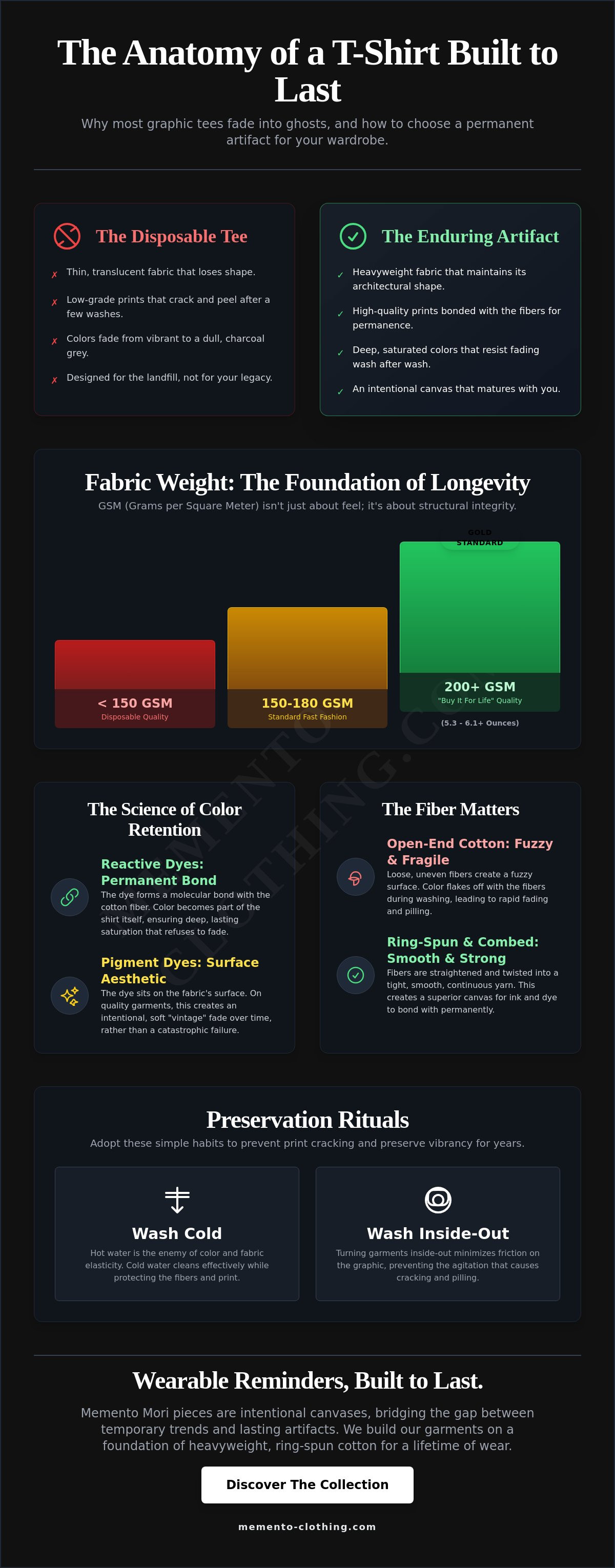
A fragile garment often starts with low GSM. When fabric weight drops below 150 grams per square meter, the structure lacks the mass to retain dye. Most budget tees use open-end cotton. This material has a fuzzy, uneven surface. These tiny loose fibers break off during washing, taking the color with them. To hide this, factories apply chemical finishers. These coatings provide a temporary softness that vanishes after a single wash cycle. You're left with a rough, distorted shell that has lost its original character. It's a hollow version of the piece you bought.
The Hallmarks of Endurance
Longevity requires a superior foundation. Combed and ring-spun cotton offers a smooth, continuous surface. This tight knit prevents the see-through effect common in cheaper alternatives. During the screen printing process, high-quality inks penetrate these refined fibers for a permanent bond. Look for a fabric weight between 5.3 and 6.1 ounces. This range provides the necessary density for color retention. Reinforced stitching and shoulder-to-shoulder neck tape are also vital. These details are the quiet guardians of the silhouette. They ensure the shirt maintains its shape through years of wear. Choosing a garment with these specifications is an act of preservation. It's a choice to own something that matures with you.
The Science of Longevity: Fabric Weight and Dye Integrity
Longevity isn't an accident. It's a calculation. Most garments fail because they lack the physical mass to hold their color against the friction of time. When we discuss non-fading graphic t-shirt brands, we're looking at the intersection of physics and artistry. A garment with a weight of 200 GSM (grams per square meter) or higher provides a stable foundation. This density prevents the fabric from stretching excessively, which is the primary cause of print cracking. Without this mass, the ink has nowhere to anchor itself.
Understanding GSM and Fabric Density
GSM measures the weight of the knit. High GSM isn't just about warmth; it's about structural integrity. A dense fabric provides a flat, consistent surface. Think of it as a higher resolution canvas. Thick cotton can sometimes be "open-end" and airy, which feels heavy but lacks strength. Dense cotton uses tightly packed fibers that resist the agitation of the wash cycle. This stability ensures that the graphic remains an undistorted part of the garment's history. It maintains thermal regulation while offering a shield against the wear of daily life.
Reactive vs. Pigment Dyes: Choosing Your Aesthetic
Color is a choice between chemical permanence and intentional evolution. Reactive dyes create a covalent bond with the cotton fibers. This means the color becomes part of the molecular structure of the shirt. It's the secret to deep blacks that refuse to turn grey. Scientists at the Wilson College of Textiles use rigorous colorfastness tests to measure how well these bonds hold up against light, heat, and water. This is the gold standard for those who seek a garment that looks identical on day one thousand as it did on day one.
Pigment dyes offer a different narrative. They sit on the surface, designed to fade slightly at the edges to create a "vintage" patina. This isn't a failure of quality; it's an aesthetic of transition. However, even with pigment dyes, the base fabric must be strong. Heavyweight cotton allows the ink to settle deeper into the fiber core, preventing the "peeling" effect seen in cheaper alternatives. It's a way to embrace the passage of time without sacrificing the garment's soul.
Choosing non-fading graphic t-shirt brands means looking for these technical specifications. It's about finding a piece that acts as an emotional anchor. If you value a silhouette that remains unchanged through the years, exploring the Memento Mori Heavyweight Hoodie offers a study in this specific structural philosophy. The weight of the fabric directly informs the longevity of the story it tells.
Key Indicators of a "Buy It For Life" Graphic Tee Brand
A brand is more than a logo. It's a curator of technical decisions. When seeking non-fading graphic t-shirt brands, you must look past the aesthetic and examine the architecture of the garment. The most enduring pieces begin as high-quality "blanks." These are the raw canvases sourced from manufacturers who prioritize fiber length and weave density. A shirt's origin determines whether it becomes a lasting artifact or a temporary fragment of a season.
Architecture matters. Most budget shirts use tubular construction, meaning they're knitted as a continuous cylinder. This is efficient for mass production but disastrous for longevity. Over time, tubular shirts torque. The seams twist. The graphic becomes a distorted memory of its original form. Superior brands utilize side-seam construction. This method allows the garment to follow the natural contours of the body. It ensures the silhouette remains stable through years of wear and countless wash cycles.
Look for the "Garment Dyed" label. This process involves dyeing the shirt after it's been sewn. It results in a pre-shrunk, color-stable piece. It eliminates the risk of the fabric shrinking beneath the print, which is a common cause of graphic cracking. It's a commitment to a fixed proportion.
Screen Printing vs. Modern Digital Methods
Traditional screen printing remains the pinnacle of durability. In this process, ink is pushed through a mesh screen, allowing it to sit deep within the fibers. Research indicates screen-printed graphics can last between 50 and 100 wash cycles before showing significant wear. Modern Direct-to-Garment (DTG) methods have improved, but they often struggle with color depth on darker fabrics. DTG prints typically begin to fade or "frost" after 30 to 50 washes. Truly non-fading graphic t-shirt brands often favor screen printing for its tactile weight and vibrational color fastness. Beware of prints that feel excessively thick or rubbery. These layers lack flexibility and will eventually peel away from the cotton foundation.
Construction Details That Matter
The smallest details often provide the strongest defense against time. Double-needle stitching on the sleeves and hem is a requirement for fray resistance. It provides a reinforced edge that refuses to unravel. When these elements align with pre-shrunk heavyweight fabrics, the result is a garment built for the long walk. It's a wearable reminder that some things are meant to stay.
Construction details define the lifespan of your wardrobe. You can find this meticulous attention to detail in the Memento Mori Vintage Tee, where every stitch is an intentional choice.
- Double-needle stitching: Look for twin lines of thread at the hem and sleeves to prevent unraveling.
- High-ribbed collars: These maintain their crisp, intentional line and won't sag or "bacon" over time.
- Side seams: Essential for maintaining a tailored fit and preventing the garment from twisting after a wash.
Preserving the Narrative: How to Stop Graphic Prints from Cracking
Care is not a chore. It's a ritual. Even the most resilient non-fading graphic t-shirt brands require a mindful approach to maintenance. You've invested in a piece that carries a story. Protecting that narrative requires understanding the chemistry of the wash. Mechanical friction and thermal stress are the primary architects of a print's demise. By adopting a few intentional habits, you can stop the cracking and peeling that plagues lesser garments. Maintenance is simply an act of respect for the craft.
The first rule is simple. Turn the garment inside out. This creates a physical barrier between the graphic and the abrasive surfaces of other clothes in the drum. Use only cold water. Heat causes cotton fibers to swell and contract violently. This movement puts immense pressure on the ink bond. Over time, that pressure manifests as visible cracks. Choosing a gentle detergent is equally vital. Avoid products with harsh enzymes like cellulase. These chemicals are designed to "brighten" fabrics by eating away loose fibers, but they also digest the structural integrity of the cotton itself. This slow erosion eventually leaves the print with nothing to hold onto.
The Ultimate Wash Cycle for Longevity
- Sorting is the first step. Never wash heavyweight tees with heavy zippers or rough denim. The metal teeth can snag the print.
- Skip the fabric softener. These liquids coat the fibers in a waxy film. This film prevents the fabric from breathing and can eventually interfere with the ink's adhesion to the cotton core.
- Treat stains with care. Use a spot treatment but avoid scrubbing the print area directly. Gentle dabbing with a damp cloth preserves the surface area.
- Hang your shirts in a shaded area. Direct sunlight acts as a natural bleach. It's a slow, silent way to lose the saturation you've worked to preserve.
Long-term Storage and Care
Proper storage is the final hallmark of non-fading graphic t-shirt brands. Heavyweight cotton (200+ GSM) has significant mass. Hanging a wet, heavy shirt can lead to "hanger bumps" or a permanently sagging neckline. Folding is the superior choice for long-term storage. It supports the garment's weight and prevents the graphic from stretching out of proportion. If the print feels stiff after air drying, use a steamer. Never touch an iron to the graphic surface area. Steam rehydrates the fibers and softens the ink without the risk of melting the design. This preserves the tactile quality of the original piece.
A well-maintained shirt becomes a second skin. It's an emotional anchor that survives the seasons. To start your collection with a piece designed for this level of permanence, explore the Memento Mori Vintage Tee and experience the difference of intentional construction.
Memento Mori Clothing: Wearable Reminders Built to Last
A garment should be a silent witness to your life. Most modern apparel is designed to be forgotten, arriving with a vibrancy that quickly surrenders to the wash. At Memento Mori, we reject this transience. We create wearable reminders that stand firmly against the tide of fast fashion. The Memento Mori Vintage Tee is our answer to the ephemeral. It's a piece where philosophy meets physics. We utilize the structural secrets of non-fading graphic t-shirt brands to ensure your chosen message remains vivid through the years. This isn't just about ink on cotton. It's about the integrity of the artifact you choose to wear.
Our commitment to longevity is a reflection of our worldview. We believe in an intersection of aesthetic minimalism and rugged construction. A shirt shouldn't just be a product. It should be an emotional anchor. By focusing on heavyweight fabrics and superior dyeing techniques, we've created a collection that acts as a permanent canvas. These pieces don't just occupy space in a wardrobe. They hold a place in a personal history. They're built to endure the friction of daily life while maintaining their original soul.
From Philosophy to Fabric
The Memento Mori story informs every technical decision we make. If we are to remember our mortality, we must value the things that last. Intentionality means producing clothing that avoids the landfill. A shirt should gain a patina of memory, not a collection of cracks and holes. Our garments are designed to age with you, evolving in character while maintaining their physical strength. This dedication to permanence is what defines our place among non-fading graphic t-shirt brands. We don't follow trends. We follow the timeless.
The Heavyweight Collection
Our commitment to mass is evident in the Memento Mori Heavyweight Hoodie. It's built as a shield against the mundane, utilizing high-GSM cotton that retains its silhouette. This same obsession with density extends to our Youth Graphic T-Shirts. We don't compromise on quality for smaller sizes. Every piece in our collection follows the same rigorous standards of construction and color fastness. We offer a minimalist aesthetic supported by rugged engineering. It's a choice to wear something that matters, for as long as it matters. It's a way to leave a lasting footprint in a world that often forgets.
The Pursuit of Permanence
A garment is a vessel for memory. By prioritizing heavyweight 200+ GSM cotton and understanding the chemistry of reactive dyes, you ensure your story doesn't wash away. Longevity isn't just a technical spec; it's a commitment to things that endure. When you look for non-fading graphic t-shirt brands, you're choosing to own artifacts that gain character over time. We've explored how intentional construction and mindful care rituals transform a simple piece of clothing into a lasting emotional anchor. This is the difference between a temporary trend and a permanent legacy that survives the friction of the everyday.
Every stitch and pigment choice at Memento Mori is an act of defiance against the disposable. Our garment-dyed pieces offer the stability of a vintage aesthetic without the fragility of fast fashion. It's time to build a wardrobe that reflects your values and survives the seasons. Explore the Memento Mori Collection: Apparel Designed for the Long Run. Choose pieces that stay with you, carrying your narrative into the future with quiet, unwavering confidence. Your clothes should last as long as the memories they hold.
Frequently Asked Questions
Do 100% cotton graphic t-shirts fade faster than polyester blends?
High-quality 100% ring-spun cotton doesn't necessarily fade faster than blends. While polyester is essentially plastic and holds pigment, it lacks the breathability and soul of natural fibers. Premium cotton treated with reactive dyes creates a molecular bond that resists fading. It's about the quality of the dye and the density of the weave rather than the presence of synthetic fibers. A well-crafted cotton tee matures with grace.
How can I tell if a graphic tee is high quality just by touching it?
Look for a smooth, dense hand-feel rather than simple bulk. High-quality cotton feels substantial yet refined, lacking the fuzziness of cheaper open-end yarns. If the fabric feels rough or looks translucent when held to the light, it won't hold its color. Truly non-fading graphic t-shirt brands prioritize a tight, combed weave. This creates a stable surface that keeps the print and the pigment locked within the structure.
What is the best printing method for a t-shirt that will never peel?
Traditional screen printing is the most resilient method for preventing peeling. The process allows ink to penetrate the cotton fibers, becoming a part of the garment's history. Unlike heat transfers or low-end digital prints that sit on the surface like a sticker, screen-printed designs move with the fabric. They're designed to withstand the friction of time. Choosing this method ensures your wearable reminder remains an unbroken narrative for years.
Why do black t-shirts turn grey, and can I stop it?
Black shirts turn grey when individual fibers break and shed, revealing a pale core. This is often accelerated by hot water and aggressive drying. You can stop this by washing in cold water and avoiding harsh detergents. Selecting garments with reactive dyes is also essential. These dyes bond permanently with the cotton, ensuring the obsidian depth of your shirt remains a constant, even after many cycles.
Is "Garment Dyed" better for preventing fading in graphic tees?
Garment dyeing is superior for color stability and preventing structural distortion. Because the shirt is dyed after assembly, the fabric is fully shrunk and the color is set before the graphic is ever applied. This creates a reliable foundation. It prevents the underlying fibers from shifting or contracting at a different rate than the print. It's a hallmark of non-fading graphic t-shirt brands that value consistency.
Can I iron my graphic t-shirts if they are made of heavyweight cotton?
You should never apply a hot iron directly to the graphic surface. The heat can liquefy the ink, causing it to smear or peel. Use a steamer to gently relax the heavyweight cotton fibers instead. If an iron is necessary, turn the garment inside-out and use the lowest setting. This protects the integrity of the print while maintaining the crisp, intentional silhouette of your favorite pieces.
What does GSM mean, and why should I care when buying a t-shirt?
GSM stands for Grams per Square Meter, a measurement of the fabric's weight and density. You should care because it's a primary indicator of a garment's lifespan. A higher GSM, typically 200 or more, means the shirt has the physical mass to retain its shape and pigment. It provides a more substantial canvas that resists the thinning and fading common in lightweight, disposable fast-fashion alternatives.
How often should I wash my premium graphic tees to ensure they last?
Wash your premium tees as sparingly as possible to extend their existence. Over-washing is a form of slow erosion for both the fabric and the print. Spot cleaning and airing out the garment are often enough to maintain freshness. When a full wash is required, follow the cold-water rituals discussed earlier. This mindful approach ensures your clothing remains a vivid part of your personal story for a lifetime.