
The Best Material for Vintage Feel T-Shirts: A Guide to Intentional Quality
Most modern garments are designed to be ephemeral; they are ghosts that vanish after a few cycles in the wash. A true vintage tee is different. It acts as a structural anchor for your identity and your history. Finding the best material for vintage feel t-shirts is not a search for the softest synthetic blend, but a quest for the weight that survives the passing of time. You likely know the frustration of a shirt that lacks soul. It is thin, scratchy, and loses its shape before the memories even begin to take root.
You deserve a piece that ages with grace rather than simply falling apart. This guide reveals the specific fabric weights, weaves, and cotton types that create the authentic drape of a legacy garment. We will explore why high-GSM ring-spun cotton serves as the essential foundation for a "forever" shirt. By the end, you'll understand how intentional quality and heavyweight construction define pieces like our Memento Mori Vintage Tee, turning a simple garment into a lasting vessel for self-expression and remembrance.
Key Takeaways
- Understand why weight equals soul. The 6.0 to 7.5 oz range provides the necessary heft for a lasting, intentional silhouette.
- Identify the best material for vintage feel t-shirts by prioritizing high-GSM ring-spun cotton over the ephemeral cling of polyester blends.
- Recognize the structural signals of longevity, such as the high-ribbed collar, that distinguish a legacy piece from a disposable one.
- Learn how to navigate the break-in period of heavyweight fabric to achieve a personalized, soft-hand feel that mirrors authentic mid-century garments.
The Architecture of a Classic: Why Fabric Defines the Vintage Feel
A true vintage feel is a tangible weight. It is the specific marriage of hand-feel, drape, and structural heft. Many mistake "vintage" for a faded graphic, but the soul of the garment lives within its fibers. Looking back at the history of the t-shirt, we see a shift from utilitarian undergarment to a symbol of permanence. Mid-century shirts were built to endure. They possessed a certain gravity that modern, mass-produced alternatives lack. To find the best material for vintage feel t-shirts, one must look beyond the surface and evaluate how a fabric holds space against the body.
The drape of a vintage tee isn't accidental. It's the result of intentional density. When a shirt has enough weight, it doesn't cling to every curve or ripple; it hangs with a quiet confidence. This structural integrity allows the shirt to act as a canvas for your life. It becomes a physical record of where you've been. Fabric choice dictates this journey. A lower quality weave will shred and thin, while a superior cotton will only grow more distinguished with age.
The Problem with Modern "Fast" Fabrics
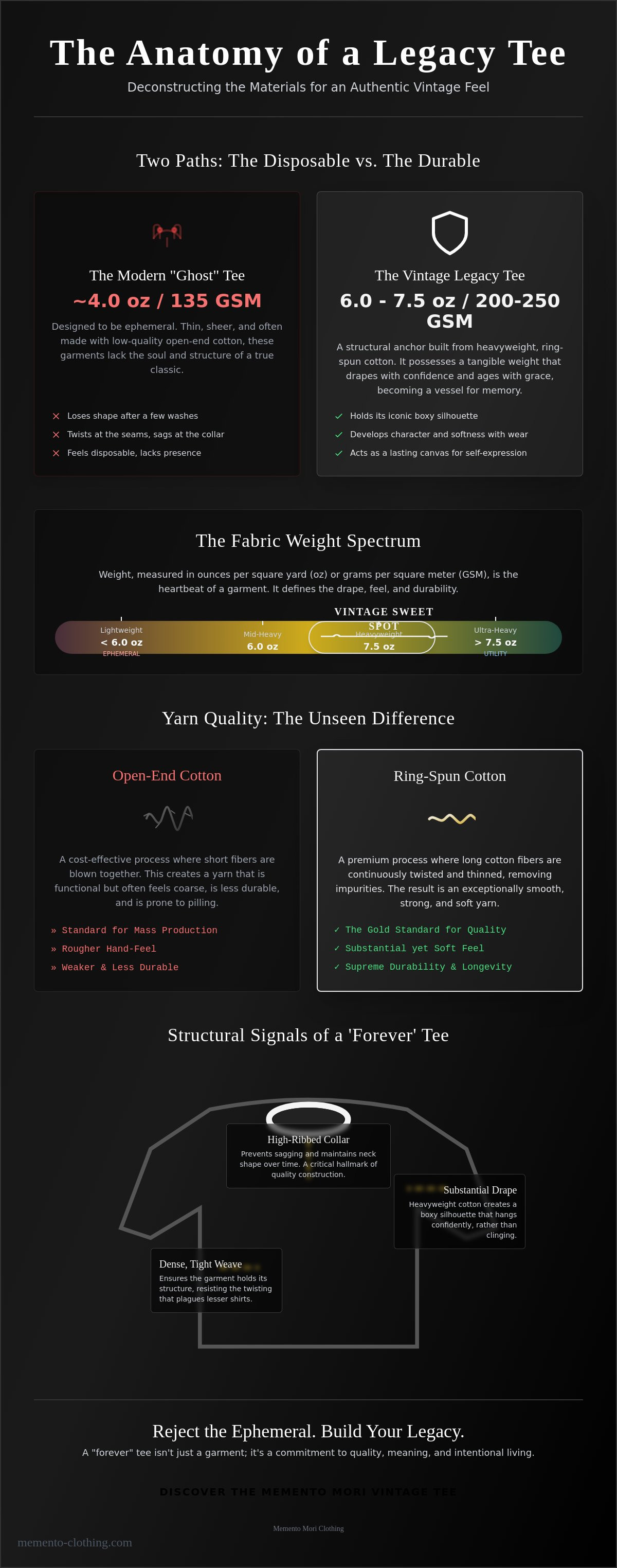
Modern retail favors the ephemeral. Most contemporary shirts use 4oz "lightweight" cotton that feels disposable after a single wash. These fabrics are often sheer, lacking the opacity required for a dignified silhouette. They lose their shape, twisting at the seams and sagging at the collar. This is the cost of "fast" fashion. It isn't just an environmental burden; it's a personal one. You're left with a garment that can't hold a memory because it can't survive the season. These "tissue-thin" tees are ghosts. They haunt your wardrobe for a few weeks before being discarded, leaving no trace of their existence.
The Philosophy of the "Forever" Tee
We believe a shirt should witness a lifetime. It should be a quiet companion through years of wear. This perspective is central to the Memento Mori philosophy. Choosing high-quality materials is an act of intentional living. It's a rejection of the temporary. A heavyweight fabric doesn't just last; it ages. It develops a character that reflects your own personal legacy. When you select the best material for vintage feel t-shirts, you aren't just buying clothes. You're choosing an emotional anchor that remains steady as the world shifts around you. It's a commitment to quality over quantity, and meaning over trend.
Cotton Weight and Weave: The GSM and Ounce Breakdown
The weight of a garment is its heartbeat. In the technical world, we measure this through GSM (Grams per Square Meter) or ounces per square yard. These metrics define the presence of a shirt. To find the best material for vintage feel t-shirts, you must look for the "Vintage Sweet Spot." This range exists between 6.0 oz and 7.5 oz, or roughly 200 to 250 GSM. Anything lighter feels like a whisper that fades. Anything heavier might feel like armor. Within this specific window, the fabric finds its balance.
Weave density is the silent guardian of a shirt's shape. High-density weaves prevent the dreaded twisting that occurs after a few cycles in the laundry. When the threads are packed with intention, the garment retains its architectural integrity. This is not merely about thickness. It is about how the fibers interact. The physical structure of cotton determines how these fibers grip one another, influencing the strength and the eventual softness of the textile. A dense weave ensures the shirt hangs straight, honoring the wearer's frame rather than collapsing against it.
Understanding Heavyweight Cotton (6.5oz - 7.5oz)
Heavyweight cotton is the architect of the iconic boxy vintage silhouette. It provides a drape that modern, clingy fabrics cannot replicate. While some fear that weight brings heat, the science of thermoregulation suggests otherwise. Natural, heavy cotton allows air to circulate between the thick fibers, keeping the body cool while maintaining a substantial feel. Heavyweight cotton stands as the gold standard for structural integrity.
Ring-Spun vs. Open-End Yarn
The method of spinning the yarn changes the narrative of the fabric. Open-end yarn is the standard for mass production; it is functional but often lacks refinement. In contrast, ring-spun cotton undergoes a process of continuous thinning and twisting. This combing removes impurities and short fibers, leaving only the longest, strongest threads. The result is a material that feels substantial yet soft against the skin. It captures the premium vintage feel by offering the heft of a classic piece with the comfort of a cherished heirloom. If you seek this balance, our Memento Mori Vintage Tee exemplifies this marriage of strength and grace.
Tri-Blends vs. Heavyweight Cotton: Which Captures the Retro Soul?
The marketplace often whispers that softness is the ultimate virtue. This leads many toward tri-blends. While these mixtures of cotton, polyester, and rayon offer immediate comfort, they lack the structural soul of a classic garment. True vintage is defined by its drape. A 100% cotton shirt hangs with a certain architectural gravity. In contrast, synthetic blends tend to cling. They follow the body too closely, losing the intentional, detached silhouette that defines mid-century style. When searching for the best material for vintage feel t-shirts, one must choose between the ephemeral ease of a blend and the lasting presence of pure cotton.
A common objection arises: Is heavyweight cotton too stiff? Initially, perhaps. But this stiffness is a promise of future character. Heavyweight cotton requires a break-in period. Much like a fine pair of leather boots, it learns your shape over time. It softens through use, not through chemical shortcuts. This process allows the fabric to absorb pigments and oils, creating a unique patina. Modern science has sought to create durable and wrinkle-resistant cotton, yet these treatments often strip the material of its ability to age naturally. Authentic vintage thrives on the honest wear that only pure fibers can endure.
The Case for 100% Cotton
Natural fibers breathe. They possess a hypoallergenic quality that synthetic threads can never replicate. As you wear and wash 100% cotton, it develops a soft-hand feel that is earned, not manufactured. This is the patina of a life well-lived. Beyond the personal experience, there is a quiet dignity in choosing materials that do not shed micro-plastics into the world. Natural cotton returns to the earth; polyester persists as a silent residue. It is a choice that honors both the wearer and the environment.
When to Avoid Tri-Blends
Blends often feel flimsy. They lack the heft required to maintain the boxy fit seen in iconic 90s streetwear. Because polyester is essentially plastic, it tends to retain odors and trap heat against the skin. Over time, these garments do not age; they simply decay. They develop pills, which are small, unsightly clusters of tangled fibers that signal the end of the shirt's life. If you seek a garment that acts as a witness to your history, avoid the cling of the blend. Choose the best material for vintage feel t-shirts: high-ounce, unyielding cotton that softens only under the weight of time.
Beyond the Label: Structural Details That Signal Vintage Longevity
While the weight of the cotton provides the soul, the construction provides the skeleton. Finding the best material for vintage feel t-shirts is only half the journey. You must also look at how that material is held together. A classic tee is a feat of engineering. It requires specific reinforcements to ensure it doesn't succumb to the gravity of its own weight or the stress of daily life. These structural choices define whether a garment is a mere commodity or a lasting anchor for your identity.
The neckline is often the first place where a lesser garment reveals its weakness. It sags. It ripples. We call this "bacon neck," and it is the antithesis of intentional quality. A thick, 1x1 ribbed collar acts as the structural foundation of the tee. It stays tight against the neck, framing the face with a certain formality that lightweight, flimsy shirts lack. This detail is a quiet signal of a high-quality reproduction. It ensures the silhouette remains sharp and intentional for years, rather than stretching into an unrecognizable shape after a single season.
The Ribbed Collar and Neckline
A reinforced neckline is the most visible marker of a shirt built to endure. When a collar uses a dense 1x1 rib, it possesses the elasticity to snap back into place after every wear. It acts as the structural foundation of the tee. This choice prevents the collar from expanding or losing its crisp edge. In the world of vintage aesthetics, a tight, high-ribbed neck is the first indicator that a garment was designed with reverence for the past. It provides a sense of security and permanence that defines the "forever" tee.
Stitching and Seams
The single-stitch myth persists among collectors. It is often used as a shorthand for authenticity. While it marks a specific era of production, modern double-stitching often provides the durability required for a true legacy piece. The real secret lies in the tubular construction. By eliminating side seams, the shirt becomes a singular, cohesive form. This prevents torquing. It ensures the garment never twists or distorts around your torso, even after decades of cycles through the laundry. It is a nod to the manufacturing standards of the 80s and 90s, where shirts were built as cylinders of resilience.
Shoulder-to-shoulder taping is the final, essential reinforcement. In a heavyweight garment, the weight of the fabric itself can be its own enemy. Without this internal tape, the seams at the shoulders would eventually stretch and sag under the heft of the cotton. This taping acts as a bridge. It distributes the weight evenly across the frame. It is a non-negotiable feature for those seeking the best material for vintage feel t-shirts. These hidden details ensure that the "boxy" fit you admire today remains the same silhouette you wear ten years from now.
If you value these structural nuances, explore our Memento Mori Vintage Tee, crafted with tubular construction and a reinforced neckline to endure.
Intentional Design: The Memento Mori Approach to the Perfect Vintage Tee
Quality is an act of defiance against the fleeting. We don't select the best material for vintage feel t-shirts merely for the sake of aesthetics. We do it to ground the wearer in the physical world. The Memento Mori Vintage Tee represents the culmination of these standards. It is a garment with gravity. This weight is intentional; it serves as a constant, subtle reminder of the present. Wearing it is a tactile ritual that demands awareness and appreciation for the now.
We view our creations as vessels for memory. A thin, disposable shirt cannot hold the weight of a life lived with purpose. By choosing high-density, heavyweight cotton, we ensure that each piece becomes more than just apparel. It becomes a companion. These are "future vintage" garments. They are built with such resilience that your children might find them in a thrift store thirty years from now. They will still possess the same soul and structure they do today.
Crafted for the National Stage
Our commitment to excellence extends across the United States. We prioritize high-ounce, ring-spun cotton to provide a premium experience for every individual who seeks depth in their wardrobe. This choice allows us to balance the "heft" of historical silhouettes with the refined comfort expected of a modern luxury item. This isn't just manufacturing. It's a translation of ancient wisdom into a modern medium. Every fiber is influenced by the Memento Mori story, ensuring that our philosophy is woven into every stitch. We don't follow trends; we create artifacts that honor the passage of time.
A Wardrobe of Meaning
Choosing a heavyweight tee is a quiet rejection of the disposable culture that defines much of the modern world. It is a statement of value. Pairing these vintage-inspired pieces requires no effort; their presence is enough. They work best with understated, timeless staples that allow the texture and drape of the cotton to speak for itself. This is style as a worldview. It is the belief that what we wear should reflect our internal landscape: steady, thoughtful, and enduring. When you invest in the best material for vintage feel t-shirts, you're investing in a legacy that refuses to fade. Explore our collection of intentional, heavyweight apparel and find the piece that will witness your history.
Choosing Permanence in a Fleeting World
Choosing a garment is an act of curation. It's a decision about which objects deserve to witness your life. We've explored how weight, weave, and construction define the difference between a disposable item and a legacy piece. Identifying the best material for vintage feel t-shirts is the first step toward a wardrobe that tells a story. Look for the heft of heavyweight cotton and the resilience of tubular construction to ensure your silhouette remains intentional through the years.
Our collection is built on these exact standards. With custom-developed 7.5oz cotton and a philosophy-driven design, we create pieces that honor the passage of time. These shirts don't just mimic the past; they prepare for the future. They're designed to be the artifacts your descendants find and cherish. It's time to move beyond the ephemeral and embrace the enduring. Discover the Memento Mori Vintage Tee and begin your journey toward a more intentional, lasting style.
Frequently Asked Questions
What is the best weight for a vintage feel t-shirt?
The ideal weight for an authentic feel falls between 6.0 and 7.5 ounces. This density provides the necessary heft to create a silhouette that doesn't collapse against the body. It is often cited as the best material for vintage feel t-shirts because it balances structural presence with long-term comfort. Anything lighter lacks the gravity required for a true, mid-century drape.
Does 100% cotton feel softer than a tri-blend over time?
Pure cotton develops a unique softness that synthetic blends cannot replicate. While tri-blends offer immediate ease, they eventually pill and lose their form. 100% cotton gains a patina with every wash. It absorbs the history of your movements, becoming a softer, more personalized version of itself over years of intentional wear and reflection.
What is the difference between GSM and fabric ounces?
These are simply different languages for measuring fabric density. GSM stands for grams per square meter, while ounces measure weight per square yard. Both tell you how much fiber is packed into the weave. For those seeking the best material for vintage feel t-shirts, a GSM above 200 is the standard for a garment that feels substantial and permanent.
Why do vintage t-shirts have a boxy fit?
This silhouette is a product of tubular construction and fabric density. Vintage garments were often knit as a single cylinder without side seams. When combined with high-ounce cotton, the shirt maintains its shape rather than clinging to the body. This creates a detached, architectural look that honors the wearer's frame with a quiet, reserved confidence.
Is heavyweight cotton too hot to wear in the summer?
Heavyweight cotton is surprisingly comfortable in heat due to its natural breathability. Unlike polyester, which traps moisture and heat, thick natural fibers allow air to circulate. This thermoregulation keeps you cool while providing a sense of physical security. It's a functional weight that serves as a steady companion regardless of the season's inevitable shift.
What does "ring-spun" cotton mean for t-shirt quality?
Ring-spun refers to a process where cotton fibers are continuously twisted and thinned to create a stronger thread. This method removes short, weak fibers and impurities. The result is a yarn that is significantly more refined than standard open-end cotton. It allows a heavyweight garment to feel smooth against the skin without sacrificing its structural soul or durability.
How should I wash a heavyweight t-shirt to keep the vintage feel?
Wash your garment in cold water and allow it to air dry or use low heat. Harsh detergents and high temperatures can strip the fibers of their natural resilience. Treat the laundering process as a ritual of preservation. By avoiding aggressive cycles, you allow the cotton to age gracefully and develop its character over decades of use.
What is a "single-stitch" t-shirt and why does it matter?
Single-stitching is a sewing method where a single line of thread is visible on the hems and sleeves. It was the industry standard until the late 1990s. While it's a useful marker for dating authentic vintage pieces, it's a historical detail rather than a guarantee of superior strength. It represents a specific era of manufacturing before double-stitching became the modern norm.