
Smart Casual: Which Layers Create a Polished, Relaxed Look
The most polished outfit isn’t always the most formal one. The answer to how to dress casually and look smart is to balance relaxed pieces with a more structured layer, such as a blazer over a simple shirt and well-fitting jeans. The result feels composed without becoming corporate.
That balance can be harder to find than it sounds. A dress code may leave room for interpretation, while a favorite casual piece can feel too informal on its own. Smart casual works best when each choice has a purpose: one element brings ease, another adds shape, and the overall look still feels like you.
Here, you’ll learn what smart casual means, how to keep your personal style in the picture, and which layers can bring an outfit together. We’ll also distinguish smart casual from professional and semi-formal dress, so you can adjust the polish to the setting without losing your sense of ease.
Key Takeaways
- Build a smart-casual outfit by pairing well-fitting, non-ripped jeans with a more polished piece, then let the details refine the look.
- Balance ease with structure so your outfit feels relaxed and composed, rather than entirely corporate or purely casual.
- Use a blazer, cardigan, or another considered layer to add shape and adjust the level of polish to the setting.
- Distinguish smart casual from professional and semi-formal dress by considering how structured the outfit is and what the occasion calls for.
1. What is smart casual?
Smart casual pairs relaxed clothing with polished details, without requiring a fixed uniform. A white shirt with dark, well-fitting jeans is a clear example. To dress casually and look smart, balance an easygoing piece with structure, a considered fit, or refined accessories.
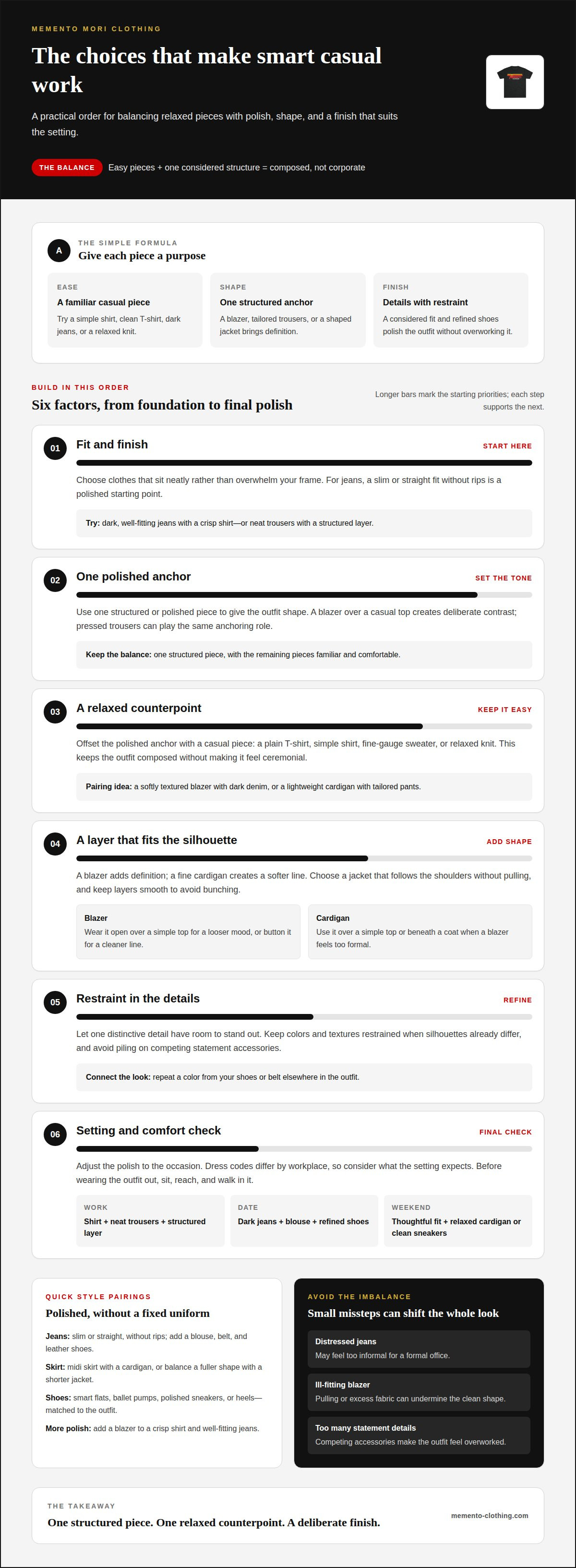
Build a capsule wardrobe with pieces that pair easily: dark jeans, a crisp shirt, a neutral cardigan, and a versatile jacket. Wear the shirt with jeans on its own, then add a blazer for more polish. A statement coat can also elevate a simple outfit: a clean, structured silhouette adds presence to a T-shirt and jeans. Keep proportions deliberate by balancing wide-leg trousers with a closer-fitting top, or a flowing skirt with a shaped jacket. Tailoring helps clothes sit neatly rather than overwhelm your frame.
Jeans work best when their fit and finish suit the setting. Choose a slim or straight pair without rips, then add a blouse, belt, and leather shoes. Flare jeans offer another polished option with a tucked-in shirt. For dresses and skirts, try a midi skirt with a cardigan or a simple dress with a belt and understated accessories. Aim for a deliberate pairing, not an overworked one.
Smart flats, ballet pumps, polished sneakers, and heels can all work. Match the shoes to the outfit: clean white trainers soften a tailored look, while slingbacks sharpen dark jeans. Build a budget-friendly wardrobe by first using versatile pieces you already own, then adding items that complete several outfits. The total cost depends on what you own and which pieces need replacing or tailoring.
Common missteps include wearing distressed jeans to a formal office, choosing an ill-fitting blazer, or piling on competing statement accessories. For work, try a shirt, neat trousers, and a structured layer. For a date, wear dark jeans with a blouse and refined shoes. On weekends, keep the thoughtful fit but swap in a relaxed cardigan or clean sneakers.
2. Balancing professionalism and personal style
A dress code sets the frame; personal style gives the outfit its character. For a workplace, ask what attire is expected, since dress codes differ by employer, according to the U.S. Bureau of Labor Statistics. Then choose one polished anchor, such as pressed trousers, and let the remaining pieces feel more relaxed. A textured knit or simple shirt can soften the formality without losing intention.
To balance dressy and casual clothing, start with a single contrast. Pair a neat button-down with straight-leg chinos, or wear a relaxed knit beneath a clean jacket. Keep colors and textures restrained when the silhouettes already differ. A polished jacket over a casual top creates deliberate contrast, while formal shoes and a tie may shift the outfit toward business casual.
How can you dress smart casual without looking overdressed? Choose one structured piece, then keep the rest familiar and comfortable. A casual shirt with tailored trousers feels composed, while a full suit with formal accessories can look too ceremonial for an easygoing setting.
Comfort depends on movement as well as fabric. Sit, reach, and walk in the outfit before wearing it out. Trousers should stay in place, and a jacket should let your arms move freely. If a collar feels restrictive or a hem needs constant adjustment, choose another piece. This simple test preserves ease while keeping the finish polished.
Personal details work best when they have room to be seen. A muted outfit can take one distinctive accessory, while a patterned shirt may need simpler shoes and outerwear. For a relaxed weekend outside a strict dress code, a youth graphic T-shirt can make personal expression the focus. Keep the rest understated, and reserve that pairing for settings where a graphic feels appropriate.
3. Blazers, cardigans, and other layering pieces
A useful layer changes the silhouette as well as the temperature. Start with a close-fitting base, then add a blazer that follows your shoulders without pulling across the chest. Its hem should sit neatly over the waistband, not swallow the outfit. A fine cardigan creates a softer line; wear it beneath a coat or over a simple top when a blazer feels too formal. Smooth layers help prevent bunching at the sleeves and waist.
For smart casual outfits, consider the contrast between fabric and shape. Dark denim and a softly textured blazer feel composed without matching like a suit. Tailored pants take a different direction with a lightweight cardigan and a clean knit polo. With either pairing, repeat a color in the shoes or belt to connect the pieces. A classic neutral jacket also works with denim, trousers, and skirts, giving a small wardrobe more combinations.
A tailored jacket adds definition, while a relaxed blazer makes that structure feel less ceremonial. Choose a fabric with visible texture, such as tweed or soft cotton, and wear it open over a simple top. Buttoning the jacket creates a cleaner line; leaving it open shows the layer beneath and loosens the mood. With a skirt, balance a fuller shape with a shorter jacket, or let a longer jacket frame a straighter skirt.
To dress down a blazer, swap formal details for familiar ones. Try a fine-gauge sweater, a plain T-shirt, or dark jeans, then keep accessories restrained. A cardigan can work just as well over a button-front shirt, especially when its color echoes a subtle detail elsewhere in the outfit. With a statement coat, keep inner layers quiet so its shape remains the focus. The aim isn’t to remove polish, but to distribute it: one structured piece, one relaxed layer, and a finish suited to the setting.
4. Smart casual compared with professional and semi-formal dress
Smart casual sits between everyday clothing and more formal dress, but it isn’t simply business casual with softer shoes. A blazer with pumps may suit business casual; smart casual can pair tailored trousers with a relaxed knit and clean sneakers instead. The difference is balance: professional settings often favor consistency and restraint, while smart casual leaves more room for personal style. For a board meeting, choose a more structured outfit; for dinner afterward, loosen it with a casual top or shoes.
Professional dress usually puts greater emphasis on formality and a conventional finish. A matching suit, pressed shirt, and polished shoes send a clear professional signal. Smart casual can retain one of those elements, such as a blazer, while replacing the rest with dark denim or a simple blouse. That one change shifts the outfit’s character without making it careless. Workplace dress codes still matter, since “smart casual” can mean different things in different settings.
Semi-formal dress is generally more occasion-led than smart casual. For an evening event, a refined dress or coordinated separates feel more appropriate than a casual T-shirt and jeans. Smart casual leaves more room for everyday pieces, such as loafers with a neat blouse and tailored pants. In summer, lighter fabrics and open shoes can preserve a polished look; a statement accessory adds distinction without making the outfit feel formal.
Use the occasion as your guide: identify its formality, then adjust one piece at a time. Swap sneakers for loafers to make a relaxed outfit sharper, or replace a structured jacket with a cardigan to soften a formal combination. The takeaway is simple: professional dress prioritizes a consistent standard, semi-formal dress answers an occasion, and smart casual balances both with ease. Explore relaxed everyday style for another way to bring personal character into casual dressing.
Memento Mori Clothing: Memento Mori Heavyweight Hoodie
Memento Mori Clothing’s Memento Mori Heavyweight Hoodie suits days when comfort and personal expression matter more than formal polish. Pair it with dark jeans and simple shoes for a relaxed outfit, or wear it beneath an open jacket when the setting suits a layered look. For a lighter casual option, the Memento Mori Vintage Tee and Memento Crewnecks bring the same reflective spirit to everyday dressing. Memento Hats can finish an informal outfit without competing with its main pieces.
A hoodie won’t suit every smart-casual workplace or occasion. Choose one for a relaxed setting, and keep the rest of the outfit clean and considered. Visit memento-clothing.com to explore Memento Mori Clothing’s casual apparel.
Let Your Everyday Style Leave a Mark
Personal style takes shape through the choices you return to, not through a perfect formula. As you decide how to dress casually and look smart, leave room for pieces that feel like your own, even when the occasion calls for restraint. A considered outfit can look polished without erasing the details that make it personal.
Memento Mori Clothing’s Memento Mori Heavyweight Hoodie, Memento Mori Vintage Tee, and Memento Crewnecks bring a reflective sensibility to casual dressing. Choose the piece that fits your everyday style, then make it part of the stories you carry forward.
Explore Memento Mori Clothing and find a piece that feels true to your own way of dressing. Let the next outfit be a quiet expression of who you are.
Frequently Asked Questions
What is smart casual?
Smart casual is a flexible way to dress, combining relaxed clothing with more polished pieces. There’s no single uniform, so the balance depends on the occasion. A pencil skirt with a classic T-shirt or a neat shirt with dark jeans can both work. Think of it as a considered outfit that preserves ease while showing care in fit and finish.
Are casual items like jeans and sneakers okay in that case?
Yes, jeans and sneakers can work when they look intentional and suit the setting. Choose jeans without rips in a clean, dark wash, then pair them with a blouse or structured jacket. Keep sneakers neat and simple; a polished pair can soften a dress or skirt. For a more formal workplace or event, the dress code may call for dress shoes instead.
Okay, so what makes it different from business casual?
Business casual generally follows a more consistent workplace standard, while smart casual allows more personal interpretation. A blazer with pumps and tailored trousers reads as business casual; swap the pumps for clean trainers or the trousers for dark denim to make the outfit more relaxed. Context is key: a board meeting may call for greater formality than a casual office gathering.
What is the smart casual dress code for men and women?
For men, one option is a button-down shirt with well-fitting trousers and desert boots; a blazer can sharpen dark jeans. For women, try a blouse with wide-leg trousers or a knee-length or longer dress with restrained accessories. Either look can work with polished flats or clean trainers when the occasion allows. Let the venue and workplace expectations guide how dressed up to be.
What are the best smart casual basics for a capsule wardrobe?
Choose versatile pieces that adapt when you change your shoes or outerwear: a crisp shirt, dark jeans, tailored trousers, a cardigan, and a blazer. A midi skirt or simple dress adds another silhouette. Keep the palette cohesive, then introduce an accent with a scarf, belt, or bag. Before buying anything, consider whether it pairs naturally with clothes you already wear.
Which fabrics and fits look polished but feel comfortable?
Look for fabrics that hold their shape without restricting movement, such as a cotton-blend shirt or soft knit cardigan. For jeans, a clean finish and a premium feel help create a more considered look. Fit matters just as much: trousers should sit comfortably at the waist, and jackets should allow easy arm movement. Try sitting and walking before settling on an outfit.