
Non-boring casual clothes for men that feel personal
Casual style doesn’t need to be loud to feel distinctive. Start with well-fitting chinos, add a seasonal layer in a contrasting texture, then give the outfit character with your shoes and one considered accessory. Non-boring casual clothes for men come down to balance: familiar pieces chosen with intention and shaped around your fit, not a passing trend.
It’s easy to reach for the same safe combination every day. The answer isn’t a crowded wardrobe, but a clearer sense of how proportion, colour, and texture work together. This guide shows you how to build casual outfits around chinos, choose seasonal layers, and bring the look together with shoes and accessories. Practical styling choices can make each combination feel more like you, whether your style is understated, relaxed, or quietly considered.
Key Takeaways
- Choose chinos or drawstring trousers by balancing comfort with a clean, intentional shape.
- Build seasonal outfits through thoughtful layers, using texture and colour to create quiet contrast.
- Bring tops, outerwear, shoes, and accessories together by giving each piece a clear role.
- Use fit as the foundation: proportion and ease matter more than following every trend.
- Avoid common styling missteps by editing the outfit and letting one personal detail stand out.
1. Chinos and drawstring trousers
Chinos sit between denim and dress trousers. Their clean surface works with a knit polo, a plain T-shirt, or an unstructured jacket. Start with a straight or gently tapered cut, and check that the fabric falls smoothly from hip to hem. You don’t need a sharp crease, just a clean line.
Fit comes first. The waistband should stay in place without pulling, and the seat shouldn’t strain when you sit. Check the hem with the shoes you plan to wear: a slight break suits leather sneakers, while a shorter hem shows more of a loafer. Olive chinos and a cream tee, for example, feel considered without looking formal.
Colour gives familiar trousers a more personal note. Try stone, olive, tobacco, or deep navy rather than defaulting to black. Pair stone chinos with a dark green overshirt, or wear tobacco with an off-white knit. Keep one piece simple when another has visible texture, such as a brushed flannel shirt. The contrast adds interest without crowding the outfit.
Drawstring trousers offer ease while keeping a deliberate shape. Look for a waistband that lies flat and a leg that narrows gently, rather than ballooning around the ankle. A crisp cotton pair works with a tucked T-shirt and leather sneakers. A softer version suits a sweatshirt, but balance the relaxed feel with a tidy hem and structured footwear.
Use the rise and leg shape to guide proportions. A higher rise can work well with a tucked-in shirt, while a lower rise often feels natural with an untucked tee. If the trousers are wide, choose a closer-fitting top; if they taper sharply, try a roomier overshirt. Adjust one element at a time so you can judge the result.
How much do quality men’s casual clothes cost, and where can you find affordable options? For men’s shirts, the typical market range is $94 to $109, with a median of about $99. Compare sale sections, resale shops, and thrift stores for lower-cost finds; those prices vary by garment, condition, and retailer.
Before choosing trousers, try three checks: sit, walk, and inspect the hem. The waistband should stay comfortable while seated, the fabric shouldn’t twist during a short walk, and the hem should suit your shoes. These steps can reveal a poor fit before you build an outfit around it. Chinos and drawstring trousers both feel distinctive when their cut, colour, and styling reflect your habits.
2. Seasonal outfit combinations
Stylish casual outfits feel distinctive when their layers suit the weather and the day. A light jacket over a textured shirt adds depth in changing conditions, while carefully chosen shoes can shift the same outfit from relaxed to polished. Dressing for the season helps make non-boring casual clothes for men feel personal, not like a collection of unrelated pieces.
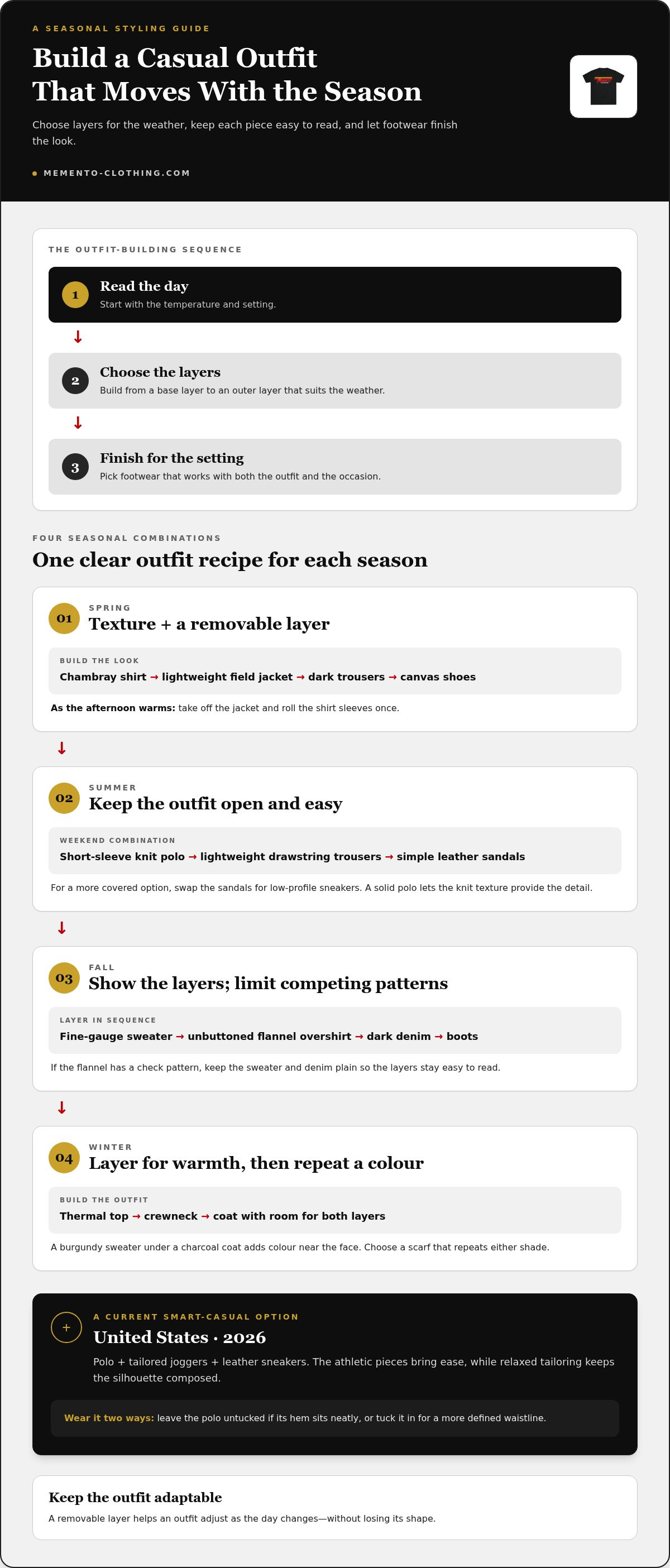
In spring, try a chambray shirt under a lightweight field jacket, with dark trousers and canvas shoes. The shirt adds texture, while the jacket helps with a cool breeze. When the afternoon warms up, take off the jacket and roll the sleeves once. This simple adjustment keeps the outfit comfortable without changing its character.
Summer outfits benefit from breathable-looking combinations and a sense of openness. Pair a short-sleeve knit polo with lightweight drawstring trousers and simple leather sandals for an easy weekend look. If sandals don’t suit the occasion, low-profile sneakers offer a more covered option. Choose a solid polo and let its knit texture provide the detail.
For fall, combine a flannel overshirt with a fine-gauge sweater and dark denim. Leave the overshirt unbuttoned so both layers show, then add boots for a grounded finish. If the flannel has a check pattern, keep the sweater and denim plain. This makes the layers easy to read without adding another competing print.
In winter, wear a thermal top beneath a crewneck, then add a coat with room for both layers. A burgundy sweater under a charcoal coat brings colour close to the face while keeping the rest restrained. Choose a scarf that repeats either shade, so it feels like part of the outfit rather than an afterthought.
In the United States in 2026, a polo, tailored joggers, and leather sneakers offer one current smart-casual combination. The athletic pieces bring ease; relaxed tailoring keeps the silhouette composed. Wear the polo untucked if its hem sits neatly, or tuck it in for a more defined waistline.
To plan a seasonal outfit, start with the day’s temperature and setting, then choose a base layer, an outer layer, and footwear that suit both. A cool morning walk calls for a sweater and coat; a warmer afternoon may need only the sweater. These combinations give non-boring casual clothes for men continuity across changing weather. Keep one layer removable so the outfit can adapt without losing its shape.
3. Tops, bottoms, outerwear, shoes, and accessories
Give each clothing category a distinct role. Tops frame your face, bottoms shape the silhouette, and outerwear sets the overall mood. Shoes connect the look to the setting, while accessories add a personal signature. Building non-boring casual clothes for men starts with pieces that work together without competing for attention.
Start with the neckline and collar. A crewneck tee feels relaxed beneath a shirt jacket, while an open-collar shirt creates a softer line with straight trousers. For a casual dinner, try a knitted polo under a simple jacket. Choose a collar that sits neatly beneath the outer layer, so the fabric doesn’t bunch around your neck.
Balance the top and bottom. A cropped jacket can make higher-rise trousers feel intentional, while a longer shirt works well with a clean, straight leg. If a shirt has a curved hem, wear it untucked when its length looks balanced against your torso. Tucking in a shirt can define the waist beneath an open overshirt.
Outerwear should suit both the weather and the outfit beneath it. A chore jacket brings a sturdy workwear character; a soft blazer gives a tee and jeans a more considered finish. Check the shoulder fit with your usual layers underneath. If the jacket pulls when buttoned or restricts your reach, its shape may not suit your everyday wardrobe.
Choose shoes to suit the occasion and the outfit’s formality. Minimal sneakers work with a casual jacket, while suede loafers make a button-down and dark denim feel more refined. Match visible socks to your trousers or shoes for a deliberate transition. A contrast sock works too when the rest of the outfit stays restrained.
Accessories add meaning without clutter. A canvas tote suits a daytime errand; a leather belt can sharpen trousers worn with a tucked shirt. A cap works best when its shape and colour relate to another part of your outfit. Choose one or two details, then remove anything that distracts from the main silhouette.
To make a small wardrobe more adaptable, choose pieces that work across settings. A plain button-down can be worn open over a tee or tucked into trousers. A neutral jacket can layer over both a polo and a sweatshirt. The strongest non-boring casual clothes for men don’t rely on novelty; thoughtful styling gives familiar shapes a personal quality.
Before dressing, identify each piece’s role: base, layer, footwear, or accent. Then check the outfit in a mirror while standing and sitting. A belt may interrupt the line of a long top, or a shoe may feel too formal with a soft sweatshirt. Adjust one piece at a time until the combination feels coherent and comfortable.
4. Fit and personal style
The best casual clothing brands for distinctive style have cuts, colours, and design details that suit your preferences. Look for a consistent point of view, whether understated workwear, vintage graphics, or relaxed tailoring, rather than buying a label for recognition alone.
Fit is the first test. Put on a shirt and check its shoulder seams: they should sit near your natural shoulder line. Raise your arms, sit down, and walk a few steps. If the hem rides sharply upward or the fabric pulls across your back, try another cut. A comfortable fit still lets the garment keep its intended shape.
Use proportion to make personal style visible. If you prefer a roomy overshirt, balance it with straight trousers rather than another oversized layer. A closer-fitting knit works well with wider pants because each piece gives the other room. For example, a boxy denim jacket over a plain tee feels deliberate with tapered chinos and simple shoes.
Start with a reference point, not a complete outfit to copy. Choose a detail you genuinely like, such as a faded graphic, a military-style pocket, or a relaxed blazer, then adapt it to your wardrobe. A vintage-inspired tee works under a clean jacket, while a structured blazer can soften jeans and a simple crewneck.
Personal style also comes from how pieces work together. A polo, tailored joggers, and leather sneakers combine low-key athletic elements with relaxed tailoring. Keep the polo neat at the shoulders, let the joggers taper cleanly, and choose sneakers with a simple profile. The result has a sharper outline without feeling formal.
Before keeping a new piece, try it with three items you already wear. For example, pair a patterned shirt with dark denim, neutral chinos, and a plain jacket. If each combination feels natural, the shirt can earn its place. If it works with only one specific outfit, consider whether its colour, pattern, or cut is too limiting.
Build a personal style vocabulary from the choices you repeat. You might favour soft textures, dark colours, and minimal graphics, or prefer light denim, bold prints, and vintage details. Notice which combinations feel comfortable during a workday, a weekend walk, or dinner with friends. Those settings reveal useful patterns without requiring a rigid uniform.
Refine one detail at a time. Cuffing a sleeve, changing the shoe shape, or choosing a different jacket can alter an outfit’s proportions. Compare the result in a mirror from the front and side. Keep the version that feels balanced and recognisably yours, not simply the one that follows a trend.
Look for brands with a consistent aesthetic, such as understated workwear, vintage graphics, or relaxed tailoring. Choose the one whose cuts and details feel natural in your wardrobe.
Aim for a balanced impression. That combination keeps smart-casual dressing from feeling fixed in one register: athletic elements can sit alongside relaxed tailoring without taking over. Let the pieces share an easy mood, and use their shapes to make the outfit feel considered rather than overly formal, much like the curated approach you find at Memento Mori Clothing.
5. How to avoid common styling mistakes
A common mistake is combining several competing focal points. A graphic tee, patterned trousers, bright sneakers, and a bold cap all demand attention. Choose one standout piece and let the rest support it. For example, wear a printed shirt with dark jeans and plain shoes. The print stays visible without making the outfit feel like a collection of unrelated statements.
Another misstep is ignoring proportion. A long, oversized tee can overwhelm slim trousers, while a fitted shirt may feel unbalanced with very wide pants. Check the silhouette in a mirror from the front and side. If both the top and bottom look loose, define the shape with a shorter jacket or a cleaner trouser cut.
Take care with colour combinations that lack a clear connection. Three unrelated bright shades can make separate pieces feel disconnected. Instead, repeat one colour in two places, such as a navy overshirt with navy details on your sneakers. For an easier palette, combine cream, olive, and brown, then add a muted accent such as rust.
Don’t let accessories compete with the outfit. A large watch, statement belt, patterned scarf, and bright bag can crowd a simple combination. Choose one detail to notice first. A plain tee and jeans may need only a textured belt, while a patterned overshirt can stand alone without extra decoration.
Footwear can also undermine an otherwise considered outfit. Bulky athletic sneakers may clash with pressed trousers, while dress shoes can feel too formal beside a soft sweatshirt. Match the shoe’s visual weight to the clothing: try leather sneakers with dark denim, or suede loafers with a relaxed button-down. Clean shoes help preserve the outfit’s line.
Before leaving home, make a quick check of fit, colour, footwear, and one focal detail. Sit down in the trousers, raise your arms in the jacket, and look for pulling or bunching. Remove an accessory if the outfit feels crowded. These practical checks catch small distractions before they become the first thing people notice.
Finally, avoid buying a piece solely because it looks striking on its own. Test it with items already in your closet. A bold jacket should work with at least a plain tee and familiar trousers; otherwise, it may remain unworn. For graphic-led casual style, explore expressive graphic tees and consider how one could anchor a simpler outfit.
Memento Mori Clothing: Memento Mori Heavyweight Hoodie
Memento Mori Clothing’s Memento Mori Heavyweight Hoodie offers a graphic-led layer for casual outfits with a more personal point of view. Wear it with simple jeans and understated sneakers, letting the design carry the focus without adding competing details.
For lighter days, the Memento Mori Vintage Tee gives a familiar outfit a distinctive note. Memento Crewnecks offer another layering option, while Memento Hats can finish a pared-back look. Each piece can stand on its own or work with staples already in your wardrobe.
If you want casual clothing shaped by the Memento Mori philosophy, explore the collection and choose what feels most like you. Contact Memento Mori Clothing to learn more.
Let Your Everyday Style Leave a Mark
Personal style takes shape through the pieces you return to and the memories you gather while wearing them. Let your next choice reflect more than a passing trend. For men seeking non-boring casual clothes, a garment with a clear point of view can make an ordinary day feel distinctly their own.
Memento Mori Clothing offers the Memento Mori Heavyweight Hoodie, Memento Mori Vintage Tee, and Memento Crewnecks. Each can bring a graphic-led note to a familiar wardrobe, whether you want a defining layer or an easy everyday starting point. Choose the piece that feels closest to your own way of dressing, then give it room to become part of your personal story. Explore Memento Mori Clothing and find a piece that feels like yours.
Frequently Asked Questions
How can men add personality to basic jeans-and-T-shirt outfits?
Add a personal detail that reflects your interests, not just a decorative extra. A vintage-inspired graphic tee can make an outfit feel individual, while a jacket connected to a favourite activity gives it context. You can also create a signature through grooming or a familiar colour. Choose details you’ll still enjoy when a trend fades, and keep the jeans-and-tee foundation comfortable for the setting.
How should men choose casual clothes that fit their body type?
Choose garments by how they sit on your frame, not by labels such as “slim” or “regular.” Compare a new shirt’s measurements with one you already like, checking shoulder width, chest, and length. For trousers, compare the rise and leg opening with a comfortable pair. Use those measurements as a starting point, then judge the garment while standing and sitting.
What shoes and accessories make men's casual outfits stand out?
Shoes with a distinct material or finish can add a subtle point of difference to a familiar outfit. Try suede instead of smooth leather, or textured canvas shoes with dark denim. Socks can connect your footwear to another small colour in your outfit without taking focus. Keep shoes clean and make sure accessories suit the occasion: a canvas bag feels at home on an errand, while a leather one looks more polished.
What are common mistakes that make men's casual outfits look dull or poorly put together?
Visibly worn, wrinkled, or occasion-inappropriate clothing can undermine an otherwise thoughtful outfit. A faded tee may suit relaxed plans, but look careless at dinner. Check garments in daylight for stains and loose threads, then consider where you’re going. Clean, well-kept basics often look more intentional than another accessory or trend-led piece.
What are the best casual clothing brands for men with distinctive styles?
The best brands have cuts, colours, and design details that suit your preferences, with a consistent point of view such as understated workwear, vintage graphics, or relaxed tailoring. Choose for that fit and style rather than label recognition alone.