
Men's Fashion for Guys Who Read a Lot: Build Your Style
Good style comes from thoughtful choices, not simply accumulating clothes. Men's fashion for guys who read a lot starts with a clear point of view: clothes that fit, a palette of no more than three colors, and one pattern at a time. Begin with versatile foundations, then add texture or a considered detail. The goal is an outfit that feels like you, not a costume.
If books, ideas, and quiet details appeal to you, your clothes can reflect that same sense of intention. Personal style is a skill you can develop through observation and small, thoughtful choices. This guide covers how to refine your eye, work with color and pattern, find a better fit, and choose among jeans, tailored trousers, and chinos. Each choice can bring your wardrobe closer to a style that feels natural, considered, and distinctly your own.
Key Takeaways
- Build a wardrobe gradually around pieces that suit your everyday life, rather than chasing every passing trend.
- Sharpen your eye by studying the details you admire in others’ style and adapting them to your own character.
- Use proportion, texture, and thoughtful color choices to make outfits feel balanced and considered.
- Choose between jeans, tailored trousers, and chinos by matching their shape and formality to the occasion.
1. Building a personal style gradually
Build a personal style by adding useful pieces gradually instead of replacing your wardrobe all at once. Start with an everyday outfit you already enjoy, such as dark jeans, a plain shirt, and a jacket. Notice what feels comfortable and what feels awkward, then let that observation guide your next purchase. A casual capsule wardrobe works when its pieces combine easily and suit the places you actually go.
For bookstores, cafés, and campus settings, choose clothes that feel relaxed but considered. Straight jeans, a clean T-shirt, and an overshirt make an easy reading-day outfit; chinos and a button-down offer a neater alternative. Add a lightweight jacket when the weather calls for another layer. These combinations work for a library table, a campus walk, or an informal café.
A men's capsule wardrobe can begin with adaptable basics: two pairs of trousers, several shirts, a knit layer, and a jacket. Choose items that work together, such as dark denim with a gray sweater or chinos with an Oxford-style shirt. Before buying anything, try it with clothes you already own. If it creates several useful outfits, it earns its place.
Keep footwear practical. Three pairs can cover most casual outfits: white sneakers, brown boots, and sandals. White sneakers are especially versatile with different colors, textures, and clothing types. A midweight men's white T-shirt is recommended at around 170-240 gsm, giving you a concrete starting point when comparing fabric weight. Pair it with denim, chinos, or an open shirt.
Choose a simple grooming routine that suits your hair texture and keeps your overall look intentional. A neat side part, natural curls, or a carefully maintained short cut can all complement a bookish aesthetic; regular trims and neat facial hair add definition. Build gradually: keep the hairstyle you like, then refine one detail, such as the length around your ears or your beard shape. Changing one thing at a time makes it easier to see what feels like you.
2. Treating personal style as a learnable skill
Style improves through observation and practice. Spend a few minutes listing three men whose outfits you admire, then identify the details that appeal to you: a relaxed jacket, a restrained color palette, or a particular shirt collar. Online fashion blogs can help you notice these choices, but use them as references, not instructions. For men's fashion for guys who read a lot, save examples and adapt one detail to clothes you already wear.
Classic styles offer useful lessons without demanding imitation. In the 1920s, American college students adopted Oxford-associated button-down shirts and natural-shouldered jackets. The 1950s became known as the Age of Conformity in men’s fashion, while fashion bloggers entered the mainstream in the 2010s. These shifts show how styles change. For an Ivy League influence, try a button-down shirt with chinos, then keep the fit relaxed and the details personal.
For affordable classic literary style in the US, focus on value-priced basics rather than labels: plain shirts, knitwear, and trousers that combine easily. A bookish wardrobe can draw on Ivy, workwear, or simple smart-casual styles. At home or in a library, a soft crewneck, comfortable trousers, and an easy layer make a practical reading outfit. These are useful foundations for men's fashion for guys who read a lot.
Keep a literary look from feeling like a costume by choosing one reference at a time. Pair a textured jacket with an everyday shirt instead of stacking vintage cues, a bow tie, and a dramatic coat. Clean leather sneakers or loafers can balance chinos and a button-down without making the outfit overly formal.
Accessories work best when they serve a purpose. Choose comfortable glasses that suit your face, a bag with room for a book, and a watch that doesn’t compete with the rest of your outfit. A canvas shoulder bag and a simple watch add character without turning a quiet look into a display.
3. Fashion rules for colors, patterns, and fit
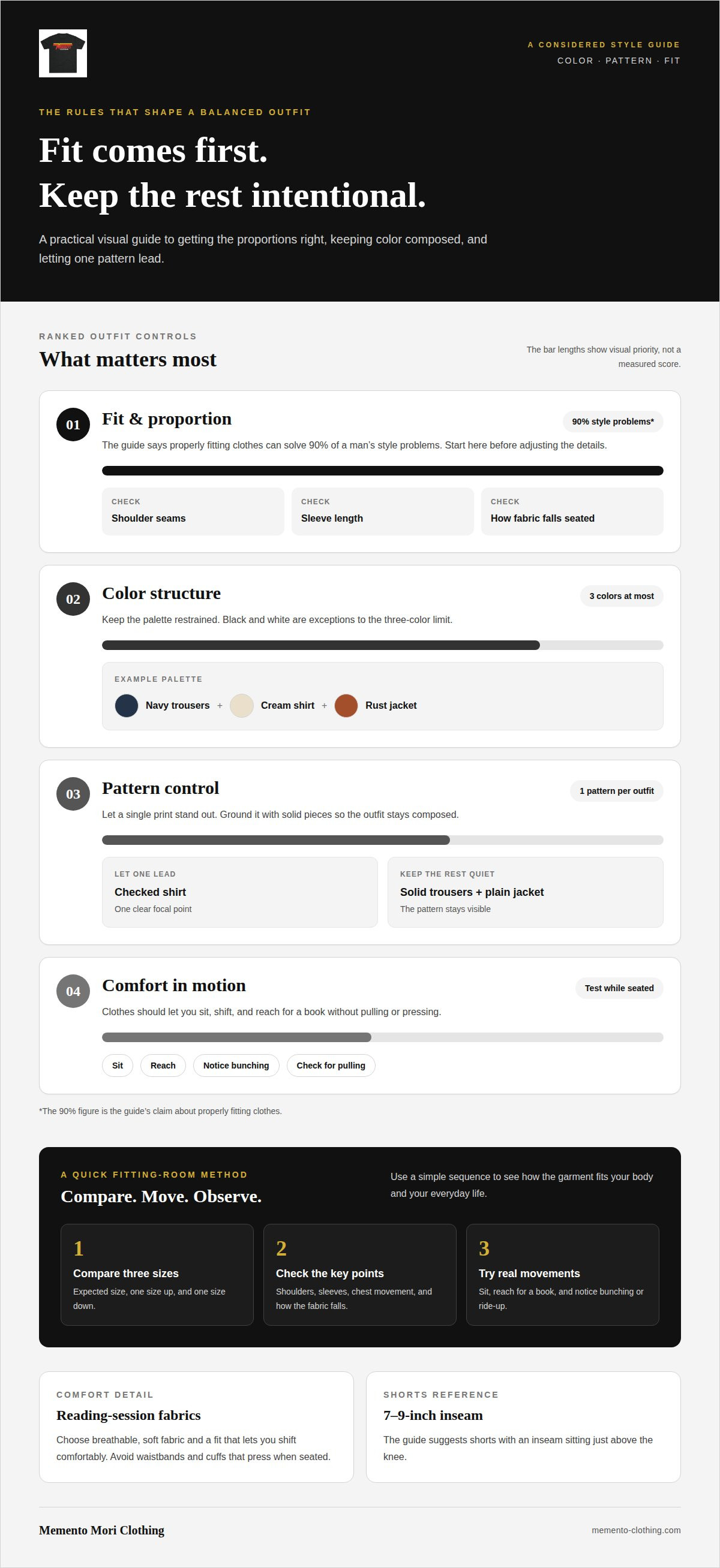
Give color a quiet structure. Keep an outfit to three colors at most, with black and white as exceptions. For example, pair navy trousers, a cream shirt, and a rust-colored jacket. This creates contrast without making the pieces compete. Neutral clothing also helps a wardrobe work together, especially when shirts, trousers, and outer layers share complementary shades.
Let one pattern stand out. A checked shirt can be the focal point, while solid trousers and a plain jacket keep the outfit composed. Another useful guide is to balance three solid, neutral pieces with one patterned or brighter item, such as a striped shirt under a charcoal cardigan. The pattern stays visible without overwhelming the whole look.
Fit gives those choices their shape. Properly fitting clothes can solve 90% of a man's style problems, according to the guide. When trying a new garment, compare three sizes: the one you expect to wear, one size up, and one size down. Check the shoulder seams, sleeve length, and how the fabric falls when you sit. A shirt should allow movement without pulling across the chest.
For long reading sessions, choose breathable, soft fabric and a fit that lets you shift comfortably. A cotton shirt with room through the shoulders, paired with relaxed chinos, works at a desk or library table. Avoid waistbands and cuffs that press when seated; a flexible layer, such as a relaxed crewneck, adds warmth without restricting your arms.
Use a mirror and a chair to check the fit. Sit, reach for a book, and notice whether a jacket bunches at the back or a shirt rides up. Check how a knit holds its shape after wearing, and favor fabric that feels comfortable against your skin. These simple tests help color, pattern, and fit come together in a coherent personal style.
Keep patterned clothing to one pattern per outfit, and choose neutral-colored T-shirts for easy mixing and matching. For shorts, the guide suggests a 7-9-inch inseam, sitting just above the knee.
4. Jeans, tailored trousers, and chinos
Choose trousers for the setting and the impression you want to make. Straight or straight-slim jeans offer a balanced shape for everyday wear; avoid very slim, bootcut, or loose cuts when seeking a classic silhouette. Dark denim works with a knit or button-down, while lighter washes feel more relaxed. Check that the rise stays comfortable when seated and the hem meets your shoes cleanly.
Chinos sit between denim and dress trousers in formality. Wear them with a plain shirt and leather sneakers for a campus day, or add a textured jacket for dinner. Khaki, navy, and olive pair easily with neutral tops, while a tapered leg keeps the outline composed. Choose a waistband that stays secure without digging in during a long afternoon of reading.
Tailored trousers create a sharper line for a lecture, presentation, or evening event. Pair charcoal trousers with a soft crewneck for restrained contrast, or wear them with a button-down and leather shoes for a more polished outfit. A clean break at the shoe keeps the hem from pooling. The fabric should drape rather than cling, especially across the seat and thighs.
Try each pair with the shoes and layers you already wear. Sit, walk, and bend to see whether the waistband shifts or the fabric pulls. Straight jeans can ground a patterned shirt; chinos balance a knit; tailored trousers refine a simple tee and jacket. These combinations give each type of trousers a clear role and level of formality, making it easier to choose.
For a useful starting point, keep one pair of straight jeans for casual days, chinos for smart-casual plans, and tailored trousers for occasions that call for polish. Let comfort guide the final choice, then wear the outfit with quiet confidence. For a graphic top to bring into a casual outfit, browse graphic T-shirts.
The guide recommends straight or straight-slim jeans rather than very slim, bootcut, or loose jeans, reinforcing the emphasis on a balanced, classic shape.
Memento Mori Clothing
Memento Mori Clothing offers a natural next step when you want everyday clothing to reflect a considered point of view. Its apparel draws on the Memento Mori philosophy, inviting you to choose pieces with personal meaning rather than follow every passing trend.
The range includes the Memento Mori Heavyweight Hoodie, Memento Mori Vintage Tee, Memento Crewnecks, and Memento Hats. Each can add a distinct note to a simple outfit, whether you’re layering for a quiet reading day or adding a graphic element to familiar basics. Keep the rest of your wardrobe understated and let one chosen piece carry the sentiment.
Explore Memento Mori Clothing’s apparel and choose a piece that reflects your point of view.
Let Your Style Become Part of Your Story
Clothing can mark the life you’re living now, not just the image you present to others. Let a favorite book, a familiar place, or a season of change guide a thoughtful choice. Over time, those choices can become a quiet record of your days. The best men's fashion for guys who read a lot leaves room for curiosity and change instead of turning literary influence into a uniform.
Give your wardrobe room to evolve. Keep the pieces that feel true to you, and let new choices earn their place through wear. Personal style doesn’t need a final form. It can stay open, like a well-loved book whose meaning shifts each time you return to it.
If you’d like to explore clothing shaped by reflection and personal meaning, begin a conversation with Memento Mori Clothing. Take the next step at your own pace, and let what you wear feel like your own story.
Frequently Asked Questions
How to build a bookish men's capsule wardrobe on a budget?
Build your wardrobe around versatile pieces you can wear in different combinations, adding items only to fill a real gap. For example, pair an existing button-down with secondhand chinos, then look for a used cardigan that works with both. Check seams, buttons, and fabric condition before buying. Simple care, such as hanging shirts promptly and mending a loose button, helps clothes stay in rotation longer.
What are affordable men's clothing brands for a classic literary style in the US?
Focus on value-priced basics rather than labels: plain shirts, knitwear, and trousers that combine easily. The guide does not name specific brands.