
Men’s Clothing That Gets Better with Age: What to Look For
What if a garment’s first crease or faded edge isn’t a flaw, but the beginning of its story? The best men's clothing that gets better with age doesn’t simply survive wear. It gathers signs of use that feel natural while staying comfortable and whole. That distinction matters when you’re trying to buy less impulsively and choose pieces you’ll want to wear for years.
Some softening and fading can add character. Thinning fabric, loose seams, or a shape that no longer holds may point to damage instead. The difference depends on more than appearance: materials, construction, how often a garment is worn, and how it’s cared for all play a part. No piece improves with age by default.
This guide will help you assess quality before buying, set realistic expectations for patina and wear, and care for clothing without stripping away its character. We’ll look at what helps garments age gracefully, what signals they’re wearing out, and how to choose enduring pieces, from a vintage tee to a heavyweight hoodie, for a wardrobe shaped by personal meaning rather than passing trends.
Key Takeaways
- Learn how fibre, fabric structure, dye, and construction can shape the way a garment changes with wear.
- Recognize when softening or fading may add character, and when holes, seam failure, or distortion signal damage.
- Use the care label and respond to actual soil to help limit unwanted wear from washing, heat, and friction.
- Choose men's clothing that gets better with age by considering how it may change, not just how it looks when new.
- Build a more personal wardrobe around pieces you’ll return to, including heavyweight hoodies, vintage tees, and crewnecks.
What Makes Men’s Clothing Get Better with Age?
Age alone doesn’t improve a garment. Men's clothing that gets better with age changes in ways that feel earned: the fabric may soften, the colour may mellow, or creases may settle into its shape, while the piece remains comfortable and structurally sound. It still does its job. Its character deepens without its usefulness disappearing.
That balance depends on several things working together. Material, construction, dye, and finish influence how a garment responds to use. So do wearing habits: repeated friction in one spot can have a different effect from gradual, even wear. Care matters, too. A well-loved piece can still deteriorate if it’s repeatedly exposed to conditions that weaken or distort its textile. Time is part of the story, not the whole explanation.
Patina, softness, and signs of wear
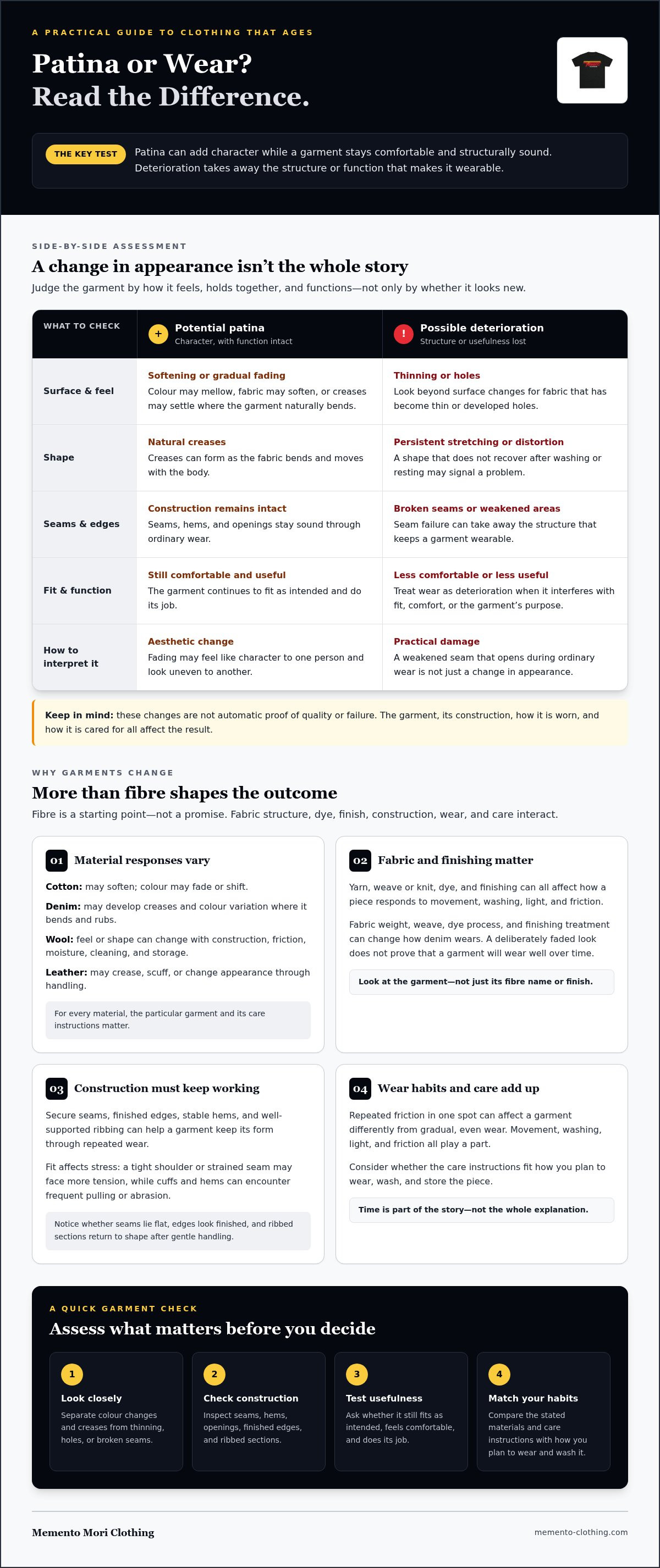
Patina is a visible change that records use. It might be a gradual shift in colour, a softer feel, or creases that form where the garment naturally bends. These changes aren’t automatically improvements; their appeal depends on the wearer and the garment. A faded area may feel like character to one person and look uneven to another.
There’s no single ageing pattern. A fabric’s fibres, weave or knit, dye, and finishing can all affect how it changes. The way a garment fits and moves against the body also matters. A finish can influence its appearance from the beginning, so a deliberately faded look doesn’t prove that a piece will wear well over time.
When ageing becomes deterioration
Look beyond surface appearance. Persistent stretching, thinning areas, broken seams, and holes can signal damage, especially when they make the garment uncomfortable or less useful. Distortion that doesn’t recover after washing or resting is different from a crease that forms naturally during wear. Check whether the garment still fits as intended and whether its seams, hems, and openings remain intact.
Patina adds character while a garment stays sound; deterioration takes away the structure or function that makes it wearable.
Textiles can also change through environmental exposure and chemical processes, not just visible friction. The overview of Textile stabilization and deterioration offers context for why preservation involves more than keeping a garment looking new. In everyday terms, judge a piece by whether it remains comfortable, wearable, and fit for its purpose, rather than by whether every mark has disappeared.
A useful life matters more than a perfectly unchanged appearance. Some fading may be welcome; a weakened seam that opens during ordinary wear is not. The distinction is practical, not merely aesthetic. A garment earns a place in a lasting wardrobe when its changes feel compatible with continued use, rather than when it simply looks old.
How Fabric and Construction Shape the Way Clothes Age
A garment’s future is shaped before its first wear. Fibre is one part of the story; yarn, weave or knit, dye, finishing, and construction also influence how a piece responds to movement, washing, light, and friction. These elements interact, so the same broad material can change in different ways depending on how it was made and how it’s worn.
Fibre type alone can’t predict a garment’s long-term appearance. Use material as a starting point, not a promise. If you’re choosing men's clothing that gets better with age, consider how the cloth feels, how it’s shaped, and whether its care needs fit your habits.
How common clothing materials change with wear
Cotton may soften with use, while its colour can fade or shift according to the dye, finish, and care. Denim may develop creases and areas of colour variation as it bends and rubs against the body, but those effects aren’t universal. Fabric weight, weave, dye process, and finishing treatment can all change the result.
Wool and leather have their own responses. Wool garments may change in feel or shape depending on their construction, exposure to friction or moisture, and how they’re cleaned and stored. Leather can crease, scuff, or change in appearance through handling, but its finish and care instructions matter. Neither material guarantees an attractive patina or a longer useful life. Look at the particular garment, not just the fibre name.
Why construction matters as much as fabric
Fabric has to be held together and shaped for movement. Secure seams, finished edges, stable hems, and well-supported ribbing can help a garment keep its form through repeated wear. Fit matters, too: a tight shoulder or strained seam may face more tension than a relaxed area, while cuffs and hems can encounter frequent pulling or abrasion.
Inspect how the garment sits and where it bears stress. Notice whether seams lie flat, edges look finished, and ribbed sections return to shape after gentle handling. These are useful observations, not proof of future performance. Check product details for stated materials and care instructions, and compare them with how you plan to wear and wash the piece.
A simple way to compare two pieces is to separate the questions: what changes might the material show, and what parts of the construction must keep working for you to wear it comfortably? That distinction helps avoid mistaking a pleasing surface finish for sound construction. It also keeps expectations grounded: clothes can gather personal meaning with repeated use, but no fabric or seam can promise that every sign of age will be beautiful.
For clothing chosen with personal meaning in mind, explore Memento Mori Clothing’s heavyweight hoodies, vintage tees, and crewnecks. Their place in a wardrobe is shaped not only by how they look today, but by whether you’ll keep reaching for them.
Which Men’s Clothing Develops Character, and Which Just Wears Out?
Materials offer clues, not guarantees. A change in colour or feel may be purely visual, while a garment that has shrunk, pilled heavily, or strained at the seams may have lost comfort or function. To judge men's clothing that gets better with age, consider both what changes on the surface and whether the piece still fits, feels comfortable, and holds together.
The comparison below describes tendencies, not fixed outcomes. Blends, dyes, fabric weight, finishing, construction, wear, and care can all change what happens.
A practical comparison of natural materials
Read the table as a guide to possibilities, not a ranking of which material lasts longest. Attractive fading or softening can coexist with sound seams and a comfortable fit; shrinking, persistent distortion, fabric breakdown, or seam stress can make a garment less useful, even if its surface still looks appealing. Blends, dye methods, treatments, and fabric weight may alter each material’s behaviour. Visible age and functional condition are related, but they aren’t the same measure.
How to judge ageing potential before buying
Start with the product details. Look for stated fibre content, construction information, and care guidance, then consider whether you can realistically follow those instructions. Think about the garment’s colour and texture: will gradual change feel welcome, or will it make the piece harder to wear? Match its intended use to your routine, too. Frequent friction at a backpack strap or repeated movement at the elbows may affect how particular areas look over time.
Finally, treat words such as durable or vintage as descriptions, not evidence on their own. A vintage-inspired finish may be present from the start; it doesn’t prove the garment will age gracefully. Look for specifics, and judge the garment’s fit, seams, and comfort alongside its material. The best choice is not simply the one that changes most visibly. It’s the one whose likely changes you can live with while it remains useful.
How to Wear and Care for Clothes That Age Gracefully
Good care isn’t about keeping a garment untouched. It’s about letting it be worn while avoiding strain that serves no purpose. For men's clothing that gets better with age, a simple routine can help preserve comfort, shape, and the changes you actually value.
Care choices that preserve shape and character
Let the care label lead. There’s no universal washing rule: the right approach depends on the garment’s fibre, construction, and shape. Respond to actual soil rather than washing automatically after every wear, and follow the label’s instructions for cleaning and drying. Heat, vigorous handling, and unnecessary washing may contribute to unwanted fading, shrinkage, stretching, or surface wear.
- Read the care label. Check the garment-specific instructions before washing, drying, ironing, or using a cleaning product.
- Respond to actual soil. If a garment isn’t dirty, consider whether it needs a full wash; spot-clean only when suitable for its fabric and finish.
- Dry and store with care. Follow the label and account for the garment’s shape. Avoid leaving clothes crumpled or crowded where they’re more likely to crease, stretch, or rub against other items.
Intentional fading or softened texture may be part of a garment’s life. Rough handling is different. Repeated friction from a bag strap, overfilled pockets, or forceful pulling at cuffs can create wear that doesn’t add character. After wearing a piece, take a moment to check its seams, hems, cuffs, and other stress points. A loose thread or small weakness is easier to notice before it becomes a larger problem.
A vintage tee has its own practical considerations, and the label should still guide its care. The vintage tee care guide offers related context for wearing and looking after this kind of wardrobe staple.
Build a wardrobe for repeated wear
Choose pieces that fit your actual routines. A garment you can wear comfortably across ordinary days is more likely to earn a place in your life than one kept aside for a hypothetical occasion. Think about how it pairs with clothes you already own, and whether its colour and feel suit the way you dress. Practical versatility gives a piece more chances to gather personal meaning.
Rotate garments when it makes sense, but don’t treat a rest period as a promise of extra years. Rotation can simply make it easier to wear different pieces and notice changes before they’re overlooked. The aim isn’t to preserve clothing in a pristine state. Useful garments are meant to be used, cared for, and kept in circulation while they remain comfortable and fit for purpose.
If you’re choosing a piece to wear often, explore Memento Mori Clothing’s apparel and find a style that feels relevant to your own routine.
Choose Men’s Clothing for Meaning, Not Just the Moment
Clothing becomes lasting through more than fabric or finish. A piece earns its place by fitting the life you lead, feeling right to wear, and remaining relevant after a trend has passed. Repeated use can give a garment personal meaning: a familiar hoodie worn on ordinary mornings, or a tee that brings back a particular season. Those memories belong to the wearer, not to a product promise.
Why personal meaning can outlast a trend
Memento Mori Clothing takes its name from a reflection on time and the lives we choose to make. That perspective invites a quieter question when building a wardrobe: will this feel like me beyond this moment? The Memento Mori story explores the philosophy behind the brand and its modern expression.
Emotional significance can grow through use, but it can’t be guaranteed by a label or design. It comes from what you experience while wearing something, and the associations that gather around it. That’s why choosing men's clothing that gets better with age is not simply a search for visible fading or softness. It’s also a choice to wear what feels personal, rather than keeping a piece untouched for an imagined future.
Find a garment that fits the life you actually lead
Start with wearability. Consider where you’ll wear a garment, what you’ll pair it with, and whether its care instructions fit your real habits. A piece that works with your everyday routine is more likely to be worn and become part of your story than one that only suits a narrow occasion. Choose for your own sense of style, not for the approval of a passing trend.
Memento Mori Clothing offers heavyweight hoodies, vintage tees, and crewnecks. Consider how each style fits your wardrobe, how often you’ll wear it, and whether you’ll enjoy the way it changes with use. For a closer look at one option, the Memento Mori Vintage Tee guide offers related product context.
Ultimately, a considered wardrobe isn’t a collection of clothes protected from life. It’s made of pieces you choose with care, wear with intention, and look after in ways that suit each garment. Let lasting relevance matter more than novelty, and let personal meaning develop at its own pace. Explore Memento Mori Clothing and take a calm look at the apparel range.
Choose What You’ll Carry Forward
A considered wardrobe is less about predicting exactly how a garment will age and more about choosing what deserves a place in your everyday life. Before bringing something home, ask whether you can imagine reaching for it beyond this season. Does it feel like your own? Can you see it becoming part of ordinary days, not just an outfit for a particular moment?
That’s the quieter promise of men's clothing that gets better with age: not perfection, but relevance that deepens through use. The most meaningful changes may be small. A familiar shape, a remembered day, the ease of wearing something that still feels like you. None can be guaranteed in advance. They grow from the life you give a garment.
Choose with care, then let your clothes accompany you. Wear them, look after them, and allow their stories to take shape naturally. Explore Memento Mori Clothing and find a piece that speaks to the way you want to dress. The next chapter is yours to wear.
Frequently Asked Questions
What does it mean when men’s clothing gets better with age?
It means the changes a garment gathers through use add character without making it less comfortable or useful. A shirt that softens and takes on a gentle colour shift may still fit well and hold its seams. A shirt with a hole under the arm or a seam that opens is failing, not developing patina. For men's clothing that gets better with age, the change should suit both the wearer’s taste and the garment’s continued use.
Which fabrics develop a desirable patina over time?
Denim may develop creases or uneven colour, while cotton may soften or fade; leather can show creases and surface marks. Wool may change in feel or appearance with wear and handling. These are possibilities, not promises, and “desirable” is personal. A blend, dye, coating, or fabric finish can change the result, as can seam quality and care. Consider whether the change would still appeal to you on that specific garment.
Does cotton clothing get softer the more you wear it?
It can, but softness isn’t guaranteed. The cotton’s yarn, knit or weave, finishing, and any blended fibres all influence how the fabric feels after repeated wear and washing. A tee may feel more relaxed over time, while another may retain much of its original hand-feel. Care matters: harsh washing or high heat can affect texture and shape. Follow the garment’s label, and judge softness alongside fit and condition.
Can washing make clothes age faster?
It can contribute to change, particularly if washing is more frequent or harsher than a garment needs. Repeated agitation, heat, or unsuitable detergent may affect colour, texture, shape, or surface fibres, depending on the fabric and finish. That doesn’t mean clothes should be left dirty; respond to soil and follow the care label. For example, a printed tee may need gentler handling than a garment whose label allows a more robust wash.
How can you tell if a garment is wearing out rather than developing character?
Check whether the change affects use. A gradual colour shift or softer feel can be aesthetic; fabric that has become unusually thin, a hole that’s spreading, or a seam that pulls apart points to wear affecting function. Also notice changes in fit: a garment that stays stretched out or twists after washing may no longer sit as intended. Inspect the inside as well as the outside, especially around pockets, cuffs, and underarms.
Are heavyweight clothes more durable than lightweight clothes?
Not necessarily. Weight describes how substantial a fabric feels, but it doesn’t tell you everything about fibre, yarn, knit or weave, finishing, or how the garment is assembled. A heavier piece can still strain at a poorly supported seam; a lighter one may suit regular wear if its construction and care align with its use. Compare product details and inspect the garment rather than treating weight alone as a durability measure.
What should you look for when buying men’s clothes that age well?
Start with stated fibre content, then look for construction details and clear care instructions. Check the garment’s fit and consider where repeated movement or friction may affect it, such as at the elbows or pocket openings. Ask yourself whether its colour and texture will still feel right if they change, and whether its care suits your routine. Specifics are more useful than broad words like “vintage” or “durable” on their own.