
How to Wash a Heavyweight Hoodie: The Definitive Guide
A premium garment is a vessel for memory. It's a heavy drape that holds the shape of your history, and to treat it like common fabric is to invite its premature end. You've likely felt a quiet dread standing before the washing machine, fearing the heat that shrinks or the friction that pills. It's painful to see a structured silhouette lose its original stiffness and become a shapeless shadow of the piece you first fell in love with.
Learning how to wash heavyweight hoodie garments correctly is a ritual of preservation. It's about honoring the intentional design and the time you've spent within it. This guide provides the care rituals required to maintain the structure, softness, and longevity of your premium garments. You'll learn how to keep a hoodie feeling new after fifty washes while retaining its deep color and substantial weight. We'll explore the quiet patience of air drying and the technical steps to ensure your legacy pieces remain timeless and intact for years to come.
Key Takeaways
- Dense fibers demand patience; understand why high-GSM cotton requires unique care to prevent structural distortion and stretching.
- Protect the narrative of your piece by turning it inside out and securing drawstrings to safeguard graphics and hardware before the cycle begins.
- Master how to wash heavyweight hoodie essentials using cold water and delicate cycles to ensure the fabric remains soft and unshrunken.
- Treat drying as a slow ritual; laying the garment flat preserves the heavy drape and prevents the damage caused by high-heat mechanical drying.
- Maintain the legacy of your garment with intentional storage and pilling care, ensuring it feels as substantial after fifty washes as it did on the first.
Understanding the Heavyweight Difference: Why Fabric Weight Matters
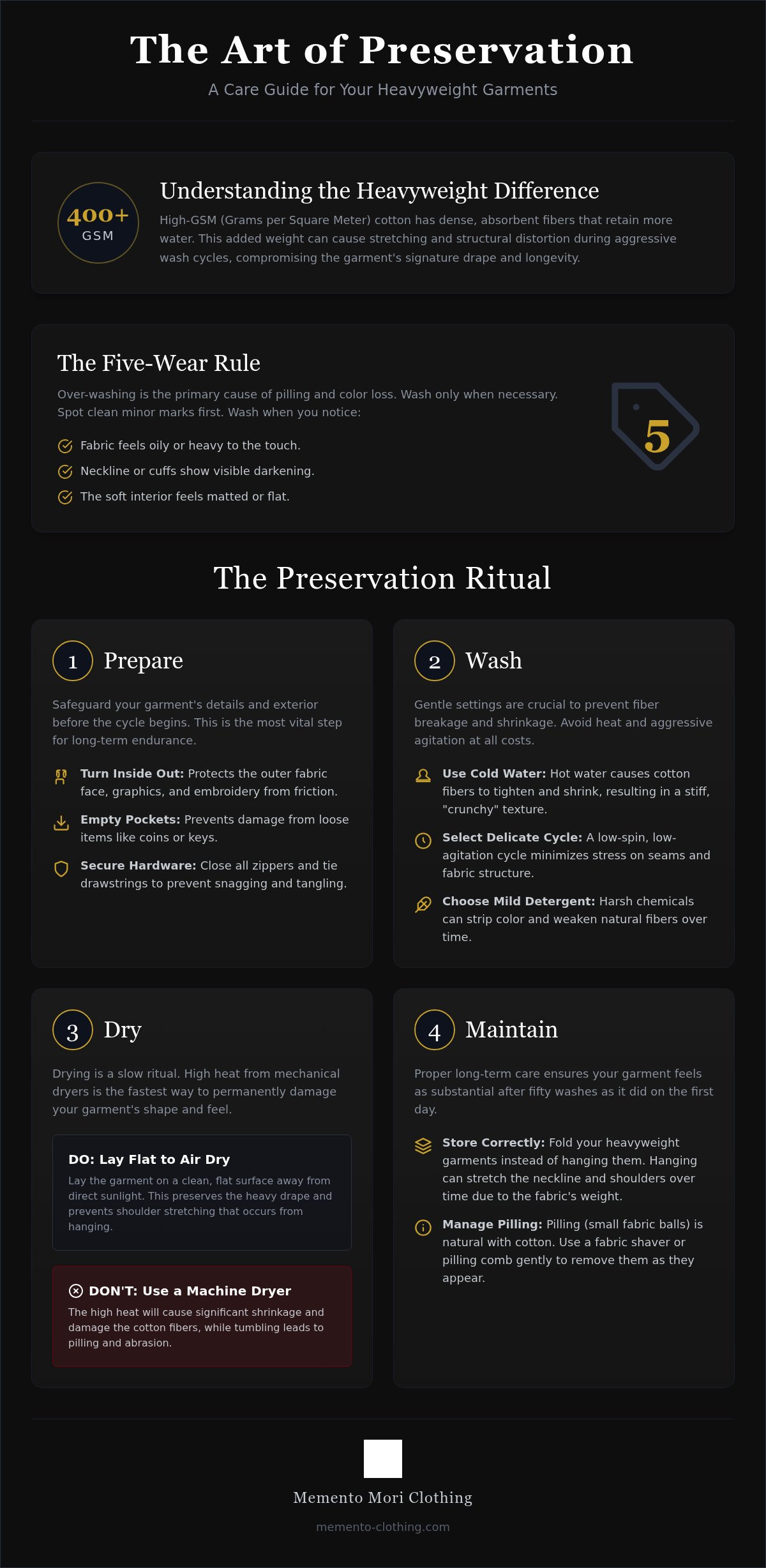
Substance defines the experience. A true heavyweight hoodie typically features a fabric weight of 12oz or 400+ GSM. This isn't just a technical spec. It's a tactile promise of durability and warmth. Most fast-fashion alternatives feel thin and fleeting, but high-density cotton offers a structure that lasts. It's an anchor in a world of disposable trends.
The physics of density changes everything. These heavy fibers are incredibly absorbent. They retain significantly more water than standard blends. When fully saturated, a 400+ GSM garment becomes surprisingly heavy. This weight pulls at the seams and the neckline during the spin. Standard wash cycles are often too violent for this mass. Aggressive agitation leads to internal fiber breakage, which eventually destroys the hoodie's signature drape and structural integrity.
We see our garments as more than just inventory. They're emotional anchors. Understanding how to wash heavyweight hoodie pieces is a ritual of respect. It's about preserving a piece of your personal history. When you treat the fabric with intention, it rewards you with a lifetime of wear.
The Science of GSM and Longevity
GSM is the standard measurement of fabric thickness and durability. High-density cotton is prone to a specific kind of "crunchiness" if treated poorly. This happens when the dense weave is exposed to excessive heat, causing the fibers to tighten and lose their natural suppleness. Always consult the laundry care symbols before starting. These icons are the roadmap to longevity, indicating exactly how much stress the cotton can endure before the structure begins to fail.
When to Wash: The Five-Wear Rule
Every wash cycle is a moment of wear. To maintain the original feel, wash only when truly necessary. We suggest following a five-wear rule. Unless there's an obvious stain or odor, let the garment breathe. Over-washing is the primary cause of pilling and color loss. It's a slow erosion of the piece you love.
Spot cleaning is your first line of defense. Use a soft, damp cloth for minor marks. Look for these signs that a deep clean is finally required:
- The fabric feels "heavy" or oily to the touch.
- The neckline or cuffs show visible darkening.
- The original soft interior begins to feel matted or flat.
- The garment has lost its natural, fresh scent.
Preserving the fiber integrity is the ultimate goal. Knowing how to wash heavyweight hoodie garments sparingly is just as vital as the washing process itself.
The Pre-Wash Ritual: Preparing Your Hoodie for Preservation
Before the water touches the fabric, there's a moment for intentionality. Preparation is the quietest part of the process, yet it's the most vital for long-term endurance. You aren't just cleaning a garment; you're safeguarding a vessel of memory. Neglecting these small steps leads to the slow erosion of the piece's character. Understanding how to wash heavyweight hoodie garments begins with this silent preparation.
The first act of preservation is turning the garment inside out. This simple motion protects the outer "face" of the cotton from the mechanical friction of the drum. It shields any screen-printed graphics or embroidered details from the abrasive touch of other fabrics. By washing the interior surface, you target the areas in direct contact with your skin while keeping the visible exterior pristine. It's a layer of defense against the fading that often haunts dark, heavy cotton.
Check every pocket with care. A forgotten receipt or a stray coin can cause irreparable mechanical damage or permanent ink bleeds during the spin. These small oversights often lead to the most significant regrets. Once the pockets are cleared, address the drawstrings. To prevent the cord from disappearing into the hood's channel, tie a loose, deliberate knot at the ends or use a safety pin to secure them to the fabric. This ensures the silhouette remains balanced and functional.
Securing the Details
Fasteners require their own specific attention. If your piece features a zipper, close it fully to prevent the metal teeth from snagging the dense weave of the hoodie. Metal aglets, those weighted tips on the drawstrings, are particularly vulnerable. They can chip or scratch if left to clatter against the machine drum. Tucking them inside the garment before turning it inside out offers the necessary protection. Maintaining these small, metallic details ensures the piece feels complete and intentional. This level of care is essential for a Memento Mori Heavyweight Hoodie, where every element is designed to last.
Spot Treatment Strategies
Stains are marks of a life lived, but they don't have to be permanent. Treat them with patience. Avoid harsh chemical sprays that can bleach or weaken the fibers. Instead, use cold water and a drop of mild detergent. Never scrub the fabric. Scrubbing breaks the dense cotton fibers and creates a fuzzy, worn patch that ruins the uniform texture. Blot the area gently with a clean, light-colored cloth. Always test your cleaning agent on a hidden interior hem first. This ensures the deep color of your garment remains undisturbed by the treatment. Mastering how to wash heavyweight hoodie pieces means respecting the fabric even before the cycle starts.
The Washing Process: Temperature, Cycle, and Detergent
The machine is a place of controlled chaos. When you approach the wash, you're managing the forces of friction and thermal stress. For a 400+ GSM garment, this process is a delicate balance. It requires a departure from standard laundry habits. Understanding how to wash heavyweight hoodie pieces means acknowledging that heat is a destructive force. It's the primary cause of shrinkage in 100% cotton.
Cold water is a mandate, not a suggestion. Keep the temperature at 30°C or lower. High temperatures cause the dense fibers to contract and tighten, permanently altering the fit. Once the structure is lost to heat, it rarely returns. Select the Delicate or Hand-Wash cycle. These settings minimize mechanical friction, protecting the internal fiber integrity we discussed earlier. It's a slower, more respectful rhythm for the fabric.
Dosage matters. With high-density fabrics, less is more. Excessive detergent often fails to rinse out of the tight weave, leaving a dulling residue. This buildup can irritate the skin and stiffen the cotton. Avoid fabric softeners entirely. They work by coating fibers in a waxy film, which weakens the cotton over time and ruins the natural breathability of the garment. It's a temporary softness that leads to long-term degradation.
Choosing the Right Detergent
Liquid detergents are superior to powders for heavy weaves. They dissolve instantly in cold water, ensuring no gritty particles remain trapped in the fibers. pH-neutral soaps are the gold standard for premium streetwear. They cleanse without stripping the deep, intentional dyes of the fabric. Never use bleach or optical brighteners. These harsh chemicals degrade the cotton and cause the rich colors to lose their soul. They turn a legacy piece into something washed-out and tired.
Managing Machine Load
A single heavyweight hoodie is a massive sponge. It absorbs a significant volume of water, becoming heavy and difficult to move. Never overload the machine. The garment needs space to tumble freely to ensure a thorough rinse. Wash with like weights. Mixing your hoodie with rough denim causes abrasion, while mixing it with light tees creates an unbalanced load during the spin. A moderate spin cycle is essential. It removes the excess water weight that would otherwise stretch the fibers during the drying stage. This is a critical step in learning how to wash heavyweight hoodie garments without sacrificing their original shape.
Drying Without Destruction: The Art of Air Drying
Time is the final architect of quality. After the wash, the drying stage is where structure is either preserved or surrendered. Many people rush this process, but haste is the enemy of endurance. Learning how to wash heavyweight hoodie garments requires the discipline of patience. The dryer is a graveyard for heavyweight cotton. High heat forces fibers to contract violently, leading to permanent shrinkage and a loss of that original, substantial drape. It's a betrayal of the garment's intent.
Gravity is a silent force that can reshape your garment in hours. Never hang a wet heavyweight hoodie. The retained water weight pulls at the shoulders, creating permanent distortions and stretching the torso vertically. This ruins the boxy, intentional silhouette. Instead, lay the piece flat on a clean, light-colored surface. This preserves the heavy drape and ensures the fabric doesn't migrate under its own weight.
To avoid the musty scent that haunts slow-drying fabrics, ensure maximum airflow. Air drying a heavyweight hoodie can take 12 to 24 hours depending on the humidity of your space. Use a fan to keep the air moving. If the fabric feels too stiff once dry, use the "Tumble Fresh" trick. Place the hoodie in the dryer on an "air fluff" or "no heat" setting for exactly five minutes. This restores softness without the structural damage caused by thermal stress.
Setting Up the Perfect Drying Environment
Pigments hold the story of the piece. Direct sunlight is a danger to deep pigments like those in the Memento Mori Heavyweight Hoodie. UV rays bleach the cotton, turning a deep black into a weary grey. Use a drying rack to support the weight of the water-logged fabric evenly. Before laying it out, use the "Towel Roll" method. Place the wet hoodie on a dry towel, roll it up tightly, and press down. This removes excess moisture without the violent wringing that breaks internal fibers.
Looking for a piece built to withstand the test of time? Explore our collection of legacy heavyweight hoodies.
Restoring Softness Without Chemicals
Air-dried cotton often feels rigid at first. You can restore the original feel through manual "massaging" of the fabric. Gently knead the cotton with your hands to break up the surface tension. A garment steamer is also an invaluable tool for maintenance. Steam rehydrates cotton fibers without the damage of a tumble dryer. It relaxes the weave and restores the original drape, making the piece feel alive and supple once again. It's a ritual that honors the fabric's natural character.
Maintaining the Legacy: Long-Term Care for Your Memento Mori Piece
A garment is a witness to your history. Its story doesn't end when the wash cycle stops. True quality reveals itself over years, not weeks. While mastering how to wash heavyweight hoodie essentials is the foundation of preservation, long-term care is where the legacy is truly built. It's a commitment to the objects that ground us in a world of the fleeting and the disposable.
Friction is a natural consequence of a life lived. Over time, high-contact areas like the underarms or cuffs may show signs of pilling. Don't view this as degradation. It's simply the fibers responding to your movement. A fabric shaver used with a delicate touch can restore the surface texture without thinning the weave. Similarly, a loose thread isn't a defect; it's an invitation to pause and repair. We believe in the beauty of the mended. We encourage a lived-in look that respects the original structure while embracing the softening that only comes with years of wear. It's about maintaining premium quality while allowing the piece to age with grace.
Understanding how to wash heavyweight hoodie garments is only half the ritual. The way you store the piece between wears determines its future silhouette. A heavy drape is a heavy responsibility. If you treat the fabric with the respect it deserves, it will hold its shape and its soul for decades.
Storage Solutions for Heavyweight Apparel
Gravity is the silent enemy of the silhouette. Heavyweight hoodies should never be stored on a hanger. The sheer mass of 400+ GSM cotton will eventually stretch the neckline and distort the shoulders beyond recovery. This creates permanent "shoulder nipples" that ruin the intentional fit. Always fold your pieces. Store them in a cool, dry space with enough room to breathe. Use cedar blocks or dried lavender to provide natural protection against moths without the clinical scent of chemicals. These same principles apply to other dense garments, as detailed in our Memento Crewnecks guide.
The Memento Mori Standard
Our heavyweight construction is an exercise in endurance. We design these pieces to withstand the rituals of care and the passage of years. It's a rejection of the fleeting and a celebration of the permanent. Caring for your garment is an act of mindfulness. It's a way to honor the craft and the philosophy behind every stitch. To find your next anchor, view our collection of Memento Mori Heavyweight Hoodies. Quality is a choice. Choose what lasts.
Honoring the Narrative of Your Garment
Caring for a premium garment is an act of quiet mindfulness. Heat and friction are the silent thieves of structure. By mastering how to wash heavyweight hoodie essentials through cold cycles and air drying, you ensure your piece remains a substantial anchor in your wardrobe. These rituals transform a mundane chore into a preservation of personal history. Every choice extends the life of the cotton. Every fold matters.
Our pieces are designed for endurance. We use high-GSM cotton and philosophically driven design to create garments that age with a dignified grace. We provide national shipping across the United States for those seeking an investment in timelessness. It's a way to ensure your clothing is more than a fleeting trend. It's a vessel for memory. It's a legacy you wear.
Shop the Memento Mori Heavyweight Hoodie Collection to find a piece built for longevity. Treat your garments with respect. They'll hold your story for decades to come.
Frequently Asked Questions
Can I ever put my heavyweight hoodie in the dryer?
High heat is a destructive force that shrinks 100% cotton. You should avoid the dryer whenever possible to preserve the original fit and soul of the piece. If you must use a machine, select the lowest heat or an "air fluff" option for no more than five minutes. This short burst can break up stiffness without damaging the dense fibers that define a premium garment. It's a compromise between convenience and the desire for permanence.
How do I stop my hoodie from pilling after washing?
Friction is the root of pilling. To protect the outer face, always turn your garment inside out before the cycle begins. Wash the piece only with similar soft fabrics and avoid rough materials like denim. If pilling occurs on high-friction areas like the underarms, use a dedicated fabric shaver with a light touch. This restores the uniform texture of the cotton. It's a simple act of maintenance that respects the garment's history.
Is it better to dry clean a premium heavyweight hoodie?
Professional dry cleaning is rarely necessary and can degrade the soul of the fabric. The harsh chemicals often strip the deep pigments and weaken the high-GSM cotton. A gentle home ritual using cold water and mild liquid detergent is the superior choice. This intentional care allows the garment to age naturally while maintaining its structural integrity. It's a more personal way to care for a piece that truly matters to you.
Why did my hoodie get stiff after air drying?
Stiffness is a natural result of cotton fibers settling into a rigid state during the slow evaporation of water. It doesn't mean the fabric is ruined. You can break this surface tension by manually "massaging" the fabric once it's fully dry. Alternatively, a quick pass with a garment steamer will rehydrate the weave, relaxing the fibers and restoring the original, heavy drape. It's a final touch that brings the cotton back to life.
How do I get the "musty" smell out of a thick hoodie that took too long to dry?
Musty odors occur when moisture remains trapped in the dense weave for too long. To prevent this, ensure maximum airflow with a fan during the 12 to 24-hour drying period. If the scent has already taken hold, re-wash the piece in cold water with a half-cup of white vinegar. Correctly knowing how to wash heavyweight hoodie items means managing the drying environment as carefully as the water. It's a clean, honest way to refresh the fabric.
Should I use fabric softener on 100% cotton heavyweight hoodies?
You should never use fabric softeners on premium heavyweight cotton. These products coat the fibers in a waxy film that reduces the fabric's natural breathability. Over time, this buildup makes the cotton feel "slimy" rather than soft. It also weakens the bond of any screen-printed graphics. Stick to mild, pH-neutral detergents to keep the fibers pure and resilient. Softness should come from quality, not a chemical coating that hides the true character.
What is the best way to wash a hoodie with a screen-printed design?
Protection starts by turning the hoodie inside out to shield the graphic from direct abrasion. Cold water is essential; heat causes ink to crack or peel. Avoid aggressive agitation by selecting a delicate cycle. This is the definitive way to preserve the narrative of your piece. When you learn how to wash heavyweight hoodie garments with graphics, you're protecting the art itself. It ensures the visual story remains as sharp as your memories.
How often should I wash my Memento Mori hoodie?
Wash your Memento Mori hoodie only when absolutely necessary. We recommend a "five-wear rule" at minimum, though many enthusiasts wait longer between deep cleans. Frequent washing is a form of erosion that slowly fades the deep colors and thins the high-quality construction. Spot cleaning minor marks with a damp cloth allows the garment to remain an enduring part of your daily history without unnecessary stress. It's a choice that honors the timelessness of the design.