
How to Try on Shirts Together and Find Grounding Clothes
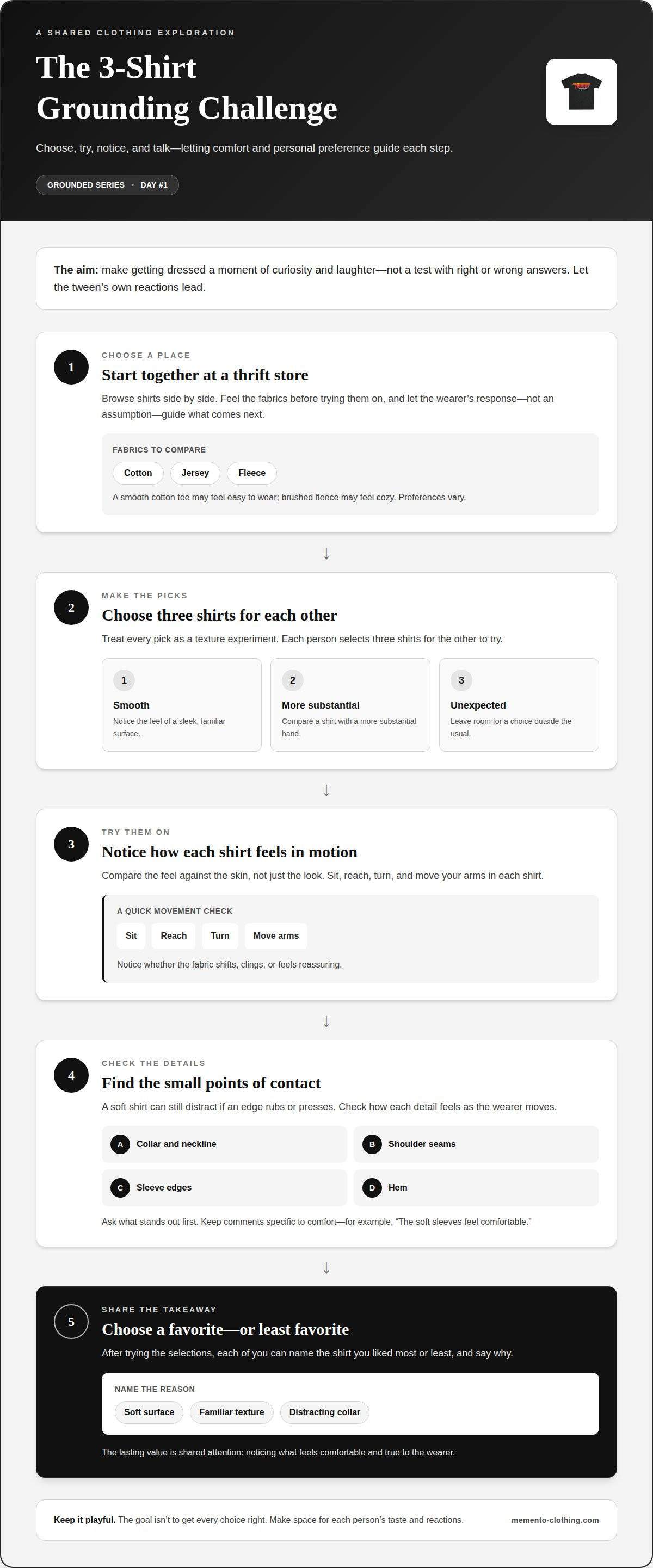
A shirt can seem like a small thing, until it helps a tween feel more at ease in her own skin. To explore clothes that make you feel grounded together, visit a thrift store, pick three shirts for each other, then try them on side by side in a dressing room. Afterward, each of you can choose the shirt you liked most or least.
The goal isn’t to get every choice right. It’s to notice how different fabrics, textures, colors, and shapes feel while making room for each person’s taste. A shared try-on can make getting dressed a moment of curiosity and laughter, rather than another decision made alone.
This guide takes you through the shirt challenge, from choosing a place to shop to discussing what feels comfortable and true. Find simple ways to keep the experience playful, respect your tween’s growing independence, and recognize the pieces she may reach for when she wants a sense of steadiness. The best outcome might be a favorite shirt, or simply a memory you made together.
Key Takeaways
- Notice which fabrics and textures feel soothing, then use those preferences to guide what you try on.
- Assess fit and clothing weight while moving, not just while standing still; small adjustments can change how a shirt feels.
- For sensory sensitivities, focus on the details that cause discomfort and let the wearer set the pace.
- Adapt layers to the weather so clothing feels comfortable in the moment, not just appealing on the hanger.
What clothing fabrics and textures feel grounding and calming?
- Start with familiar fabrics. Choose a thrift store together, then compare shirts made from cotton, jersey, or fleece. Invite your tween to feel each fabric before trying it on. A smooth cotton tee may feel easy to wear; a brushed fleece shirt may feel cozy. Let her response guide the choice rather than assuming one texture suits everyone.
- Notice the small points of contact. Have her check the collar, shoulder seams, sleeve edges, and hem. Even a soft shirt can feel distracting if a seam rubs or the collar sits too close. Compare two shirts, such as a crew neck and a wider neckline. Ask which details she notices first as she moves her arms.
- Choose three shirts for each other. The challenge asks each mother and tween to select three shirts for the other to try. Treat each pick as a texture experiment: choose one smooth shirt, one with a more substantial hand, and one unexpected option. Brooke was 12 when the Grounded series challenge began. Her age reminds families to make room for a tween’s own reactions.
- Try the shirts on together. In the dressing room, compare how each fabric feels against the skin, not just how it looks. Invite your tween to sit, reach, and turn in each shirt. Notice whether the material shifts, clings, or feels reassuring. Keep your comments specific: “The soft sleeves feel comfortable,” rather than judging her body or appearance.
- Use preference as the measure. After trying the selections, each of you can choose one shirt you liked most or least. Name the reason: a soft surface, a familiar texture, or a collar that felt distracting. This is Day #1 of the Grounded series challenge, but the lasting value is shared attention. A shirt becomes a useful reminder of what feels like her.
How do fit, layering, and clothing weight influence sensory comfort?
- Compare room to move. Try a relaxed shirt alongside a closer-fitting one. In each, lift both arms, reach forward, and sit down. Notice whether fabric pulls across the shoulders or gathers at the waist. A shirt that feels comfortable while standing may feel different during everyday movement. Let your tween describe the difference in her own words.
- Check where edges rest. Look at the shoulder seams, neckline, cuffs, and hem. A tight cuff may feel distracting; a loose sleeve may repeatedly brush the wrist. Ask your tween to bend her elbows and turn her head. These small movements can show whether a seam or edge shifts, presses, or catches her attention.
- Test layers one at a time. Start with a base shirt, then add a light overshirt or sweater. Notice whether the second layer bunches under the arms or pulls at the collar. Have her remove it, then put it back on. This simple comparison helps distinguish the feel of each garment from the combined pressure of both.
- Compare garment weight in motion. Hold two shirts, then wear each while walking and reaching. A lighter fabric may move freely, while a heavier one can feel more noticeable against the body. Neither response is automatically better. Ask which weight she prefers for sitting through class, walking outdoors, or relaxing at home.
- Record the useful details. After trying on a shirt, name one fit detail and one layering detail. For example: “roomy shoulders, smooth under a cardigan.” Keep the note focused on comfort, not appearance. If a familiar image helps a tween feel connected to a shirt, browse graphic designs with personal meaning as another way to consider what feels like her.
What clothes help with sensory grounding for people with sensory sensitivities
- Identify the specific source of discomfort. Before choosing clothes, ask what feels difficult: scratchy labels, tight cuffs, shifting waistbands, or fabric touching the neck. Focus on one sensation at a time. If a collar feels intrusive, for example, compare crew necks with wider openings. A clear preference is more useful than guessing about an entire outfit.
- Reduce irritating details. Turn a shirt inside out to inspect its seams and printed areas. Check whether a tag rests against the back of the neck or a seam crosses the shoulder. If those spots bother the wearer, choose a garment with a different construction or remove a bothersome tag when practical. Let the person wearing it make the decision.
- Make a small comfort selection. Set aside a few familiar clothes for mornings when choosing feels demanding. Include a preferred shirt, comfortable pants, and a removable layer. Keep the set visible and easy to reach. Choosing between two known favorites can feel more manageable than sorting through a full closet.
- Test clothing in ordinary situations. A shirt may feel fine briefly, then become distracting during a school day. Try it while sitting at a desk, carrying a backpack, or reaching for a shelf. Notice whether the fabric twists, straps rub, or the hem rides up. Note the exact moment discomfort appears, so the next choice can address it.
- Let the wearer set the pace. During a try-on, offer one garment at a time and allow a pause between choices. Agree on a simple signal, such as saying “stop,” if a sensation becomes too much. Don’t insist that someone keep wearing an uncomfortable item. The aim is to notice useful preferences, not endure distress.
The challenge is meant to help mothers and tweens laugh and spend time together. Keep that shared purpose in mind while centering the wearer’s comfort: a pleasant moment together shouldn’t depend on choosing or keeping on a particular garment. The person wearing the clothes decides what feels acceptable, while the time together remains the point.
How can I choose grounding clothes for hot or cold weather?
- Start with the day’s setting. Compare time outdoors with indoor plans. A warm walk followed by an air-conditioned classroom calls for different comfort than a day at home. Ask your tween where she expects to feel warm or cool. Use her answer to choose a base shirt and decide whether an extra layer makes sense.
- For warm weather, keep the outfit simple. Try a lightweight cotton tee with shorts or a loose skirt. Check whether the neckline, sleeves, or waistband feel distracting as the wearer moves. A relaxed shape may allow more air and movement. If a shirt clings or feels heavy, try another option before adding layers.
- For cold weather, build layers gradually. Start with a familiar shirt, then add a sweater or jacket. Have your tween raise her arms and sit down in the complete outfit. Notice whether sleeves bunch beneath the outer layer or the collar feels crowded. Choose pieces that can be removed without disturbing the comfortable base outfit.
- Plan for changing temperatures. A morning commute, heated classroom, and cool afternoon walk can each feel different. Choose a removable layer that fits easily into a backpack or can be carried by hand. Test the outfit indoors and outside, then adjust the combination. Avoid relying on one thick garment for every part of the day.
- Use comfort notes to guide the next choice. After wearing an outfit, note what worked in the heat or cold. For example, a loose tee may feel comfortable outdoors, while a bulky sweater feels restrictive indoors. Keep the notes specific to the wearer. Over time, these examples can help your tween choose familiar pieces for changing weather.
For the challenge, mother and tween can choose a thrift store together. Use the visit to look for pieces suited to the weather conditions you’ve discussed, while keeping the wearer’s comfort in mind. Invite your tween to compare possible layers and simple warm-weather options, then decide which pieces feel worth trying. Choosing together keeps her preferences central and gives you a shared way to explore comfortable clothing for different conditions.
Memento Mori Clothing: Memento Mori Heavyweight Hoodie
Memento Mori Clothing’s Memento Mori Heavyweight Hoodie is one option to consider as a substantial layer. Because clothing weight feels different from person to person, use the same fitting steps: notice how it rests on the shoulders, moves with the arms, and feels over a familiar shirt. Comfort is personal; a product name alone can’t tell you how a garment will feel.
The Memento Mori Vintage Tee offers another option for a shirt-centered outfit. Memento Crewnecks and Memento Hats can complete a look if they suit the wearer’s preferences. Let your tween choose what feels right rather than treating any garment as a universal answer for sensory comfort.
Visit Memento Mori Clothing online to explore its apparel.
Let the next outfit become a shared ritual
A shirt chosen together can mean more than another item in the closet. It can bring back a quiet afternoon, an unexpected favorite, or a moment when a tween felt understood. Keep that memory close by letting her lead the next choice, even as her taste changes. The most meaningful clothes that make you feel grounded are the ones she can choose for herself, with room to develop her own sense of comfort and identity.
When you’re ready to explore pieces with a thoughtful point of view, Memento Mori Clothing offers the Memento Mori Heavyweight Hoodie, Memento Mori Vintage Tee, and Memento Crewnecks. Let the wearer decide which, if any, feels right for her life and wardrobe.
Contact Memento Mori Clothing to continue the conversation. Keep choosing with care, and let each small discovery become part of your story together.
Frequently Asked Questions
What are the best comfortable outfits for feeling grounded during anxiety or stress?
Choose familiar clothes that make you feel grounded and are easy to wear and adjust. On a stressful school morning, a favorite T-shirt, soft pants, and a familiar sweatshirt offer a straightforward starting point. Keep an alternate top nearby in case plans change or the first choice feels distracting. Let the wearer decide what stays on; comfort is personal, and clothing isn’t a treatment for anxiety.
What clothing colors and styles do people find calming or grounding?
There’s no single color or style that feels calming to everyone. Clothes that make you feel grounded might be a muted blue shirt, a soft green layer, or a familiar neutral. Compare a plain shirt with one featuring a graphic, then notice which feels more like the wearer. Personal meaning can guide the choice better than a universal color rule.