
How to Tell If a Hoodie Is High Quality: The 2026 Guide to Intentional Apparel
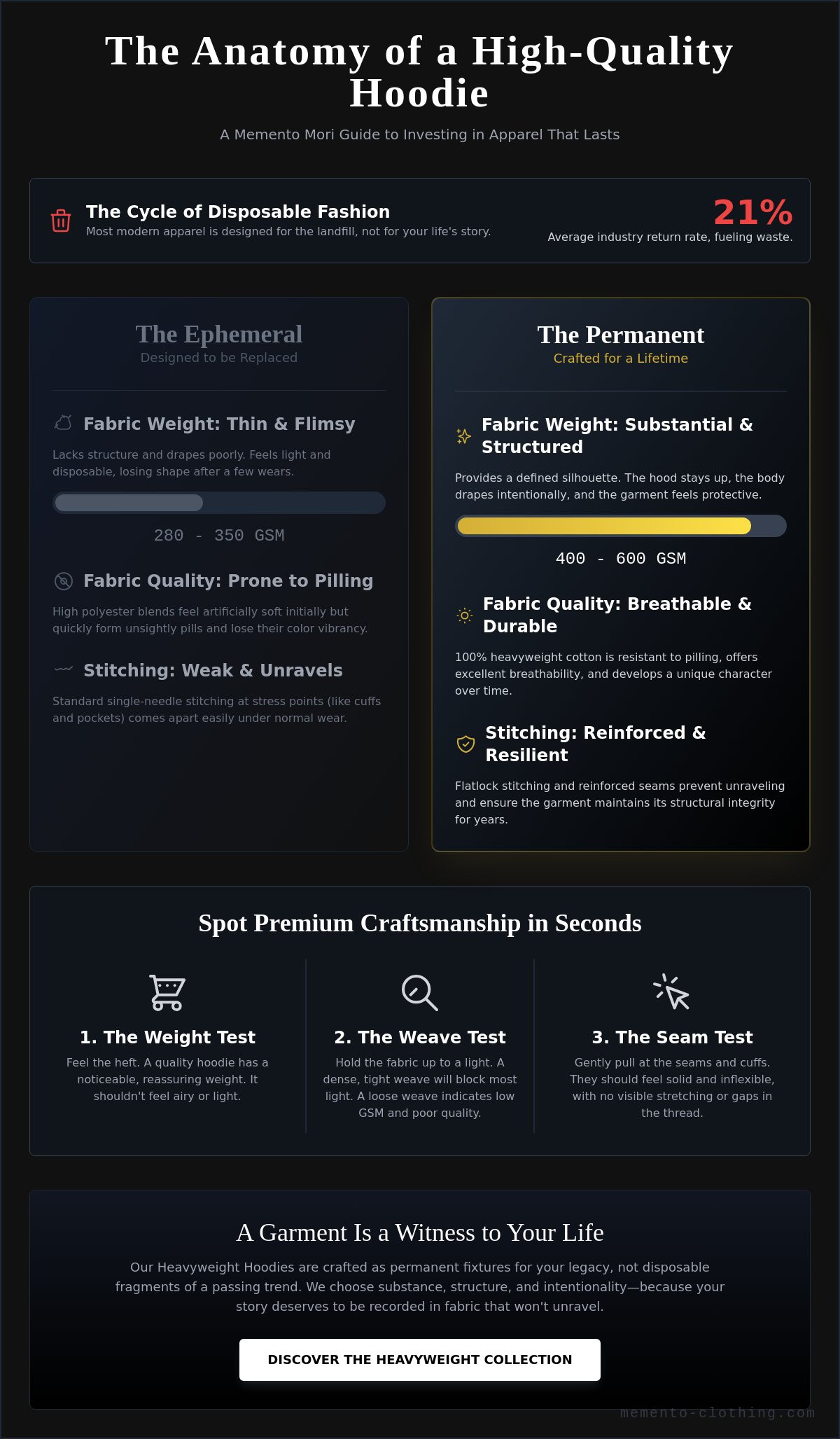
A garment should be a witness to your life, not a disposable fragment of a passing trend. Most modern apparel is designed for the landfill, contributing to an industry where the average return rate sits at 21%. Understanding how to tell if a hoodie is high quality is a necessary act of resistance against this culture of the ephemeral. You've likely felt the sting of a premium priced piece pilling after three washes or seen drawstrings fray into a tangled mess. It's time to look past the branding to the substance beneath.
We believe your wardrobe should be built on intentionality rather than impulse. This guide provides the technical markers to invest in apparel that offers lasting substance and style. We'll explore the pillars of premium craftsmanship, from the structural integrity of 400 to 600 GSM fabrics to the stitching methods that prevent unraveling. You'll also see how 2026 shifts, like the EU ban on destroying unsold textiles, are finally redefining what we value. We'll preview the specific details that make a piece like our Memento Mori Heavyweight Hoodie a vessel for personal history rather than just another item in your closet.
Key Takeaways
- Master the architecture of fabric by identifying why 400 GSM and above is the essential threshold for a truly heavyweight, structured garment.
- Recognize the silent strength of flatlock stitching and reinforced stress points that preserve the integrity of your apparel through years of wear.
- Utilize the weight and light tests to master how to tell if a hoodie is high quality in seconds, bypassing deceptive branding and thin weaves.
- Understand the value of intentional design where every stitch serves a purpose, turning a simple hoodie into a permanent fixture of your legacy.
Beyond the Surface: Why Hoodie Quality Is an Investment in Longevity
Choosing a garment shouldn't be a fleeting transaction. It's a choice of what will accompany you through the years. High quality apparel is a quiet rejection of the disposable fast fashion cycle. It's an embrace of intentional design, where every stitch has a purpose and every fiber has a reason to exist. When you master how to tell if a hoodie is high quality, you begin to see the architecture behind the aesthetic. Hoodie quality is the intersection of fabric density, structural reinforcement, and ergonomic fit.
There's a psychological shift that happens when you stop viewing clothes as seasonal props. A well made piece becomes a long term companion, a witness to your daily life. This shift toward substance also has a profound impact on our world. By choosing pieces built to last, you naturally reduce consumption and waste. It's a way of leaving a smaller, more meaningful footprint. Learning how to tell if a hoodie is high quality is the first step in building a wardrobe that honors both the wearer and the craft.
The True Cost of Fast Fashion Hoodies
Cheap hoodies rely on planned obsolescence. Many mass produced garments use high polyester blends that feel soft in the store but pill after three washes. These materials lack structural memory. They stretch out, lose their shape, and eventually end up in a landfill. The textile manufacturing process for these items is optimized for speed, not endurance. Low quality dyes are another hallmark of the ephemeral. They lead to a tired look, where a deep black fades into a dusty grey within months. This cycle of buying and replacing is an expensive habit that offers no lasting value.
Quality as a Form of Personal Philosophy
Our Memento Mori philosophy suggests that since time is finite, the objects we keep should be significant. A Memento Mori Heavyweight Hoodie isn't just a layer; it's a staple in a curated, minimalist wardrobe. Buying once and buying well is a more mindful approach to modern life. It requires patience and an eye for detail. When you invest in a piece with 400+ GSM density, you're choosing a garment that can handle the weight of time. This isn't just about fashion. It's about an individual's worldview. It's a choice to value the permanent over the passing, ensuring your personal history is recorded in fabric that won't unravel.
The Architecture of Fabric: Understanding GSM and Heavyweight Cotton
The soul of a garment resides in its weight. To understand how to tell if a hoodie is high quality, you must first look at the metric that defines its substance: GSM. This stands for Grams per Square Meter. It's a measure of fabric density that separates the ephemeral from the permanent. While standard mass market hoodies often fall within the 280 to 350 GSM range, they lack the structural permanence required for a true investment piece. They feel airy and thin, surrendering their shape to the first sign of tension.
The threshold for a premium garment begins at 400 GSM. This is the gold standard for those who seek "Heavyweight Architecture" in their wardrobe. A high density fabric doesn't simply hang; it drapes with intent. It dictates the silhouette, ensuring the hood stays upright and the body retains its form regardless of movement. You can feel this difference in the tactile resistance of the cloth. It's a physical manifestation of quality that you can identify by touch alone. When you choose a piece like our Memento Mori Heavyweight Hoodie, you're opting for a 400+ GSM construction that provides both structure and a sense of security.
The interior finish also reveals the maker's intent. French terry, with its characteristic loops, offers a breathable and structured experience. It's the choice for those who value a crisp, athletic silhouette. In contrast, brushed fleece provides a soft, voluminous warmth that feels like a sanctuary. Both have their place, but the density of the weave remains the primary indicator of longevity.
Why Heavyweight Cotton Matters
Pure cotton is a living material. At high densities, 100% cotton provides exceptional breathability while naturally retaining structural heat. It's resistant to pilling, the unsightly clusters of fibers that plague cheaper blends. Unlike synthetic alternatives, heavyweight cotton develops a unique patina and character over years of wear, reflecting the personal history of the individual who inhabits it. It's a fabric that matures rather than degrades.
Decoding the Fiber Blend
Not all blends are a compromise, but transparency is key. A small percentage of high quality polyester, typically under 20%, can aid in shape retention and prevent excessive shrinking. However, many brands use "filler" fibers to create a false sense of softness that vanishes after the first wash. Look for ring-spun cotton instead of open-end cotton. Ring-spun fibers are twisted and thinned, resulting in a significantly stronger and softer yarn. It's a more deliberate manufacturing choice that ensures the fabric remains smooth against the skin for a lifetime.
Structural Integrity: Examining Stitching, Ribbing, and Hardware
True durability is rarely loud. It lives in the silent precision of a seam. While the weight of the cotton provides the foundation, the structural integrity of the garment determines its lifespan. Knowing how to tell if a hoodie is high quality requires a gaze that penetrates the surface. You must look at the points where the fabric meets itself. These intersections are where a garment either prepares for a lifetime of use or begins its slow descent into disrepair.
Flatlock stitching stands as the hallmark of premium construction. Unlike standard overlock seams that create bulk, flatlock joins two pieces of fabric edge-to-edge. This results in a seam that's exceptionally strong and sits flat against the skin. It's a technique often reserved for high-end athletic and lifestyle gear because it demands more time and specialized machinery. Beyond the seams, examine the stress points. The corners of the kangaroo pocket and the underarm gussets should feature reinforced bar-tack stitching. Without these, the tension of daily life will eventually cause the fabric to fail. Learning how to tell if a hoodie is high quality is about seeing the invisible labor behind the product.
Hardware serves as a final signal of intent. When a brand chooses metal aglets and grommets over plastic alternatives, they're signaling a commitment to permanence. Plastic is a material of the temporary. Metal is a material of the enduring. These small details reflect a philosophy where no element is too minor to be considered. It's the difference between a mass-produced item and a piece of apparel crafted for a lifetime.
The Stitching Test: Inside and Out
Turn the garment inside out. The interior reveals the true character of the maker. Look for a high stitch-per-inch count. When stitches are placed closer together, they prevent the seams from puckering after a wash. Search for loose threads or irregular paths. A high-quality piece will show consistent, clean lines. Double-needle coverstitching on the hood is particularly important. It provides the necessary tension to maintain that architectural, upright shape that defines a premium silhouette.
Ribbing and Shape Retention
The ribbing on the cuffs and waistband acts as the garment's memory. Perform a simple snap back test. Pull the cuff firmly and release it. High-quality ribbing should return to its original shape instantly. This is usually achieved by incorporating a small percentage of elastane into the cotton weave. Without this memory, the cuffs will eventually sag, losing their ability to trap heat or maintain the hoodie's proportions. A seamless waistband is often preferred for its clean aesthetic; however, a perfectly sewn-on band can offer superior structural support if executed with precision.
The Inspection Checklist: How to Spot Premium Craftsmanship in Seconds
Identifying excellence shouldn't take hours. It's a series of instinctive checks. When you know how to tell if a hoodie is high quality, you can separate the artifacts from the waste in seconds. This process is about sensory awareness and technical literacy. It's about recognizing the difference between a garment made to be sold and a garment made to be worn.
The weight test is your first filter. High-quality hoodies feel substantial. They have a physical gravity that suggests endurance. Next, use the light test. Hold the fabric against a window or a lamp. A dense, high-GSM weave will block most of the light. If you see a constellation of gaps in the weave, the fabric is thin. It's fragile. It will fail you within a season. Structure is the silent language of quality.
Look at the hood and hardware. A single layer of fabric in the hood is a common cost-cutting measure. It collapses and loses its shape. A double-lined hood maintains its architectural integrity. It frames the face with intent. Check the drawstrings. Metal aglets provide a tactile finish that plastic cannot replicate. These small choices signal a brand's commitment to the permanent over the ephemeral.
Evaluating the Hood and Pockets
The silhouette of a hoodie is defined by its sleeves and pockets. Set-in sleeves offer a sharp, structured shoulder for a classic look. Raglan sleeves provide a more fluid, athletic drape that follows the natural curve of the body. The pouch pocket should be perfectly symmetrical. Check the openings for reinforcement. These are the first places where inferior garments begin to fray under the tension of daily use. A well-constructed pocket is a witness to the maker's attention to detail.
Online Shopping: Reading Between the Lines
Understanding how to tell if a hoodie is high quality is even more critical when you can't touch the fabric. Look for technical terms in the product description. Keywords like 'cross-grain' and 'pre-shrunk' are vital. Cross-grain construction prevents the vertical shrinkage that ruins the proportions of cheaper hoodies. You can use our guide on Memento Crewnecks as a benchmark for these garment specifications. Transparent manufacturing information is a sign of a brand that values substance over marketing. It shows they've nothing to hide.
Memento Mori: Heavyweight Hoodies Crafted for a Lifetime
A garment should be more than a temporary shield against the cold. It's a container for memory. By now, you've mastered how to tell if a hoodie is high quality through its technical markers; the density of the weave, the snap of the ribbing, and the precision of the seams. At Memento Mori Clothing, we view these details as a form of respect for the wearer. We prioritize 400+ GSM fabrics because we believe substance is the only antidote to the fleeting nature of modern fashion. Our pieces are designed to be "future vintage." They are garments that age with you, gaining character as the years pass.
Our commitment to quality honors the philosophical roots of our brand. If life is finite, then the objects we choose to inhabit should be worthy of our time. We reject the noise of loud branding in favor of a quiet, aesthetic confidence. Every stitch in a Memento Mori Heavyweight Hoodie is an intentional choice. We don't build for a season. We build for a legacy. Understanding how to tell if a hoodie is high quality allows you to see the difference between a product that merely exists and one that is crafted to endure alongside you.
The Memento Mori Heavyweight Standard
We choose our materials with a focus on longevity and tactile depth. Our 400+ GSM cotton provides a structural weight that standard apparel cannot match. This density ensures that the silhouette remains sharp and the warmth remains consistent. You can explore the technical nuances of our construction in The Definitive Guide to the Memento Mori Heavyweight Hoodie. We focus on intentional style, creating pieces that remain relevant long after the current trends have faded into obscurity.
Join a Community of Intentionality
Choosing high-quality apparel is a reflection of a broader life philosophy. It's a decision to value the permanent over the passing. We invite you to explore the Memento Mori story and discover how ancient wisdom informs our modern craft. Your wardrobe can be a curated collection of anchors, helping you stay grounded in what truly matters. Explore our collection today and find the legacy piece that will accompany you through your own unique history.
- 400+ GSM Heavyweight Cotton for structural permanence.
- Minimalist, philosophical designs that transcend seasonal trends.
- Reinforced construction designed for decades of wear.
- A rejection of disposable culture in favor of lasting substance.
Invest in Substance: Shop Memento Mori Heavyweight Hoodies and find a piece that matures alongside you. Let your choices be a reflection of your legacy. Choose with intent, and wear something that truly lasts.
Choosing the Permanent Over the Passing
Understanding the architecture of your wardrobe is a quiet form of self-respect. We've explored the necessity of high-density 400+ GSM cotton and the enduring strength of reinforced flatlock stitching. These aren't just technical specifications; they're the markers of a garment designed to survive the hollow cycles of fast fashion. Now that you've mastered how to tell if a hoodie is high quality, you can make choices that honor your own timeline. Every thread should serve a purpose. Every silhouette should reflect a commitment to the enduring.
Our pieces are built on a philosophically inspired design that views apparel as a witness to your personal history. We don't create for the moment; we create for the memory. By prioritizing substance over noise, we ensure that your clothing remains a long-term companion rather than a disposable fragment. Invest in Substance: Shop Memento Mori Heavyweight Hoodies and find a piece that matures alongside you. Let your choices be a reflection of your legacy. Choose with intent, and wear something that truly lasts.
Reflections on Quality: Frequently Asked Questions
What is the best fabric for a high-quality hoodie?
High-quality ring-spun cotton is the gold standard for durability and texture. It provides necessary breathability while maintaining a substantial, architectural drape. While some performance blends exist for specific uses, a heavy, high-density cotton weave ensures the garment ages with grace rather than degrading after a few seasons. It's the most intentional choice for those seeking a permanent wardrobe staple that feels like a second skin.
How much should a high-quality heavyweight hoodie weigh?
A truly heavyweight hoodie should utilize fabric that's at least 400 GSM. This ensures the garment feels substantial and provides natural insulation. When you consider how to tell if a hoodie is high quality, the physical weight in your hands is a primary indicator. A premium piece should feel like a protective layer, resisting the wind and holding its silhouette even when it's not being worn.
Does '100% cotton' always mean the hoodie is high quality?
Labeling a garment "100% cotton" doesn't guarantee excellence. Low-quality, short-staple cotton can still be 100% pure, yet it'll pill and lose its shape quickly. High-quality pieces use long-staple or ring-spun fibers that are twisted for strength. The true value is found in the density of the weave and the refinement of the yarn, not just the raw material listed on the care tag.
What is GSM and why does it matter for hoodies?
GSM stands for Grams per Square Meter and serves as the industry standard for measuring fabric density. It matters because it dictates the thickness, warmth, and structural integrity of the hoodie. Standard apparel often stays below 300 GSM, while premium, intentional garments push toward 400 to 600 GSM. This higher density prevents the fabric from becoming thin or "airy" after a few cycles in the wash.
How can I tell if a hoodie will shrink after washing?
To predict shrinkage, check the product specifications for "pre-shrunk" or "garment-dyed" labels. Another hallmark of quality is "cross-grain" construction, where the fabric is cut against the grain to prevent vertical shrinking. If a brand is transparent about these technical details, it's a strong signal they've engineered the piece to retain its original proportions through years of careful maintenance.
Why are some hoodies so much more expensive than others?
Higher costs often reflect a commitment to ethical labor and superior raw materials. Manufacturing a 400 GSM hoodie in regions with high standards involves significantly higher costs of goods compared to mass-market alternatives. These garments prioritize longevity, meaning the cost-per-wear is actually lower over time. You're investing in a piece that won't need to be replaced when the season ends.
What are the signs of poor-quality stitching in a hoodie?
Signs of poor construction include irregular seam lines, visible loose threads, and puckering where the fabric bunches together. If the stitch-per-inch count is low, the seams are more likely to fail under tension. High-quality construction uses flatlock or double-needle stitching to ensure the garment remains a structural whole, especially at common stress points like the underarms and the corners of the pockets.
Is a heavier hoodie always better than a lightweight one?
For those seeking structure and a lasting aesthetic, a heavier hoodie is almost always the superior choice. The increased density provides better shape retention and a more sophisticated drape that suggests permanence. While a lightweight hoodie may be suitable for summer layering, it lacks the protective feel of a heavyweight piece. Weight is often the most honest way how to tell if a hoodie is high quality.