
How to Look Put Together in Casual Clothes: A Simple 2026 Guide
A casual outfit can feel unfinished not because it needs more, but because one small choice hasn’t quite settled into place. Learning how to look put together in casual clothes isn’t about dressing formally or chasing every new trend. It’s about paying attention to fit, proportion, color, and garment condition so everyday pieces work well together.
If your comfortable favorites sometimes look mismatched, start with the details you can control. Check that a shirt sits comfortably, the colors feel at ease beside each other, and each piece is clean and presentable. These small choices can change the whole impression without making an outfit less comfortable.
This guide shows you how to build intentional outfits from pieces you already own, balance relaxed shapes, and use simple finishing touches. You’ll find practical outfit formulas, color ideas, and ways to make personal expression, including graphic apparel, feel at home in a casual wardrobe. The aim isn’t perfection. It’s a way of dressing that feels natural, considered, and truly yours.
Key Takeaways
- Learn how to look put together in casual clothes by choosing pieces that feel coherent rather than formal or trend-led.
- Use fit and proportion to balance relaxed garments without relying on clothes that are overly tight or oversized.
- Check garment condition, coordination, and the setting to make an outfit feel considered rather than unfinished.
- Follow a flexible dressing routine that starts with the occasion and leaves room for personal expression.
How to Look Put Together in Casual Clothes Without Dressing Up
Put-together casual style is comfortable clothing that looks considered and suits the moment. It isn’t formalwear in disguise. The difference is often a few small decisions: choosing familiar pieces that work together, checking how they fit, and making sure they’re presentable. The answer to how to look put together in casual clothes is to aim for ease with intention, not extra formality.
Casual clothing has long been shaped by changing ideas about comfort and everyday dress. The Casual Wear overview offers useful background, but a polished casual outfit doesn’t depend on a strict dress code. It depends on coherence. Price, labels, and current trends aren’t prerequisites. A clean, well-fitting T-shirt, relaxed jeans, and simple shoes can look just as considered as more elevated pieces when their condition and proportions feel in harmony.
What makes an everyday outfit feel intentional?
Fit, condition, and coordination work together. Fit means your clothes sit comfortably and allow movement, not that they cling or follow a particular silhouette. Condition means each garment is clean and presentable, without distracting marks or damage. Coordination connects the pieces through color, shape, or mood.
Picture a familiar combination: a soft crewneck, straight-leg jeans, and sneakers. Check whether the crewneck length works with the rise of the jeans, whether the colors sit comfortably together, and whether each piece is in good shape. Those details help the outfit read as a choice rather than a fallback. Straightening a collar or folding a sleeve once can bring the whole look into focus.
Intentionality doesn’t mean dressing like everyone else. Trends can offer ideas, but they change; personal taste gives an outfit continuity. A graphic tee, for example, can be part of a considered everyday look when the rest of the outfit supports rather than competes with it. Keep what feels like you, and leave the rest.
Why comfortable clothes can still look polished
Comfort and polish aren’t opposites. Clothes feel polished when they suit you and the situation, not when they restrict movement or imitate a formal outfit. Soft fabrics, easy layers, and relaxed shapes can look composed when you choose them with care. There’s no single body type, age, or aesthetic that defines a put-together appearance.
Context helps set the level of ease. A casual day with friends may call for a favorite tee and worn-in sneakers; a relaxed workplace or informal gathering might feel better with neater shoes or a clean outer layer. Neither setting requires a total change of identity. Consider what the moment asks of you, then make a small adjustment while keeping the comfort that drew you to the outfit.
That’s the distinction: relaxed dressing leaves room to breathe, while careless dressing ignores whether the clothes are comfortable, presentable, and suited to the occasion. Polish is not a performance. It’s a quiet sense that the pieces belong together, and that you do, too.
Build a Cohesive Casual Outfit with Fit, Proportion, and Color
A cohesive outfit doesn’t require matching pieces or a prescribed silhouette. It comes from how garments sit, how their shapes relate, and how color guides the eye from one piece to the next. As you explore how to look put together in casual clothes, think of fit as ease with balance: clothing should let you move freely while creating a shape that feels deliberate. Fit sets the ease; proportion gives an outfit its visual balance.
Start by noticing how each piece behaves on its own, then consider the whole outfit. Does the shirt bunch where it meets the waistband? Do the sleeves feel comfortable when you reach forward? Do the shapes create a clear visual rhythm, or are several pieces competing for attention? These practical checks are more useful than a strict rule about what someone “should” wear.
Choose a fit and silhouette that feel balanced
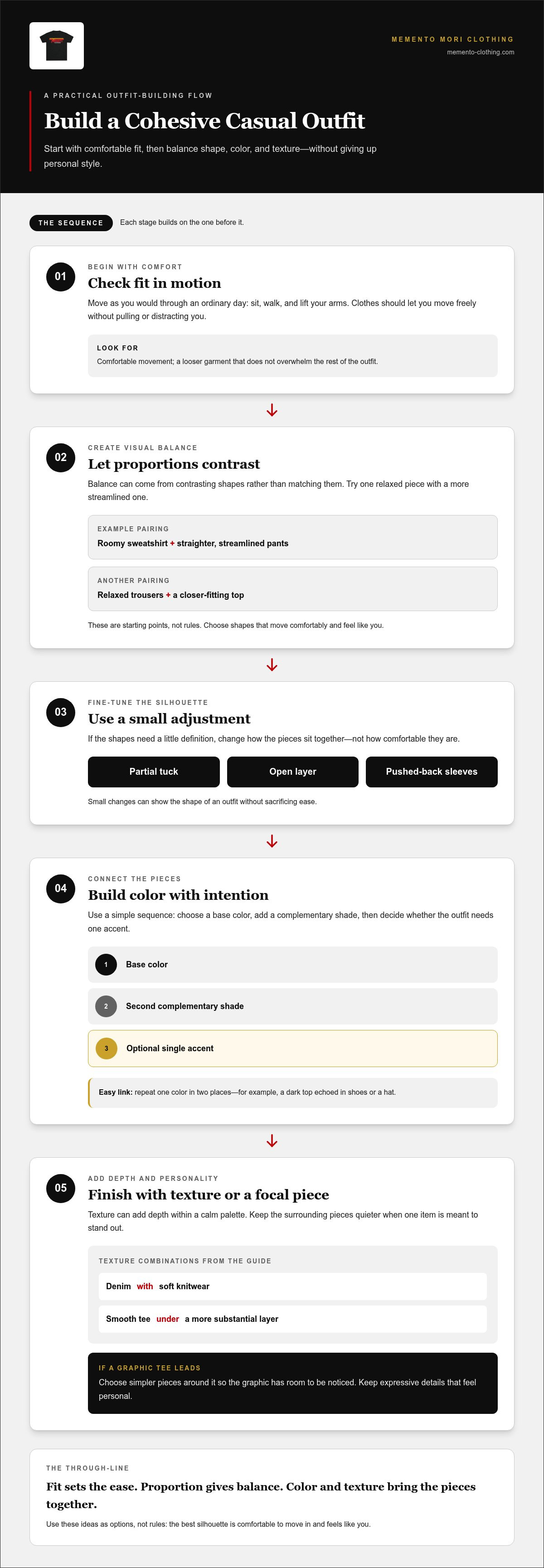
Balance often comes from contrast, not symmetry. A roomy sweatshirt can sit well with straighter, more streamlined pants; relaxed trousers can pair with a closer-fitting top. Neither combination is a rule. Try different proportions and notice whether the clothes move comfortably, stay in place, and feel like you. The best silhouette is one you can inhabit with ease, not one chosen to imitate a body ideal.
When assessing fit, move as you would through an ordinary day. Sit, walk, and lift your arms. Fabric shouldn’t pull in a way that distracts you, and a looser garment shouldn’t overwhelm the rest of the outfit. You can also adjust the relationship between pieces with a partial tuck, an open layer, or sleeves pushed back. Small changes can show the shape of the outfit without sacrificing comfort.
Use color and texture to create visual cohesion
A restrained palette is a useful starting point, not a restriction. Repeating one color in two places, such as a dark top echoed in shoes or a hat, can make separate pieces feel connected. Texture adds depth within that calm palette: denim beside soft knitwear, or a smooth tee under a more substantial layer. Analyzing Casual Style Elements offers another perspective on how texture, color, and cut work together.
For a simple test, choose a base color, add a second complementary shade, then decide whether the outfit needs one accent. That accent might be a brighter layer, a patterned piece, or a graphic tee. Give it room to be noticed by keeping the surrounding pieces quieter. If every item asks to be the focal point, the outfit can lose its sense of direction.
Graphic clothing can be part of that balance when it reflects something personal. A Memento Mori Vintage Tee, for instance, can bring expressive character to everyday clothes. Pair it with simpler pieces if you want the graphic to lead. If that kind of meaningful detail feels like you, explore graphic tees with a reflective point of view as one possible starting place for personal expression.
Compare Casual Outfit Choices to Avoid an Unfinished Look
Casual clothes don’t become careless simply because they’re soft, familiar, or well-worn. The difference is usually whether the outfit feels cared for and suited to where you’re going. A favorite faded tee can be part of a thoughtful look; visible stains or a stretched neckline may draw attention for reasons you didn’t intend. Aim for awareness, not perfection.
Context changes how an outfit reads. The same clothes may feel just right at home and too relaxed for a gathering or workplace. Use this comparison as a guide, not a universal dress code:
| Consideration | Feels more intentional | May feel unfinished |
|---|---|---|
| Garment condition | Clean, comfortable pieces with wear that feels natural | Visible stains, lingering wrinkles, or damage that distracts |
| Coordination | Pieces that share a compatible color, mood, or level of ease | Items that seem unrelated, without a deliberate contrast |
| Setting | Clothing that feels at ease in the place and activity | A level of casualness that seems out of step with the occasion |
Distinguish relaxed from neglected
Relaxed style leaves room for comfort and personality. Neglect is less about a garment being old than whether its condition distracts from the way you want to present yourself. Fading, softening, and signs of regular wear can give clothes character; a fresh stain or a loose seam may simply call for care. There’s no need to discard every imperfect piece or dress for someone else’s approval.
Before leaving, check the details most visible in the setting: the front of a shirt, the knees of trousers, or the condition of your shoes. A quick clean or a change of garment can make a familiar outfit feel more considered. If visible wear is part of your personal style, keep it deliberate. Comfort and self-expression aren’t flaws to correct.
Match the level of casualness to the occasion
At home, ease may be the priority, and soft, relaxed clothes can make sense throughout the day. For a casual gathering, you might choose pieces that feel a little fresher or more composed while still reflecting your usual style. In a relaxed workplace, expectations can differ by role, team, and environment, so there’s no single outfit standard that applies everywhere.
Think of the setting as a cue, not a command. Consider the activity, who you’ll spend time with, and whether you’ll move between settings. A small shift in neatness or formality may be enough; casual dressing doesn’t require a complete change of character. That’s the practical heart of how to look put together in casual clothes: choose an ease that feels like yours and fits the moment.
Use a Simple Routine to Make Casual Clothes Look More Intentional
A useful getting-dressed routine should make mornings easier, not turn them into a styling exercise. Start with what’s already in your wardrobe. A practical answer to how to look put together in casual clothes is to make a few clear choices in sequence, then stop when the outfit feels comfortable and appropriate.
- Choose the occasion. Think about where you’re going and what you’ll be doing, including whether you’ll move between settings.
- Select a base. Begin with a familiar piece you like wearing, such as a T-shirt, jeans, or relaxed trousers.
- Check the fit. Make sure the pieces allow comfortable movement and sit well together as you walk, sit, and reach.
- Refine the look. Add a layer or simple detail if it serves a purpose, then pause before adding more.
This order is flexible. On a busy morning, the base might already be clear; on a slower day, you might try a different layer. You don’t need to buy something new to make an outfit work. First, look at the clothes you own and consider which combinations you already reach for with ease.
Create a repeatable outfit formula
A formula is a dependable starting point, not a uniform. Pair one familiar base piece with a complementary layer or separate, then vary the colors, textures, or accessories. A simple shirt-and-trousers combination, for instance, can feel different with an open overshirt, a cardigan, or a change of shoes. Exploring adaptable collections from MO. DA FASHION can give you ideas for pairing everyday tops, jackets, and trousers that work together effortlessly. Keep the structure that works; let the details shift with your mood.
Repeating a useful combination can reduce decision fatigue because you’re not rebuilding an outfit from scratch each day. It also helps you notice which pieces earn their place in your regular rotation. If a graphic tee is part of your wardrobe, the Memento Mori Vintage Tee guide offers an example of how one expressive piece can inform an everyday look.
Make a quick final check before heading out
Pause at the mirror, but use it as a practical check rather than a search for flaws. Look for a mark, twisted seam, or detail that needs attention. Move naturally: raise your arms, sit, or take a few steps. If something pulls, slips, or keeps needing adjustment, choose a more comfortable option. Then consider whether the outfit suits the day’s setting.
If the overall look feels busy, remove one competing detail rather than adding another. Perhaps the graphic, pattern, or accessory already gives the outfit enough character. The aim is not to erase personality, but to let it come through clearly. Explore Memento Mori graphic apparel as one way to bring personal meaning into a casual wardrobe.
Make Personal Style Part of a Put-Together Casual Wardrobe
Personal style isn’t another standard to meet. It’s the thread that helps familiar pieces feel like they belong to you. A wardrobe can be simple, expressive, or somewhere between the two; coherence comes from choosing what feels genuine, then wearing it with care. You don’t need to keep up with every new silhouette or color to make your everyday clothes feel considered.
That’s the lasting answer to how to look put together in casual clothes: let practical choices serve your own point of view. Notice which garments you reach for repeatedly and why. Perhaps a certain color feels calming, a graphic carries a memory, or a well-loved layer makes an ordinary day feel more like yours. Those preferences can become a quiet guide as you dress.
Choose everyday pieces that reflect your point of view
Meaningful clothing can be understated or vivid. A familiar tee, a comfortable hoodie, or a crewneck with a graphic may express something personal without making the outfit feel like a costume. These are options, not requirements. Ask whether a piece feels natural in your daily life and whether you can imagine wearing it in more than one setting. Let your own associations matter more than a passing trend.
There’s no need to build an identity around a label or a trend cycle. A personal wardrobe takes shape through repeated choices: the colors you return to, the messages you want to carry, and the clothes that feel at home in your routine. Keeping those choices in view can make getting dressed feel less like following instructions and more like recognizing yourself.
Explore philosophy-led casual apparel
Memento Mori Clothing offers vintage tees, heavyweight hoodies, and crewnecks inspired by the Memento Mori philosophy. The idea invites reflection on time and the meaning we give to what we wear. That perspective can make an everyday garment feel more personal, though no particular message or graphic is necessary for a casual outfit to feel complete.
When a piece resonates, let it sit naturally within your wardrobe rather than asking it to define every outfit. Choose it because its meaning feels worth carrying into an ordinary day. The clothes you return to can hold more than comfort; they can become small markers of memory, taste, and the person you are becoming.
For a closer look at the thinking behind this philosophy-led approach, explore the Memento Mori story. Take what speaks to you, and let the rest of your style remain your own.
Let Your Everyday Style Take Shape
Getting dressed can be a small act of recognition: choosing what feels comfortable, considered, and true to you. The question of how to look put together in casual clothes doesn’t need a permanent formula. Your preferences will shift with the day, and your wardrobe can shift with them. What matters is keeping room for ease and for the details that carry personal meaning.
Memento Mori Clothing brings that reflective spirit to everyday apparel. The Memento Mori Vintage Tee, heavyweight hoodies, and crewnecks are inspired by the Memento Mori philosophy, a reminder to give attention to the time and moments we have. A meaningful piece doesn’t need to define your whole look. It can simply become part of your own story.
If you’d like to find a piece that speaks to your point of view, explore Memento Mori Clothing. Start with what feels natural and let your everyday style become more fully your own.
Frequently Asked Questions
Can a graphic T-shirt look put together for a casual dinner?
Yes. If you’re wondering how to look put together in casual clothes for a casual dinner, a graphic tee can work when it feels appropriate for the restaurant and the people you’re meeting. Consider the graphic’s message and condition, then choose a clean, comfortable option for the rest of your outfit. If you’re unsure about the venue, a light layer gives you an easy way to adjust without changing your whole look.
Is a matching set necessary to make casual clothes look polished?
No. Matching sets are convenient, but separate pieces can feel just as considered. For example, wear a plain top with trousers that share a detail such as a similar fabric weight or a clean, simple shape. If your outfit feels disjointed, try changing one piece rather than replacing everything. A set is one option, not a requirement for a cohesive wardrobe.
How can I look put together in casual clothes on a hot day?
Choose clothes that let air move and don’t cling uncomfortably as the temperature rises. A simple cotton tee with relaxed shorts or lightweight trousers can be practical; keep an extra layer in your bag if you’ll spend time in strong indoor air conditioning. Consider the day’s activities, too. Shoes suited to walking and a small, secure bag can help you stay comfortable without fuss.
What should I wear when a casual event has no dress code?
Use the invitation, venue, time of day, and planned activity as clues. For a daytime backyard gathering, a familiar outfit that lets you sit outdoors and move around is a sensible starting point. For an evening meal, you might choose a slightly neater version of your usual casual wear. If you’re uncertain, bring a versatile layer that can adapt to the setting.
Can I look put together in casual clothes while working from home?
Yes. For a video call, choose a top that feels comfortable for sitting and looks presentable within the camera frame. Check how its pattern and neckline appear on screen, and keep a cardigan or overshirt nearby if you want a quick change between calls. On a meeting-free day, dress for comfort and the tasks ahead. Your home routine doesn’t need to imitate an office uniform.
How do I make a travel outfit look intentional without sacrificing comfort?
Build around the longest part of the journey: choose a comfortable base, then bring a layer you can add or remove as temperatures change. Wear shoes you already know are comfortable for walking, and keep essentials accessible in a small bag or outer pocket. Bringing a practical accessory like a Taschenretter handbag holder can also keep your bag clean and off transit or cafe floors when taking a break. Before leaving, check that waistbands and straps won’t bother you while seated. A simple, adaptable outfit can carry you through delays and changes of plan.