
How to Layer Clothes for a Vintage Look: A Guide to Intentional Style in 2026
A truly timeless outfit is never a costume. It's a quiet conversation between the ghosts of the past and the reality of the present. You've likely felt the frustration of a look that feels bulky rather than structured. It's difficult to mix different weights of cotton without losing the intended silhouette. Often, cheap fabrics fail to hold the history you're trying to project. Learning how to layer clothes for a vintage look requires more than just finding old garments. It demands an intentional architecture of fabric and form.
We'll show you how to master this balance. You'll learn to use high-quality modern essentials, such as a Memento Mori Heavyweight Hoodie or a structured Memento Crewneck, to anchor your style. This guide provides a clear framework for understanding fabric weights and garment structure. We'll explore how to mix textures to build a wardrobe that feels both modern and eternal. It's time to move beyond fleeting trends and embrace a style that honors the passage of time. Let's begin the process of building a silhouette that lasts.
Key Takeaways
- Understand the vital role of fabric weight in achieving a structured silhouette that honors the past without feeling dated.
- Learn how to layer clothes for a vintage look by using foundational pieces like heavyweight tees to create a controlled, architectural base.
- Explore the "Double-Hood" technique to add sophisticated mid-layer depth using structured hoodies and versatile crewnecks.
- Master the interplay of hard and soft textures to give your ensemble a lived-in character and a sense of personal history.
- Adopt a philosophy of intentional curation, choosing a few enduring garments that prioritize structural integrity over fleeting trends.
The Architecture of Vintage Layering: Understanding Silhouette and Weight
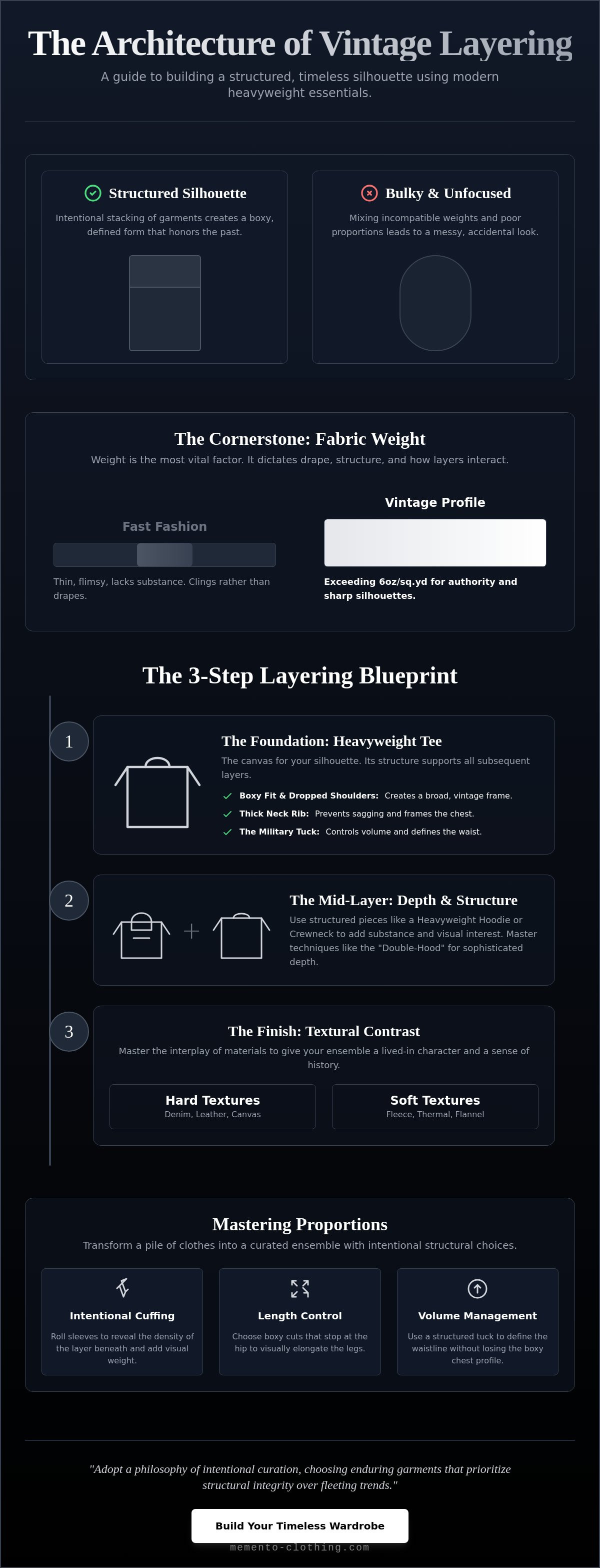
Layering is an act of creation. It is the intentional stacking of garments to build a boxy, structured silhouette that resists the pull of gravity. While the practice of layering clothes often serves a functional purpose, in the context of a retro aesthetic, it becomes a study of form. We've moved from the raw utility of the 20th century to a more meditative, intentional fashion in 2026. Understanding how to layer clothes for a vintage look starts with recognizing that fabric weight is the most vital factor. It dictates how a garment rests on the body and how it interacts with the pieces beneath it. Weight creates the shadow and the substance of the look.
Proportions define the era you choose to inhabit. A 1990s-inspired look relies on a broad, boxy frame. A 1970s silhouette demands something slimmer and more elongated. These choices aren't accidental. They are the foundation of a visual narrative. When you layer with intention, you aren't just putting on clothes. You are constructing a persona that respects the history of the garment while remaining rooted in the present.
Fabric Density as a Foundation
Modern fast fashion often feels ephemeral. The fabrics are thin. They lack the substance needed to hold a shape. For a true vintage profile, heavyweight cotton is essential. We look for materials exceeding 6oz per square yard. This density ensures a garment drapes with authority rather than clinging to the skin. A Memento Mori Vintage Tee provides the structural integrity required to support heavier outer layers. This density allows the fabric to maintain its profile across multiple levels of dress. It ensures the silhouette remains sharp. It stays intentional. It lasts.
Managing Proportions for a Retro Profile
Balance is found in the "Rule of Thirds." We avoid the chaos of being swallowed by our choices. Managing proportions is the final step in mastering how to layer clothes for a vintage look. If the top layer is oversized, the foundation must be structured. This prevents a look from appearing messy or accidental. Consider these structural choices:
- Intentional Cuffing: Roll sleeves to reveal the density of the layer beneath.
- Length Control: Choose boxy cuts that stop at the hip to elongate the legs.
- Volume Management: Use a structured tuck to define the waistline without losing the boxy chest profile.
These small gestures transform a pile of clothes into a curated ensemble. It's about control. It's about knowing where the garment ends and the individual begins. A well-layered outfit is a reminder of the permanence we seek in a world of fleeting things.
The Foundation: Styling the Heavyweight Vintage Tee
The foundation of any enduring silhouette begins with the simplest of garments: the t-shirt. To master how to layer clothes for a vintage look, one must look beyond the flimsy, disposable options of the modern era. We seek a piece with weight. A piece that remembers its purpose. This first layer is the canvas. It determines how every subsequent piece will fall. It's the silent anchor of the entire ensemble.
- The Tee: Choose a boxy, heavyweight tee. A thick neck rib is non-negotiable. It provides a frame for the throat and chest that resists the sagging common in lesser fabrics.
- The Tuck: Use the military tuck. Fold the excess fabric at the sides to control the volume at the waist. This maintains the boxy chest while anchoring the look.
- The Under-layer: Introduce a contrasting texture. A thermal or long-sleeve layer underneath adds depth. This echoes historical layering techniques where each layer serves a visual and tactile purpose.
- The Shoulders: Ensure the shoulder seams are dropped. This creates the authentic 90s feel, a silhouette that suggests ease and permanence.
- The Frame: Complete the narrative with a simple hat. It frames the face and balances the weight of the torso.
Every choice in this foundational stage is a rejection of the temporary. We don't dress for the moment. We dress for the memory of what style used to be. By focusing on the structural integrity of the base layer, you ensure the rest of the outfit has a place to rest.
The Boxy Fit vs. Modern Slim Cuts
Modern cuts often prioritize a fleeting "slim" aesthetic that lacks character. They cling. They fail to drape. The Memento Mori Vintage Tee provides the perfect structural base because it respects the architecture of the body. Side seams are often absent in high-quality vintage-style construction. This allows the shirt to hang without twisting over time. An intentional oversized fit is not just "too big." It's a deliberate choice of volume that creates a powerful, grounded profile. It's a choice to be seen. It's a choice to remain.
Tucking and Draping Techniques
The way a garment meets the waist tells a story. A full tuck evokes a 50s workwear vibe. It's disciplined. It's serious. For a more relaxed 2026 aesthetic, the french tuck offers an effortless balance. It provides access to the belt, which acts as a visual anchor. A leather belt adds a "hard" texture to the "soft" cotton, bridging the gap between layers. This contrast is essential for those learning how to layer clothes for a vintage look. If you value this level of detail, consider exploring our collection of intentional essentials to begin your journey toward a more permanent wardrobe.
Building Mid-Layer Depth with Hoodies and Crewnecks
Once the foundation is set, we build upward. Mid-layers aren't just for warmth. They provide the visual volume required for a historical silhouette. Understanding how to layer clothes for a vintage look means mastering the space between the skin and the outer shell. This middle ground is where the architecture of an outfit truly takes shape. It's about the weight of the fabric and the way it interacts with the layers below.
The "Double-Hood" technique is a hallmark of this approach. By placing a structured hoodie beneath a canvas or denim jacket, you create a collar profile that is both rugged and refined. It offers a sense of protection and permanence. Tonal colors are your greatest tool here. Depth comes from subtlety. We prefer palettes that echo the natural world. A washed charcoal hoodie over a black tee creates a shadow effect. It suggests a life lived. It suggests a garment that has seen time and survived it.
Stacking necklines is a quiet art. The tee collar should peek out beneath the sweatshirt. This small sliver of fabric adds a preppy, intentional touch. It anchors the more relaxed outer layers. It shows that the outfit was constructed with a purpose. It wasn't just thrown on. It was composed.
Neckline Play and Fabric Stacking
The art of the "peeking" collar is a study in detail. A crisp rib at the neck suggests a respect for the garment. Memento Crewnecks offer the density needed for this level of stacking. They don't collapse under the weight of a jacket. Managing sleeve lengths is equally vital. Let the sleeve of a thermal layer or a heavyweight tee extend slightly past the cuff of the sweatshirt. These small overlaps create a narrative of layers. They suggest a ritual of dressing that values every piece of the whole.
The Structural Hoodie
A flimsy hood is a failure of form. It loses its shape. It looks accidental. We require a stiff, heavyweight hood that retains its peak even when pushed down. When learning how to layer clothes for a vintage look, the structure of the hood acts as a frame for the head and shoulders. The Memento Mori Heavyweight Hoodie serves as a definitive outer layer when the weather allows. It pairs naturally with structured headwear, like our Memento Hats, to create a balanced profile. It's a look that feels grounded. It's a look that remains.
Textural Contrast: Elevating the Vintage Narrative
Texture is the silent language of history. To truly master how to layer clothes for a vintage look, you must look beyond the color of the garment. Look at the grain. Look at the friction between the layers. A modern outfit often feels flat. It lacks the depth of a lived experience. By mixing "hard" textures like heavy canvas or aged denim over "soft" heavyweight cotton, you create a tension that feels authentic. It feels earned. This contrast is what separates a curated ensemble from a mere costume.
Fading is not a defect. It is a record of time. A vintage wash suggests a story that began long before you put the garment on. We use these washes to soften the architectural structure built in the previous layers. It bridges the gap between the rigid and the comfortable. Graphic elements serve as a visual anchor in this landscape. A well-placed design provides a focal point amidst the complexity of multiple layers. It reminds the observer of the intention behind the style. It grounds the silhouette in a specific moment of personal history.
Accessories are the final punctuation marks in this narrative. They are not afterthoughts. A hat or a belt is a deliberate choice to finish the form. These pieces provide the balance needed when working with the oversized volumes of retro styling. They ensure the person is not lost within the clothes. They ensure the clothes are an extension of the person.
Mixing Materials for Visual Interest
Heavyweight cotton is the soul of this process. Pairing it with corduroy or high-density denim adds a layer of visual interest that flat, synthetic fabrics cannot match. Matte finishes are essential. Shiny materials often feel artificial. They break the illusion of a timeless silhouette. Texture makes an outfit feel three-dimensional. It invites the eye to linger on the details. It rewards the observer for noticing the subtle differences between a canvas jacket and the Memento Mori Vintage Tee beneath it.
The Role of Headwear
A hat balances the volume of an oversized layered ensemble. It provides a frame for the face that mirrors the structure of the shoulders. Memento Hats are designed with this balance in mind. Choosing between a relaxed "Dad hat" for a 90s grunge aesthetic or a structured snapback for an athletic retro vibe depends on the era you wish to channel. Match the hat color to your base layer for a cohesive narrative. This creates a visual loop that ties the entire outfit together. To complete your own architectural silhouette, explore our collection of Memento Hats and intentional apparel.
Curating an Intentional Wardrobe with Memento Mori
Style is a choice of what to keep. In a world increasingly crowded by the ephemeral, we find beauty in the enduring. Mastering how to layer clothes for a vintage look is not an exercise in accumulation. It is an exercise in subtraction. Five great pieces possess more soul than twenty trend-chasing ones. They carry the weight of intention. They resist the pull of the temporary. When you choose quality over quantity, you aren't just buying clothes. You are curating a personal history.
Heavyweight garments improve with age. They don't just wear out; they wear in. Like the true vintage pieces we admire from decades past, these items develop a character that reflects the life of the wearer. A Memento Mori Heavyweight Hoodie or a structured Memento Crewneck becomes a companion. It holds its shape. It remembers your movements. Building a "forever" wardrobe means looking past the 2026 fashion cycle and toward a silhouette that remains relevant as the years pass.
Dressing with Intent
The Memento Mori story is rooted in the quiet awareness of mortality. This philosophy informs every design choice we make. We choose garments that tell a story of craftsmanship and permanence. The weight of your clothes affects your presence. It grounds you. When you wear a piece with substance, you feel a sense of confidence that thin, disposable fabrics cannot provide. It is a ritual of dressing that values the self and the garment equally. It is a choice to be present in every layer.
The Longevity of Heavyweight Cotton
There are technical reasons why we favor density. Heavyweight fabric resists pilling and stretching. It maintains the architectural lines of your outfit through years of use. This is how to layer clothes for a vintage look that maintains its integrity over time. While modern fast fashion often fails after a single season, high-density cotton preserves the soul of the piece. Intentional care, such as cold washing and air drying, ensures these modern essentials become the vintage treasures of the future.
Your style is a bridge between the past and the future. By choosing pieces like our Memento Mori Vintage Tee or our specialized spirit wear, such as Urbana Hillclimbers or Marysville Monarchs apparel, you anchor yourself in a specific narrative. Find your personal "Memento" through style. Choose pieces that don't just fill a space in your closet, but hold a place in your life. The most beautiful things are those that stay.
Constructing Your Eternal Silhouette
Dressing is a ritual of memory. We've explored how the weight of a garment dictates its drape and how the stacking of textures creates a lived-in narrative. Mastering how to layer clothes for a vintage look requires more than just an eye for the past. It demands a respect for the structural integrity of the present. By focusing on heavy fabric weights and intentional proportions, you transform clothing into a personal anchor. You move beyond the noise of 2026 into a space of quiet permanence. It's a choice to remain seen.
The journey toward an intentional wardrobe begins with a single, meaningful choice. We invite you to Explore the Memento Mori Collection and Build Your Timeless Wardrobe. Our designs utilize premium 10oz+ heavyweight fabrics to ensure your silhouette remains sharp for years to come. These are philosophically driven pieces crafted for those who value craftsmanship over the ephemeral. With national shipping across the United States, your next memento is within reach. Wear your history. Build something that lasts.
Frequently Asked Questions
What is the best fabric for a vintage layered look?
Heavyweight cotton, specifically 100% carded or combed cotton over 6oz, is the superior choice. It possesses the density required to hold a silhouette against the body. Flimsy synthetics fail to provide the architectural drape that defines a retro aesthetic. Our Memento Mori Vintage Tee serves as an ideal base. It offers a structured foundation that remains unchanged through years of wear.
How do I avoid looking bulky when layering multiple shirts?
Control the volume at the waist to prevent an accidental, bulky appearance. Use the military tuck to anchor the base layer while maintaining a wide chest profile. This creates a sharp transition between the torso and the legs. By managing the excess fabric of a Memento Mori Heavyweight Hoodie, you ensure the layers look intentional. Structure is the enemy of messiness.
Can I achieve a vintage look with brand-new clothes?
You can certainly achieve a timeless aesthetic using brand-new, high-quality garments. The secret of how to layer clothes for a vintage look in 2026 lies in the construction and the wash of the pieces. Choose items with a faded, lived-in finish and a heavyweight feel. Modern essentials from our collection are designed to age into the vintage treasures of the next generation.
What is a 'boxy fit' and why does it matter for vintage styling?
A boxy fit features a wider chest, dropped shoulders, and a slightly cropped hem. This silhouette is essential because it mirrors the utility-focused designs of the late 20th century. It provides a powerful, grounded frame that resists the cling of modern slim cuts. This shape allows for easier movement and creates the necessary space for effective mid-layering.
How many layers are too many for a vintage outfit?
Three distinct layers are typically the limit for maintaining a structured profile. A base tee, a mid-layer like a Memento Crewneck, and an outer jacket provide depth without sacrificing form. Adding a fourth layer often leads to a loss of the intended silhouette. It's better to choose fewer, heavier pieces than many light ones. Quality remains the priority.
Does the weight of the t-shirt really matter for layering?
The weight of the t-shirt is the most critical factor in the entire ensemble. A flimsy base layer will collapse under the pressure of a hoodie or jacket. This ruins the lines of the outfit. A 6oz or 7oz tee provides the necessary tension to support the upper layers. It ensures the collar stays crisp and the shoulders remain defined.
How do I style a heavyweight hoodie without it looking like gym wear?
Transform a hoodie into a sophisticated piece by layering it under a structured outer shell. The "Double-Hood" technique, pairing a Memento Mori Heavyweight Hoodie with a denim or canvas jacket, removes the athletic context. Use tonal colors to keep the look refined. This approach emphasizes the architectural quality of the fabric rather than its casual origins.