
Gildan Hammer Tee vs. Premium Ring-Spun Vintage Tee: Which Should You Choose in 2026?
The heavier tee isn’t automatically the better everyday shirt. In the gildan hammer tee vs premium ring spun vintage tee comparison, the right choice depends on how you want the fabric to feel, how you want the shirt to fit, and what you’ll wear it for.
It’s easy to see “premium,” “ring-spun,” and “vintage” on a label and assume they tell the whole story. They don’t. Gildan’s Hammer H000 is a 6 oz classic-fit tee, while the Softstyle 64000, a common example of a lighter ring-spun tee, is 4.5 oz with a modern-classic fit. Those details are a useful starting point, not a guarantee of which shirt you’ll prefer.
This guide explains what fabric terms and weights can tell you, compares feel, fit, printing potential, and daily wear, and shows you what to look for in a product listing. If you’re drawn to a vintage-inspired graphic tee with personal meaning, Memento Mori Clothing’s Memento Mori Vintage Tee offers a style-led option.
Key Takeaways
- Separate product names from fabric terms: “Hammer” identifies a Gildan tee, while ring-spun describes how yarn is made and “vintage” may refer to appearance.
- Compare the exact product code and listing details, including fabric composition, weight, fit, finish, and care instructions.
- Choose for your intended use: consider print goals, daily comfort, preferred silhouette, and how the tee will layer.
- The gildan hammer tee vs premium ring spun vintage tee choice comes down to the wearing experience you want, not a universal winner.
- For a style-led graphic tee with personal meaning, explore the Memento Mori Vintage Tee.
Gildan Hammer Tee vs. Premium Ring-Spun Vintage Tee: What Are You Comparing?
The first distinction is simple, but it changes the comparison: Hammer is the name of a Gildan product line, while ring-spun describes how yarn is made. “Vintage” may describe a garment’s look or finish, but it isn’t a standardized fabric specification. A “premium ring-spun vintage tee” therefore isn’t one specific model or a direct equivalent to the Hammer H000. The phrase combines clues about construction and style, not a complete product identity.
Ring-spun describes the yarn; vintage describes a look or treatment. Neither term alone tells you a shirt’s weight, cotton percentage, fit, or full wearing feel. For background on the apparel manufacturer, see Gildan Activewear Inc.
Keep four dimensions separate as you read a listing. Fabric weight describes the mass of fabric per area, often given in ounces per square yard or grams per square meter. It can suggest whether a cloth is lighter or more substantial, but it doesn’t determine comfort by itself. Yarn construction describes how fibers are spun into yarn. Garment finish refers to treatments applied to the fabric or finished shirt, such as dyeing or washing. Fit describes the garment’s shape and proportions. One attribute doesn’t establish the others.
What does ring-spun cotton mean in a T-shirt?
In ring spinning, cotton fibers are drawn out and twisted together to form yarn. This construction is distinct from the percentage of cotton in a fabric, its listed weight, and any finishing applied after knitting or sewing. A label that says “ring-spun” answers one question, not every question about the tee.
Ring-spun yarn can contribute to a particular surface feel, but softness also depends on the specific yarn, fabric, and finish. Don’t assume two ring-spun shirts will feel identical. Gildan’s Hammer H000 is listed as 6 oz and made from 100% combed ringspun cotton, with blends used for some heather colors. Those details apply to that model, not to every tee described as premium or vintage.
What does vintage mean on a tee product description?
“Vintage” might refer to a graphic or silhouette inspired by an earlier era. It can also describe a garment finish, but the word alone doesn’t tell you that a shirt is garment-dyed, washed, faded, or made from a particular fabric. Product descriptions use the term in different ways, so look for construction and finish details rather than relying on the mood of the label.
The same distinction helps when choosing the Memento Mori Vintage Tee. It is a branded vintage tee, so consider its design and meaning separately from the fabric details in its product listing. A considered choice starts with the specifications provided and the style you want.
How Gildan Hammer and Ring-Spun Vintage Tees Differ in Fabric and Feel
A useful comparison starts with the exact garment, not the broad phrase “premium ring-spun vintage tee.” The table separates Gildan’s named Hammer and Softstyle products from that general description. Softstyle is included as a concrete ring-spun example, not as a stand-in for every vintage-style shirt.
| Specification | Gildan Hammer H000 | Gildan Softstyle 64000 | Generic ring-spun vintage-style tee |
|---|---|---|---|
| Composition | 100% combed ringspun cotton; some heather colors are blends | 100% preshrunk ringspun cotton; some colors are blends | Depends on the specific garment |
| Listed weight | 6 oz | 4.5 oz | Not defined by the phrase |
| Construction | Combed ringspun cotton; high stitch density | Ringspun cotton; high stitch density | Depends on the specific garment |
| Fit | Classic | Modern classic | Varies by garment |
| Finish | No specific vintage or garment-dye finish stated | No specific vintage or garment-dye finish stated | Varies; the description alone doesn’t establish a treatment |
These figures apply to the named Gildan models, not to every shirt carrying similar marketing language. A listed 5.3 oz weight for Gildan Premium Cotton, for example, can’t be treated as the specification for all ring-spun vintage tees. Compare product codes and stated details. For wider industry context, the U.S. Department of Commerce’s textile industry associations resource identifies organizations in the sector; it doesn’t establish the specifications of an individual garment.
Does a heavier Gildan Hammer tee always feel better?
No. Fabric weight is a useful clue to a tee’s substance, but it can’t predict comfort, softness, or preferred drape on its own. The Hammer H000’s listed 6 oz weight may appeal if you want a more substantial-feeling layer. A lighter shirt may suit warm conditions or layering, while the way either garment hangs also depends on its cut and construction. Preference is personal, not a ranking.
What changes the feel of a ring-spun vintage-style tee?
Feel develops through several choices: yarn construction, knit, fiber blend, finishing, and garment construction. A cotton-poly blend may feel different from a 100% cotton fabric, while the shirt’s finish can change its surface character. Look for those details in the specific product listing. A soft hand feel and a vintage appearance are not interchangeable claims, and neither one tells you the full composition.
In the gildan hammer tee vs premium ring spun vintage tee comparison, judge stated specifications separately from the impression created by the name. If visual meaning matters as much as construction, the Memento Mori Vintage Tee offers a style-led branded option.
Gildan Hammer vs. Premium Ring-Spun Vintage Tee for Printing and Daily Wear
The right blank depends on what the shirt needs to do. A graphic tee for a crisp screen-printed design has different priorities from a soft-feeling layer worn through ordinary days. In the gildan hammer tee vs premium ring spun vintage tee decision, separate verified construction details from assumptions suggested by words like “premium” or “vintage.”
For a specific comparison, the Gildan Hammer H000 is listed as a 6 oz classic-fit shirt, while the Softstyle 64000 is listed as a 4.5 oz modern-classic-fit shirt. Those differences may affect how each wears and layers, but they don’t determine which one will suit every body, climate, or design.
Which tee might suit a graphic-print project?
Start with the decoration method and fabric details. The Hammer’s high stitch density and smooth surface are cited as useful for screen printing, while the Softstyle’s tighter knit is described as well suited to DTG printing. These are product-specific considerations, not guarantees. Color, artwork, ink, preparation, and production choices also influence the finished image.
- For detailed screen printing: Consider the Hammer H000’s stated smooth surface alongside the artwork and printing method.
- For DTG: The Softstyle 64000’s tighter knit may be relevant to the intended print result.
- For a vintage graphic: Consider the blank’s color and finish separately from the artwork’s visual character. A worn-looking graphic doesn’t mean the shirt itself has a washed or aged finish.
Think of the blank and the design as two parts of the final garment. A shirt’s print-friendly features don’t dictate the graphic’s color, placement, or style. Match the fabric and construction details to the decoration plan, then consider how the complete tee should look and feel.
Which option fits a softer or more vintage-inspired look?
Don’t use “vintage” as a shortcut for softness or a broken-in feel. Check the stated fit, inspect product photographs, and look for a specific finish description. The Hammer’s classic fit and Softstyle’s modern-classic fit offer different starting points for silhouette, but the fit you prefer depends on your proportions and how you like a tee to sit.
For daily wear, consider your usual layers and setting. A more substantial-feeling shirt may suit someone who likes a defined layer; a lighter one may feel easier under another garment. Neither preference makes one tee universally better. The Memento Mori Vintage Tee is a branded, style-led option for readers drawn to a graphic tee with personal meaning.
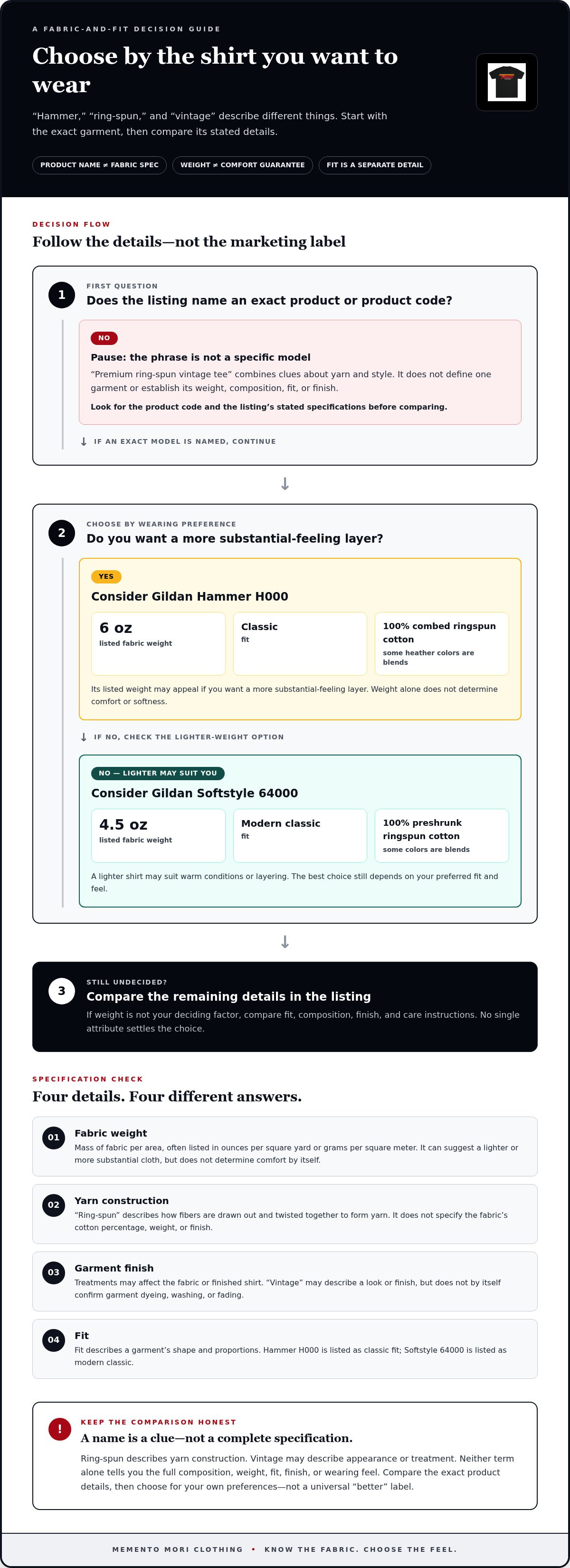
How to Choose Between a Gildan Hammer Tee and a Ring-Spun Vintage Tee
A good choice comes from matching the garment to its intended use: a printed design, a daily layer, or a particular silhouette. Use this process to compare actual product details rather than letting “premium” or “vintage” settle the decision for you.
What should you check on each T-shirt listing?
Read the listing for the exact product name or code, then note its fiber content, stated weight, fit description, care instructions, and available measurements. Make sure each specification belongs to the garment you’re considering. If a listing doesn’t state a finish or fabric detail, treat it as unknown rather than filling the gap with a typical industry figure.
- Define the use. Decide whether the tee is mainly for a graphic-print project, regular wear, layering, or a specific visual style. Your primary use helps rank the details that matter most.
- Check the specifications. Compare composition, weight, yarn details, and finish in the product descriptions. Confirm the model or product code so you don’t compare one shirt’s features with another shirt’s name.
- Assess the fit. Use the seller’s size chart, but don’t assume sizing is standardized across product lines. If garment measurements are provided, compare them with a T-shirt you already like. Lay it flat and measure the chest width and length using the same method described in the listing.
- Compare care. Read the washing and drying instructions, especially if you’ll wear the shirt often. Care directions are more useful than assumptions about how a fabric or finish will respond over time.
- Make the trade-off. Consider fit, weight, intended decoration, care, and appearance together. Choose the shirt whose documented qualities best match your priorities, even if its marketing language sounds less compelling.
How should you match the tee to your priorities?
If you want a more substantial hand feel, give greater weight to the stated fabric weight and construction, then consider how you’ll layer the shirt and the climate where you’ll wear it. If softness matters, look for specific yarn, blend, and finish details instead of treating “ring-spun” as a promise of one exact feel. For a vintage look, use the photographs and finish description as evidence; the label alone doesn’t guarantee a broken-in texture.
For printing, weigh the blank’s stated surface and composition against the decoration method and artwork. For everyday wear, give fit and care equal attention. Choose by verified specifications and intended wear, not labels alone. If you’re drawn to graphic apparel as a form of personal expression, explore the Memento Mori Vintage Tee.
Choosing a Vintage Tee That Feels Personal: From Comparison to Memento Mori
There isn’t one universal winner in the gildan hammer tee vs premium ring spun vintage tee comparison. The better choice is the one that suits how you plan to wear it: the structure you prefer, the fit that feels right, the intended print, and the visual character you want. A blank tee can be compared by its listed construction. A branded graphic tee also carries a design and point of view.
That distinction matters. Fabric details describe the garment; artwork can connect it to a memory, an idea, or a way of seeing the world. Neither replaces the other. You can care about both the shirt’s practical qualities and what its graphic expresses.
When does a branded vintage tee matter more than blank specifications?
A branded tee may feel more meaningful when its graphic reflects something you want to carry into ordinary life. The Memento Mori brand draws on an ancient philosophy and its modern narrative, giving context to the ideas behind the design. That meaning belongs to the graphic and story, not to a claim about fabric weight, yarn, fit, or finish.
When considering the Memento Mori Vintage Tee as a style choice, let the garment’s listed details guide practical expectations and let its graphic speak to the personal meaning you seek.
A considered next step after comparing the tees
Before you decide, use this short checklist to bring the comparison back to what you’ll notice after the shirt becomes part of your routine.
- Use: Is this mainly for printing, daily wear, layering, or a particular look?
- Specifications: Are fiber content, weight, fit, finish, and care details stated for the exact tee?
- Fit: Do the size chart and garment measurements align with how you want the shirt to sit?
- Feeling: Are you choosing for a documented fabric quality, a silhouette, the graphic, or some combination?
Choose with both clarity and feeling. The label can begin the search, but your priorities should finish it. If intentional graphic apparel is what draws you, explore the Memento Mori Vintage Tee, a branded option rooted in personal expression.
Choose the Tee You’ll Make Your Own
A shirt becomes part of more than an outfit. It gathers the ordinary moments around it: the familiar route, the long afternoon, the memory you return to. Let that future use guide your choice. The gildan hammer tee vs premium ring spun vintage tee decision isn’t a test with one correct answer. It’s a chance to choose what suits your daily life and what you want your clothing to express.
If a graphic with personal meaning matters as much as the garment itself, the Memento Mori Vintage Tee offers a branded option. Memento Mori Clothing brings intentional style and personal meaning to its apparel.
Explore the Memento Mori Vintage Tee and find a piece that feels true to what you want to carry forward. Choose with care, then make it yours.
Frequently Asked Questions
Is a Gildan Hammer tee ring-spun?
Yes. The Gildan Hammer H000 is made from 100% combed ringspun cotton in its solid colors; some heather shades use cotton-polyester blends. Check the composition for the exact color, since a blend changes the fiber content even though the style name stays the same. “Combed” refers to additional fiber preparation, while “ringspun” describes yarn construction.
Is a ring-spun vintage tee softer than a Gildan Hammer tee?
Not necessarily. “Ring-spun vintage tee” doesn’t identify one standardized garment, so softness depends on the particular yarn, knit, blend, finish, and construction. The Hammer is also ring-spun, which means the comparison isn’t simply ring-spun versus non-ring-spun. If softness is your priority, use the exact model’s fabric details and reviews where available rather than relying on “vintage” or “premium” alone.
Is a heavier T-shirt always more durable?
No. A heavier fabric can feel more substantial, but weight alone doesn’t establish how long a shirt will last. Stitching, seams, fabric construction, how often you wear it, and how you wash and dry it all matter. For example, a heavyweight tee repeatedly dried at high heat may not retain its shape as well as a lighter shirt cared for according to its label.
Can I use a Gildan Hammer tee or a ring-spun tee for screen printing?
Both may be considered for screen printing, but suitability depends on the exact garment, artwork, ink, and production setup. The Hammer H000 is described as having a smooth, high-stitch-density surface, a feature often considered useful for detailed screen prints. That isn’t a guarantee of a particular result. Check that the chosen shirt’s color and composition suit the design and printing process.
How do I choose the right T-shirt size when comparing these styles?
Use each style’s own size chart, since letter sizes aren’t consistent across every product. Compare the listed chest and length measurements with a shirt you already like: lay it flat, measure from armpit to armpit, then measure from the highest shoulder point to the hem. Check whether the chart gives garment dimensions or body measurements, and allow for the fit you prefer.
What makes a T-shirt vintage-style?
Vintage-style can refer to the graphic, silhouette, color palette, or a garment finish that evokes an older tee. Those cues don’t necessarily come together in every product, and the phrase alone doesn’t confirm garment dyeing, fading, or a broken-in feel. Look at product photographs and read the finish description to understand the intended appearance. Treat fabric and fit as separate specifications.