
Durable Casual Shirts for Creatives: 2026 Guide
A shirt earns a regular place in your wardrobe when it works for the day you actually have, not just the outfit you pictured. For creative professionals, durable casual shirts for creative professionals need to move between focused work, errands, and unplanned hours without losing their shape or feeling out of place.
It’s frustrating when a shirt fades, twists, or stops feeling right after regular wear. Fabric labels and polished product photos don’t always make quality easy to judge, either. A better choice starts with details you can assess, then makes room for the fit and style you’ll want to wear again.
This guide explains how fabric, construction, fit, and care affect a shirt’s working life. You’ll learn what to compare, what product claims can’t tell you, and how to choose pieces that suit your routine. Memento Mori Clothing brings personal meaning to everyday apparel, including the Memento Mori Vintage Tee. Clothing passes through time with us, and the right piece can carry a little of our own story.
Key Takeaways
- Choose durable casual shirts for creative professionals by weighing fabric, construction, fit, care, and how often you’ll wear them.
- Compare cotton, linen, and blends by their qualities and trade-offs rather than treating one fabric as best for every routine.
- Use specific product details to compare shirts. Treat broad claims such as “long-lasting” as a starting point, not proof.
- Build repeatable outfits around pieces that feel like you. Follow garment labels and avoid unnecessary heat when caring for them.
- Let personal meaning guide a considered wardrobe, including casual options such as the Memento Mori Vintage Tee.
Why durable casual shirts matter in a creative professional’s wardrobe
Creative work asks clothing to balance personal expression with everyday usefulness. A shirt might accompany a morning spent drawing, a collaborative afternoon, and an informal meeting, with little time to change between them. Durable casual shirts for creative professionals should suit that rhythm without imposing a uniform or muting the wearer’s point of view.
Durability doesn’t simply mean heaviness. A thick fabric may feel substantial, but weight alone can’t tell you whether a shirt will keep its shape, suit your routine, or stay comfortable through a long day. Consider how the garment is made, how you plan to wear it, and whether its care instructions fit your habits. A shirt that stays comfortable and appealing enough to wear is more useful than one that lasts in a drawer.
What does durability mean in an everyday shirt?
Think about durability in several ways. Physical wear includes thinning, snags, or damage in areas that experience friction. Shape retention is whether the shirt continues to sit as intended after wear and washing. Colour matters too, especially if fading makes the shirt harder to pair with the rest of your wardrobe. Finally, consider whether it remains a piece you want to wear.
A durable shirt suits its purpose, withstands the wear and care it receives, and remains comfortable and appealing enough to be worn again. That definition leaves room for different fabrics and weights. The textile journey, from fiber to yarn to fabric, helps explain why a finished shirt’s qualities depend on more than thickness; Textile manufacturing offers a useful overview of those stages. Repeated friction, washing, drying, and storage all influence how a garment ages. Follow its care label and wear it in ways that suit its design to help preserve its usefulness.
Why creative professionals need a different kind of versatility
Creative work rarely follows one dress code. A designer may move from focused screen work to a client presentation; a maker may spend the day standing, reaching, and handling materials. Someone else may work remotely, then head out for errands or an informal meeting. The right shirt depends on those real demands, not a stereotype of what a creative person wears.
Think through the transitions in your own week. Do you need freedom of movement, a layer that works indoors and outside, or a slightly neater appearance for client conversations? Comfort helps a shirt keep pace. A collar, pattern, or graphic can add character without making the outfit feel formal or trend-bound. Choose a piece that feels appropriate for the settings you encounter while leaving room for individual taste. Versatility isn’t about looking the same everywhere. It’s about having a reliable starting point that adapts to your day.
How fabric and construction influence a casual shirt’s working life
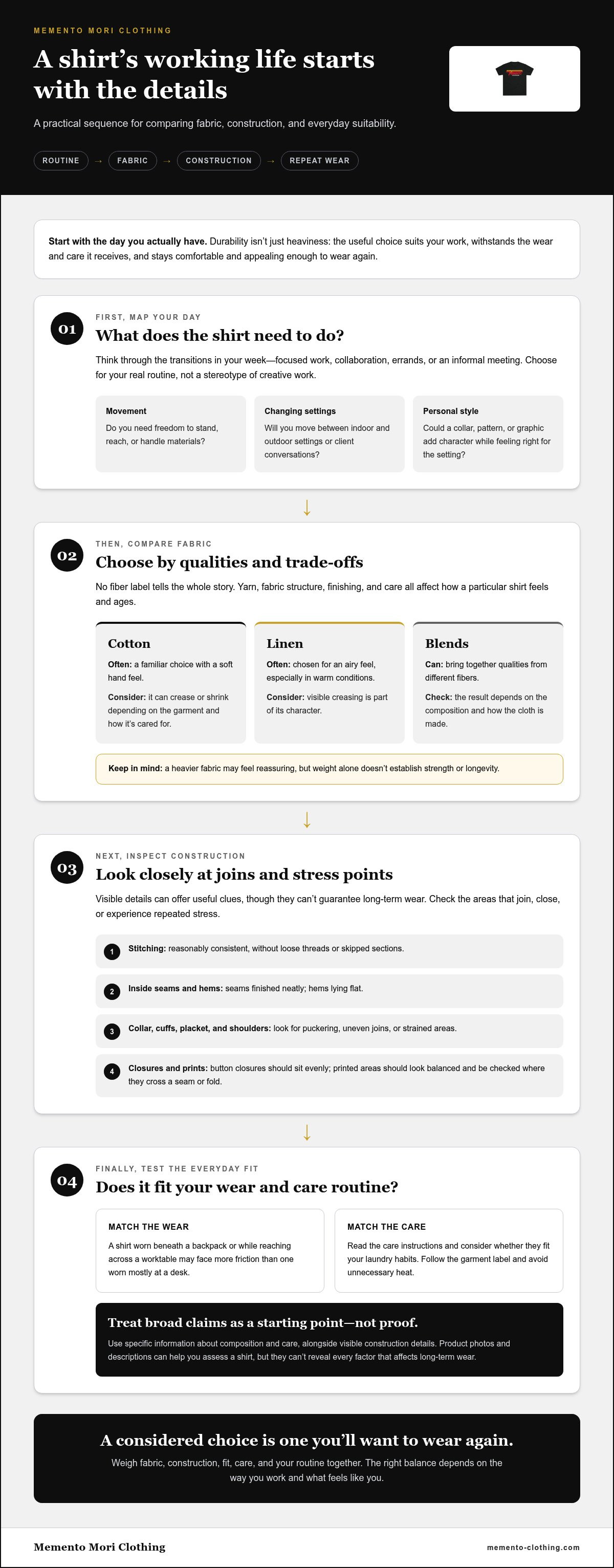
A fabric label is a starting point, not a verdict. Cotton, linen, and blends bring different qualities to everyday wear. Yarn, weave or knit structure, finishing, and sewing also shape how a particular garment feels and ages. For durable casual shirts for creative professionals, the useful question isn’t simply “Which fabric lasts longest?” It’s “Which combination suits my work, comfort preferences, and care routine?”
Choosing shirt fabrics for comfort and repeat wear
Cotton is a familiar choice, and many cotton garments have a soft hand feel. Comfort and appearance vary with the yarn and fabric structure. Cotton can crease or shrink depending on the garment and how it’s cared for. Linen is often chosen for its airy feel, especially in warm conditions, though visible creasing is part of its character. Blends can bring together qualities from different fibers, but the result depends on their composition and how the cloth is made. No fiber label tells the whole story.
Yarn characteristics affect a fabric’s surface and feel; its structure influences drape, airflow, and how it responds to movement. Finishing can change the feel or appearance as well. A heavier fabric may feel reassuring, but weight alone doesn’t establish strength or longevity. Read the garment description alongside its intended use, and consider whether its care needs fit the way you do laundry.
Construction details worth noticing
Inspect the places where fabric joins or faces repeated stress. Stitching should look reasonably consistent, without loose threads or skipped sections. Check whether seams are finished neatly inside and hems lie flat. At the collar, cuffs, placket, and shoulder seams, look for puckering, uneven joins, or areas that appear strained. On button-front shirts, check that closures sit evenly. For printed designs, consider whether the placement looks balanced and whether the print crosses a seam or fold.
Before buying, inspect the stitching, inside seam finishes, hems, collar, closures, and printed areas for consistency and signs of strain. These visible details are useful clues, not guarantees. A careful finish can’t reveal every material or manufacturing factor that affects long-term wear. When shopping online, product photos and written descriptions can help you assess details, but look for clear information about composition and care too.
Match the choice to your routine. A shirt worn beneath a backpack or while reaching across a worktable may face more friction than one worn mostly at a desk. A soft fabric against the skin may matter more to you than a crisp finish; someone else may prefer a surface that looks composed for meetings. These practical distinctions make comparing materials personal, rather than a search for a universal winner.
For a casual piece chosen for its meaning as well as its place in an outfit, Memento Mori apparel offers a considered addition to the wardrobe.
How to compare durable casual shirts without relying on vague claims
Product pages often use words such as “premium,” “built to last,” or “all-day comfort.” Those phrases may describe a brand’s intention, but they don’t show how a particular shirt is made or how it will perform in your routine. Compare specific details instead. A consistent checklist helps you weigh practical needs alongside personal style.
A practical checklist for evaluating a shirt
Use the same categories for each option. Note what the product description states, what you can observe, and what remains unknown. Missing information isn’t proof of poor quality; it simply can’t support a comparison.
Fabric: Note the listed fiber content and any fabric description. Consider whether the feel and care needs suit your preferences.
Construction: Look for clear product images and descriptions of seams, hems, and other finishing details. Treat neat visible stitching as an observation, not proof of long-term performance.
Fit: Compare garment measurements with a shirt you already like, if measurements are provided. Consider how the cut allows you to sit, reach, and layer.
Care: Check the stated washing and drying instructions. A shirt with care demands that don’t fit your habits may be harder to wear repeatedly.
Versatility: Picture it in the settings you actually move through, from focused work to informal meetings. Ask whether it works with pieces you already own.
Design: Consider whether the colour, pattern, or graphic feels like your taste beyond a passing trend, and whether it suits the situations where you’d wear it.
Product photos can help you assess visible details such as a collar’s shape or print placement. Fiber content and care instructions are concrete information when provided. Broad adjectives don’t establish a test result, and a fabric label alone can’t prove how one specific shirt will hold its shape or colour over time.
How to balance longevity, comfort, and self-expression
A quiet, adaptable basic may earn more use than a delicate piece reserved for particular occasions. But expressive design has its place, too. A graphic shirt can feel distinctly yours under an open layer, while a simpler option may suit a setting that calls for a restrained look. Choose according to the situations you want a shirt to serve, not a universal rule about what creative people should wear.
You can also consider value through cost per wear: think about the garment’s price in relation to how often you realistically expect to wear it. This isn’t a promise of savings or longevity. It’s a way to compare an occasional statement piece with an everyday option using your own habits. Be honest about comfort, laundry routines, and whether you’ll still reach for the design. Base your choice on details you know, rather than filling gaps with marketing language.
How to wear and care for casual shirts across a creative workweek
A useful shirt earns its place through repeated wear, not a single carefully styled moment. A little planning helps it move between work, errands, and off-hours, while simple care habits help keep it ready for the next day. The aim isn’t to create a uniform. It’s to make getting dressed feel less like starting over each morning.
Building a practical rotation for work and off-hours
Start with your actual week: the settings you move through, the climate, and the dress expectations of your workplace or clients. Build outfits around shirts you feel comfortable wearing, then use layers and familiar foundations to adjust the look.
- Choose a base. Pair a casual shirt with trousers, jeans, or another everyday staple that suits your workday and feels comfortable when you move.
- Adjust for the setting. Add a jacket or overshirt for a more composed meeting, or keep the outfit relaxed for focused work and errands.
- Plan for the weather. Use layers that are easy to add or remove as temperatures and indoor conditions change.
- Make it personal. Use colour, pattern, or a graphic detail to express your taste. Keep the rest of the outfit as simple or distinctive as you prefer.
Repeat combinations that work. Rotate shirts rather than wearing the same one day after day, giving each a break between wears. Store clean garments in a way that suits their shape and your available space, and avoid leaving worn clothing crumpled in a pile. A creative wardrobe can be varied, quiet, graphic, or somewhere between. Its rhythm should belong to you.
Care habits that help shirts stay in use
Start with the garment’s care label. There isn’t one washing method for every fabric, finish, and printed design. Follow the instructions, and avoid washing a shirt more often than its condition requires. When a stain appears, address it promptly and gently. Choose a method suited to the garment rather than rubbing aggressively or using a strong treatment without checking the care guidance.
Unnecessary heat and rough washing can affect some garments, potentially contributing to shrinkage, fading, or changes in shape. The risk depends on the fabric and how the garment is made, so don’t assume one setting works for every shirt. If the label allows, a gentler wash and less heat during drying may be suitable. Follow the care directions first.
The Memento Mori Vintage Tee buyer’s guide introduces the brand’s casual tee, while its garment-specific care instructions should guide how you look after it. Thoughtful routines are part of choosing durable casual shirts for creative professionals: they support repeat wear while respecting each garment’s particular needs.
Memento Mori casual apparel brings a meaning-led option into a considered wardrobe.
Choosing an intentional casual shirt: a natural fit with Memento Mori
A considered wardrobe isn’t defined by how much it contains. It’s shaped by the pieces you reach for and the reasons they feel right. For creative professionals, clothing can be part of a visual language: a quiet foundation for the day, a graphic statement, or a familiar piece that carries personal meaning. That choice is individual. There’s no single style that represents every maker, designer, or independent thinker.
Choosing durable casual shirts for creative professionals means weighing practical use alongside identity. Fabric and construction matter, as do fit, care, and how a garment works across your routine. Its place in your life also depends on whether it feels like yours. Repeat wear comes more naturally when usefulness and personal connection meet.
What intentional design can add to everyday clothing
Colour, imagery, and silhouette can communicate something before a word is spoken. Some people prefer understated clothes that leave space for their work; others find meaning in visible graphics or symbols. Neither approach is more authentic. Intentional design begins with noticing what resonates with you and choosing accordingly, rather than dressing according to a borrowed idea of creative style.
Memento Mori Clothing draws on the Memento Mori philosophy, a reflection on time and the importance of living with intention. That perspective can prompt a simple question: what do you want your everyday objects to remind you of? The answer may be subtle, personal, or simply aesthetic. The clothing gives the philosophy a modern expression.
Personal meaning doesn’t replace practical judgment. A design may draw you in, while the garment’s disclosed details and care instructions help you decide whether it suits your needs. Consider both. A piece can express your perspective without needing to serve every setting or suit every person.
Explore the Memento Mori Vintage Tee
The Memento Mori Vintage Tee is a branded casual option for those who want everyday clothing to carry a sense of intention. Its name offers a point of connection to the philosophy, while its place in your wardrobe is yours to define. Wear it as part of a relaxed outfit, layer it with familiar pieces, or choose it when its message feels especially close.
This guide has covered how to assess fabric, construction, fit, and care, but no general rule can establish the durability of a specific garment. Make that judgment using product-specific details and your own routine. You can choose the Memento Mori Vintage Tee for its personal and visual meaning without assuming material or performance qualities that haven’t been established.
Explore the Memento Mori Vintage Tee as one considered choice for your everyday wardrobe.
Choose What You Want to Carry Forward
The next addition to your wardrobe doesn’t need to answer every need. Start with a quieter question: does this feel like something you’ll choose again, and does it reflect the way you want to move through the day? For durable casual shirts for creative professionals, personal connection belongs beside practical judgment. Neither has to be sacrificed for the other.
Memento Mori Clothing brings an intentional, meaning-led perspective to everyday apparel. The Memento Mori Vintage Tee is one branded casual option to consider, not a promise of any particular fabric or working life. Let the available details guide your decision, and let your own sense of style have the final word.
Explore the Memento Mori Vintage Tee and choose a piece that speaks to you. Build your wardrobe slowly, with room for the work, moments, and memories still ahead.
Frequently Asked Questions
What makes a casual shirt durable?
A casual shirt is durable when its materials and construction suit the way it’s worn and cared for. For durable casual shirts for creative professionals, useful clues include consistent seams, secure hems, a comfortable fit, disclosed materials, and care instructions you can follow. These are signals, not guarantees. Fabric weight alone can’t predict how a shirt will respond to repeated wear, friction, laundering, and the activities it encounters.
Which fabric is best for a durable everyday shirt?
There’s no single best fabric for every wearer or routine. Cotton is often valued for its familiar feel, linen for its airy character, and blends for combining properties, though results vary with the specific fibers and fabric. Consider how each feels against your skin, how it handles warmth and wrinkles, and whether its care needs suit your habits. Construction and garment instructions matter too, so a fiber name alone can’t determine how long a shirt remains useful.
Can a lightweight shirt still be durable?
Yes. Lightweight fabric isn’t automatically fragile, just as a heavier shirt isn’t automatically long-lasting. Fiber choice, fabric structure, seam quality, finishing, and care all contribute to how a garment handles use. Consider what you’ll do in it: a shirt worn for desk work faces different demands from one worn while moving equipment or reaching throughout the day. Judge the whole garment against your activities rather than using weight as a shortcut.
How can I tell if a shirt is well made before buying it?
Inspect the details you can see. Product images or an in-person look may reveal uneven stitching, loose threads, rough seam finishes, hems that pull, or stress around the collar and openings. Read the listed materials and care guidance as well. Words such as “premium” describe a product, but don’t prove how it’s constructed or how it will perform. Visible clues can inform your choice, but they can’t guarantee how the shirt will age after regular use.
How often should I wash a casual shirt?
Wash a casual shirt when it needs cleaning, rather than following one schedule for every garment. Activity, climate, fabric, and your comfort all influence that decision. A shirt worn briefly in a cool, quiet setting may need different treatment from one worn through a hot, active day. Check its care label before washing, since instructions vary. Thoughtful washing and drying can help preserve clothing, but the garment’s own guidance should lead.
Are graphic shirts suitable for creative professional settings?
They can be, depending on the workplace, your role, the people you’ll meet, and the graphic itself. A subtle design may feel at ease in one setting, while a bold image may suit another or work better outside a formal meeting. Consider the graphic’s scale and colour, then pair it with simpler pieces if you want to balance the look. Creative workplaces don’t share one dress code, so let personal expression meet the situation.
How can I make casual shirts last longer?
Follow each garment’s care label, avoid unnecessarily harsh washing or heat, and treat stains promptly with an approach suited to the garment. Store shirts so they aren’t crushed or pulled out of shape, and rotate them rather than putting the same piece through repeated wear without a break. Care needs vary by fabric and construction, and good habits can’t correct poor construction or promise a particular lifespan. They can help you look after what you own.