
Creating a Personal Uniform: The Art of Intentional Dressing in 2026
The weight of a thousand trivial choices can quietly erode the soul before your day even begins. You stand before a wardrobe overflowing with fabric, yet you feel entirely unrepresented by the garments staring back. It's the exhaustion of decision fatigue. It's the quiet grief of watching a cheap shirt unravel after only three washes. Creating a personal uniform isn't about restriction. It's a silent rebellion against the temporary.
You deserve a signature look that feels like an anchor in a world obsessed with the next five minutes. In 2026, as Digital Product Passports and sustainability regulations like the ESPR redefine the industry, the shift toward intentionality is no longer a luxury. It's a necessity. This article will show you how to curate a high-quality collection that reflects your deepest values and simplifies your morning routine. We'll explore how to select enduring pieces, such as a Memento Mori Heavyweight Hoodie or a Memento Crewneck, that serve as markers of your personal history and withstand the passage of time.
Key Takeaways
- Distinguish between the fleeting variety of a capsule wardrobe and the quiet, enduring power of a consistent signature silhouette.
- Understand why creating a personal uniform demands heavyweight 300GSM+ cotton to resist the cycle of planned obsolescence.
- Implement a five-step audit to silence the noise of impulse purchases and uncover the hero pieces that truly reflect your soul.
- Learn to view your clothing as modern artifacts by choosing foundations like Memento Mori Crewnecks that prioritize longevity over trends.
What is a Personal Uniform? Beyond Minimalism
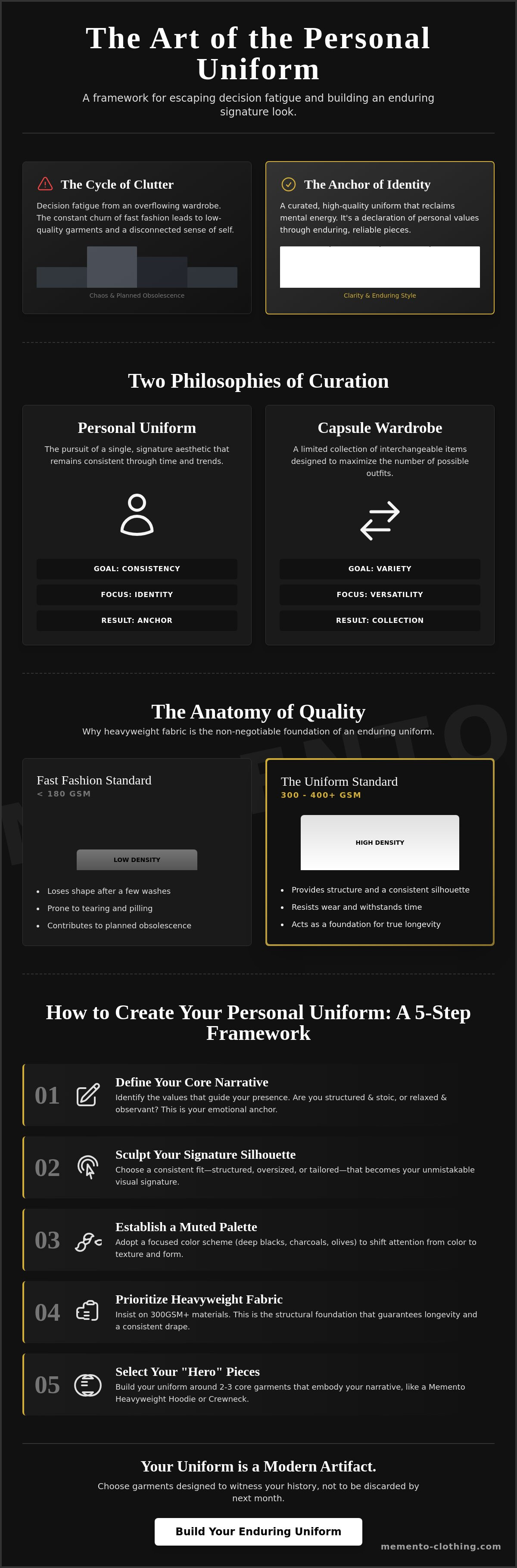
A personal uniform is a silent declaration. It is the art of choosing a singular, high-quality aesthetic that persists while the world changes. By creating a personal uniform, you aren't just simplifying a closet; you're defining a presence. This isn't the same as a Capsule wardrobe. While a capsule seeks variety through a limited set of pieces, a uniform seeks consistency. It is the pursuit of a signature that remains unchanged by the seasons. It's the difference between a collection of outfits and a singular identity.
In 2026, we've reached a saturation point. Fast fashion noise has become a deafening hum. The intentional consumer now looks for an anchor. This shift is about reclaiming mental bandwidth. Every morning spent deciding what to wear is a moment stolen from your true purpose. A uniform returns that time to you. It offers a sense of calm in a chaotic cycle. You no longer chase the ephemeral. You inhabit the permanent.
The Myth of the Boring Wardrobe
Repetition is often mistaken for a lack of imagination. It's actually the opposite. It's a visual shorthand. Icons like Steve Jobs or Barack Obama understood this. Their clothes didn't demand attention; their ideas did. Variations in texture, like the weight of a Memento Mori Vintage Tee, allow for depth without sacrificing the core identity. You aren't wearing the same thing. You're wearing the best version of yourself. Subtle changes in fit or fabric weight provide the nuance that keeps a uniform from feeling stagnant. It becomes a frame for your personality, not a replacement for it.
Intentionality as a Style Choice
True style is rooted in the Memento Mori story. It's a reminder of our finite time. Choosing fewer, better things honors the present. We've moved past buying for a single occasion. We're dressing for a life. When creating a personal uniform, you're choosing garments that act as modern artifacts. They're designed to witness your history, not to be discarded by next month. This intentionality is a form of self-respect. It acknowledges that your presence matters more than the trends you follow. It is a choice to leave a lasting footprint in a world of disappearing footprints.
The Philosophy of the Signature Silhouette
Your silhouette is the geometry of your presence. It is the first word you speak before opening your mouth. When creating a personal uniform, you aren't just selecting clothes; you are sculpting a permanent impression that persists through time. A signature silhouette provides a sense of gravity. It communicates a calm, understated confidence that refuses to be swayed by the frantic pace of seasonal trends. This is where melancholic elegance meets modern utility. By choosing a specific shape, you create a visual anchor for yourself and those around you.
Heavyweight fabrics play a vital role in maintaining this structural integrity. A garment with significant weight, such as a 400GSM hoodie, doesn't just hang; it holds. It provides a consistent frame that looks the same on Tuesday as it did three months ago. This predictability is where the emotional weight of clothing resides. When your clothes feel like armor, they become a grounding force. They remind you of who you are, especially when the world feels unpredictable.
Selecting Your Core Narrative
To define your silhouette, you must first identify your core narrative. Choose two or three words that describe how you wish to be remembered. Are you structured and stoic, or relaxed and observant? Your values should dictate the category of your uniform. A structured look suggests discipline and focus. A more relaxed, oversized fit might signal a creative, reflective nature. This is the essence of emotional longevity. You are far more likely to keep a piece for a decade if it aligns with your internal identity. It becomes a part of your history, a silent witness to your growth.
Texture and Tone: The Quiet Communicators
A cohesive visual language often relies on a monochromatic or muted palette. Deep blacks, charcoal greys, and washed olives allow the focus to shift from the color to the construction. Texture adds the necessary depth to keep a simple outfit from feeling flat. Vintage-inspired textures, in particular, suggest a life lived and a story told. They provide a tactile connection to the past while remaining firmly in the present.
The Memento Mori Vintage Tee serves as a perfect foundation for this tonal approach. Its faded aesthetic and substantial feel offer a sense of permanence that thin, mass-produced shirts cannot replicate. As you begin creating a personal uniform, look for these types of "hero" pieces that carry their own history. You might find that a carefully chosen Memento Hat provides the final, quiet detail that completes your signature look. These are not just accessories. They are the punctuation marks in your personal story.
The Anatomy of Quality: Why Fabric Weight Matters
The integrity of a uniform rests on its substance. You cannot build a lasting identity on thin foundations. When creating a personal uniform, the technical density of the fabric becomes your most important metric. We measure this in GSM (Grams per Square Meter). Standard retail garments often hover around 150 to 200 GSM. They feel light because they're designed to be temporary. A true heavyweight cotton, exceeding 300GSM, offers a different experience. It provides a deliberate drape. It resists the sagging, warping, and pilling that signal the quiet death of a garment.
This density is the physical manifestation of Memento Mori. By creating things that last, we acknowledge the passage of time without surrendering to it. We choose materials that age with grace rather than those that fall into obsolescence after a single season. A heavier drape creates a finished, professional silhouette. It maintains its own shape regardless of movement. This structural permanence is what allows a uniform to become a signature. It doesn't just cover the body. It defines the space the body occupies.
The Heavyweight Hoodie as an Outerwear Anchor
The Memento Mori Heavyweight Hoodie is a structural essential. It isn't just a layer. It's an anchor. Standard retail fleece often uses thin, synthetic blends that lose heat retention and shape within months. A heavyweight alternative uses dense, high-quality cotton that acts as a shield. It replaces the need for multiple, flimsy jackets. This singular piece provides a consistent visual weight that grounds your entire look. It's an investment in longevity. It pays dividends in both style and warmth, becoming a reliable companion through the years.
Crewnecks and Tees: Building the Base
The base of your uniform requires a specific kind of resilience. High-quality aging is a rare trait in modern apparel. Most shirts don't get better with time; they just wear out. Memento Crewnecks are designed to do the opposite. They provide the necessary structure for a mid-layer, holding their neckline and hem through hundreds of wears. A cost-per-wear analysis reveals the truth. A premium basic that lasts five years is infinitely more valuable than a "bargain" tee replaced every six months. This is the logic of the intentional consumer. You aren't just buying a shirt. You're securing a piece of your future history. When creating a personal uniform, these foundations determine if your aesthetic will endure or fade into the noise.
How to Create Your Personal Uniform: A 5-Step Framework
Transitioning from understanding quality to creating a personal uniform requires a shift in perspective. It is a ritual of subtraction. You are not just organizing a closet. You are editing your life story to ensure only the most meaningful chapters remain. This process demands honesty. It requires you to look at your reflection and ask which pieces truly anchor you to the present moment. By following a structured framework, you can move past the chaos of choice and into the clarity of a signature aesthetic.
- Step 1: The Closet Audit. Silence the noise. Remove every garment that was an impulse purchase or a reaction to a fleeting trend. If it doesn't serve your core narrative, it has no place in your future.
- Step 2: Identifying Your Hero Piece. Find the one item you feel most authentic in. This is your anchor. For many, it's a specific weight of tee or a structured hoodie that provides a sense of security.
- Step 3: Selecting a Color Story. Limit your palette to three or four complementary shades. Stick to muted tones like charcoal, bone, or deep olive to ensure every piece in your wardrobe communicates with the others.
- Step 4: Investing in Multiples. Once you find the "perfect" version of a core item, stop searching. Secure several of the same piece to ensure your look remains consistent and your decision fatigue vanishes.
- Step 5: The Trial Period. Commit to your uniform for 30 days. Use this time to refine the fit and observe how your mental bandwidth expands when the question of "what to wear" is finally answered.
Audit Your Current Reality
The "One Year Rule" is often used in cleaning, but creating a personal uniform requires a deeper philosophical twist. Don't just ask if you've worn it. Ask if the item reflects who you are today. We often cling to aspirational clothing. These are pieces bought for a life we don't actually lead or a person we no longer are. Letting go of these ghosts is essential. Look at what you've been "accidentally" wearing most often. Usually, your true uniform is already hiding in the back of your closet, waiting to be recognized and elevated.
Standardizing Your Fit
Consistency is the secret to an iconic look. Whether you prefer an oversized, draped silhouette or a more tailored, structured fit, you must commit to that choice across your entire wardrobe. This standardization makes your clothing modular. A carefully selected Memento Hat or a specific pair of boots can offer subtle variation, but the core "shape" of your body should remain a constant visual shorthand. This predictability isn't boring. It's powerful. It signals to the world that you are a person of focus and intent.
Ready to begin your journey toward intentional dressing? You can secure your foundation with our curated collection of heavyweight essentials designed to last a lifetime.
Memento Mori: Foundations for an Enduring Uniform
Memento Mori is more than a phrase. It is a design ethos. When you are creating a personal uniform, you are choosing what to carry through time. Our garments are modern artifacts. They are built for the weight of existence. We focus on heavyweight construction because durability is a form of respect. It respects your resources. It respects the hours you spent earning them. Philosophical graphics serve as silent reminders of what matters. They don't scream for attention. They invite reflection. This is the quiet confidence of a wardrobe that doesn't need to change with the moon.
An enduring uniform demands a 365-day rotation. It must survive the heat of summer and the bite of winter. Heavyweight cotton provides this versatility. It breathes during the day and insulates at night. By integrating these pieces into your daily life, you create a ritual of permanence. You aren't just getting dressed. You are inhabiting a worldview. Every wash and every wear adds a layer of personal history to the fabric. The garment becomes an extension of your own narrative. It is a physical anchor in an increasingly digital and ephemeral world.
The Core Collection
The Vintage Tee is your foundation. It is a base layer designed to age with grace. Unlike standard retail shirts that thin and warp, this tee gains character with time. It feels substantial against the skin. Then comes the Heavyweight Hoodie. It is the ultimate armor for the modern minimalist. Its structural integrity provides a consistent silhouette regardless of the environment. Finally, the Memento Hat offers a quiet finishing touch. It completes the daily silhouette without demanding a spotlight. These three elements form the backbone of a life lived with intent.
Starting Your Journey
Transitioning from a cluttered closet to an intentional uniform doesn't happen overnight. It is a slow, meditative process. You don't need a full budget overhaul to begin. In fact, starting with a single high-quality piece is better. It allows you to feel the difference in weight and presence. Choose one anchor item. Live in it. Experience the relief of having one less choice to make. As the noise of fast fashion fades, the value of creating a personal uniform will become clear. It is an investment in your own mental space. It is a commitment to the things that last.
Curate your uniform with the Memento Mori collection.
Embracing the Permanence of Intent
The journey toward a signature look is a quiet transition from the temporary to the eternal. You've explored how creating a personal uniform relies on the structural integrity of heavyweight cotton and the clarity of a defined silhouette. This choice isn't just about efficiency. It is about honoring your presence by choosing garments that act as modern artifacts. By auditing the noise and investing in substance, you reclaim the mental space stolen by fleeting trends. You transform your morning from a struggle with choice into a ritual of stillness.
Your wardrobe should be a testament to your values. Every piece must withstand the daily wear of a life lived with purpose. Our collection focuses on premium heavyweight cotton construction and philosophically driven, timeless designs. These pieces are intentional anchors designed for longevity. They allow you to step into the world with a sense of grounded confidence that no fast-fashion cycle can replicate.
Begin your intentional wardrobe with Memento Mori basics.
Let your clothing reflect the depth of your story. Trust in the beauty of the enduring. Your future self will thank you for the stillness you've cultivated today.
Frequently Asked Questions
Does creating a personal uniform mean I wear the exact same thing every day?
A personal uniform is a signature, not a carbon copy. It means choosing a consistent silhouette and tonal palette that allows for subtle variation while maintaining a recognizable identity. You might alternate between a Memento Mori Vintage Tee and a heavyweight crewneck, but the underlying shape and mood of your presence remain constant. This approach removes the friction of choice without sacrificing the nuance of self-expression.
How many pieces of clothing do I actually need for a personal uniform?
Most intentional wardrobes thrive with ten to fifteen core items. This includes your base layers, mid-layers, and outerwear that can be rotated throughout the week. The goal isn't a specific number, but the elimination of noise. By focusing on high-quality multiples of your most authentic pieces, you ensure that every item serves a purpose. It's about having enough to cover your laundry cycle while keeping your choices singular.
Is a personal uniform more expensive than a regular wardrobe?
The initial investment in premium, heavyweight garments may feel higher, but the long-term cost is significantly lower. Creating a personal uniform shifts your spending from disposable trends to enduring artifacts. When you invest in a Memento Mori Heavyweight Hoodie designed to last years, you stop the cycle of replacing cheap fleece every few months. You are paying for the longevity of the fabric and the peace of a simplified mind.
How do I choose the right color palette for my uniform?
Begin with a palette of three to four muted, complementary shades that mirror your internal landscape. Deep blacks, charcoal greys, and washed olives provide a versatile foundation that works in almost any setting. These tones allow the focus to remain on the texture and silhouette of the garment. A monochromatic approach simplifies the morning ritual, ensuring that every piece in your closet communicates effortlessly with the others.
Can I have a personal uniform if my job has a dress code?
You can absolutely maintain a uniform within the boundaries of a professional dress code. The secret lies in standardizing the hero pieces allowed by your employer. If your office requires business casual, you might choose a specific cut of trouser and a high-quality Memento Crewneck as your daily standard. You are still creating a personal uniform by limiting your choices to the best version of what is required, preserving your mental energy.
What is the best fabric for a daily uniform that lasts?
Heavyweight cotton, specifically anything above 300GSM, is the gold standard for a lasting uniform. This density provides the structural integrity needed to survive daily wear without losing its shape. It creates a deliberate drape that looks finished and intentional. Unlike thin, blended fabrics that pill and warp, dense cotton ages with a melancholic grace. It becomes a reliable anchor that holds its form through countless seasons and laundry cycles.
How do I stop my uniform from feeling like a costume?
A uniform only feels like a costume when it's disconnected from your actual life. To avoid this, your signature look must be an honest reflection of your values and daily needs. If you spend your time in creative environments, a structured hoodie and vintage tee will feel like an extension of your soul. Authenticity is the bridge between a costume and a signature. When the clothes feel like an anchor, they become invisible.