
Champion Reverse Weave vs Heavyweight Cotton Fleece: The 2026 Guide
A truly great sweatshirt is never disposable; it is an enduring anchor in a thoughtful wardrobe. Yet when weighing champion reverse weave vs heavyweight cotton fleece, the critical differences often blur behind marketing claims and fabric tags. You likely know the quiet frustration of watching a garment pill across the surface, or suffering the severe vertical shrinkage that turns a deliberate, structured silhouette into an awkward, boxy crop. Fabric density alone doesn't ensure lasting integrity.
In this guide, you will discover the essential differences in weave construction, shrinkage behavior, thermal warmth, and natural drape to choose the ideal premium sweatshirt. We compare horizontal cross-grain engineering against traditional vertical knit structures, contrast poly-blend longevity with pure cotton patinas, and help you select a timeless piece crafted for generational longevity.
Key Takeaways
- Explore how horizontal grain alignment and ribbed side panels counteract lengthwise distortion in athletic sweatshirts.
- Unpack the structural power of dense, compacted cotton exceeding 400 GSM for true architectural drape and substantial insulation.
- Master the core trade-offs of champion reverse weave vs heavyweight cotton fleece, from raw shrinkage dynamics to long-term silhouette retention.
- Learn why pure cotton develops a distinctive, lived-in patina over decades while synthetic fleece blends gradually surrender to surface friction.
- Find the exact material weight and cut necessary to anchor your wardrobe with an enduring, heirloom-quality staple.
Understanding the Architecture of Champion Reverse Weave
Form follows necessity. In 1934, collegiate athletic departments faced a recurring issue: frequent, aggressive laundering turned standard team issue sweatshirts into truncated, unwearable garments. Champion solved this structural failure by fundamentally altering how fabric met the cutting table. Reverse Weave was born not as a fashion gesture, but as an engineered solution to vertical shrinkage.
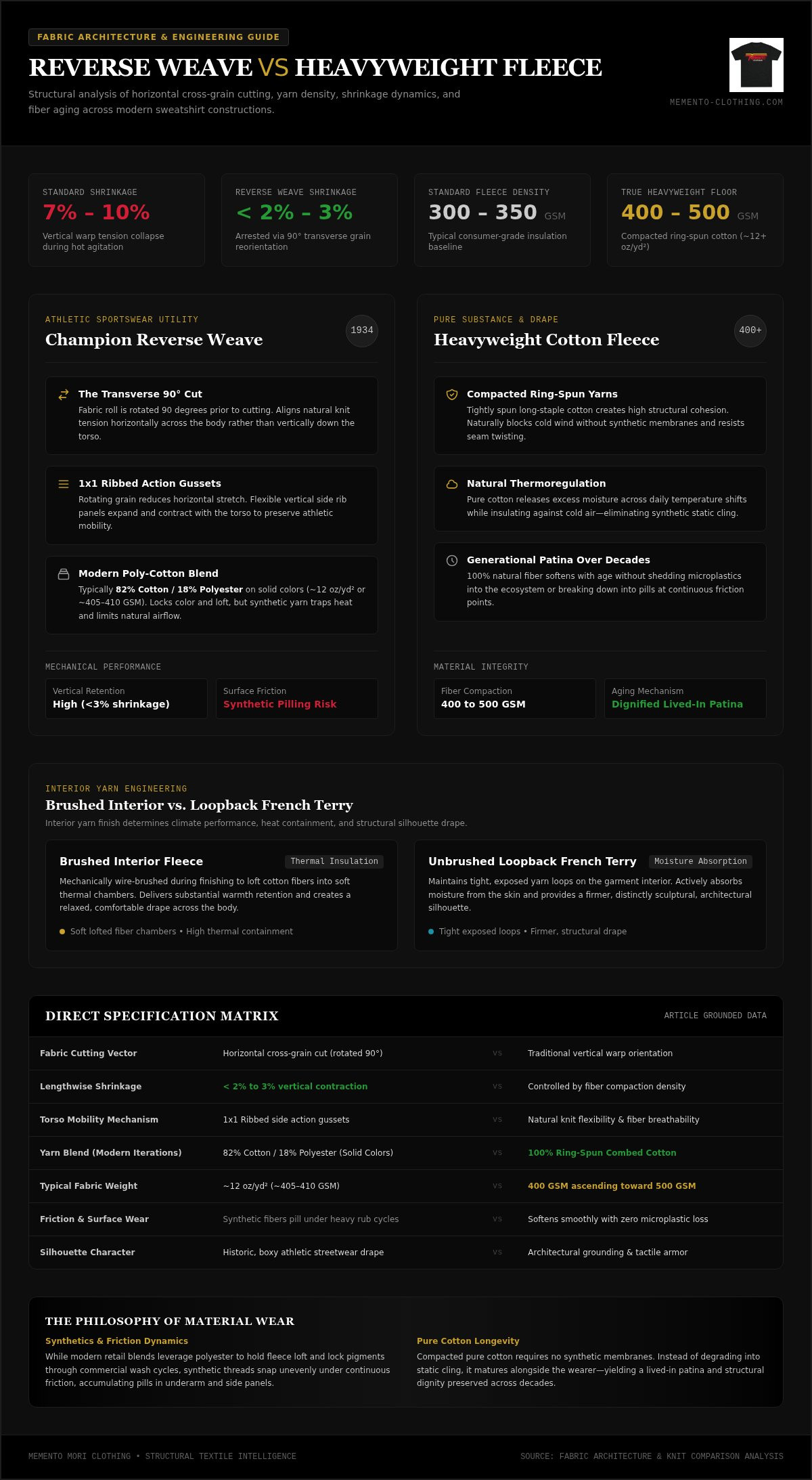
In standard sweatshirt production, fleece is cut along the vertical grain, or the warp direction. Under hot water agitation and machine drying, the vertical knit tension collapses inward. The fabric pulls upward along the torso, resulting in 7% to 10% lengthwise shrinkage. By rotating the entire fleece bolt 90 degrees before cutting, Reverse Weave aligns the natural knit tension horizontally across the body. Length remains preserved. What began as durable utilitarian sportswear for track teams eventually crossed into contemporary streetwear culture, revered for its substantial, boxy silhouette.
The Mechanics of the Transverse Cut
Rotating the fabric arrests vertical contraction, dropping lengthwise shrinkage to under 2% to 3%. However, that mechanical shift introduces a secondary tension challenge: fleece cut cross-grain loses its natural horizontal stretch. To restore mobility, the construction incorporates flexible 1x1 ribbed side action gussets. These vertical panels expand and contract with the torso, allowing free movement without straining the dense fleece body.
Modern Composition and Poly-Cotton Blends
Evaluating champion reverse weave vs heavyweight cotton fleece requires a close look at the yarn itself. While vintage mid-century pieces relied on pure cotton, modern retail iterations utilize a blend, typically 82% cotton and 18% polyester on solid colors, weighing around 12 oz/yd² (roughly 405–410 GSM).
- Dimensional Stability: Polyester fibers reinforce the cotton yarns, locking in color pigments and maintaining fleece loft across machine wash cycles.
- Tactile Trade-offs: Blended fleece holds its structured shape easily, but synthetic fibers trap heat and limit airflow during all-day wear.
- Friction Degradation: Synthetic threads break unevenly under continuous mechanical friction. Over years of hard wear, this dynamic leads to small pills along high-rub areas like underarms and side ribs.
This construction yields a reliable, historic garment. Yet when comparing champion reverse weave vs heavyweight cotton fleece, the presence of synthetic yarn separates athletic sportswear utility from the raw, breathable purity of an all-cotton silhouette.
The Anatomy of True Heavyweight Cotton Fleece
Weight alone does not convey permanence; density does. While disposable fashion treats fleece as fleeting insulation, true heavyweight fleece functions as tactile armor. It establishes a quiet, grounding presence against cold weather and rapid trend cycles. Standard consumer fleece typically hovers between 300 and 350 GSM. True heavyweight status begins firmly at 400 GSM (approximately 12 ounces per square yard) and ascends toward 500 GSM. When crafted from tightly compacted, ring-spun combed cotton, the fabric rejects synthetic shortcuts in favor of pure, enduring substance.
Yarn Density and Fabric Weight Metrics
Evaluating weight requires distinguishing between ounces per square yard and grams per square meter (GSM). High GSM reflects dense fiber compaction rather than artificial loft. By spinning long-staple cotton into tightly twisted yarns, the knit face naturally resists cold wind without synthetic membranes. This compact structural cohesion also resists seam twisting, holding its shape wash after wash.
Brushed Interior vs Loopback French Terry
Inside the garment, yarn engineering dictates both climate performance and silhouette. Brushed fleece undergoes mechanical wire-brushing that lofts cotton fibers into soft thermal chambers, offering substantial warmth and a relaxed drape. In contrast, unbrushed loopback French terry exposes tight yarn loops that absorb moisture and create a firmer, sculptural drape. Both constructions soften over time without shedding microplastics into the ecosystem.
The sensory debate between champion reverse weave vs heavyweight cotton fleece centers on breathability and fiber purity. While synthetic blends hold their initial state artificially, pure cotton breathes naturally, releasing excess moisture during temperature shifts while insulating against brisk air. Investing in an intentional heavyweight cotton fleece garment means embracing a piece that adapts to your daily rhythm, aging with quiet dignity rather than breaking down into static cling and surface wear.
Reverse Weave vs Heavyweight Cotton Fleece: Direct Comparison
Direct comparison reveals a study in divergent philosophies. Champion created an athletic solution designed for collegiate laundries. Heavyweight cotton fleece evolved as an artisanal answer to fleeting apparel culture. Both offer substantial heft, but their behavior on the body and through years of wash cycles differs profoundly.
| Attribute | Champion Reverse Weave | Pure Heavyweight Cotton Fleece |
|---|---|---|
| Fabric Grain Direction | Transverse (horizontal cut) | Vertical (standard knit direction) |
| Fiber Composition | Cotton/poly blend (approx. 82/18) | 100% combed ring-spun cotton |
| Typical Density | ~405–410 GSM (12 oz) | 400–500+ GSM (12–15+ oz) |
| Shrinkage Defense | Mechanical cross-grain engineering | Garment preshrinking and yarn density |
| Silhouette & Drape | Flared athletic boxiness, cinched hem | Architectural, straight-falling drape |
| Aging Trajectory | Retains factory color; friction pilling | Softens gracefully; develops high-contrast patina |
When analyzing champion reverse weave vs heavyweight cotton fleece, the trade-offs come down to convenience versus enduring character. The poly-cotton blend in Reverse Weave dries faster after a wash and holds initial color integrity longer. However, 100% natural cotton delivers superior tactile depth, breathability, and an authentic wear pattern that synthetic fibers simply cannot match.
Shrinkage Control: Mechanical Weave vs Preshrunk Density
Reverse Weave controls vertical loss by realigning the fabric grain horizontally. Premium all-cotton fleece takes a different path: high-temperature garment preshrinking, compaction finishing, and dense yarn knitting. By exhausting fiber contraction during manufacturing, quality cotton fleece eliminates sudden dimensional shifts. For both garments, cold-water washing and flat drying preserve original measurements indefinitely.
Drape, Silhouette, and Everyday Layering
Silhouettes reflect their origins. The Champion cut creates a classic athletic profile: broad chest, lateral stretch from side gussets, and a firm bottom band that hugs the waist. Conversely, true heavyweight cotton fleece hangs with intentional, architectural weight. It drops straight down from the shoulder, producing a clean drape that layers comfortably beneath tailored topcoats or heavy work jackets without bunching or gathering excess bulk.
Durability, Aging, and the Philosophy of Material Wear
Garments are intimate companions to time. Fast fashion treats fleece as disposable insulation, discarded the moment seams warp or synthetic surfaces degrade. A true heirloom piece functions differently. It becomes an emotional anchor, recording personal history through softening textures and shifting hues. When contrasting champion reverse weave vs heavyweight cotton fleece through the lens of longevity, the fundamental question isn't merely how a sweatshirt endures, but how gracefully it ages alongside you.
Patina vs Pilling: How Different Fibers Age
Natural cotton fibers break down with quiet dignity. Much like raw denim or waxed canvas, 100% combed cotton softens across high-friction contact points, molding to your shoulders and elbows while yielding subtle seam roping along cuffs and pocket edges. This lived-in wear pattern transforms the piece into an authentic vintage artifact. Conversely, synthetic fibers in poly-cotton blends possess high tensile resistance. Instead of shedding cleanly when abraded, broken polyester filaments twist around surface cotton threads, creating unsightly fabric pills while clinging tenaciously to body oils and odors over extended use.
Reinforced Seam Construction and Rib Retention
Structural longevity depends entirely on foundational construction. Heavy fleece garments endure relentless mechanical stress at the armscye, neckband, and waist:
- Seam Reinforcement: Flatlock and double-needle coverstitching lock panels together smoothly, eliminating bulky interior ridges while preventing thread breakage under lateral tension.
- Rib Resilience: High-density ribbed cuffs, woven with resilient elastane recovery cores, prevent the limp, bell-bottomed wrist sag typical of cheap sportswear.
- Conscious Care: Laundering with cold water and laying flat to air-dry prevents fiber agitation, protecting dense yarn integrity for decades.
True physical substance is an intentional rebellion against disposable clothing. For those seeking timeless structure built to outlive fleeting seasonal trends, explore the Memento Mori Heavyweight Hoodie to experience an enduring silhouette crafted for generational wear.
Ultimately, the choice between champion reverse weave vs heavyweight cotton fleece reflects how you value material evolution. Synthetic stability offers uniform predictability, but dense natural cotton offers living character that deepens with every passing year.
Selecting Your Signature Heavyweight Sweatshirt
Choosing a foundational garment requires an honest inventory of how you live and dress. Sweaters should never feel incidental. They anchor your daily silhouette, offering shelter against the seasons while silently communicating your relationship to quality. Deciding between champion reverse weave vs heavyweight cotton fleece ultimately hinges on whether you value retro collegiate utility or an architectural, heirloom-level drape.
A Buyer Decision Framework for Modern Fleece
Align your choice with your personal aesthetic and environmental demands:
- Collegiate Heritage: If you seek an oversized, vintage gym silhouette with athletic side panels and elastic waist tension, cross-grain athletic fleece delivers proven historical appeal.
- Sculptural Minimalism: If you prefer clean lines, dropped shoulders, and a straight hem that rests naturally over trousers, dense 100% cotton fleece provides unmatched structural poise.
- Climate and Layering: Blended fleeces dry rapidly but trap excess body heat during indoor transitions. Dense all-cotton knits above 400 GSM breathe cleanly, insulating outdoors without stifling you indoors.
- Layering Alternatives: When a substantial hood feels excessive under formal outerwear, structured Memento Crewnecks offer an equally grounding, minimalist profile for disciplined daily wear.
The Craftsmanship of Memento Mori Heavyweight Apparel
True luxury rests in the quiet assurance of permanence. Fast-fashion fleece relies on synthetic bulk that collapses after a single season. In contrast, the Memento Mori Heavyweight Hoodie is constructed from uncompromisingly dense combed cotton fleece. It offers significant physical weight, exceptional shape retention, and a sculpted double-layered hood engineered to stand upright without sagging.
Clothing can serve as an emotional anchor, a physical reminder that our time is finite and our choices should remain deliberate. By removing disposable shortcuts and synthetic fillers, Memento Mori Clothing crafts pieces that resist the erosion of fleeting trends. When resolving the balance of champion reverse weave vs heavyweight cotton fleece, investing in pure, dense cotton ensures a garment that will preserve its structure, dignity, and purpose for generations to come.
Choosing Permanence in an Age of Transience
Every garment carries an ethos. The ongoing balance of champion reverse weave vs heavyweight cotton fleece comes down to what you expect from clothing over time. Reverse Weave provides a storied athletic blueprint, mastering vertical shrinkage through transverse geometry. Yet true heavyweight cotton fleece offers something deeper: an uncompromising, natural density that breathes freely, drapes with quiet authority, and records the passage of your life through a softened, personal patina.
When you reject synthetic shortcuts and the rapid churn of seasonal disposability, a sweatshirt transforms from basic layering into a lasting physical anchor. It becomes an intentional statement of form and endurance. Explore the Memento Mori Heavyweight Hoodie to ground your everyday wardrobe in dense, sculpted cotton engineered to endure for decades.
Frequently Asked Questions
What does Reverse Weave actually mean in sweatshirt construction?
Reverse Weave refers to cutting fleece fabric crosswise across the grain rather than vertically. Sweaters conventionally run the knit grain vertically, leaving them prone to lengthwise contraction. Rotating the bolt ninety degrees redirects fabric tension horizontally. Champion engineered ribbed side action gussets into the flank seams to restore horizontal stretch, creating a garment that holds its original torso length through repeated washings.
Is Champion Reverse Weave made from 100% pure cotton?
Standard modern Champion Reverse Weave is not 100% pure cotton. Core solid colorways typically use an 82% cotton and 18% polyester blend at around 12 ounces per square yard. While early twentieth-century heritage runs used pure cotton, contemporary retail lines integrate synthetic polyester filament to stabilize fleece loft, lock in dyed pigment, and accelerate drying times at the cost of all-natural breathability.
Does heavyweight cotton fleece shrink more than Reverse Weave sweatshirts?
Unwashed, vertically cut cotton fleece can shrink substantially more than Reverse Weave unless properly preshrunk. When weighing champion reverse weave vs heavyweight cotton fleece, standard raw vertical knits contract 7% to 10% lengthwise. Premium heavyweight cotton garments, however, undergo intensive factory preshrinking and compaction treatments. This manufacturing process locks the fiber density in place, restricting subsequent home laundering shrinkage to negligible levels under gentle cold-wash conditions.
Why are heavyweight cotton fleece garments generally considered more premium?
Heavyweight cotton fleece commands a premium distinction because it relies on pure material density rather than synthetic fillers. Combed, ring-spun yarns above 400 GSM require exceptional raw cotton quality to knit tightly without structural flaws. Instead of trapping odors and generating surface pill balls like polyester blends, pure cotton softens organically with age, developing an enduring drape and subtle seam character over decades of wear.
How do fabric weight measurements like GSM apply to winter hoodies?
Grams per square meter, or GSM, quantifies the actual compacted yarn mass in sweatshirt fleece. Lightweight fleeces sit under 300 GSM, midweight athletic gear spans 300 to 380 GSM, and authentic heavyweight winter hoodies start at 400 GSM. Evaluating champion reverse weave vs heavyweight cotton fleece requires recognizing that higher GSM delivers dense thermal wind resistance and structural drape without relying on synthetic fleece linings.
Can you machine dry heavyweight cotton fleece without ruining the fit?
Machine drying heavyweight fleece on high heat risks fiber dehydration and unwanted dimensional contraction. Intense tumble dryer heat causes tightly spun natural yarns to tighten aggressively, potentially shortening the torso and stiffening the hand feel. To protect the architectural drape and fabric softness, wash the garment inside out with cold water and lay it flat to air dry naturally away from direct heat sources.