
Capsule Wardrobe for a Software Developer: Everyday and Polished-Casual Examples
A smaller wardrobe can give a software developer more useful choices. Build a practical capsule wardrobe for a software developer around three casual modules and one polished-casual module, each with two pairs of pants and three tops. Add an outer layer and shoes to each module, choosing pieces that suit your actual week.
Comfort matters when work involves long stretches of sitting, but it needn’t come at the expense of looking put-together. A reliable wardrobe reflects how you spend your days and offers enough polish for the occasions that call for it.
This article explains how to build everyday and polished-casual modules, identify versatile pieces that fill real gaps, and use cost per wear as one measure of value. You’ll also find outfit examples and a simple way to track what you reach for before editing your wardrobe. The goal is less closet clutter and more room for work and life beyond it.
Key Takeaways
- Build separate everyday and polished-casual modules around the clothes you actually need for work and life.
- Assess cost per wear by considering how often a piece fits your routine, how easily it combines with other clothes, and how manageable its care is.
- Start by cataloging your wardrobe without editing it, then observe what you wear before deciding what to remove or replace.
- Look for genuine wardrobe gaps by testing whether a potential addition completes several outfits, rather than buying for an imagined occasion.
- Use a simple wear log to reveal which pieces earn their place and where a versatile addition could make getting dressed easier.
Choosing modules for everyday and polished-casual dressing
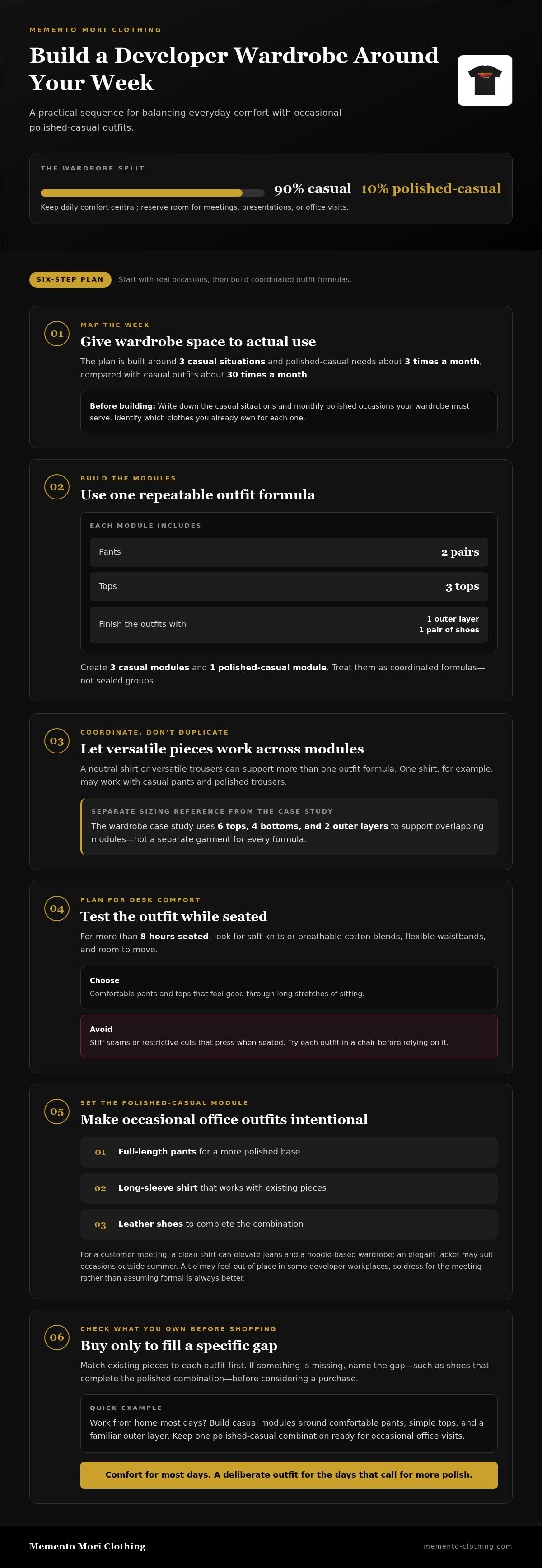
A useful capsule wardrobe for a software developer starts with the week, not a shopping list. One wardrobe plan allocates 90% of dressing to casual clothes and 10% to polished-casual outfits. That proportion keeps daily comfort central while making room for client meetings, presentations, or office visits.
Build each module around 2 pairs of pants and 3 tops. Add 1 outer layer and 1 pair of shoes to complete its outfit combinations. Treat modules as coordinated formulas, not sealed groups. A versatile pair of trousers or a neutral shirt can support more than one module.
For this plan, create 3 casual modules and 1 polished-casual module. The wearer needs polished-casual outfits about 3 times a month, compared with casual outfits about 30 times a month. That difference helps determine where to place wardrobe space and attention.
Situation: A developer works from home most days and visits the office occasionally. Action: Build casual modules around comfortable pants, simple tops, and a familiar outer layer. Set aside one polished-casual module with full-length pants, a long-sleeve shirt, and leather shoes. Result: The office outfit feels intentional without making every workday formal.
Situation: A developer wears jeans and a hoodie for focused coding but sometimes meets customers. Action: Keep the casual combination, then add a clean shirt and, outside summer, an elegant jacket. Result: The same wardrobe works for quiet desk days and more visible appointments.
For desk comfort through more than 8 hours seated, choose soft knits or breathable cotton blends, plus pants with a flexible waistband and room to move. Avoid stiff seams or restrictive cuts that press when seated; test each outfit in a chair before relying on it.
For durable, easy-care choices, read the care label and choose clothes whose washing or dry-cleaning requirements fit your routine. The U.S. Government Publishing Office advises choosing garments with care requirements, such as dry cleaning or hand washing, that you can manage.
Use the wardrobe case study as a separate sizing reference: it includes 6 tops, 4 bottoms, and 2 outer layers. Those pieces can support overlapping modules, rather than requiring a separate garment for every formula. For example, one shirt might work with casual pants and polished trousers.
Make polished-casual details deliberate. Full-length pants, a long-sleeve shirt, and leather shoes create a consistently polished combination. A tie may feel out of place in some developer workplaces, so dress for the meeting rather than assuming formal is always better.
Before shopping, write down the 3 casual situations and the monthly polished-casual occasions your modules must serve. Then identify which existing pieces already fit each outfit. Buy only for a specific gap, such as shoes that complete the polished combination.
Cost-per-wear and purchase decisions
Cost per wear turns a purchase into a question of use: divide the garment’s purchase price by how many times you wear it. The result isn’t a promise of value, but a way to compare choices against your actual habits. A shirt worn regularly for work may serve you better than a distinctive piece reserved for one event.
Start with a garment already in your closet. Record its purchase price, then estimate how often you’ve worn it from memory or a clothing log. Repeat the calculation for a similar item you’re considering. If the new shirt fills no outfit gap, the one you own may already be enough. If it pairs with several pants and suits workdays, it may get regular use.
Situation: A developer considers buying another pair of jeans. Action: They compare it with jeans they already wear for coding, errands, and office days, and check the fit while seated and standing. Result: If the new pair merely duplicates the old one, delaying the purchase saves closet space and avoids overlap.
Use these checks before purchasing:
- Wear frequency: Name the real occasions when the item fits your schedule, such as office days or relaxed weekends.
- Outfit reach: Match it with tops, pants, and layers already in your wardrobe.
- Care routine: Read the label and consider whether washing or dry cleaning fits your habits.
- Replacement need: Decide whether it fills a genuine gap or merely replaces a working favorite.
These checks make cost per wear more useful than a general impression of quality. A garment’s value depends on fit, comfort, care requirements, and how easily it works with existing outfits. Durable construction matters, but durability alone can’t make an unworn item a good purchase.
Situation: A developer needs a polished shirt for occasional presentations. Action: They choose a color that works with existing trousers and a familiar jacket, then read the care label. Result: The shirt suits more than one setting without creating a separate, hard-to-maintain routine.
Pause between wanting something and buying it. Write down the garment, the outfits it would complete, and the item it might replace. Revisit the note before shopping. If you can’t name a specific outfit or need, leave your money and closet space uncommitted. This small step helps separate a genuine wardrobe gap from a passing impulse.
For a younger developer adding a personal note to casual outfits, youth graphic T-shirts may be worth considering when they work with pieces already owned. Compare their likely use with plain tops before deciding; the stronger choice is the one that fits actual days.
Creating a capsule wardrobe
There’s no single required piece count for a men’s or women’s capsule wardrobe. A strict system can use 33 items, while a flexible wardrobe can include more or fewer, depending on climate, work, and laundry habits.
For remote work, start with clothes that feel comfortable at your desk and look presentable on video. Pair a soft top with relaxed trousers, and keep a layer nearby for cooler rooms or meetings.
Adapt the wardrobe to your local US climate, not a generic seasonal list. A humid 30°C day may call for different clothes than a dry 30°C day, so prioritize fabrics and layers suited to the conditions you experience.
Situation: A remote developer owns clothes for several imagined occasions, but repeats the same outfits. Action: During Week 1, catalog every item without judging or editing. Allow 30-60 minutes for an average-sized closet, then note the garments that suit remote work, errands, and meetings. Result: The list reveals what already works before new purchases enter the picture.
Use this sequence to shape the first draft:
- Write down your work settings, climate, laundry rhythm, and recurring occasions.
- Group existing clothes by role, such as desk tops, meeting layers, and everyday bottoms.
- Choose a color palette that lets each top pair with several bottoms.
- Test complete outfits at home, including shoes and layers, before editing the list.
A case study’s 6 tops and 4 bottoms can produce up to 24 basic combinations before accessories, shoes, or jackets are added. That’s a useful planning example, not a required count. Treat each combination as a test: can you wear it comfortably, and does it suit a real day?
Situation: A developer works remotely where temperatures change. Action: They keep a core group of tops and bottoms, adding a weather-appropriate layer as conditions shift. Result: The same base clothes work for more of the year, without requiring a separate wardrobe for every season.
Care requirements affect how practical a capsule wardrobe is. The U.S. Government Publishing Office advises choosing clothes with care requirements, such as dry cleaning or hand washing, that you can manage. A stylist can help refine colors or silhouettes, while a simple outfit log can reveal which combinations suit your routine.
Keep seasonal changes deliberate. An 18-item summer wardrobe case study excludes accessories and special-purpose clothing, so its total shouldn’t be treated as a year-round template. Review the list as the weather changes, and swap pieces only when a real need appears.
Evaluating which pieces are actually worn
A wardrobe list shows what you own; a wear log shows what supports your days. During Week 2, notice which clothes you choose, including repeat favorites and pieces avoided. Record the garment, the setting, and why it worked. A soft shirt may suit focused coding, while a structured layer may only leave the closet for meetings.
Keep your record simple enough to maintain. Mark each wear in a phone note or calendar, adding useful context such as the weather, comfort, and whether the outfit worked for video calls. Personal style becomes more practical when your choices reflect real routines, not an imagined version of work.
- Log each wear: Write the item and occasion, such as jeans worn for home coding.
- Note comfort: Record whether the waistband, fabric, or seams felt distracting.
- Track combinations: Name the top, bottom, and layer worn together.
- Mark friction: Note a garment that needed special care or felt wrong for its setting.
After the log covers the last 90 days, measure the percentage of your wardrobe worn during that period. Divide the number of distinct pieces worn by the total pieces you’re assessing, then multiply by 100. Keep the scope consistent: count clothes in the same categories, and decide whether special-purpose garments belong in the comparison.
Situation: A developer owns several shirts but repeatedly reaches for two. Action: The wear log tracks which shirts they choose, the types of meetings, and their comfort throughout the day. Result: Before considering replacements, the developer can identify what makes those pieces reliable, such as easy layering or a comfortable fit.
Don’t immediately donate or replace a garment you rarely wear. Wait a month before deciding, as the wardrobe plan recommends. During that pause, note whether an event, season, or laundry cycle explains why it stayed unworn. A polished shirt may see little use during a remote-work stretch but still suit an occasional presentation.
Situation: A developer finds a jacket unworn during the log period. Action: They wait a month, then try it with an existing work outfit and consider whether its care routine is manageable. Result: The decision reflects actual use and practical fit, rather than a rushed closet clear-out.
If a full inventory feels too large, start by cataloging 20 frequently worn items. Use those pieces to examine fit, condition, and outfit combinations first. Then compare the rest of the wardrobe with that working core. The aim isn’t to punish infrequent wear; it’s to see whether each item still has a meaningful place.
Finding wardrobe gaps and versatile additions
A wardrobe gap is a recurring problem, not an empty space in the closet. Use your wear log to spot situations where existing clothes fall short: an outfit feels too casual for a meeting, a layer clashes with most shirts, or comfortable pants don’t suit office visits. Describe the situation before deciding what item might help.
Test each potential addition against outfits you actually wear. Lay it beside your most-used pieces, then try complete combinations. A new shirt that works with several existing bottoms may solve multiple outfit problems. A jacket that matches only one rarely worn item could become another orphaned piece.
Use a simple score when two options seem equally useful. One example gives occasion match a 0.25 weight, weather match 0.20, color compatibility 0.15, comfort 0.15, personal preference 0.15, and rotation benefit 0.10. Rate each factor consistently, multiply by its weight, then compare candidates. The score organizes judgment; it doesn’t replace it.
Situation: A developer has comfortable casual clothes but lacks a suitable layer for office meetings. Action: They try a neutral jacket with their existing jeans, trousers, and shirts, and consider the weather and how the layer feels indoors. Result: If it completes several outfits, it fills a real gap rather than serving one imagined occasion.
Assess versatility through wear, not color alone. Even a neutral garment can be difficult to use if its cut, fabric, or formality doesn’t suit your routine. For each option, ask whether it works for a typical workday, a video call, and an in-person appointment. Skip categories that don’t reflect your week.
- Compatibility: Name the existing tops, bottoms, and layers it can join.
- Comfort: Try sitting, standing, and moving in a complete outfit.
- Climate: Consider whether the fabric and layer suit your local weather.
- Care: Read the label and account for its washing or cleaning routine.
- Distinct purpose: State the problem it solves without relying on a vague “just in case.”
Situation: A developer sees a striking shirt but can’t pair it with current trousers. Action: They compare it with a simpler top that works across existing outfits. Result: The simpler option may offer more combinations; the striking shirt makes sense if it meets a specific personal or occasion-based need.
Wait before buying. Write down the gap and revisit it after wearing your current clothes through another work cycle. If the same outfit problem returns, make a focused purchase. For a younger developer whose casual outfits need a graphic element, explore youth graphic T-shirts as a possible addition, then consider how they pair with existing pieces.
Memento Mori Clothing: Memento Mori Heavyweight Hoodie
Memento Mori Clothing offers the Memento Mori Heavyweight Hoodie as a distinctive layer for casual outfits. If your wear log reveals a gap in relaxed looks, consider how it would work with the pants and tops you already wear. The Memento Mori Vintage Tee and Memento Crewnecks offer other ways to bring the brand’s philosophy into everyday dressing, while Memento Hats add another accessory option.
Choose pieces for how they fit your real routine, not for how many outfits a capsule promises. A garment earns its place when you enjoy wearing it and can pair it naturally with clothes you already own.
You’re welcome to visit Memento Mori Clothing and explore the available apparel.
Make room for a wardrobe that feels like yours
The next step isn’t a perfect closet. It’s a thoughtful choice that makes your daily routine feel more considered. A capsule wardrobe for a software developer should reflect the person behind the screen, not an imagined uniform. Let the clothes you reach for reflect your preferences, work rhythms, and the details that make an outfit feel personal.
If a relaxed layer suits your existing rotation, Memento Mori Clothing offers the Memento Mori Heavyweight Hoodie, Memento Mori Vintage Tee, and Memento Crewnecks. The brand’s Memento Mori philosophy offers a reminder of time’s passage and the meaning in ordinary moments. Choose a piece when it feels at home with the clothes you already wear.
When you’re ready to explore those apparel options, visit Memento Mori Clothing. Let each addition earn its place, and build a wardrobe that feels quietly, unmistakably your own.
Frequently Asked Questions
What clothing essentials belong in a software developer capsule wardrobe?
Choose comfortable tops, versatile pants, a weather-appropriate layer, and shoes suited to your work settings. For a capsule wardrobe for a software developer, prioritize clothes that support focused desk work and look composed on camera. For example, pair a knit top with clean trousers for a video presentation, then wear the same top with jeans after work. Choose pieces suited to your climate and laundry routine, not just an imagined office dress code.
What should software developers wear to a business-casual office?
Wear full-length pants, a long-sleeve shirt, and leather shoes for a reliably polished combination. For a less formal office day, swap in a neat knit top while keeping the trousers and shoes. Match the polish to the occasion: a customer meeting may call for a jacket, while a regular team day may not. Choose clothes that let you move comfortably between your desk, a conference room, and the trip home.
How can a developer build a capsule wardrobe for hybrid work and commuting?
Consider where each piece needs to work: at home, in transit, and in the office. For a commute, try the complete outfit while seated and walking, and see whether a layer is easy to carry indoors. Keep a camera-ready top near your workspace if your outfit at home is more relaxed. After a week with remote and office days, note which combinations work across settings and which require an uncomfortable change.
How much does it cost to build a budget software developer capsule wardrobe in the US?
The total depends on what you already own, which gaps you need to fill, and each garment’s care requirements. Start with your current clothes, then list only the items needed for specific work situations. Replacing worn-out shoes may matter more than adding another top. Compare options by expected use and outfit compatibility, and build gradually so every purchase meets a real need rather than an arbitrary closet target.