
Build a Men's Weekend Uniform with Versatile Essentials
A good weekend uniform isn’t a larger wardrobe; it’s a smaller set of pieces that work together. A five-piece capsule can create 10 outfits, and creating a men’s weekend uniform starts with neutral basics, versatile layers, and shoes that suit more than one plan.
It makes sense to want clothes that feel comfortable without looking accidental. A good weekend uniform leaves room for plans to change, from a quiet morning out to an easy dinner, while still looking considered. A few thoughtful choices can make getting dressed simpler.
This guide shows how to choose versatile tops and layers, pair casual pants with everyday shoes, and build comfortable outfits around neutral colors. You’ll find practical combinations for warmer and cooler weekends, plus a simple way to keep colors in balance. The aim is not a rigid dress code, but a reliable mix of pieces you’ll reach for again.
Key Takeaways
- Choose stone or navy chinos with a mid-rise and no break for a clean foundation that pairs easily with different tops.
- Wear a washed cotton shirt buttoned on its own or open over a T-shirt; make sure an overshirt layers comfortably over a knit.
- Pair casual pants with clean everyday sneakers, and add a light layer when the weather or occasion calls for it.
- Keep an outfit to two or three main colors to make neutral basics feel deliberate without becoming formal.
- For relaxed days, favor lightweight fabrics and fits that let you move comfortably through the weekend.
1. Choosing versatile chinos, shirts, knit polos, blazers, and loafers
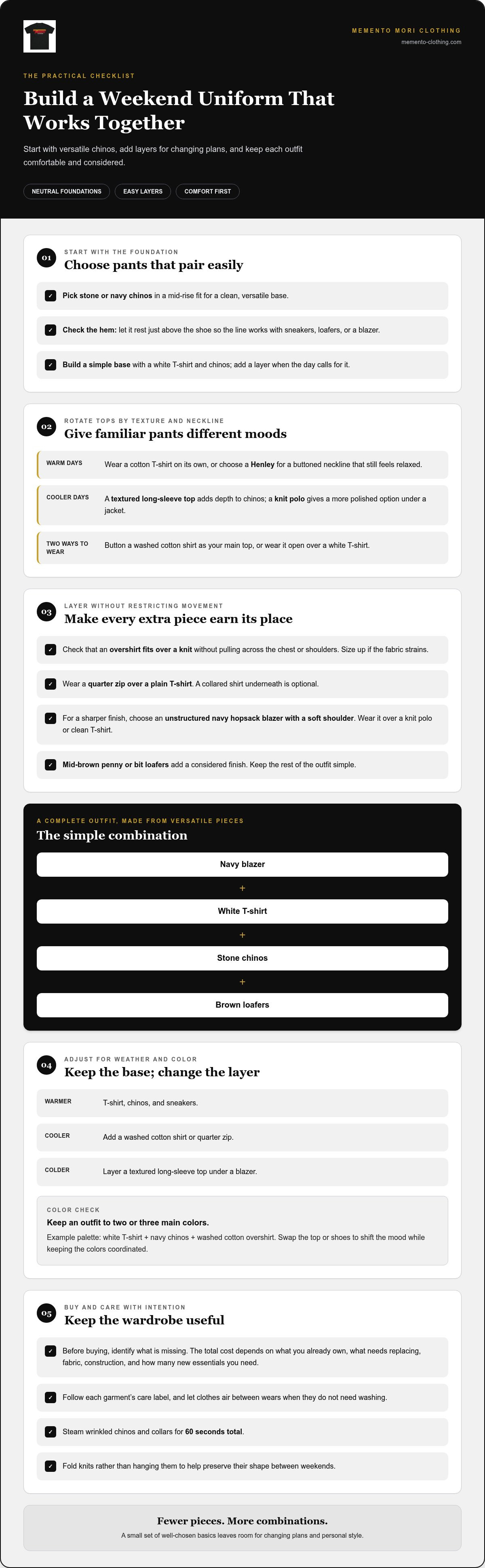
Begin with stone or navy chinos in a mid-rise fit, with the hem resting just above the shoe. These details create a clean line with sneakers, loafers, or a blazer. A white T-shirt and chinos make a simple base; add a washed cotton shirt when you need another layer. Aim for a few distinct outfits, not a closet full of near-duplicates.
The cost of a weekend uniform depends on what you already own and which pieces need replacing. Fabric, construction, and the number of new essentials all affect the total, so identify gaps before buying a complete wardrobe.
Build your tops around different textures and necklines. A cotton T-shirt works alone in warm weather, while a Henley adds a buttoned neckline without feeling formal. A textured long-sleeve top adds depth to chinos on cooler days. A knit polo offers a more polished option and can sit comfortably beneath a jacket. Choose neutral shades that work with the same pair of pants in different outfits.
A washed cotton shirt has two useful roles: button it as your main top, or wear it open over a white T-shirt. Check that an overshirt fastens over a knit without pulling across the chest or shoulders; size up if the fabric strains. For another easy layer, wear a quarter zip over a plain T-shirt. A collared shirt underneath is optional, keeping the combination relaxed.
For a sharper finish, choose an unstructured navy hopsack blazer with a soft shoulder. Its relaxed structure works over a knit polo or a clean T-shirt, while chinos keep the outfit from feeling formal. Mid-brown penny or bit loafers add a considered finish. Keep the rest simple: try a navy blazer, white tee, stone chinos, and brown loafers.
Adapt the same pieces to the season and weather. Wear a T-shirt with chinos and sneakers on warmer days; add a washed cotton shirt or quarter zip when the air turns cool. In colder weather, a textured long-sleeve top under a blazer adds another layer without changing the outfit’s foundation.
Care for chinos and shirts according to their garment labels, and let clothes air between wears when they don’t need washing. Steam wrinkled chinos and collars for 60 seconds total. Fold knits rather than hanging them, which helps preserve their shape between weekends.
To make combinations feel deliberate, limit each outfit to two or three main colors. A white T-shirt, navy chinos, and washed cotton overshirt create a clear palette; swap in a knit polo or loafers to shift the mood. A small set of choices makes getting dressed easier while leaving room for personal style.
2. Pairing casual pants and everyday shoes
Start with your pants, then choose shoes that suit their shape and your plans. Jeans with white sneakers feel relaxed, while chinos and leather loafers create a quieter finish. Each choice changes an outfit’s character without requiring a complete change of clothes.
For a casual weekend dinner, pair a lightweight shirt with jeans or chinos and clean white sneakers. The shirt adds structure; the sneakers keep the outfit at ease. Choose a shirt that sits neatly at the shoulders and leaves enough room through the body to move comfortably. A jacket can add polish if the evening feels cooler or calls for a more considered look.
Jeans should fit through the waist and thigh first. Choose a pair that feels comfortable when sitting and walking, without pulling across the upper leg. Then have the length hemmed to suit your shoes. A hem that rests cleanly over sneakers creates a different line from one worn with loafers, so try the jeans with your usual footwear before settling on the length.
For a relaxed daytime outfit, combine easy-fitting pants, a comfortable top, and everyday shoes. A cotton T-shirt with casual pants and sneakers works well on a warm day. When the weather changes, add a lightweight jacket rather than starting with heavier fabrics. This keeps the base outfit simple and gives the extra layer one clear job.
Match the shoes’ formality to your pants. Canvas sneakers bring a softer, more casual feel to chinos or jeans. Clean white sneakers work well with a lightweight shirt, while leather loafers make chinos feel more refined. Avoid making every piece compete: if your shoes have a strong texture, keep the pants and jacket restrained.
How should men’s casual clothes fit for different weekend occasions? For errands or a walk, choose pants and a top that allow easy movement, with sneakers suited to the day. For dinner, keep the same comfort but sharpen the silhouette with a well-fitting shirt, clean shoes, and a jacket if needed.
Before leaving, check the full outfit in a mirror. Look for a clean hem, balanced proportions between pants and jacket, and shoes suited to the setting. If jeans bunch heavily above sneakers, revisit the length; if chinos pull when you sit, choose a more comfortable fit. Small adjustments make familiar pieces feel intentional.
3. Neutral basics and comfort
Build comfort around pieces you can wear for several hours. A soft crewneck, cotton T-shirt, and relaxed chinos make a useful starting point. Check each garment while sitting, standing, and reaching forward. The hem should stay in place, the shoulders should feel easy, and the waistband shouldn’t pinch. These fit checks matter more than a label or trend.
Choose two or three main colors, then repeat them across tops and bottoms. For example, combine white, navy, and gray, or choose cream, olive, and black. A white tee works in either palette, while navy chinos or a gray sweatshirt provide a steady base.
Neutral doesn’t mean every piece must be plain. Add one quiet pattern, such as a fine stripe, while keeping the rest solid. A striped top with navy pants and canvas sneakers feels coordinated because the colors stay within a small range. If the shirt has a bold pattern, let it lead; avoid adding another competing print.
Use texture to give simple colors more character. A ribbed knit, brushed sweatshirt, or slub cotton tee adds visual depth without introducing another color. For example, pair a textured gray crewneck with smooth dark pants. The contrast makes the outfit feel considered while keeping familiar basics easy to wear.
Comfort also depends on how pieces move together. Try a T-shirt beneath a crewneck, then lift your arms and sit down. If the layers bunch at the waist or pull across the shoulders, change the cut or choose a lighter base. Sleeves that end near the wrist and a hem that covers the waistband help keep the silhouette neat.
For a dependable set, choose one light top, one darker top, and two bottoms that share a color. A white T-shirt, gray sweatshirt, navy pants, and dark jeans create several straightforward combinations. Keep shoes simple, and add a belt only when the outfit needs a clearer waistline. Each piece should work with at least one other item.
Think of comfort as a series of practical checks, not a claim about fabric alone. Read the garment label, consider the day’s activities, and move around in the outfit before wearing it out. A relaxed cotton tee may suit a long walk, while a soft crewneck adds coverage for a quiet afternoon. When the fit feels right, neutral basics are easy to wear again.
4. How to build a versatile men's weekend capsule wardrobe
A capsule works when each garment has a clear role and several partners. A five-piece weekend capsule can create 10 outfits when the items coordinate. Begin by listing the plans you dress for most: a relaxed morning, an outdoor afternoon, or an informal dinner. Creating a men's weekend uniform becomes easier when those real occasions guide every choice.
Build around pieces that can shift their mood through styling. Navy chinos feel relaxed with canvas sneakers and more considered with a soft-shouldered blazer. A plain tee can sit beneath a denim jacket or stand alone indoors. When creating a men's weekend uniform, prioritize useful combinations over garments suited to just one plan.
Use a restrained palette to make those combinations work. Keep each outfit to two or three main colors, then repeat a shade between tops, bottoms, and shoes. For example, navy chinos, a multi-striped shirt, and canvas sneakers share a calm foundation. A white tee can replace the shirt while the chinos and sneakers remain in place.
Choose layers for the conditions you actually encounter. A denim jacket over a T-shirt and chinos adds a practical outer layer for outdoor plans. On cooler days, a waffle Henley with jeans and casual shoes creates a different combination. The capsule stays useful because its layers complement more than one base outfit.
Keep one option for occasions that call for a quieter finish. An unstructured navy hopsack blazer with a soft shoulder adds structure without formal tailoring. Pair it with a simple top and chinos; mid-brown penny or bit loafers can complete the look. Keep the other pieces understated so the blazer and shoes feel balanced.
Test the capsule as a small outfit system before adding anything. Lay out the five chosen pieces and try each top with the bottoms. Check whether the shoes suit both combinations and whether one layer works across them. If a piece has only one workable pairing, choose a more adaptable alternative.
Leave room for personal history, too. A favorite garment can earn its place because it carries meaning, not just because it matches. Keep the practical framework flexible, then let texture, a familiar graphic, or a well-loved layer make the outfits feel like yours. A useful capsule supports your weekend routine without dictating it.
For outdoor weekends, wear a denim jacket with a T-shirt and chinos. An unstructured navy hopsack blazer with a soft shoulder and mid-brown penny or bit loafers offer another option.
5. What fabrics and fits are best for comfortable men's casual weekend clothes?
Start with lightweight fabrics for relaxed weekends. A cotton T-shirt or an unlined shirt can feel less cumbersome than a heavy layer. When the air is cooler, add a soft sweatshirt or waffle-knit top. Choose fabrics to suit the day’s pace, from a slow coffee stop to an outdoor walk.
Read the garment label before deciding how a piece will wear. Fabric names help, but construction and weight also shape how a shirt feels. Hold a cotton tee against the light, then compare it with a denser sweatshirt. The lighter option may suit warm afternoons; the heavier layer adds coverage when temperatures dip.
Fit starts with movement, not a mirror pose. Sit, reach, and walk in a shirt before wearing it for a full day. The shoulder seam should sit near the edge of your shoulder, and the sleeve should allow easy movement. A shirt that pulls when you reach forward can make even a relaxed outfit feel restrictive.
Check pants while standing and sitting. The waistband should stay comfortable, and the fabric shouldn’t pull sharply across the thigh. A straight leg allows movement without excess fabric gathering around casual shoes. If a pair feels restrictive when seated, choose a cut with more room through the seat and thigh.
Layering can reveal fit problems that a single garment hides. Try a long-sleeve top beneath a sweatshirt, then move your arms and sit down. If the sleeves twist or the fabric bunches at the waist, choose a lighter base or a roomier outer layer. Each layer should sit smoothly without compressing the one beneath it.
Use texture to balance comfort with a considered appearance. A soft cotton tee beneath a textured overshirt adds depth without requiring a bold pattern. For a quieter combination, pair a plain sweatshirt with smooth chinos. The contrast comes from the fabrics, while restrained colors keep the outfit calm.
Care affects how weekend essentials feel over time. Follow the care label, fasten buttons before washing, and avoid overcrowding garments in the closet. Fold knit tops to help them keep their shape. For a wrinkled shirt, use a steamer or iron suited to its fabric, then let it cool before dressing.
For a younger family member’s casual wardrobe, explore youth graphic T-shirts as an expressive layer.
For relaxed days, lightweight fabrics are a straightforward starting point. Keep the outfit uncomplicated and let the feel of the fabric guide your choice. A light piece can suit an easygoing plan without making clothes the focus. Consider what will feel comfortable for as long as you expect to wear it, rather than choosing a garment for appearance alone.
When choosing between casual pieces, notice which one feels less cumbersome. Build around that option and keep the rest of the outfit just as easy to wear. The aim isn’t to add layers or detail, but to choose clothes that feel relaxed from the start. Lightweight fabric is a useful priority for an unwinding day, so keep it in mind as you put together your outfit.
Memento Mori Clothing: Memento Mori Heavyweight Hoodie
Memento Mori Clothing offers the Memento Mori Heavyweight Hoodie as a considered layer for a relaxed weekend wardrobe. Wear it over a simple T-shirt with jeans or chinos when you want more coverage. The Memento Mori Vintage Tee and Memento Crewnecks offer other ways to bring the brand’s reflective philosophy into everyday dressing, while Memento Hats add a finishing detail to a casual look.
These pieces suit readers who want their basics to carry meaning as well as serve a practical role. Choose the hoodie as a familiar layer, or explore the tees and crewnecks when building outfits around comfortable essentials. Each offers a distinct expression of the Memento Mori perspective.
Visit Memento Mori Clothing to explore the apparel.
Let Your Everyday Choices Become Your Own
Clothing becomes personal through the moments lived in it. A familiar layer can accompany an unhurried morning, a long walk, or a meal that stretches into evening. Creating a men's weekend uniform leaves room for those moments while expressing what you choose to carry with you.
Memento Mori Clothing offers the Memento Mori Heavyweight Hoodie, Memento Mori Vintage Tee, and Memento Crewnecks. Each brings the brand’s Memento Mori philosophy into everyday apparel, making these pieces a thoughtful next step for a wardrobe shaped by meaning as well as ease.
Choose what feels true to your own rhythm, not simply what fills a space in the closet. Let a well-worn favorite become part of the memories made while wearing it. Contact Memento Mori Clothing to continue exploring apparel that reflects this perspective.
Frequently Asked Questions
What Makes A Good Weekend Uniform?
A good weekend uniform suits your routine, feels comfortable, and reflects your personal style. Start by considering what your days involve: a walk, time at home, or an informal meal with friends. Choose clothes that work across those settings, then add a personal detail, such as a favorite cap or meaningful graphic. The result should feel like your own, not a fixed dress code.
What is a men's weekend uniform?
A men’s weekend uniform is a repeatable approach to casual dressing, not a required outfit. It brings together familiar clothes that help you get ready without starting from scratch each morning. For example, keep a preferred top-and-pants combination for errands, then change one piece before meeting friends. The idea is consistency with room for individual choices, not wearing identical clothes every Saturday and Sunday.
What essential clothing items should a men's weekend uniform include?
Start with a few dependable tops, comfortable pants, an adaptable outer layer, and shoes suited to your usual plans. Give each item a role: a top for relaxed indoor time, a layer for changing conditions, and a cleaner option for casual gatherings. A cap or another small accessory can add personality. Choose pieces you’ll genuinely wear, rather than items reserved for rare occasions.
How much does it cost to build a men's weekend uniform?
The cost depends on what you already own, which pieces need replacing, and the fabric, construction, and number of new essentials. Identify gaps before buying a complete wardrobe.