
Beyond the Feed: The Problem with Influencer Fashion Trends in 2026
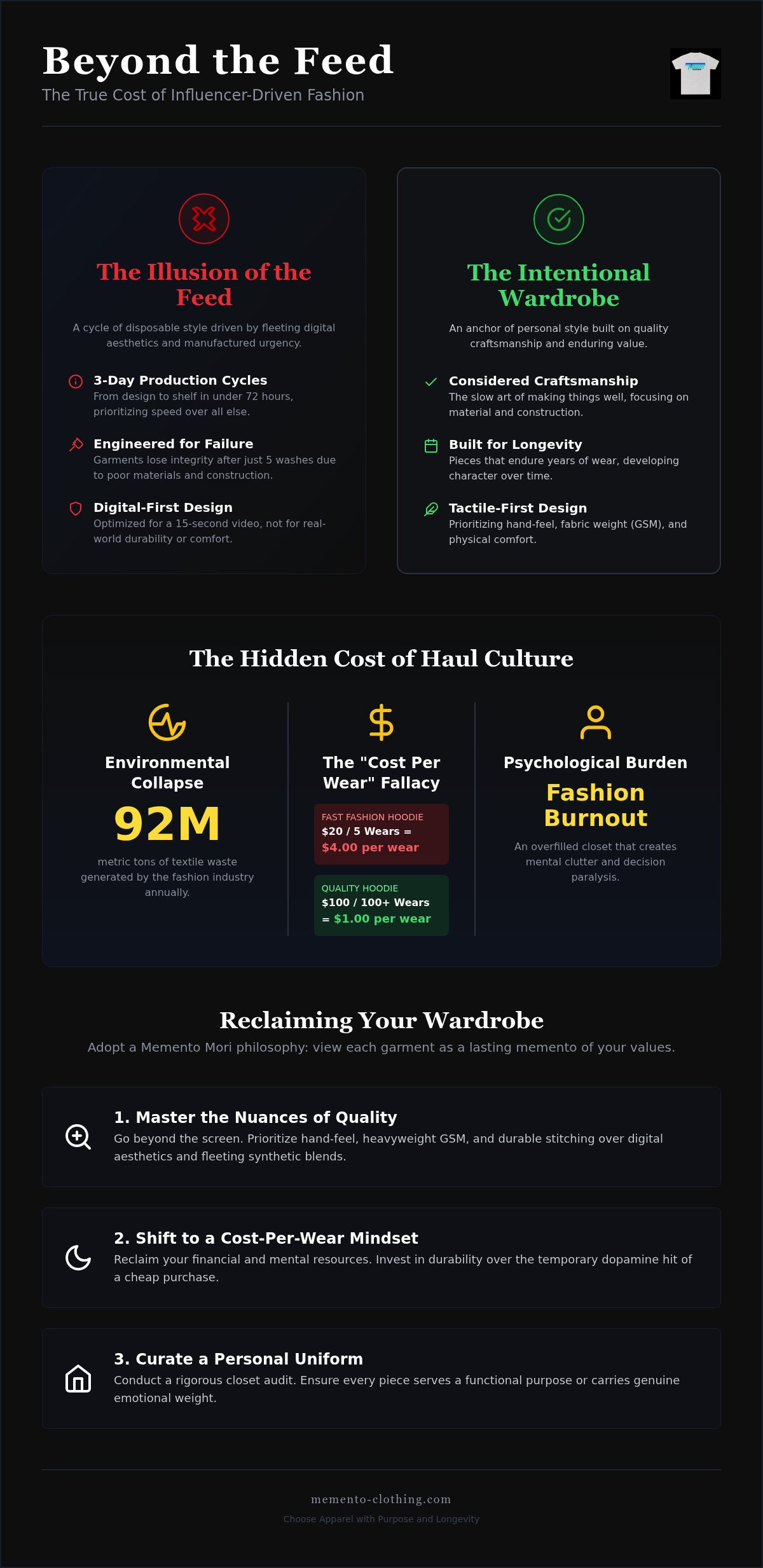
The digital pulse of 2026 moves at a speed that defies the human heart. We've reached a point where the global fashion industry discards up to 120 million metric tons of textiles every year, much of it abandoned before the season even turns. This is the problem with influencer fashion trends. These fleeting micro-trends promise a sense of belonging but leave behind only the weight of wasted resources and poor quality fabrics that disintegrate after a single wash. We're trapped in a demand-driven model where production cycles have shrunk to just three days, leaving no room for the slow art of craftsmanship or the quiet weight of a garment that actually lasts.
You likely recognize the frustration of a wardrobe that feels crowded yet empty. It's a collection of artifacts that lost their relevance before the shipping label was even removed. We agree that fashion should be an anchor, not a distraction. This article promises to guide you away from the noise of the feed and toward an intentional, lasting style philosophy. You'll learn how to identify quality materials that endure and how to align your wardrobe with values that transcend the temporary. We're moving beyond the cycle of the ephemeral to find beauty in what remains.
Key Takeaways
- Recognize how the problem with influencer fashion trends prioritizes digital aesthetics over physical longevity, trapping consumers in a cycle of disposable style.
- Master the technical nuances of quality, from hand-feel to heavyweight GSM, to distinguish lasting craftsmanship from fleeting synthetic blends.
- Reclaim your resources by shifting from "haul culture" to a cost-per-wear mindset that values durability over the temporary dopamine hit of a new purchase.
- Curate a personal uniform through a rigorous closet audit, ensuring every piece in your collection serves a functional purpose or carries emotional weight.
- Adopt a Memento Mori philosophy toward your wardrobe, viewing each garment as a lasting memento of your values rather than a temporary trend.
The Illusion of the Feed: Why Influencer Trends Fade So Fast
The digital screen is a graveyard of yesterday's obsessions. In 2026, the speed of consumption has reached a fever pitch. We see "cores" rise and fall within weeks, a phenomenon that defines the problem with influencer fashion trends. These micro-trends aren't designed to be worn. They're designed to be seen. The design process is now algorithm-first. Brands prioritize how a fabric catches the light on a smartphone camera over how it feels against the skin or how it withstands the passage of time. It's a shift from the tactile to the visual, where the garment is merely a prop for a fifteen-second performance.
Manufactured urgency is the engine of the scroll. Limited drops and countdown timers create a false scarcity that bypasses our reason. We buy because we fear being left behind in a cultural moment that will be forgotten by Tuesday. This psychological pressure transforms the act of dressing from a personal ritual into a frantic race. It's a performance of relevance. But relevance is a fragile foundation for a wardrobe. When the trend evaporates, the garment lingers. It becomes a silent ghost in a crowded closet, stripped of its social value and lacking the quality to survive as a staple.
The Anatomy of a Micro-Trend
Digital aesthetics are deceptive. A "Mob Wife" aesthetic or a "Cottagecore" silhouette exists primarily for the performative haul video. These clips normalize the idea that clothing is a single-use tool for social currency. This mirrors the broader fast fashion business model, where speed is the only metric of success. Because these items are produced for the lens, they often lack structural integrity. They're thin. They're synthetic. They're fleeting. They don't translate to a life lived outside the frame, where rain, movement, and repetitive wear expose their hollow nature.
The Death of Personal Style
True style requires silence. It needs space to breathe and evolve. The algorithm, however, demands constant noise. It acts as a homogenizing force, pushing a global aesthetic that erases individuality. When you chase every viral drop, you lose the ability to cultivate a signature look. You become a mirror of the feed rather than an original creator. Reclaiming your identity starts with a return to intentional design. It is an act of rebellion to choose a garment that doesn't scream for attention but instead whispers of quality and permanence. It's about finding pieces that serve as anchors in an ocean of fleeting trends.
The Hidden Cost of Haul Culture and Disposable Style
The digital mirage of the feed carries a heavy material price. While influencer-led hauls present an image of abundance, the reality is costly for the planet. The fashion industry accounts for an estimated 92 million metric tons of textile waste annually. This high-volume production model relies on the "Cost Per Wear" fallacy. A cheap garment appears to be a bargain at the checkout. However, its rapid degradation makes it a recurring tax on your resources. You aren't buying a wardrobe; you're subscribing to a cycle of replacement.
This cycle is often masked by greenwashing. Brands use vague "conscious" labels to justify the same destructive speeds. The result is a closet that feels like a burden. An overfilled space creates mental clutter, leaving you paralyzed by choice. Every underused item is a reminder of a fleeting impulse that failed to provide lasting value. True sustainability isn't found in a new label. It's found in the decision to stop buying what is designed to be discarded.
Beyond the Price Tag
A $20 hoodie carries an invisible ledger. Behind that price point lies depleted soil, thousands of liters of water, and a disregard for the hands that stitched it. Chasing the digital Joneses demands a constant sacrifice of your peace. We buy to belong, yet the belonging is as transient as the trend itself. Fast Fashion Burnout is the state of feeling uninspired despite constant new purchases. It's the exhaustion of a soul that seeks permanence in a world of plastic threads.
The Quality Gap
Modern garments are often engineered for failure. Built-in obsolescence ensures that most fast fashion items lose their shape or integrity after just five washes. We've lost our collective textile knowledge. We prioritize the logo over the loom. This is where the Memento Mori philosophy offers a necessary shift in perspective. If we acknowledge the finitude of our time, we should naturally gravitate toward objects that endure. A heavyweight hoodie shouldn't be a temporary distraction. It should be a companion. By choosing quality over fame, we treat our clothing as a memento of our values rather than a disposable prop for the algorithm.
Fabric vs. Fame: Identifying Quality in a Sea of Trends
The digital image is a master of deception. On a screen, a thin polyester blend can mimic the drape of silk or the texture of heavy wool. In reality, these influencer-pushed "poly-blends" trap heat, pill within weeks, and lose their shape after a single cycle in the wash. This is the problem with influencer fashion trends. They prioritize the visual over the tactile. True quality is felt before it is seen. It requires a return to heavyweight natural fibers that respect the body and the environment.
Understanding GSM (grams per square meter) is the first step toward a lasting wardrobe. Higher GSM indicates a denser, more substantial fabric. It offers a "hand-feel" that synthetic fibers simply cannot replicate. A quality garment feels cool, heavy, and grounded. It doesn't cling; it drapes with intent. While fast fashion relies on chemical finishes to simulate softness, natural cotton relies on the strength of its own fibers.
There is a profound difference between patina and decay. Fast fashion decays. It frays, thins, and becomes unwearable. In contrast, high-quality cotton develops a patina. It softens and adapts to your body over years of wear. The garment becomes a record of your life. It carries the weight of your history rather than the burden of a fleeting trend.
The Heavyweight Advantage
Density is a shield against the ephemeral. A Memento Mori Heavyweight Hoodie serves as a testament to structural integrity. While trendier alternatives use lightweight fleece that sags and loses its silhouette, heavyweight cotton maintains its form. This density provides superior warmth and a physical presence that feels protective. It is an investment in permanence. It is a choice to own something that will be as relevant in a decade as it is today.
Signs of Intentional Craftsmanship
Longevity is found in the details. Look closely at the seams. Double-needle stitching at the neckline and armholes is a hallmark of durability. It prevents the garment from unraveling at the points of highest stress. Compare the depth of color in a Memento Mori Vintage Tee to a standard promotional shirt. Garment dyeing creates a rich, lived-in aesthetic that won't flake or peel like cheap screen prints. These details distinguish an intentional choice from a fleeting purchase. They are the marks of an creator who values the future of the object.
Cultivating an Intentional Wardrobe: Beyond the Algorithm
Cultivating a wardrobe is an act of curation, not accumulation. The problem with influencer fashion trends is that they turn our closets into archives of failed impulses. To break this cycle, start with a rigorous closet audit. Remove anything that lacks functional purpose or emotional resonance. If a garment doesn't tell a story or serve a daily need, it's merely noise. Once the clutter is cleared, define your core uniform. This isn't a limitation. It's a signature. Base it on the rhythms of your actual life, not the curated snapshots of a digital feed.
Implementation requires a steady discipline. Adopt the "One-In, One-Out" rule to maintain the structural integrity of your collection. Every new acquisition should displace an item of lesser value. This ensures your wardrobe remains a living, breathing reflection of your current values. Focus your investment on anchor pieces. These are the foundations. They're the garments that remain constant while the world outside shifts. They're the items you reach for when you want to feel like yourself.
Building the Foundation
Anchor pieces rely on versatility and substance. High-quality basics like Memento Crewnecks provide the necessary weight to anchor a style. Choose colors that exist outside the seasonal mandates of the industry. Earth tones, deep charcoals, and vintage blacks offer a permanence that "color of the year" trends lack. Prioritize silhouettes that offer comfort without sacrificing form. A well-constructed crewneck is a quiet statement of confidence. It works in silence.
The 30-Day Rule
Time is the ultimate filter for desire. When you feel the pull of a viral trend, wait 30 days before acting. This period allows the manufactured urgency to fade. It helps you distinguish between true inspiration and mere digital influence. Inspiration enriches your existing style. Influence merely seeks to replace it. True style is a slow conversation, not a fast reaction. It's an evolution of the self, recorded in fabric. By waiting, you reclaim your agency from the algorithm.
Ready to begin your journey toward a more meaningful wardrobe? Explore our collection of intentional apparel and find your next anchor piece.
Memento Mori: Choosing Apparel with Purpose and Longevity
The awareness of our own finitude is the ultimate filter for the objects we invite into our lives. When we acknowledge that our time is limited, the frantic pace of the scroll loses its power. This is the final resolution to the problem with influencer fashion trends. We stop seeking validation in the ephemeral and start seeking meaning in the permanent. The Memento Mori philosophy, "remember you must die," is not a dark sentiment. It is a call to live with intention. It suggests that every choice, including what we wear, should reflect a life lived with purpose rather than a reaction to an algorithm. Clothing becomes a ritual. It is a way to anchor ourselves in the present while respecting the passage of time. This pursuit of permanence is beautifully realized in heritage accessories like the gold cufflinks from Valcrest™, which are designed to endure as timeless symbols of quality.
Fashion as a Philosophy
Design is never just about aesthetics. It is a worldview. The Memento Mori story informs a shift from disposable consumption to meaningful curation. By wearing your values, you transform a simple garment into a personal manifesto. You choose fabrics that can withstand the weight of time and designs that don't expire with the season. This is the antithesis of the modern industry. It is a slow, quiet rebellion against the noise. We move from being passive recipients of a feed to active creators of our own history. Each piece becomes an emotional anchor, a physical reminder of who we are and what we value.
Your Legacy in Fabric
There is a quiet beauty in an object that outlasts its owner. When we choose high-quality apparel, we shift from being mere consumers to being custodians of craftsmanship. Even pieces like Youth Graphic T-Shirts can become vessels of memory if they are built with integrity. A shirt that survives a decade of wear carries the marks of a life lived. It becomes a memento of personal history. It is a legacy you can hold.
This philosophy of permanence extends even to seasonal items; choosing expressive pieces from WhimSpin ensures that your festive wardrobe consists of curated favorites rather than single-use garments destined for a landfill.
The problem with influencer fashion trends is that they leave no legacy; they are designed to be forgotten. In contrast, intentional style builds a bridge between the present and the future. It allows us to leave a footprint that is both aesthetic and ethical. We encourage you to look beyond the feed and find the pieces that resonate with your internal narrative. Explore the Memento Mori collection for pieces that last a lifetime.
Reclaiming Your Narrative in a World of Noise
The digital landscape of 2026 demands a constant, exhausting performance. We've seen how the problem with influencer fashion trends lies in their inherent transience, stripping our wardrobes of both quality and meaning. By rejecting the haul culture of the algorithm, you reclaim your agency. You move from being a consumer of fleeting moments to a curator of lasting values. It's a shift from the performative to the personal.
True style resides in the weight of the fabric and the depth of the philosophy behind it. Our collection prioritizes heavyweight 13.5oz cotton construction and philosophically driven designs. These aren't just garments; they're mementos of a life lived with intent. With national US shipping on all orders, we invite you to build a foundation that endures long after the feed has refreshed. It's time to invest in what matters.
Shop Intentional Apparel at Memento Mori Clothing
Choose pieces that age with you. Let your wardrobe be a testament to what remains when the noise finally fades. Dress for the life you're actually living.
Frequently Asked Questions
What exactly are micro-trends in fashion?
Micro-trends are hyper-accelerated style cycles that last weeks rather than months. Unlike traditional seasons, they rely on social media algorithms to create a burst of demand for a specific "core" or aesthetic. This rapid turnover is central to the problem with influencer fashion trends, as it encourages the production of disposable garments that lack both physical and cultural durability. These fleeting moments prioritize the lens over the life of the wearer.
How can I tell if an influencer is promoting a low-quality brand?
Look for signs of algorithm-first design, such as fabrics that appear shiny or overly thin in video hauls. If the brand emphasizes a low price point over material composition, it's likely a trend-driven product. Check for a lack of technical specifications like GSM or fiber origin. High-quality creators usually discuss the tactile nature and longevity of a piece rather than just its visual appeal or current popularity.
Is heavyweight cotton actually better for the environment?
Durability is the most effective form of sustainability. A heavyweight cotton garment lasts years longer than a thin synthetic blend, reducing the frequency of replacement. Since the global fashion industry generates over 90 million tons of waste annually, choosing items that don't end up in a landfill after five washes is a vital choice. It's a quiet investment in a smaller, more permanent wardrobe that respects our limited natural resources.
What does Memento Mori mean in the context of clothing?
Memento Mori translates to "remember you must die," serving as a call to live and dress with deep intention. In clothing, this philosophy rejects the ephemeral nature of the feed. It encourages you to choose garments that serve as emotional anchors and physical mementos of your values. Our brand designs pieces that respect the passage of time rather than chasing a fleeting digital moment that lacks any lasting substance.
How do I start building a timeless wardrobe on a budget?
Focus on cost-per-wear rather than the initial price tag. Begin by acquiring a single, high-quality anchor piece, such as a Memento Mori Heavyweight Hoodie, which will outlast five cheaper alternatives. Perform a closet audit to identify what you actually wear. By stopping the cycle of small, impulsive purchases, you accumulate the resources to invest in garments that carry lasting structural value. True economy is found in items that endure.
Why do influencer trends change so quickly in 2026?
The speed is driven by a demand-driven model powered by AI and big data. In 2026, production cycles for some brands have compressed to just three days. Influencers must provide constant new content to remain relevant in the algorithm, which necessitates a continuous stream of new aesthetics. This manufactured urgency is a core part of the problem with influencer fashion trends today, where the garment is merely a disposable prop.
Can I still follow trends while being an intentional shopper?
You can, provided you view trends through the lens of inspiration rather than influence. Use the 30-day rule to see if a specific style resonates with your personal narrative once the digital noise fades. If a trend aligns with your core uniform and offers high-quality construction, it can be integrated. Intentionality is about making a conscious choice for your life rather than reacting to a notification on a screen.
What are the signs of a high-quality heavyweight hoodie?
A premium hoodie is defined by its density and construction details. Look for a weight of at least 13.5oz or a high GSM count, which ensures the garment holds its silhouette. Check for double-needle stitching at the seams and a robust, structured hood. High-quality pieces use garment-dyeing techniques for a rich finish that improves with age. These details distinguish an intentional piece of apparel from a temporary, low-quality distraction.