
Apparel for Men Who Hate Shopping: A Simpler Way to Dress
What if the easiest way to dress well was to shop less? If apparel for men who hate shopping sounds like a contradiction, it doesn’t have to be. The frustration is often not style itself. It’s the endless browsing, uncertain fit, and pressure to choose among too many options.
You don’t need a packed closet or a new trend each season. A dependable wardrobe can make everyday decisions easier: a few outfits that feel comfortable, suit your life, and still feel like you. The challenge is knowing what to keep, what to replace, and what’s worth bringing home.
This guide offers a practical routine for finding reliable pieces, keeping a simple replacement list, and choosing clothing with a personal point of view instead of chasing what’s new. Intentionality won’t remove every decision, but it can help you make each one with purpose and spend less time browsing.
Key Takeaways
- Make apparel for men who hate shopping easier to manage by starting with the situations you dress for most often.
- Build a low-effort wardrobe around comfortable pieces that work together and suit your everyday life.
- Compare in-store, online, and curated shopping by weighing time, choice, fit confidence, and personal control.
- Use a short routine to spot what needs replacing and shop with clear criteria instead of browsing without a plan.
- Choose clothing with a point of view that feels personal, like Memento Mori Clothing’s “New Season. New Perspective.” tagline and “live fearless, remember humbly” ethos.
Why Shopping for Clothes Feels Like Such a Chore
If browsing clothes feels like time spent without a clear return, that frustration is understandable. It doesn’t mean you’re indifferent to how you look or what you wear. You may care about comfort, fit, and clothes that feel like you, while disliking the effort of finding them. Apparel for men who hate shopping starts with recognizing that the process, not personal style, may be the obstacle.
A simple purchase can become demanding when the need is vague. “I need something to wear” leaves too many questions open: Is it for work or weekends? What weather should it suit? What feels comfortable, and what will go with what you already own? Clothing also has practical and cultural roles, as explored in the history and cultural significance of clothing. You don’t need to solve every question about style to make one useful choice. A defined need can quiet the noise: The clearer the need, the fewer avoidable clothing decisions you have to make.
Is it the clothes, the store, or the decisions?
Shopping friction can come from different places. You might resent the time it takes to travel, browse, and compare. A crowded store can make it harder to think, while fitting rooms or trying on several options may feel like more effort than the purchase is worth. Online shopping removes the store visit, but uncertainty about fit and feel can remain.
There’s also the burden of choosing. When every option requires another judgment about color, cut, comfort, or usefulness, the task can become tiring. After weighing enough choices, you may simply want to stop deciding, even if you haven’t found what you need. Which friction point makes you most likely to put off shopping: time, choice, fitting rooms, crowds, or uncertainty?
Why putting it off can make the next trip harder
Waiting doesn’t always cause a problem. But when an everyday item wears out before you think about replacing it, the need can suddenly feel urgent. You may have less time to compare options, consider how a piece fits into your routine, or wait until shopping feels manageable. The task shifts from making a considered choice to finding something that works now.
For example, if a frequently worn T-shirt is losing its shape, treat that as a reminder to assess it rather than waiting until it’s no longer comfortable. No elaborate wardrobe audit is needed. Notice what gets used, what gets skipped, and what’s nearing the end of its life. That gives your next purchase a clear purpose and makes shopping feel less like a looming errand.
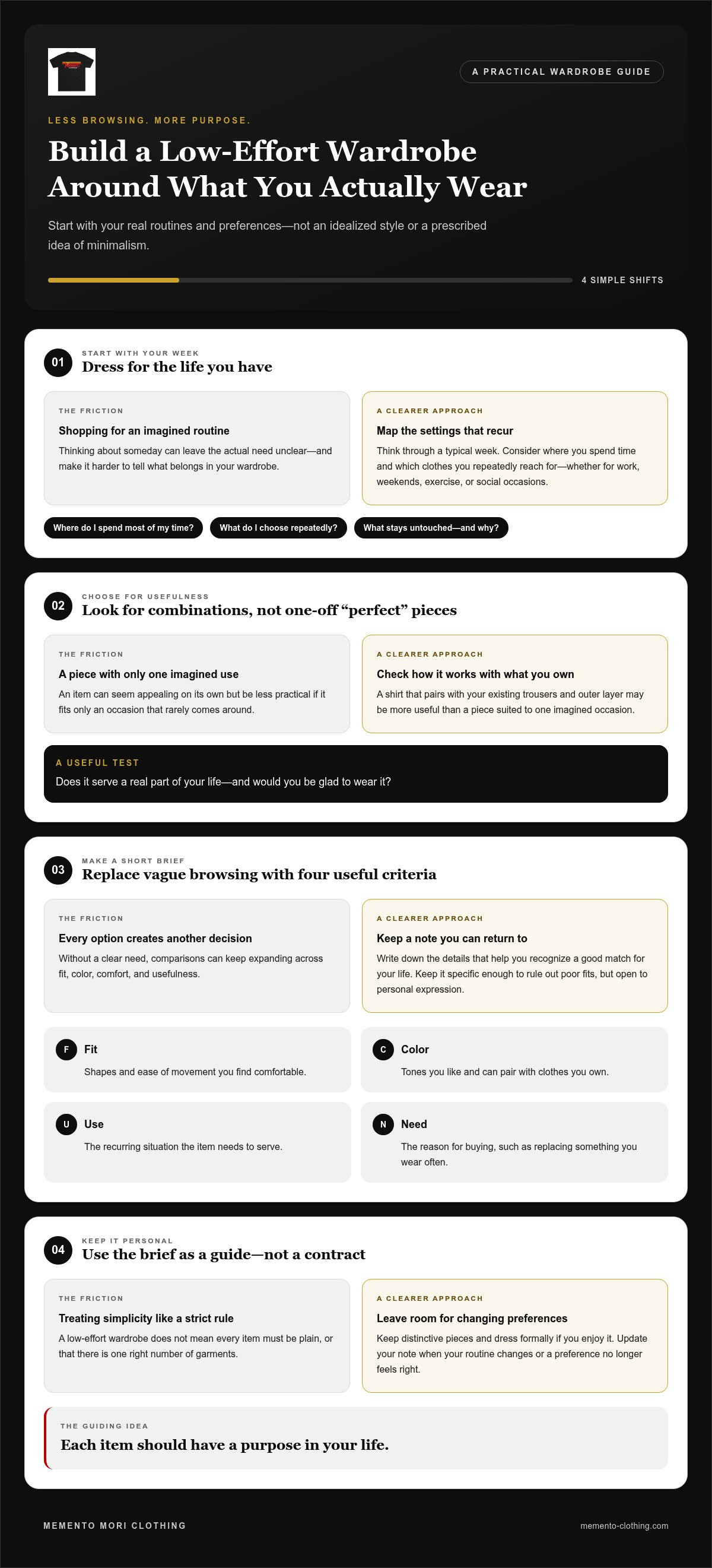
Build a Low-Effort Wardrobe Around What You Actually Wear
A low-effort wardrobe isn’t a fixed number of garments or a rule that everything must be plain. It’s a considered set of clothes for the situations you actually return to, with pieces that feel comfortable and work together. For apparel for men who hate shopping, knowing what fits your daily life makes it easier to ignore options that don’t.
An intentional wardrobe is shaped by your real routines and preferences, not by a prescribed ideal of minimalism. You can keep distinctive pieces, dress formally when you enjoy it, or own more clothing than someone else. When formal events are rare, turning to services like suit hire Auckland allows you to dress well without the burden of buying and storing seldom-used pieces. The aim is for each item to have a purpose in your life.
Start with your real week, not an idealized style
Think through a typical week, not the version of yourself you imagine dressing for someday. Note the settings that recur, then consider what you reach for in each one. Work, weekends, exercise, and social occasions may all matter, or some may barely figure into your routine.
- Where do you spend most of your time?
- Which clothes do you choose repeatedly?
- What stays untouched, and is there a reason?
Look for useful combinations rather than isolated “perfect” items. A shirt that works with the trousers and outer layer you already wear may be more practical than a piece suited to only one imagined occasion.
Create a simple personal clothing brief
Before browsing, make a short note you can return to. Include details that help you recognize a good fit for your life, rather than a long list of rules. A brief keeps comparisons focused on what matters to you.
- Fit: the shapes and ease of movement you find comfortable.
- Color: tones you like and can pair with clothes you own.
- Use: the recurring situation the item needs to serve.
- Need: the reason for buying, such as replacing something you wear often.
Save the note on your phone or somewhere easy to find. Update it when your routine changes or you discover that a preference no longer feels right. It’s a guide, not a contract.
Keep the brief specific enough to rule out poor matches, but open enough to leave room for personal expression. “Comfortable top for regular weekends, in a color I already wear” gives you a purpose without dictating a trend or a particular style. A distinct point of view can matter as much as utility; branded apparel with a clear perspective offers one way to explore clothing that carries meaning beyond the basics. The practical test is whether it suits a real part of your life and you’d be glad to wear it.
In-Store, Online, or Curated: Which Shopping Method Fits You?
The best method depends on which part of shopping you want to make easier. Shopping from home can remove travel, while a store lets you see and try garments before deciding. Curated shopping narrows the selection, but may give you less control over what appears. Each method has trade-offs. For apparel for men who hate shopping, the useful question isn’t which method is effortless, but which one reduces your main source of friction without adding another.
Compare the options against what matters to you: time, choice, fit confidence, and personal control. Curated shopping might mean a preselected range or someone else narrowing the options; the exact experience varies.
| Method | Potential advantage | Trade-off |
|---|---|---|
| In-store | See fabric and try items on | Travel, crowds, and browsing can take time |
| Online | Browse from home and compare at your own pace | Fit is harder to judge; returns take attention |
| Curated | A narrower selection can reduce browsing | Less control over the initial options and selection |
When online shopping may reduce friction
Online shopping can suit you if getting to a store or being in a crowded retail space is the tiring part. Look at a small set of options when you have time, then stop when you’ve found a plausible match. A product photo can’t tell you exactly how a garment feels or sits on your body, and a return may take extra steps. Convenience is useful, but it isn’t the same as certainty.
Use published size information rather than relying on a familiar letter size alone. If measurements are available, compare them with a garment you own that fits well. Read the retailer’s return terms before ordering so you know what to expect if the fit isn’t right. That pause can prevent a quick purchase from becoming an unwanted item you still have to deal with.
When a focused store visit may be the better choice
Some shoppers feel more confident after seeing a garment in person, judging its feel, and trying it on. If that sounds like you, make the trip specific: write down the item you need and any fit or comfort requirements. Go to look for that item, not to inspect every rack. A focused visit can limit wandering, though it can’t guarantee the right option will be there.
Curated shopping may help if choosing among a broad range is the biggest obstacle. A smaller selection can simplify comparison, but may not match your preferences as closely as choices you make yourself. You can use curation without signing up for anything: save a short list of options that meet your criteria, then compare only those. For specific categories like workout apparel, leaning on a focused destination like REP Store helps eliminate needless browsing by concentrating only on high-performance training pieces. Convenience should narrow needless choice without taking away the judgment that makes a purchase feel personal.
A Simple Shopping Routine That Prevents Last-Minute Stress
A routine doesn’t need to become a wardrobe project. Give each clothing decision a clear beginning and end: notice what you use, define the gap, set a few standards, shop within them, then consider whether the choice worked. For apparel for men who hate shopping, this small structure can replace open-ended browsing with a task that has a purpose.
A short shopping brief gives indecision fewer places to hide. Keep it somewhere easy to find, and use this sequence when an item needs attention:
- Review the closet. Notice what you wear regularly, what is worn out or uncomfortable, and what remains untouched. You’re looking for one useful observation, not a complete inventory.
- Name the need. Choose a specific gap, such as replacing an everyday layer that no longer feels comfortable. If you can’t name the situation it’s for, pause before shopping.
- Set your criteria. Note the intended use, preferred fit, comfort needs, and colors or details that work with what you own. Keep only the requirements that matter for this purchase.
- Shop to the brief. Compare options against those criteria, whether you’re browsing online or visiting a store. Buy only if the item meets the stated need and your personal standards.
- Assess the choice. Try it with clothes you already own and consider whether it suits the intended use and feels right. Keep a brief note about what worked for next time.
Before you shop: identify one genuine gap
Keep the review small. Look at the clothes you reach for and identify what, if anything, needs replacing. An item you rarely wear isn’t automatically a problem; it may serve an occasional purpose. Choose one priority rather than trying to overhaul everything. Write down how you’ll use the replacement, what fit feels comfortable, and what would make it useful with the rest of your wardrobe.
That note is your filter. If an option looks appealing but doesn’t meet the need you named, you don’t have to keep comparing it with the intended purchase. For a store trip, bring the list and keep the search focused. Online, use the same criteria to narrow your choices, and review the retailer’s stated return terms before ordering.
After the purchase: keep the process simple
Try the garment with pieces already in your wardrobe and assess it against the reason you bought it. Does the fit feel comfortable? Can you wear it in the situation you had in mind? Keep the order confirmation and review the stated return terms promptly, so you know what to do if it doesn’t work out. A quick note about fit, fabric feel, or useful details can make the next decision more precise.
Keep the routine modest: one need, a few personal criteria, one considered choice. Memento Mori Clothing’s apparel and community gear offers a distinct point of view to explore as you consider what feels right for your wardrobe.
Intentional Apparel: Where Memento Mori Clothing Fits
A simpler wardrobe doesn’t have to mean clothing without character. Once you’ve made practical choices about what you wear and what feels comfortable, personal expression still has a place. A garment can serve a familiar purpose and carry a point of view. Apparel for men who hate shopping can be straightforward to choose without becoming anonymous or shaped by every passing trend.
Memento Mori Clothing expresses its perspective in the tagline “New Season. New Perspective.” and the ethos “live fearless, remember humbly.” These words capture the brand’s outlook. They’re one example of how apparel can communicate an idea as well as meet a practical need.
A point of view beyond the shopping routine
Intentional clothing choices leave room for both use and meaning. You might choose a garment because it suits a recurring part of your life, because you like its design, or for both reasons. Neither requires building a wardrobe around a brand or adopting a particular style. Notice what feels like your own, then let that preference inform your choices without turning each purchase into a search for a new identity.
The Memento Side-Zipped Hoodies express that design language through specific details: they’re crafted from soft cotton, feature unique side zippers, and have a buttoned hood printed with “Believe in Yourself.” These details give the hoodie a recognizable point of view while keeping its features concrete.
Explore the brand without pressure to buy
The Memento Hockey Jersey comes in Black, Yellow, and Red. The Mighty Mori Hockey Jersey comes in White, Teal, and Burgundy, and is designed to be baggy. For optimal fit, the recommendation for both jerseys is to order one size smaller. These details help describe their design and fit; whether either belongs in your wardrobe depends on your needs.
The Memento Hockey Jersey, Mighty Mori Hockey Jersey, and Memento Side-Zipped Hoodies are currently sold out and unavailable for purchase. Their designs show how a brand’s perspective can appear in apparel, but these products can’t be purchased now. Inspiration can inform your taste without creating an obligation to buy.
You’ve already done the useful work of defining what you wear, what matters to you, and how you want to make clothing decisions. If you’re curious about the ideas and designs behind the brand, Memento Mori Clothing’s designs and perspective offer a place to explore them.
Let Your Next Choice Be a Considered One
You don’t have to become someone who enjoys shopping to feel more at ease with what you wear. Make the next choice modest: notice what feels like you, choose with purpose, and leave the rest for another day. That’s a quieter way to approach apparel for men who hate shopping, with room for comfort and personal meaning.
Memento Mori Clothing’s words, “New Season. New Perspective.” and “live fearless, remember humbly,” express one view of how clothing can carry a point of view. Take what resonates and leave what doesn’t. Your wardrobe should belong to your life, not an ideal you feel obliged to follow.
Explore Memento Mori Clothing’s designs and apparel to find a perspective that resonates with you.
Frequently Asked Questions
How can I shop for clothes quickly if I hate browsing?
Decide on the exact item and acceptable fit before opening a store or website. For apparel for men who hate shopping, use a focused search, filter to the relevant category and size, then compare a small set of options against a garment or outfit you already know works. If nothing meets your needs, pause rather than settling for a poor match. A clear stopping point helps keep the task contained.
Can I build a simple wardrobe without following fashion trends?
Yes. Choose clothes for the way you live and the things you enjoy wearing, not because they’re currently popular. If you prefer familiar shapes and muted colors, you can keep choosing them while changing a detail such as a graphic, texture, or layer. Trends can offer ideas, but they don’t have to set the terms of your wardrobe. Personal style can be steady and still feel expressive.
Is online clothes shopping easier than going to a store?
It depends on what makes shopping difficult for you. Online shopping may suit you if travel or a crowded retail environment is the main obstacle; a store may feel more reassuring if you want to see a garment in person before deciding. For a first online order from a brand you haven’t tried, compare garment measurements with a similar item you own and read the return terms before checkout.
How do I know what clothes I actually need?
Look for a repeated inconvenience, not a hypothetical wardrobe gap. If you keep skipping an activity because you lack a comfortable layer, or regularly find a particular item unavailable because it’s in the wash, that may point to a genuine need. Check whether another garment you own could serve the same purpose. If it can, you may not need to buy anything yet; if not, write down the specific use you want to fill.
What should I do if I keep putting off buying clothes?
Make the first step smaller than a shopping trip. Add the item you may need to a note when you notice the problem, then choose a calm moment to decide whether it’s worth replacing. If it is, set a reminder to revisit that one need before it becomes urgent. You don’t have to browse or purchase on the same day you notice something needs attention.
How can I choose clothes that feel like me without overthinking?
Use your own habits as evidence. Notice which pieces you reach for, which colors you feel comfortable wearing, and what you tend to avoid after buying. Before choosing something new, ask whether you’d wear it in a real situation coming up, not just whether it looks appealing on its own. A design detail or graphic can express something personal, but it should still feel natural in your everyday life.
Are Memento Mori Clothing’s featured products available to buy right now?
No. The Memento Hockey Jersey, Mighty Mori Hockey Jersey, and Memento Side-Zipped Hoodies are currently sold out and unavailable for purchase. Memento Mori Clothing’s apparel range also includes branded hoodies, vintage tees, crewnecks, and hats, alongside community-specific gear. The three featured products are not available to order.