
2026 Men’s Style Guide for Creative Entrepreneurs
What if dressing professionally didn’t mean dressing like someone else? A client meeting, a studio day, and an evening event can call for different choices, while your clothes still need to feel like your own. This men's style guide for creative entrepreneurs starts with that balance: personal expression, shaped for the work at hand.
It’s easy to swing too far in either direction. A look can feel overly formal in a creative setting, or too casual when trust and credibility matter. And when every morning becomes another round of outfit decisions, there’s less attention left for the work only you can do.
The answer isn’t a closet full of trends. It’s a considered wardrobe with dependable foundations, thoughtful layers, and a few pieces that carry your point of view. Here, you’ll learn how to dress for changing work contexts, use fit, color, and texture with intention, and build combinations that feel distinctively yours. A graphic tee or relaxed layer can have its place when the rest of the look gives it room to speak.
Key Takeaways
- This men's style guide for creative entrepreneurs helps you match your clothing to the day’s work, from focused making to client conversations and public appearances.
- Check shoulder, torso, sleeve, and hem fit to create a sharper impression, then build a repeatable palette with base shades, supporting tones, and restrained accents.
- Audit what you own, identify practical gaps, and test combinations against your real workweek instead of dressing for occasions that rarely happen.
- Use a familiar silhouette or meaningful graphic piece to add a personal note without asking every part of an outfit to make a statement.
Men’s Style for Creative Entrepreneurs: Look Credible Without Losing Your Point of View
Creative work depends on a point of view. So does personal style. A first meeting, pitch, or presentation can make clothing part of the introduction before you’ve said much at all. The challenge is to look considered without feeling costumed, and credible without sanding away what makes you distinct. A useful work wardrobe adapts to the room without erasing its wearer.
Clothing is a signal, not a résumé. It can support the care you bring to a project, but it can’t replace skill, character, or the trust built through your actions. The History of fashion offers a broad view of how dress has shifted alongside social and economic change. For creative entrepreneurs, that context is a reminder that clothing communicates, but its meaning depends on the people and setting around it.
What should a creative entrepreneur’s clothes communicate?
Start with three signals. Credibility comes through care: clothes that suit the occasion and appear intentional. Approachability can come from ease in the silhouette or a familiar, relaxed layer. Originality might show through color, texture, proportion, or one personal detail. These signals can coexist, but the balance should shift with your role, audience, and setting.
A designer presenting a visual concept may want a more expressive detail than a consultant leading a first conversation about a sensitive business problem. Someone moving between a workshop and a client meeting may need comfort and polish in the same outfit. There’s no universal formality level for creative work. Consider who you’ll meet, what you’ll be doing, and what the room expects. Then choose clothes that support the occasion without pretending to be someone else.
- Making: prioritize comfort and movement, with enough structure to feel put together.
- Presenting: add polish where it helps your ideas take focus.
- Building relationships: choose an ease and degree of formality that help conversation feel natural.
Why does a personal style system beat a work uniform?
A strict uniform can remove decisions, but it may flatten the differences between your workdays. A personal system offers another kind of relief: a small set of reliable colors, shapes, and layers that work together in different combinations. You might keep a familiar jacket and pair it with a tee on a studio day, then choose a more refined shirt for a client presentation. The pieces repeat, but the outfits don’t have to.
Think of a signature as a thread, not a rule. It could be a preference for relaxed trousers, a recurring dark palette, or a graphic tee beneath a more structured layer. Keep the pieces that already feel like you. They’re useful reference points, not obstacles to better dressing. Build from those honest choices so getting dressed takes less thought while your presence still feels unmistakably your own.
Build a Distinctive Creative-Entrepreneur Wardrobe from Fit, Colour, and Texture
A wardrobe becomes distinctive through the details that hold it together. The same shirt can feel relaxed or refined depending on its shape, how it sits beneath a layer, and the colors around it. Rather than chasing a trend or fixed outfit formula, use fit, color, and texture as a practical framework. Consistent choices in these areas help separate garments feel considered together.
How can fit make everyday clothes look more intentional?
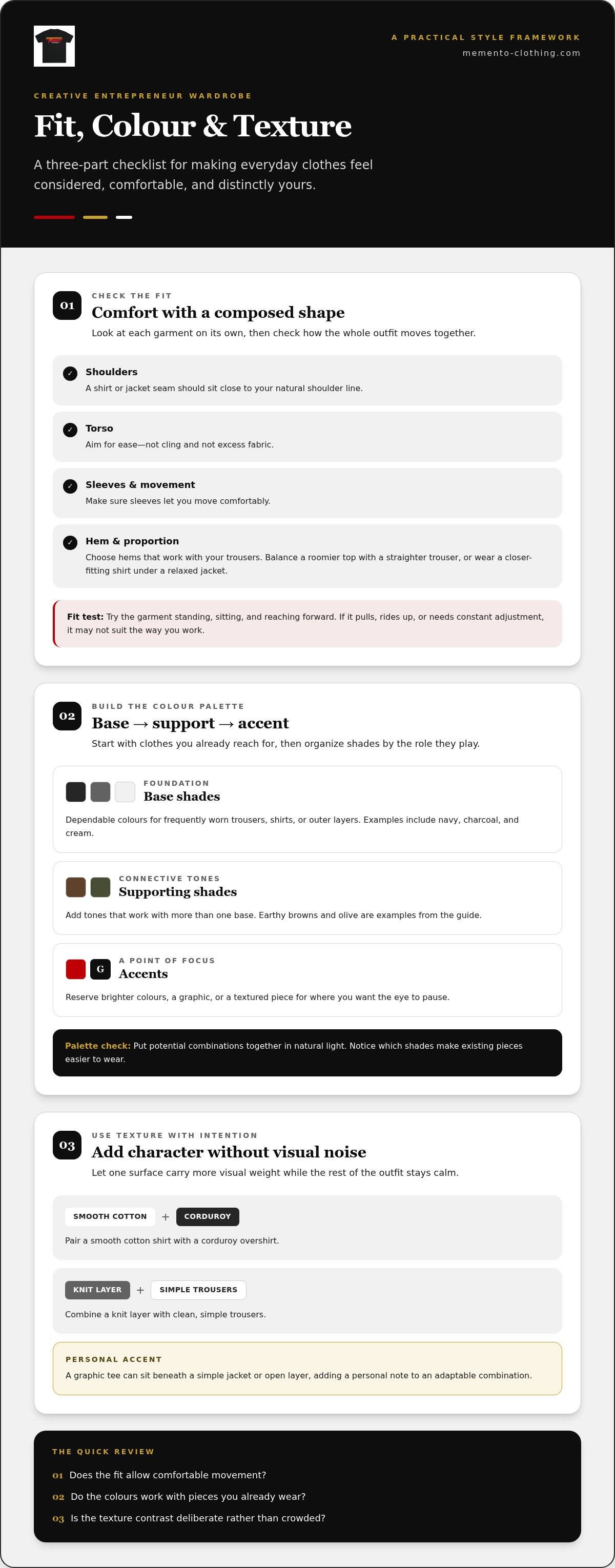
Start at the shoulders: a seam that sits close to your natural shoulder line helps a jacket or shirt look composed without feeling rigid. Across the torso, aim for ease rather than cling or excess fabric. Sleeves should let you move comfortably, and hems should work with the rise and shape of your trousers instead of bunching or cutting the outfit at an awkward point.
Check proportion across the whole outfit. A roomier top can balance well with a straighter trouser; a closer-fitting shirt may sit comfortably beneath a relaxed jacket. Neither needs to be tight. Try a garment while standing, sitting, and reaching forward. If it pulls, rides up, or needs constant adjustment, it may not suit the way you work.
How do colour and texture create a recognizable point of view?
Build a palette from clothes you already reach for. Choose a few base shades that combine easily, add supporting tones that soften or deepen them, then reserve brighter colors for accents. Earthy browns, olive, navy, charcoal, and cream can offer a quiet foundation, but the right palette is personal. Put potential combinations together in natural light and notice which shades make existing pieces easier to wear.
Texture adds character without requiring a loud silhouette. Try pairing a smooth cotton shirt with a corduroy overshirt, or a knit layer with clean, simple trousers. Let one surface carry more visual weight while the others provide calm. The aim is contrast that feels deliberate rather than crowded.
- Base shades: choose dependable colors for frequently worn trousers, shirts, or outer layers.
- Supporting tones: add shades that work with more than one base.
- Accents: use a brighter color, graphic, or textured piece where you want the eye to pause.
A graphic tee can be that considered accent beneath a simple jacket or open layer. A Memento Mori Vintage Tee or Memento Mori Heavyweight Hoodie can add a personal note to a more adaptable combination. Explore Memento Mori apparel for expressive casual pieces, then apply the same principle to garments already in your wardrobe. Not every item needs to stand out. Give each one a clear place in the outfit.
Compare Wardrobe Pieces by Use: Everyday Work, Client Meetings, and Public Moments
A creative workweek rarely asks for one kind of presence. You might spend the morning building something, meet a prospective client after lunch, then introduce your work to a room of people who know it only by name. Instead of keeping separate wardrobes for each role, start with a shared base and adjust it through one or two deliberate choices.
| Work context | Formality | Comfort and movement | Impression to create |
|---|---|---|---|
| Making and focused work | Relaxed, still considered | Easy movement for sitting, standing, and hands-on tasks | Capable, at ease, ready to work |
| Client meetings and presentations | Smart casual or more structured, depending on the room | Comfortable enough to stay present and move naturally | Prepared, attentive, credible |
| Public and relationship-building moments | Intentional, with a visible personal detail | Practical for greeting people and spending time on your feet | Distinctive and approachable |
What works for focused, everyday creative work?
For making days, choose clothes that let you concentrate rather than manage your outfit. A well-kept tee, crewneck, or relaxed layer can work well when its proportions feel deliberate and its finish suits your surroundings. For getting around town, pairing functional gear like a dedicated backpack for bike commuters with flexible pieces keeps transit comfortable without wrinkling your garments. If the day involves materials, equipment, or frequent movement, consider whether a layer is easy to remove or its sleeves easy to adjust. Comfort should support the work, not make the outfit feel forgotten.
Graphic tees also vary in how much attention they draw. A graphic tee can express something personal beneath a quiet overshirt, while a more visible design may suit a casual studio or independent workspace. For a closer look at how a substantial layer can fit into everyday wear, see this heavyweight hoodie guide. Consider how much visual attention you want the piece to hold in that setting.
How should an outfit shift for a client meeting or presentation?
Keep a familiar base, then raise the finish. A tee and trousers can become meeting-ready with a clean, structured jacket and more refined footwear. A crewneck can sit beneath a tailored outer layer; a sharper shirt can replace the tee if the audience or occasion calls for more formality. For those who appreciate enduring craftsmanship, pairing minimalist staples with a classic timepiece from Noir Time Group offers quiet polish without feeling overdone. Small changes can alter the frame around your work.
For a public talk or relationship-building event, consider whether you’ll be moving, greeting people, or standing for an extended stretch. Choose shoes and layers that suit the occasion without distracting you. Preserve one personal detail, perhaps a familiar silhouette or restrained graphic, and let the rest of the outfit give it context. Treat each outfit as a response to the day, not a costume for a job title.
Create a Repeatable Men’s Style System for the Creative Workweek
A useful wardrobe is built around the days you actually have, not a collection of imagined occasions. A week with studio work, a client presentation, and a networking event asks for different levels of polish, but those outfits can still draw from the same dependable pieces. This five-step process helps you see what’s working before deciding what, if anything, is missing.
- Map your work contexts. Look at the coming week. Note when you’ll be making, presenting, meeting clients, or building relationships, and what each activity asks of your clothes.
- Audit your garments. Group what you own by use, fit, condition, and how often you wear it. Notice the pieces that already work across more than one kind of day.
- Identify functional gaps. Look for a real obstacle, such as having no comfortable layer for a long workday or no outfit that feels ready for a client meeting. Name the need before making a shopping list.
- Test combinations. Build outfits from existing pieces and wear them during realistic work activities. Check comfort, movement, and how the clothes feel after several hours.
- Refine what works. Keep successful combinations easy to recall, then adjust one element at a time. A different layer or shoe can change the impression without requiring a wholly new outfit.
How can you audit what you already own?
Take each garment out of the closet and assess it honestly. Does it fit the way you need it to? Is it in good condition? Does it serve a particular work context, or combine easily with several pieces? You may find that a familiar tee and two dependable layers already create more options than you expected. Note missing functions, not just missing items. A useful layer for client meetings is a clearer gap than a vague desire for something new.
How do you test outfits before relying on them?
Wear a potential combination through a normal workday. Sit at your desk, move around, and see whether the layers stay comfortable and the outfit still feels right later in the day. A quick mirror check won’t reveal every practical issue. Photograph combinations in consistent light, too. Images can make proportions and recurring pairings easier to assess.
Repeat the combinations that serve you. Repetition creates continuity, not monotony, when you vary a layer, shoe, or other detail with purpose. If a vintage tee earns a regular place in your rotation, proper care can help you keep it in use; the vintage tee care guide offers garment-care guidance. The aim is a system that leaves more attention for the work itself.
To add an expressive casual piece to your rotation, explore Memento Mori apparel and consider how it might work with garments you already wear.
Make Personal Style Feel Like Yours, with Meaningful Everyday Pieces
A considered wardrobe isn’t a performance of creativity. It’s a way to choose what feels true, then carry that choice into the rooms where you work. Once fit and context are in place, a personal detail can make an outfit feel less interchangeable. It might be a familiar silhouette, a graphic with meaning, or a layer you’ve reached for through more than one season.
How can a signature detail remain personal rather than distracting?
Look for a detail that feels natural on an ordinary day, not just one designed to make an impression. A familiar shape, restrained color, or graphic tee might work with several outfits and move between settings with a change of layer. If a piece draws the eye, let quieter surrounding garments give it space when the occasion calls for a more measured look.
There’s no requirement to build a signature around tattoos, visible logos, or accessories. Those choices can be meaningful for some people, but none is a measure of creative credibility. Your point of view may show in proportion, repetition, or the way you combine pieces. A useful test: would you still choose this detail if nobody commented on it?
How can clothing hold meaning beyond the workday?
Some garments become familiar through use. A certain layer may recall a long stretch of building a business; a silhouette might feel connected to the way you’ve always preferred to move through the day. Meaning doesn’t need to be explained to others. It can simply make a piece feel like part of your own history.
The Memento Mori Vintage Tee is one option for expressing identity through casual clothing. Wear a graphic piece on its own when the setting suits it, or let it sit beneath a calmer layer when you want its meaning to stay personal rather than become the whole outfit. For a closer look at the thought behind this garment, read the Memento Mori Vintage Tee guide.
This men's style guide for creative entrepreneurs comes back to a simple principle: choose clothes with intention, and let them serve both the work and the person doing it. Keep the pieces that feel honest. Add new ones only when they have a place in the life you already lead.
If a meaningful casual piece belongs in that picture, explore Memento Mori Clothing and choose with care.
Let Your Next Choice Reflect the Work Ahead
Your wardrobe doesn’t need a final, perfect form. It can keep changing as your work changes, shaped by the rooms you enter and the person you’re becoming. Before adding something new, ask what role it will play and whether it feels like a choice you’ll still recognize as your own later.
The lasting idea is simple: dress with intention, not for approval. A garment can be practical and personal at once. Memento Mori Clothing offers casual pieces inspired by the “Memento Mori” philosophy, including heavyweight hoodies, vintage tees, crewnecks, and hats. Let any new addition earn its place through the way it fits into your days and your point of view.
If you’re ready to find a piece that feels personal, explore Memento Mori Clothing and choose with intention. Build a wardrobe that gives your work room to move while still carrying something unmistakably yours.
Frequently Asked Questions
What should a man wear as a creative entrepreneur?
A creative entrepreneur should wear clothes that suit the day’s responsibilities and feel comfortable enough to work in. For a video call, check how your shirt or layer appears on camera; for a site visit, consider whether your shoes and clothes suit the environment. A men's style guide for creative entrepreneurs works best as a decision framework, not a strict formula. Let the audience and activity shape the final choices.
Can creative entrepreneurs wear graphic tees to client meetings?
Yes, if the tee suits the client, purpose, and atmosphere of the meeting. For an informal first conversation with a creative partner, a clean graphic tee beneath an open overshirt may feel appropriate. If you’re presenting to a conservative audience or discussing a serious matter, a plain top can reduce visual distraction. Consider the impression you want to leave, and choose a graphic that supports rather than competes with it.
How many outfits does a creative entrepreneur need for work?
There’s no required outfit count; let your calendar reveal what you need. Review a typical stretch of work and note which days involve home-based tasks, in-person meetings, travel, or public speaking. Then check whether your current combinations cover those situations without uncomfortable repeats or last-minute changes. If a specific kind of day repeatedly creates a clothing problem, solve that gap before adding outfits for occasions that rarely arise.
How can a man look professional without wearing a suit?
A man can look professional without a suit by dressing neatly and matching the setting’s expectations. For example, a crisp shirt with well-kept trousers may suit a design review, while a refined knit can feel natural for a casual coffee meeting. Pay attention to small details such as clean shoes, a presentable collar, and pockets that aren’t overfilled. The right level of polish depends on the people you’re meeting and the work at hand.
Should creative entrepreneurs follow menswear trends?
Creative entrepreneurs can use menswear trends as inspiration, but they don’t need to follow them. Before adopting a new silhouette or color, try it alongside clothes you already wear and consider whether it fits your day-to-day movement. A trend that feels unfamiliar may still be worth testing, but it shouldn’t displace a piece you rely on simply because it’s current. Keep changes that feel useful after the novelty has passed.
How can I make my work wardrobe feel less repetitive?
To make work outfits feel less repetitive, change a small detail while keeping a familiar foundation. Try wearing the same shirt with different trousers, or switch between a jacket and an overshirt. You can also vary how colors meet, such as pairing a light top with dark trousers one day and reversing the contrast another. Keep notes on combinations that feel fresh but still suit your workday.
What is a capsule wardrobe for a creative entrepreneur?
A capsule wardrobe is a coordinated group of clothes chosen to make dressing simpler across work and personal life. To assess yours, pick a garment you wear often and see whether it works with several other items for different activities. Pieces that only match one outfit may deserve a closer look, unless they serve a specific purpose. A capsule can include expressive garments; coordination matters more than a neutral-only palette.